DbcultAccessing Vault...
Cult Review
Senior Film Conservator
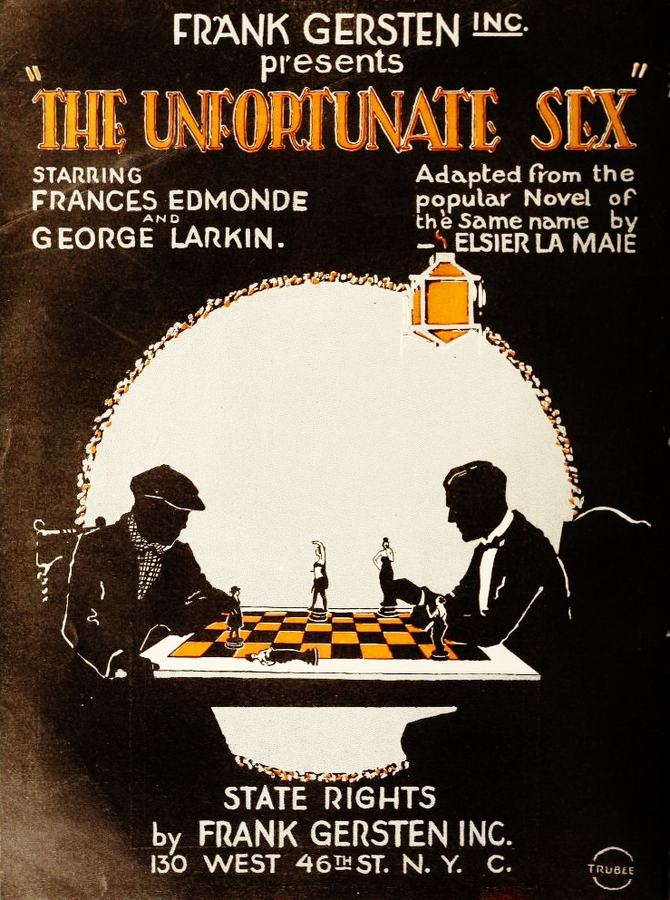
In the pantheon of silent cinema, few narratives confront the visceral sting of patriarchal rejection with the same unvarnished intensity as The Unfortunate Sex (1920). This film, a relic of an era grappling with the nascent stirrings of women's suffrage and the shifting tectonic plates of social class, presents a harrowing yet ultimately redemptive odyssey. Directed with a keen eye for the disparities between the gilded elite and the grit of the underworld, it serves as a scathing indictment of the biological determinism that once dictated a child's worth.
The film opens with a sequence of chilling domesticity. James Harrington, portrayed with a stiff, aristocratic coldness by Harry von Meter, commits an act of such profound moral bankruptcy that it sets the entire narrative machinery in motion. Upon learning that his newborn is female, Harrington discards the infant—a move that echoes the atavistic preferences of ancient dynasties rather than the burgeoning modernity of the 1920s. This rejection is not merely a personal failing; it is a manifestation of a systemic devaluation of the feminine. Unlike the more whimsical explorations of class found in It's No Laughing Matter, the stakes here are rooted in the survival of the soul.
Harrington’s deed estranges him from his wife, creating a vacuum of grief and resentment that lingers over the film like a spectral presence. The narrative then pivots to Peggy, the discarded daughter, who finds refuge not in an orphanage, but in the care of a kindly crook. This juxtaposition—the 'noble' father who is monstrous and the 'criminal' guardian who is nurturing—serves as the film’s primary subversion of Victorian morality. It suggests that virtue is not a byproduct of legal standing, a theme similarly dissected in The Innocent Sinner.
Jeanne Poe’s portrayal of the adult Peggy is a masterclass in silent-era physical storytelling. Raised in the shadows of a newsstand, her Peggy is a creature of resilience and street-smarts. She navigates the urban labyrinth with a grace that belies her hardscrabble upbringing. When she encounters George Bentley (George Larkin), the film shifts gears from a Dickensian tragedy to a legalistic thriller. Bentley is the quintessential 'New Man'—rational, empathetic, and unimpressed by the rigid hierarchies of the previous generation.
The collaboration between Peggy and the police to capture Spike Kelly (a menacing Earl Schaeffer) is more than a plot device; it is Peggy’s first act of agency. By betraying the gang that raised her, she isn't just seeking justice—she is purchasing her own freedom. The reward money acts as a bridge between two worlds, facilitating her entry into a finishing school. This transition is portrayed with a fascinating attention to detail, highlighting the performative nature of class. Peggy must unlearn the language of the streets to adopt the syntax of the elite, a transformation that mirrors the social mobility explored in Life's Whirlpool.
George Bentley’s role in the film is that of a detective of the human condition. His search for Peggy’s natural father is driven by a sense of cosmic justice. When he finally locates James Harrington, he finds a man hollowed out by remorse—a stark contrast to the vigorous, albeit misguided, patriarch of the opening reels. The reconciliation scene is the film’s emotional crescendo. It avoids the easy sentimentality of Ambrose's Vacation and instead opts for a heavy, atmospheric tension. Harrington must reckon with the fact that the daughter he threw away is the very person who now holds the key to his family's restoration.
The Unfortunate Sex excels in its visual language. The use of chiaroscuro in the underworld scenes creates a sense of claustrophobia, while the finishing school and the Harrington estate are bathed in a softer, more diffused light. This visual dichotomy reinforces the film’s exploration of the 'two worlds' Peggy inhabits. The direction by the uncredited auteur (often attributed to the script's influence by Elsier La Maie) ensures that the pacing never falters, even as it navigates complex emotional terrain.
When placed alongside The Price Woman Pays, this film offers a more optimistic, albeit conditional, view of female empowerment. While both films deal with the systemic disadvantages faced by women, The Unfortunate Sex posits that education and legal intervention can mitigate the 'unfortune' of birth. However, it is important to note that Peggy’s ultimate 'salvation' still comes through the traditional channel of marriage. George Bentley’s proposal at the end of the film is framed as a rescue, suggesting that while she is no longer 'unfortunate,' her status is still inextricably linked to her relationship with a man.
In many ways, the film shares a spiritual DNA with The Sign Invisible, focusing on the unseen forces that guide human destiny. The 'sign' here is the blood bond that Harrington tried so desperately to sever. The narrative suggests that nature eventually reclaims what it is owed, regardless of the social constructs we build to deny it. The film’s treatment of the criminal element, specifically the 'kindly crook' archetype, provides a nuanced look at the marginalized, much like the characters in The Scarlet Shadow.
The cinematography by the era's standards is remarkably fluid. There is a specific shot of Peggy at the newsstand—her face half-shadowed by the encroaching urban sprawl—that perfectly encapsulates her liminal existence. She is neither fully of the underworld nor of the polite society she will eventually join. Jeanne Poe’s ability to convey this internal conflict without the aid of dialogue is a testament to the power of silent acting. Her performance lacks the exaggerated histrionics often associated with the period, opting instead for a grounded, emotive realism.
Richard Johnson and Katharine Lewis provide solid support, though their roles are primarily functional. They represent the stability that Peggy was denied, acting as the moral compass for a story that frequently veers into dark territory. The writing by Elsier La Maie is surprisingly sophisticated, utilizing title cards that are poetic without being flowery. The dialogue (as presented in text) feels authentic to the characters' social strata, avoiding the homogenized tone found in lesser works like Congestion.
As we look back at The Unfortunate Sex from a modern perspective, its title carries a heavy irony. The 'misfortune' of being born female is shown to be a fabrication of men like Harrington—a self-fulfilling prophecy of exclusion. By the film’s conclusion, Peggy has proven her worth through bravery, intelligence, and adaptability. She has moved through the social ranks with more agility than any male character in the film. While the ending aligns with the conservative expectations of 1920, the journey itself is one of quiet rebellion.
The film’s exploration of fatherhood is equally provocative. Harrington’s redemption is not easily earned. He must endure the loss of his wife and the knowledge of his own cowardice before he is allowed the grace of reconciliation. This thematic depth elevates the film above the standard melodramas of the time, such as His Only Chance. It demands that its characters—and its audience—confront the consequences of their prejudices.
Ultimately, The Unfortunate Sex is a vital piece of cinematic history. It captures a moment in time when the world was beginning to question the 'natural order' of things. It is a film about the power of nurture over nature, the resilience of the human spirit, and the slow, painful process of societal evolution. For those interested in the roots of feminist cinema or the intricate social tapestries of the silent era, this film is an essential watch. It stands alongside works like Nanette of the Wilds and The Squaw Man's Son as a testament to the complexity of identity in early 20th-century art.
Reviewer's Note: While some prints of this film have suffered from the ravages of time, the emotional core remains as sharp as ever. It is a reminder that even in the silence of the past, the cry for equality was loud and clear.
IMDb 6.8
1915
Community
Log in to comment.