DbcultAccessing Vault...
Cult Review
Senior Film Conservator
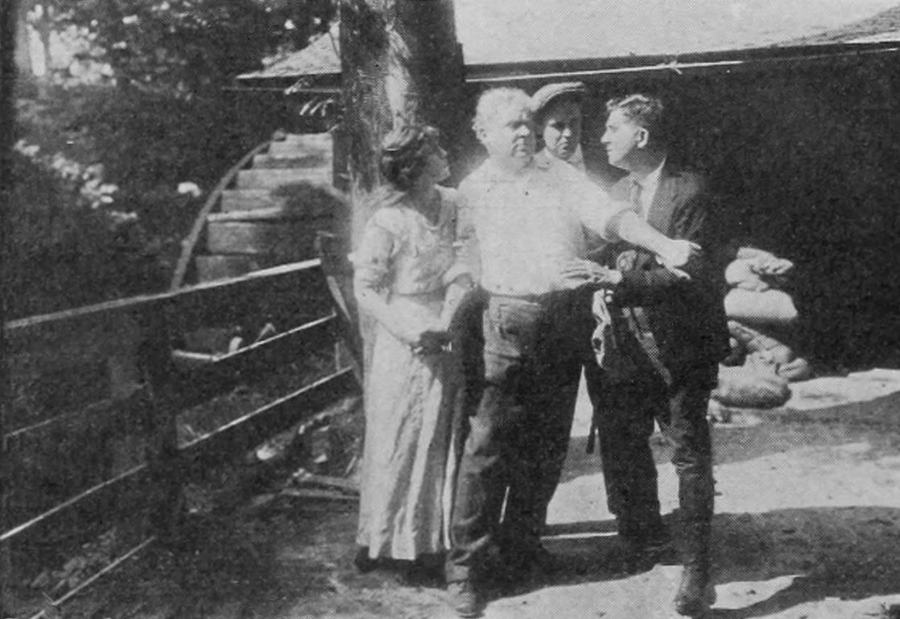
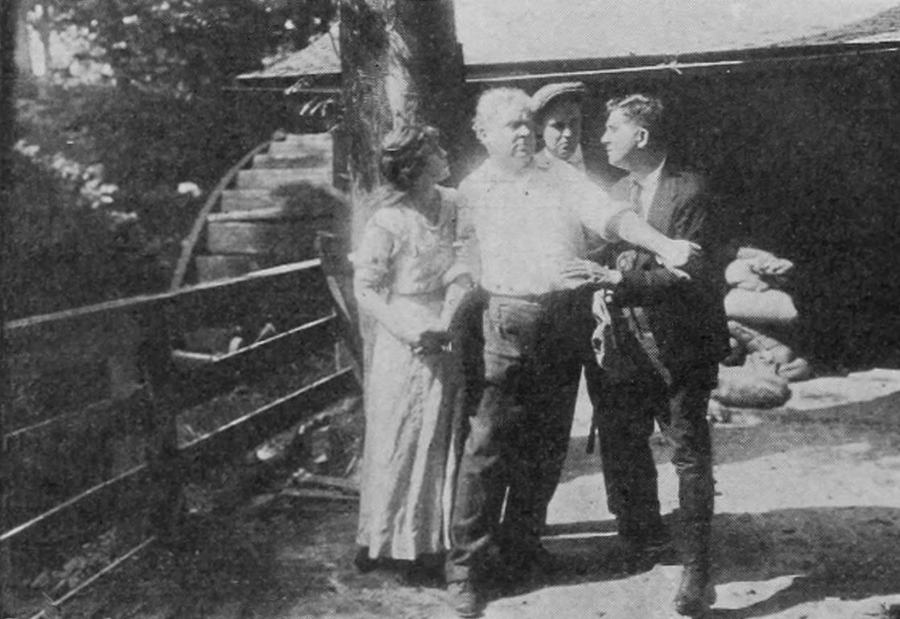
Torrents of ink—then torrents of water—define Maggie Tulliver’s universe in this 1915 transcription of Eliot’s granite-hearted classic. The flicker is brittle, the tinting feverish, yet the emotional undertow drags you under like the Floss itself.
Director Philip Lonergan compresses a Victorian leviathan into four reels, sacrificing sub-plots the way a beleaguered skipper jettisons cargo, yet somehow the moral ballast remains intact. Grace Stevens, as Maggie, has the eyes of a startled doe and the posture of one perpetually bracing for rebuke; she fidgets with cuffs, bites under-lip, hurls herself into frame as though cinematography were a confessional booth. The camera loves her turmoil: every time she contemplates Philip’s overtures, a yellow gel flickers across the lens—an amber alert for desire policed by conscience.
George Marlo’s Tom is less sibling than blunt-force instrument, jawbone squared to the point of self-caricature. Watch him in the counting-house scene: he raps abacuses like war drums, the ledger’s columns becoming trenches between genders, classes, and blood. The performance is silent, of course, yet the set seems to vibrate with his staccato breathing—a reminder that patriarchal rage seldom needs dialogue.
The mill itself—half homestead, half oracle—photographs as a hulking silhouette against nitrate skies. Intertitles announce legend: “Should the wheel cease, the river will reclaim what greed has mortgaged.” Rare for 1915, the film treats folklore as Chekhovian gun; when the final cloudburst arrives, we feel the narrative gear-turn of myth, not deus-ex-machina contrivance.
Comparative glances toward contemporaries sharpen the picture. Where Pierre of the Plains romanticises frontier libertinism and The Temptations of Satan externalises vice into a moustache-twirling fiend, The Mill on the Floss internalises morality until characters blister from the heat of their own scruples. Even Marta of the Lowlands, another riverine tragedy, opts for lurid murder; Eliot’s adaptation chooses the quieter cruelty of social exile.
The print survives in duotone—sea-blue nights, ochre dawns—but the projectionist of 1915 would have unleashed a phantasmagoria. Look for the reel in which Maggie reads Philip’s letter: the frame swims in aquamarine, a literalisation of her drowning conscience. Moments later, Tom’s intrusion triggers a crimson flare, as though the celluloid itself were blushing at its own transgressions. Because the current DVD defaults to monochrome, I urge cine-archivists to reference the Fides restoration model, where tinting scripts were reconstructed frame-by-frame.
While original cue sheets lamentably vanished, contemporary screenings favour a pastiche: Grieg for pastoral interludes, Smetana’s Moldau for river sequences, and—during the climactic flood—a bespoke dissonance of prepared piano and bowed saw. That conclusive glissando as the siblings sink echoes nothing so much as the existential shriek underpinning The Alien, though the latter trades Eliot’s Christian fatalism for cosmopolitan nihilism.
Lonergan’s most excruciating deletion is the childhood section—no witch-haunted attic, no broken doll-funeral, no Tom’s chalk-and-cheese schooling. The amputation hobbles Maggie’s later hunger for intellectual companionship, rendering Philip’s affection somewhat abrupt. Conversely, the screenwriter amplifies the flood prophecy, inserting a quasi-Biblical intertitle every reel until the river obliges. The approach prefigures the moral absolutism of El Grito de Dolores, though that revolutionary pageant wields religiosity as political fuse.

Shot on location in the Hudson Valley during late-winter 1914, crew members complained of frozen cameras and emulsion cracking like sugar-glass. Cinematographer Isolde C. Illian—one of the era’s rare female DPs—compensated by over-cranking the flood sequence, producing a viscous motion that makes the water appear almost gelatinous, a primordial soup reclaiming civilisation. Compare this tactile liquidity to the expressionist backlots of Der Eid des Stephan Huller II; both films weaponise environment as moral barometer.
Post-screening discussion inevitably circles the same drain: is Maggie’s demise punitive or transcendent? Lonergan nudges us toward tragic catharsis—two souls fused in death the way society forbade in life—yet the image of a woman erased by water carries a whiff of tribunal justice. Modern viewers may taste the same bile raised by The Vicar of Wakefield, where virtue rewarded feels suspiciously like virtue surveilled. Still, Stevens refuses to let Maggie sink into passive symbol; her clawing strokes against the current embody a proto-feminist refusal to go gently.
Released stateside alongside frothy fare like Mister Smith fait l’ouverture, the film barely recouped its negative cost. Critics praised its “statuesque sorrow,” but escapist audiences craved jazz-age levity. Today, the movie survives as a ghost in archival blogs and 16mm university collections, awaiting the boutique Blu-ray label courageous enough to pair it with The Melting Pot for a double bill of assimilation tragedies.
What lingers is not the moral algebra but the sensory frisson: the creak of the water-wheel, the hush before the dam bursts, the siblings’ interlocked fingers dissolving into silt. Lonergan’s film may lack the textual marrow of Eliot’s prose, yet it distills a primal equation—love plus property equals catastrophe—into indelible shadow-play. Approach it not as literary illustration but as weather system: you emerge soaked, shivering, weirdly grateful for the deluge.
Verdict: Imperfect, indispensable. A cracked heirloom whose jagged edges still draw blood.

IMDb —
1919
Community
Log in to comment.