DbcultAccessing Vault...
Cult Review
Senior Film Conservator
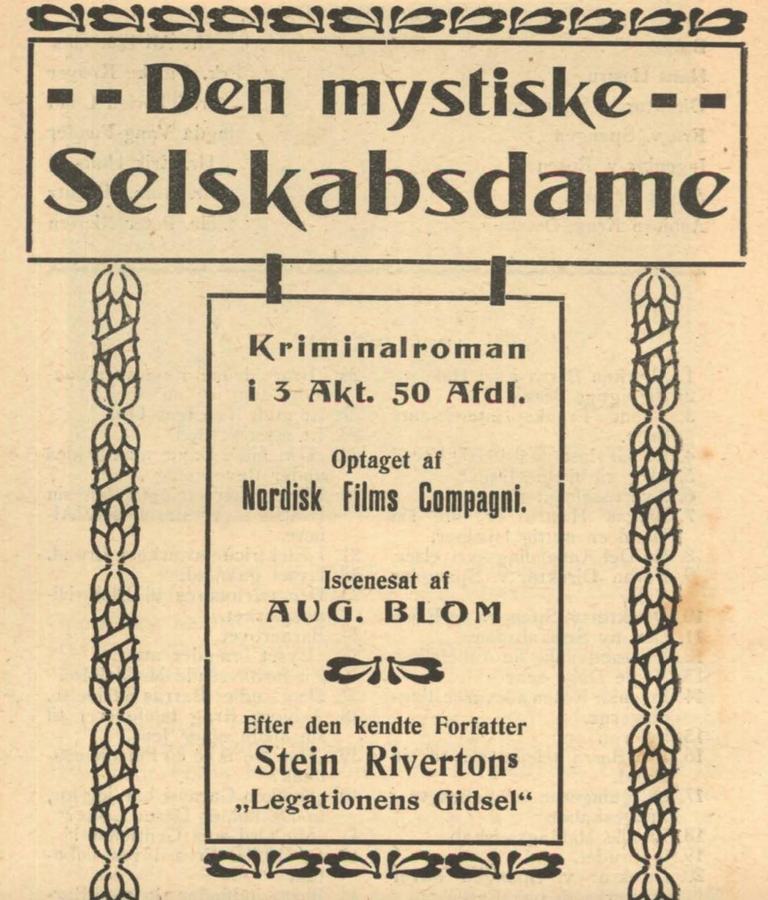
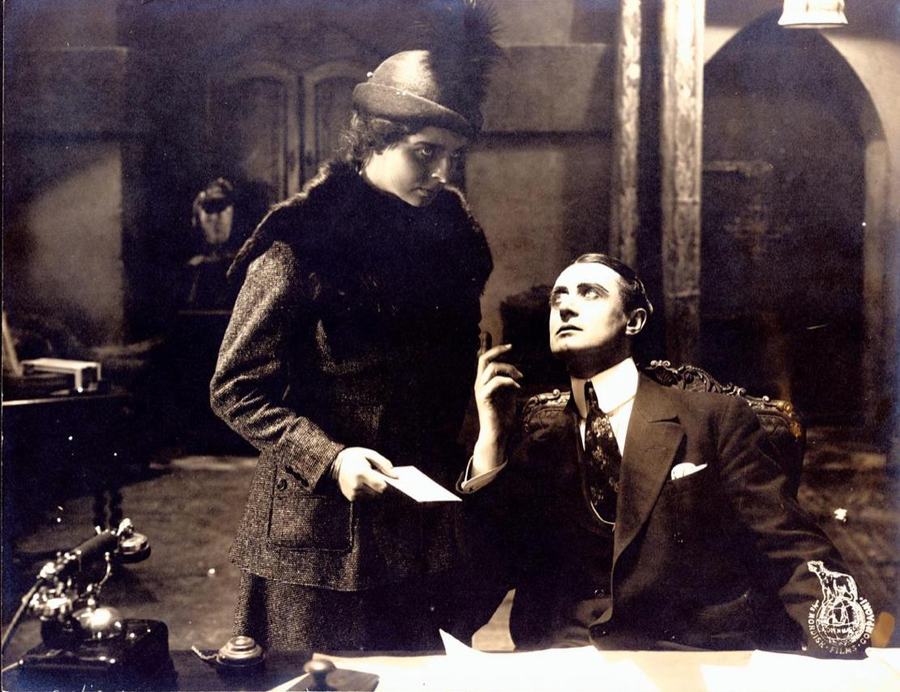
The flickering phantoms of early cinema often hold a peculiar allure, a window into a nascent art form grappling with its own immense potential. Among these cinematic specters, The Mysterious Lady (original Danish: Den hemmelighedsfulde Dame), released in 1917, emerges not merely as an artifact of its time but as a fascinating precursor to the profound psychological dramas that would later define one of cinema's most revered auteurs. Penned by the prodigious Carl Theodor Dreyer, in collaboration with Sven Elvestad, this silent thriller from Nordisk Films Kompagni offers more than just a glimpse into a bygone era of filmmaking; it provides a foundational understanding of the narrative complexities and thematic undercurrents that Dreyer would masterfully explore throughout his career. While often overshadowed by his later, more introspective works, The Mysterious Lady possesses a distinct charm and a surprisingly sophisticated narrative architecture that warrants closer inspection. It's a film that speaks volumes without uttering a single word, relying instead on the evocative power of gesture, expression, and meticulously crafted suspense.
At its heart, The Mysterious Lady plunges into the murky waters of industrial espionage, a domain ripe for cinematic exploitation even in the nascent days of the medium. The narrative pivots around Barra, a figure shrouded in criminal notoriety, whose reputation for illicit acquisition precedes him. His world, a meticulously organized network of shadowy dealings, is disrupted by the entrance of Agent Frank, a representative of a powerful, albeit ambiguous, authority. Frank’s proposition is audacious: a collaboration, not a confrontation, to secure the revolutionary designs of a groundbreaking internal combustion engine. This isn't merely a tale of theft; it's a high-stakes chess match where intellectual property becomes the ultimate pawn. The engine itself, a device promising to redefine industrial might and transportation, serves as the MacGuffin, driving the intricate machinations of both the underworld and the establishment. The screenplay, bearing Dreyer’s early touch, doesn't merely present a simple heist; it delves into the moral ambiguities of its characters, exploring the fine line between legality and ethics, ambition and avarice. The "mysterious lady" herself, often a pivotal figure in such narratives, becomes less a damsel in distress and more a catalyst, perhaps even an unwitting participant, in a larger game of power and technological supremacy. This layered approach elevates the film beyond a mere genre exercise, hinting at the profound character studies Dreyer would later perfect.
To consider The Mysterious Lady is to acknowledge the nascent genius of Carl Theodor Dreyer as a screenwriter, long before he stepped definitively into the director's chair. His collaboration with Sven Elvestad here reveals a keen understanding of tension, character motivation, and the dramatic potential inherent in a tightly constructed plot. Even in this early work, one can discern the thematic seeds of his later masterpieces: the exploration of morality under duress, the quiet suffering of individuals caught in larger societal mechanisms, and the profound impact of external forces on internal lives. While not as overtly spiritual or existentially probing as The Passion of Joan of Arc or Ordet, The Mysterious Lady nonetheless presents a world where human desires—for power, wealth, or perhaps even justice—drive a complex web of interactions. The moral landscape is not black and white; Barra, the criminal, is not simply a villain, nor is Agent Frank a straightforward hero. Their collaboration, born of mutual benefit rather than shared ideals, complicates traditional notions of good and evil, a nuance Dreyer would continue to explore with increasing depth. The film's preoccupation with a revolutionary engine also taps into a broader societal fascination with technological advancement at the turn of the century, mirroring anxieties and excitements about the future, much like how films such as Human Driftwood or Vultures of Society might have reflected contemporary social issues. This foresight in embedding relevant societal concerns within a thrilling narrative is a testament to the writers' perceptive abilities.
In the realm of silent cinema, the onus on actors to convey intricate emotions and narrative beats without dialogue is immense. The cast of The Mysterious Lady rises to this challenge with commendable skill, transforming gestures, facial expressions, and body language into a potent communicative tool. Alf Blütecher, likely in the role of Barra or Frank, would have had to project authority and cunning through subtle shifts in posture and gaze, embodying the intricate dance of power. Thorleif Lund, a formidable presence in many Nordisk productions of the era, would bring a certain gravitas, his stature often lending itself to characters of imposing will or tragic depth. Peter Nielsen, known for his versatility, would navigate the nuances of his character, whether as a figure of authority, a sympathetic bystander, or a conflicted participant in the unfolding drama. Magda Vang, Erik Holberg, Vibeke Krøyer, and Jonna Anker Kreutz, each contribute to the ensemble, their silent performances weaving together to create a tapestry of human interaction under pressure. The absence of spoken words forces the audience to pay closer attention to these visual cues, making the performances incredibly intimate and demanding. Unlike the more overt melodramatics sometimes seen in American contemporaries like The Glory of Yolanda, Danish silent cinema often favored a more restrained, yet equally impactful, style of acting, allowing the narrative to unfold with a subtle intensity. The success of The Mysterious Lady hinges significantly on the ability of these actors to breathe life into Dreyer's complex characters, translating internal conflict and strategic maneuvering into palpable on-screen presence.
While specific directorial credits for such early films can sometimes be ambiguous, the visual language of The Mysterious Lady would have been crucial in establishing its atmosphere and driving its suspense. Silent films relied heavily on evocative set design, strategic lighting, and dynamic camera work (for its time) to convey mood and advance the plot. One can imagine the shadowy interiors of Barra’s lair, meticulously constructed to suggest both his power and his clandestine operations, contrasting sharply with the more formal, perhaps starker, environments associated with Agent Frank. The use of deep focus or carefully composed tableaux would have guided the viewer's eye, highlighting crucial details – perhaps the gleam of a stolen blueprint, the furtive glance between conspirators, or the subtle tension in a hand reaching for a hidden weapon. The visual storytelling would have been paramount, with each frame designed to communicate information, emotion, or impending danger. The cinematography of the era, while technically limited by modern standards, possessed an artistic purity, forcing filmmakers to be incredibly resourceful and imaginative. This visual ingenuity would have been essential in portraying the intricate steps of the heist and the subsequent cat-and-mouse game. One might draw parallels to the visual clarity and narrative economy found in other European thrillers of the period, such as The Suspect, where every visual element contributes directly to the unfolding mystery. The pacing, dictated by editing rather than dialogue, would have been carefully calibrated to build suspense, culminating in moments of high drama that resonate without uttering a single sound.
Placing The Mysterious Lady within the broader landscape of early 20th-century cinema offers valuable perspective. While many films of the era, such as Silver Threads Among the Gold or The Awakening of Ruth, often focused on melodramatic personal struggles or moral allegories, The Mysterious Lady leans into the burgeoning genre of the espionage thriller. It foreshadows the intricate plotlines and morally ambiguous characters that would become staples of spy fiction for decades to come. The emphasis on a technological marvel as the central object of desire also links it to a forward-thinking sensibility, distinguishing it from historical epics like The Loyal Rebel or romantic dramas such as The White Sister.
Dreyer’s involvement, even as a writer, imbues the film with a certain intellectual weight. It’s not merely a popcorn thriller; it's a carefully constructed narrative exploring the mechanics of power and the human cost of ambition. This early engagement with complex themes, even within a genre framework, sets it apart from more straightforward adventure tales like The Fighting Trail or Westerns like Buckshot John. Its legacy, though perhaps not as overtly celebrated as Dreyer's later directorial efforts, lies in its demonstration of sophisticated storytelling in the silent era and its contribution to the development of the European thriller. It shows that even in its infancy, cinema was capable of tackling intricate plots and exploring shades of grey in human morality. For cinephiles and historians, it serves as an important piece of the puzzle in understanding the evolution of narrative film and the formative years of one of its greatest practitioners. The film's ability to maintain tension and engage an audience without spoken dialogue is a testament to its enduring craft, much like the sustained intrigue in films such as Blind Justice or the character depth in Jack Chanty. It showcases the universal appeal of a well-told story, regardless of the technological limitations of its medium.
The central premise of The Mysterious Lady — the illicit acquisition of revolutionary engine designs — provides a fertile ground for exploring human motivations beyond simple greed. Agent Frank’s approach to Barra isn't merely an offer; it's a strategic maneuver designed to exploit Barra's established network and expertise. This collaboration forces both characters into an uncomfortable alliance, where trust is a fragile commodity and betrayal a constant shadow. The script, even in its silent form, must convey the subtle power dynamics at play. Is Frank genuinely seeking a partnership, or is he merely using Barra as a means to an end, with an ulterior motive that will only be revealed in the climax? And Barra, the seasoned criminal, would undoubtedly approach such a proposition with a healthy dose of skepticism, constantly weighing the risks against the potential rewards. His decision to engage implies a profound confidence in his own abilities to navigate treacherous waters, or perhaps a desperate need for the immense profits promised.
The "mysterious lady" herself, if she is indeed a distinct character and not just an allegorical figure, would likely serve as a fulcrum for much of the emotional and dramatic tension. Is she an informant, a double agent, a pawn, or perhaps the true mastermind pulling strings from the shadows? Her presence would undoubtedly complicate the already intricate dance between Barra and Frank, introducing an element of unpredictability and romantic intrigue, a common trope in silent thrillers that often added layers of pathos or urgency. One can imagine scenes of clandestine meetings, coded messages, and narrow escapes, all punctuated by the dramatic close-ups characteristic of the era, designed to amplify suspicion and revelation. The narrative, therefore, becomes a multi-faceted exploration of loyalty, deception, and the pursuit of technological advantage, mirroring the complex societal shifts occurring during the early 20th century. The stakes are not just financial; they are about the control of future power, a concept that resonates deeply even today. This intricate plotting and character interaction positions The Mysterious Lady as a sophisticated work for its time, eschewing simplistic hero-villain dynamics for a more nuanced portrayal of human agency in a world driven by innovation and ambition. The film's silent nature compels the audience to interpret every gesture, every lingering gaze, every sudden movement, making the viewing experience an active, rather than passive, engagement. This immersive quality is a hallmark of truly effective silent storytelling, often surpassing the superficiality of some talkies.
Danish cinema of the silent era, particularly from Nordisk Films Kompagni, often exhibited a distinctive style, characterized by a blend of technical innovation and artistic ambition. While Hollywood was churning out Westerns and slapstick comedies, Danish studios were delving into more serious dramas, social commentaries, and psychological thrillers. The Mysterious Lady fits squarely into this tradition, demonstrating a commitment to narrative complexity and character depth that often set it apart. The influence of Scandinavian literature and theatre, known for its existential angst and moral introspection, likely permeated the filmmaking sensibilities of the time. This cultural backdrop provided a rich soil for writers like Dreyer to cultivate stories that explored the darker facets of human nature and the societal pressures that shape individual destinies.
The production values, while perhaps not reaching the epic scale of some contemporary Italian or American spectacles, would have been meticulously crafted to serve the story. From period-appropriate costumes to atmospheric sets, every detail would have contributed to the verisimilitude of the world presented on screen. The reliance on natural light, or artfully simulated natural light, often gave Danish films a particular visual texture, a certain stark beauty that enhanced their dramatic impact. This aesthetic choice, coupled with the restrained yet powerful acting style, created a cinematic experience that was both engaging and thought-provoking. Comparing it to the more overtly theatrical style of a film like The Little Mademoiselle, The Mysterious Lady likely embraced a more grounded approach, despite its thrilling premise. The film stands as an example of how a relatively smaller national cinema could produce works of international quality and thematic resonance, influencing not only its domestic audience but also contributing to the global language of cinema. It reminds us that innovation and artistic merit are not solely the preserve of the largest studios but can flourish wherever creative minds are given the opportunity to explore new narrative frontiers. This rich heritage paved the way for future generations of Danish filmmakers to continue pushing artistic boundaries, cementing the country's reputation as a significant contributor to world cinema.
There's a timeless quality to a well-executed silent thriller, and The Mysterious Lady undoubtedly falls into this category. The absence of dialogue forces a reliance on universal visual cues, making the film accessible across linguistic barriers. The tension is built not through spoken threats or expository dialogue, but through the escalating rhythm of the editing, the widening of an eye, the clench of a jaw, or the sudden, decisive movement of a character. This visceral experience taps into primal fears and fascinations, engaging the audience on a deeply intuitive level. The revolutionary engine designs, as the object of desire, symbolize progress and power, making the stakes feel genuinely high, even a century later. The film's exploration of espionage, a theme that has only grown in relevance, speaks to an enduring human fascination with secrets, subterfuge, and the unseen forces that shape our world. While films like A tanítónö might offer a different kind of drama, the core intrigue of The Mysterious Lady remains potent. It's a reminder that compelling storytelling transcends technological advancements. The ingenuity of Dreyer and Elvestad in crafting such a intricate plot, combined with the expressive performances of the cast and the evocative visual direction, ensures that The Mysterious Lady remains more than just a historical curiosity. It is a testament to the power of pure cinema, a film that continues to speak to audiences through the universal language of action, emotion, and suspense. Its ability to captivate without a single spoken word is perhaps its greatest achievement, cementing its place as an important, if often overlooked, piece of cinematic history. The film’s silent screams and whispers resonate with a particular intensity, inviting viewers to fill in the auditory gaps with their own imaginations, making the experience deeply personal and lasting.
IMDb —
1919
Community
Log in to comment.