DbcultAccessing Vault...
Cult Review
Senior Film Conservator
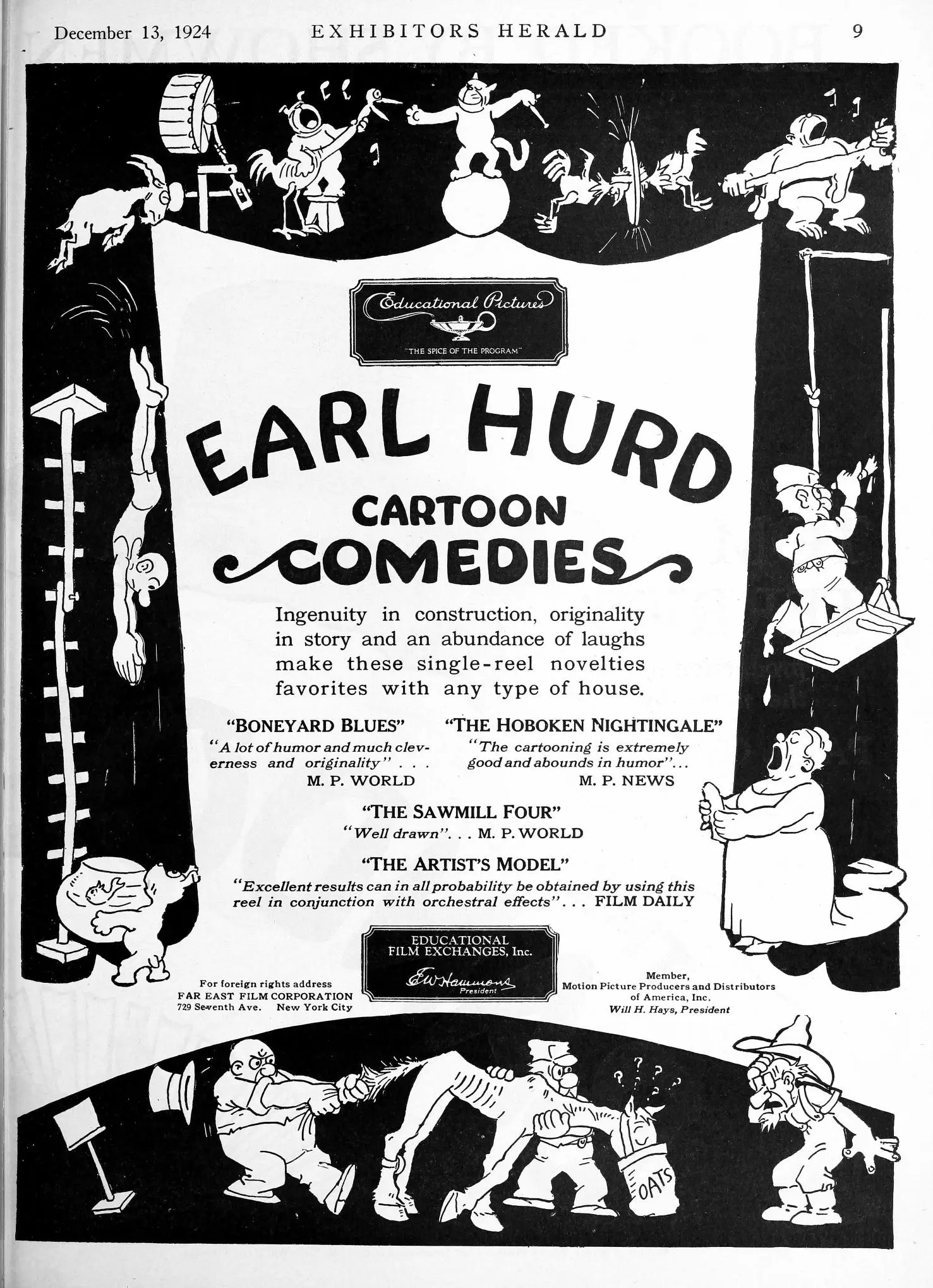
The Hoboken Nightingale is a cinematic gem that masterfully captures the essence of early 20th-century America. Set in the bustling yet quaint town of Hoboken, New Jersey, Hurd's directorial prowess is evident in his ability to blend the personal dramas of its inhabitants with the broader political landscape. The narrative follows the lives of several characters, each representing different facets of the community, as they navigate through a network of alliances, betrayals, and romantic entanglements.
The film opens with a panoramic view of Hoboken, a snapshot of a town that is both rooted in tradition and on the cusp of change. The camera pans across the picturesque streets, capturing the bustling life of the community. Earl Hurd's visual storytelling is impeccable, with each shot meticulously framed to convey a sense of place and atmosphere. The early morning light filtering through the cobblestone streets sets the tone for a story that is as much about the dawn of a new era as it is about the lives of the characters who will be its protagonists.
The central figure of the narrative is Sarah, an impassioned young woman whose dreams of a better life for herself and her family are both a driving force and a potential source of conflict. Sarah's journey is emblematic of the broader themes explored in the film—hope, ambition, and the struggle for identity in a rapidly changing world. Her character arc is compelling, and Hurd's performances capture the complexity of her emotions with a depth that is rarely seen in films of this era.
Supporting Sarah are a diverse array of characters, each representing different social and political factions. There is James, a local politician with lofty aspirations and a penchant for power; Clara, a determined and resourceful woman who finds herself at odds with the male-dominated power structures; and Thomas, a mysterious figure with secrets that threaten to unravel the fabric of the community. These characters are intricately woven into the narrative, their interactions and conflicts driving the plot forward and adding layers of complexity to the story.
Hurd's screenplay is a triumph of subtle dialogue and nuanced character development. The script is peppered with witty one-liners and poignant observations about the human condition. The conversations between characters are not just exchanges of information but rich dialogues that explore the deeper motivations and desires of the individuals involved. This attention to detail is particularly evident in the scenes where Sarah and James discuss their differing visions for the future of Hoboken. The tension between their viewpoints is palpable, and the tension builds as the film progresses, culminating in a dramatic climax that leaves the audience on the edge of their seats.
Technically, the film is a masterpiece. Hurd employs a variety of cinematic techniques to enhance the storytelling. The use of close-ups during pivotal moments adds a sense of intimacy and immediacy to the narrative. The wide shots of the town capture the sweeping scale of the events unfolding, while the close-ups emphasize the emotional stakes. The cinematography, captured by an anonymous but talented cinematographer, is a study in contrasts, from the warm, golden hues of the early morning to the stark, cold light of night. The use of natural light and shadow creates a mood that is both hopeful and foreboding, mirroring the uncertain future that the characters face.
The performances are uniformly strong, with Earl Hurd delivering a particularly nuanced and compelling portrayal of the titular role. His embodiment of Sarah's inner turmoil and external resolve is a testament to his skill as an actor. The supporting cast, including James, Clara, and Thomas, deliver equally impressive performances. Their chemistry is electric, and the tension between them is palpable, contributing significantly to the film's overall impact.
One of the strengths of 'The Hoboken Nightingale' is its ability to explore complex themes without resorting to didacticism. Hurd approaches these themes with a deft hand, using the personal lives of the characters to reflect broader societal issues. The film touches on themes of identity, the struggle for power, and the role of women in a male-dominated society. These themes are woven seamlessly into the narrative, enhancing the depth and richness of the story without overwhelming the audience.
The film's pacing is another notable aspect. While the narrative unfolds at a deliberate pace, this approach allows for a deeper exploration of the characters and their motivations. The slower tempo creates a sense of anticipation and builds to a powerful climax. The film's climax is a masterclass in tension and suspense, with the resolution leaving the audience with a profound sense of satisfaction.
Comparing 'The Hoboken Nightingale' to similar works in its era, it stands out as a unique and innovative film. It shares thematic similarities with films like 'Squire Phin' and 'The Little Intruder', which also explore the interplay between personal and political narratives. However, 'The Hoboken Nightingale' goes beyond these predecessors by offering a more nuanced and complex exploration of its characters and themes. It also bears a striking resemblance to 'Noemi, die blonde Jüdin', particularly in its portrayal of a woman navigating a male-dominated world, but Hurd's film does so with a broader scope and a more optimistic outlook.
Apart from its literary and cinematic merits, 'The Hoboken Nightingale' holds a special place in cinematic history. It is a testament to the power of storytelling and the ability of a filmmaker to convey complex ideas through the medium of film. The film's legacy is cemented not only by its artistic achievements but also by its enduring relevance. It continues to resonate with audiences today, offering a window into a bygone era while also reflecting universal human experiences.
In conclusion, 'The Hoboken Nightingale' is a film that deserves to be rediscovered and celebrated. Earl Hurd's direction, the compelling performances, and the rich, layered narrative make it a standout work in early 20th-century cinema. It is a film that not only entertains but also challenges and inspires, making it an essential addition to any cinephile's collection.
IMDb 6.7
1918
Community
Log in to comment.