DbcultAccessing Vault...
Cult Review
Senior Film Conservator
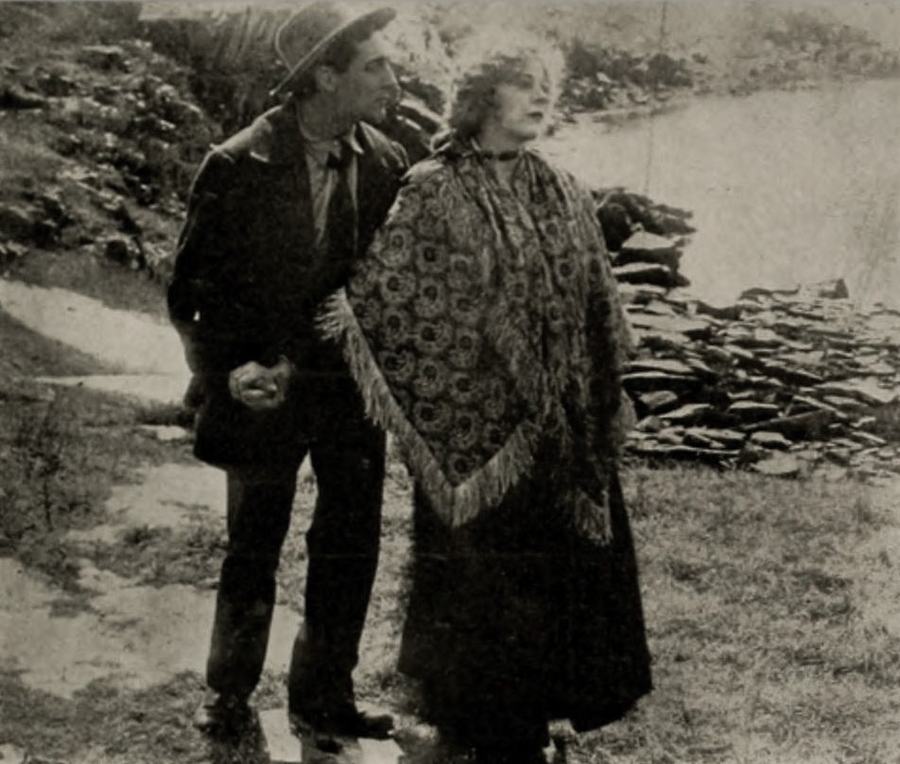
Every frame of Hearts of Oak arrives soaked—rainwater, brine, or tears—so that the celluloid itself seems to weep. Maine’s winter coast, captured in 1913 by cinematographer James A. Fitzgerald, becomes a bruised character: granite outcrops clawing at pewter skies, gull-cry echoing like torn parchment, tide pools reflecting faces distorted by obligation. Against this amphitheater of wind, a parable of possession unfurls: a man rescues a girl, adopts another child, then watches love ossify into marble gratitude.
Old Luke’s smallpox is no mere plot lever; it is a moral acid, eating contours from recognizable flesh. His pustules glow like evil constellations beneath tallow light, and when he breathes his last the camera lingers on the cooling kettle—steam dying mid-air as though even physics mourns the inevitability of orphanhood. The disease’s residue lingers like original sin, forcing Terry Dennison to quarantine Crystal inside Owen’s salt-crusted shack, a limbo where innocence is weighed against contagion and found temporarily priceless.
Notice how Terry’s first gesture—wrapping the child in his own greatcoat—already blurs rescue with appropriation. The coat swallows her, sleeves dangling like unearned years. From this instant, possession masquerades as virtue; the audience, still reeling from plague-terror, applauds the savior. Yet the film’s genius lies in retroactively staining that applause with complicity.
Years later, Owen’s senescent eyes misread a photograph: Ned’s face becomes Terry’s. A trifling moment, but the entire moral axis tilts. The mistake feels Shakespearean—think As You Like It’s woodland mix-ups—yet here the forest is surf-sprayed shale and the cost is two lifetimes. Owen’s gossip metastasizes into a proposal, and Crystal—taught since infancy to equate debt with destiny—accepts, pressing gratitude into the shape of a wedding ring.
"She consented with the resignation of a saint walking into the lion’s den, believing the lion had earned the feast."
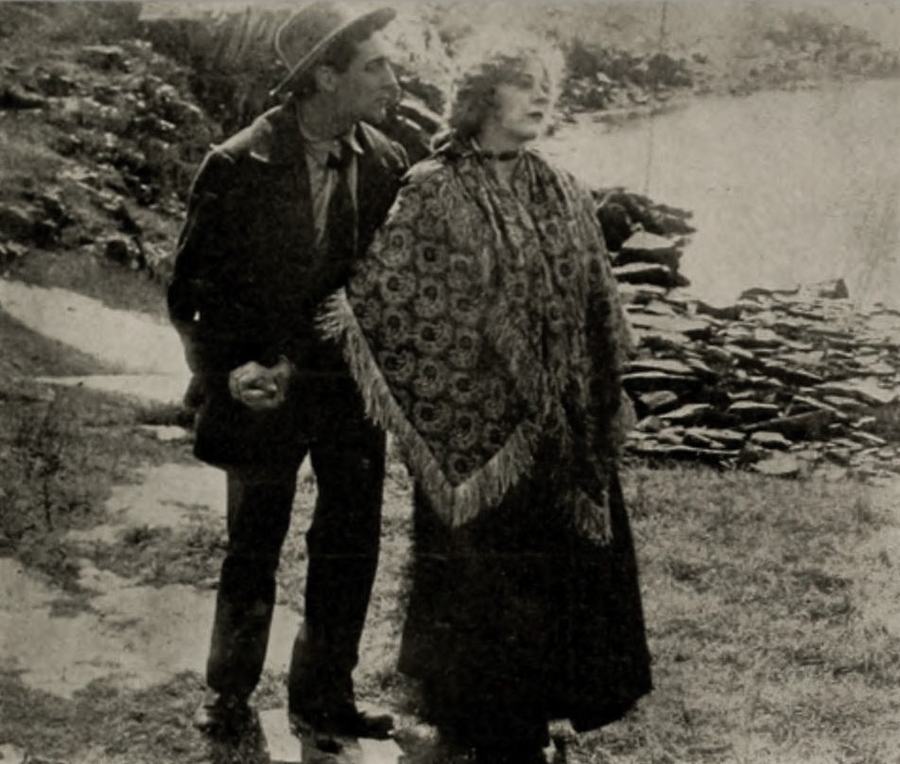
When Ned returns from Boston, he finds his fiancée transformed into a mother and a wife. Their beachside confrontation—shot in long silhouette so the horizon bisects their bodies—plays like a negative-image courtship. Instead of pledging futures, they vow amputation: to sever their desire so Terry may keep his illusion. The scene’s blocking is exquisite: Ned stands downslope, literally lower, while Crystal raises her veiled hand; the ring catches a brief solar flare and blinds the camera for a single frame—an eclipse of hope.
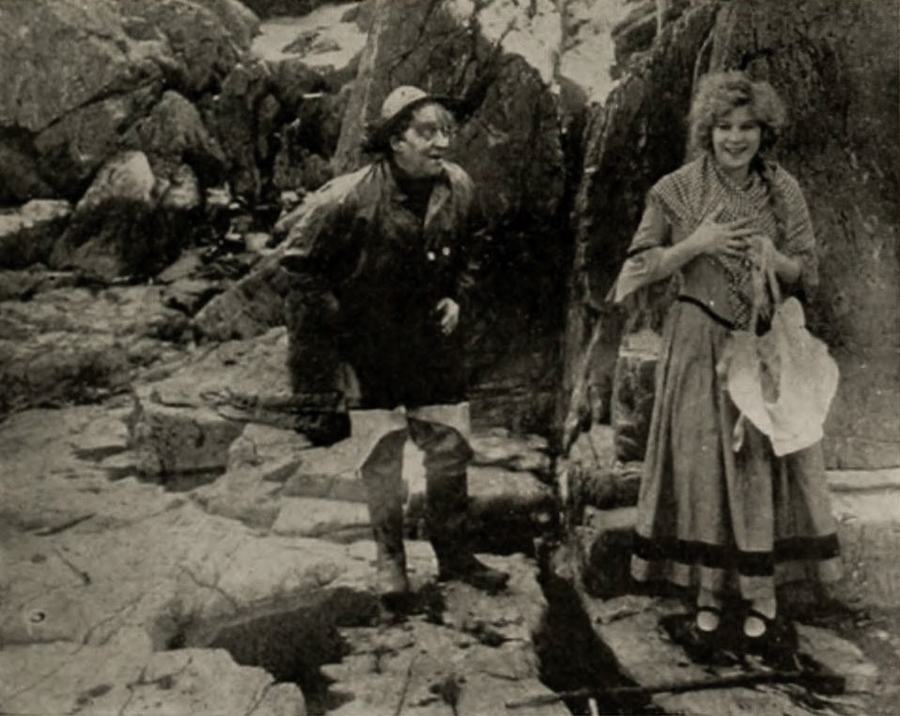
Two years elide in a fade-to-black, the only transition in silent cinema that feels like a punch. The absence of exposition here is ruthless; we must imagine nightly dinners where silence calcifies, where a child learns to call Terry "Papa" while sensing an unnamed phantom at the table. The film trusts viewers to populate those years with their own dread, a narrative negative space more terrifying than any intertitle.
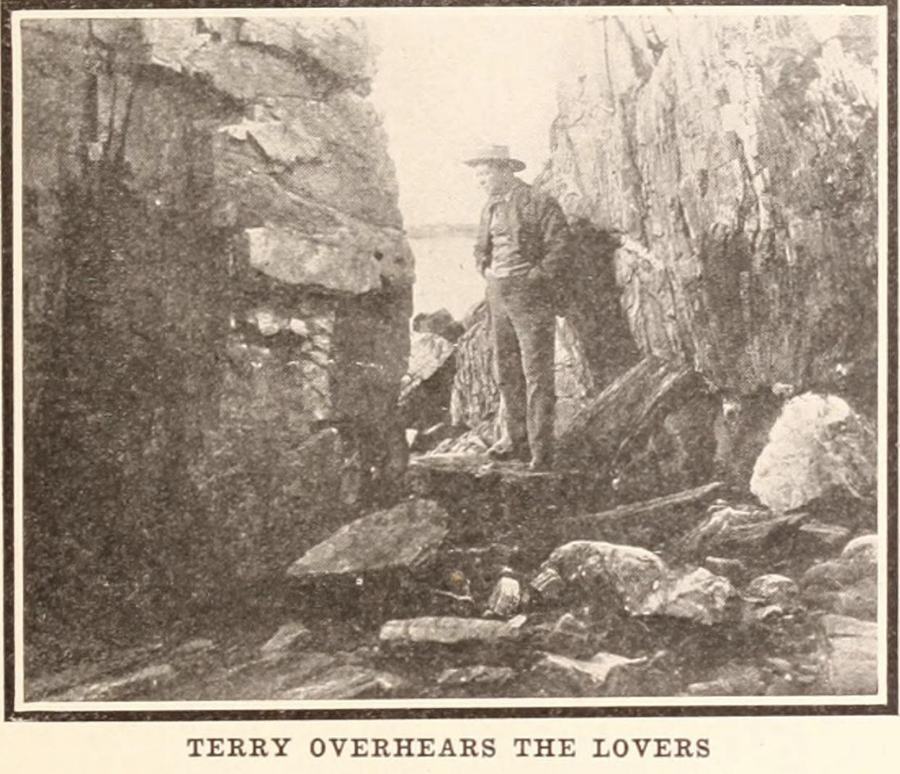
Terry’s self-exile is staged like a Norse saga: a cliff-top vow, gulls wheeling like Valkyries, salt wind whipping coat-tails into battle flags. His demand for a quid-pro-quo oath—Ned must marry Crystal should he fail to return—converts charity into contract, a grotesque inversion of the marriage market. Terry genuinely believes he is freeing the lovers; in truth he shackles them to a calendar, turning affection into a timed tomb.
The off-screen explosion that blinds Terry is the film’s most radical ellipsis. We only glimpse aftermath: a mastless hulk vomiting smoke, a sailor’s body surf-battered until identity sloughs away like kelp skin. When Terry crawls back across the sand, his blindness is both retribution and grotesque enlightenment—he finally sees the cost of his benevolent tyranny.
Little Crystal—named after a mother who never truly chose the name—threads daisies through cemetery lettering. The monument’s chiseled TERRY DENNISON looms like a rebuke in granite. When the blind man asks her to spell the inscription, recognition detonates silently: he is conversing with his own memento mori. The child’s innocent recitation—"That’s you, Mister"—carries metaphysical vertigo; the past literally speaks to the present across the void of death-that-never-was.
"To witness oneself already canonized is to become a ghost haunting your own future."
Inside Owen’s cottage, death becomes a cramped parliament: Crystal the elder weeps over the man she never loved yet always owed; Ned clutches the hand that once signed his fate; little Crystal tickles her biological father’s palm, unaware she is coaxing a soul across the threshold. Terry’s smile—milky eyes upturned—transmutes guilt into grace, but the film refuses catharsis. The camera retreats through the doorway, leaving tableau intact, as though to say absolution is merely perspective purchased too late.
Violet Horner’s Crystal ages from wide-shuttered innocence to porcelain stoicism without recourse to dialogue; her shoulders, gradually corseted by obligation, speak volumes. Wilbur Hudson’s Ned exudes a rangy warmth that curdles into hollow-cheeked resignation—watch how he practices smiles in a Boston shop-window, each reflection less convincing. Yet the film’s gravitational pole is George W. Middleton’s Terry: a man forever mistaking stewardship for heartbeats, his final blindness a grotesque honesty.
Study Middleton’s right thumb worrying the brim of his hat during the proposal—an untrained tell that betrays terror beneath paternal calm. Or Horner’s blink pattern: three rapid flares when she hears Ned’s voice post-marriage, Morse code for a love still alive. Silent cinema lives in such granular physics.
Fitzgerald’s photography exploits orthochromatic stock: sea foam registers as mercury, faces as alabaster, the yellow #EAB308 of Aunt Becky’s taffeta bleeding into umber dusk. The grist mill’s interior is lit by a single shaft of tungsten, dust motes swirling like floury constellations—an inverted cosmos where sustenance is ground, not granted.
Place Hearts of Oak beside The Spoilers or På livets ödesvägar and you map an archipelago where men barter women as social ballast. Yet Herne’s screenplay—adapted from his own stage hit—leans closer to domestic Fatal Wedding-style melodrama than to frontier sensationalism. The film’s true spiritual cousin is During the Plague: both weaponize contagion as moral reagent, though here the virus vanishes early, leaving emotional scar tissue in place of pustules.
Crystal circulates like specie: from Luke to Terry, then to Ned via oath, her value determined by male debt. Yet the narrative complicates commodity theory—her final refusal to flee with Ned, even after Terry’s abdication, reclaims agency through self-immolation. She becomes both coin and mint, striking her own sorrow into currency tenderable only in the church of guilt.
Often dismissed as comic relief, Becky’s hesitant romance with Owen reframes the marital market: late love, freely chosen, contrasted with Crystal’s coerced vows. Their matrimony arrives off-screen, a quiet revolution glimpsed only through a joint appearance at the dinner table—two elders sharing a single chair arm, fingers braided like marsh grass.
While original scoring is lost, cue sheets suggest a through-composed arc: sea-shanty variations for exteriors, parlor-room waltzes adulterated with minor thirds for domestic scenes, and a final organ chord held so long it vibrates like mourning fog. Modern revival houses often interpolate ”O Promise Me” beneath the proposal, irony so thick it tastes of brine.
Released months before The Reign of Terror ignited box-office pyrotechnics, Hearts of Oak offered audiences something rarer than spectacle: the unbearable inertia of decency. Trade papers praised its ”wholesomeness,” yet urban viewers recognized the suffocation beneath the flannel. The film’s Maine locations—shot in winter—were a novelty that prefigured location-hungry epics like The Pursuit of the Phantom.
Watch it today and detect proto-Kurosawa triangularity: obligation vs. desire vs. time. The five-year hiatus foreshadows Ikiru’s death-lease, while the blind homecoming prefigures City Lights’ pathos. Most striking is the ecological undercurrent: the ocean as ledger where human debts are washed up, bleached, and recast.
Hearts of Oak is not a relic; it is a wound that refuses scabbing. Its moral geometry—where gratitude metastasizes into matrimonial imprisonment—remains uncomfortably contemporary. Technical limitations become aesthetic triumphs: the lack of close-ups during the beach confession forces us to squint across spatial gulfs, mirroring Terry’s eavesdrop. Performances oscillate between barn-playhouse declamation and proto-naturalistic tremor, creating a friction that sparks rather than fizzles.
Minor quibbles: the Boston interlude exists only as intertitle, and Ned’s off-screen prosperity feels expedient. Yet these absences reinforce the claustrophobic littoral universe—the world beyond the rocks is rumor, not reality.
Final note: bring tissues, but not for the obvious reasons. You will weep less for death than for the decades of living death that precede it, for every dawn Crystal wakes beneath a wedding ring that clangs like iron on an empty galley.
High. The film’s narrative negative space invites forensic revisitation; each ellipsis becomes a rabbit hole. Second viewing foregrounds Owen’s micro-smirks, the way Becky’s eyes track Crystal’s torment, the inevitability of surf foam swallowing footprints on the beach—a visual refrain that whispers: nothing here was ever built to last.
IMDb —
1925
Community
Log in to comment.