DbcultAccessing Vault...
Cult Review
Senior Film Conservator
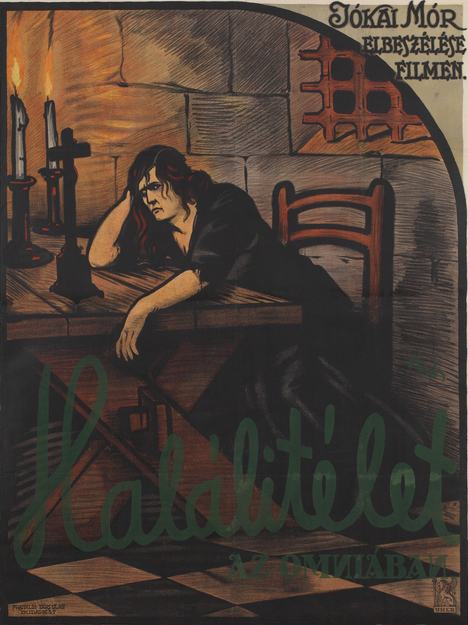
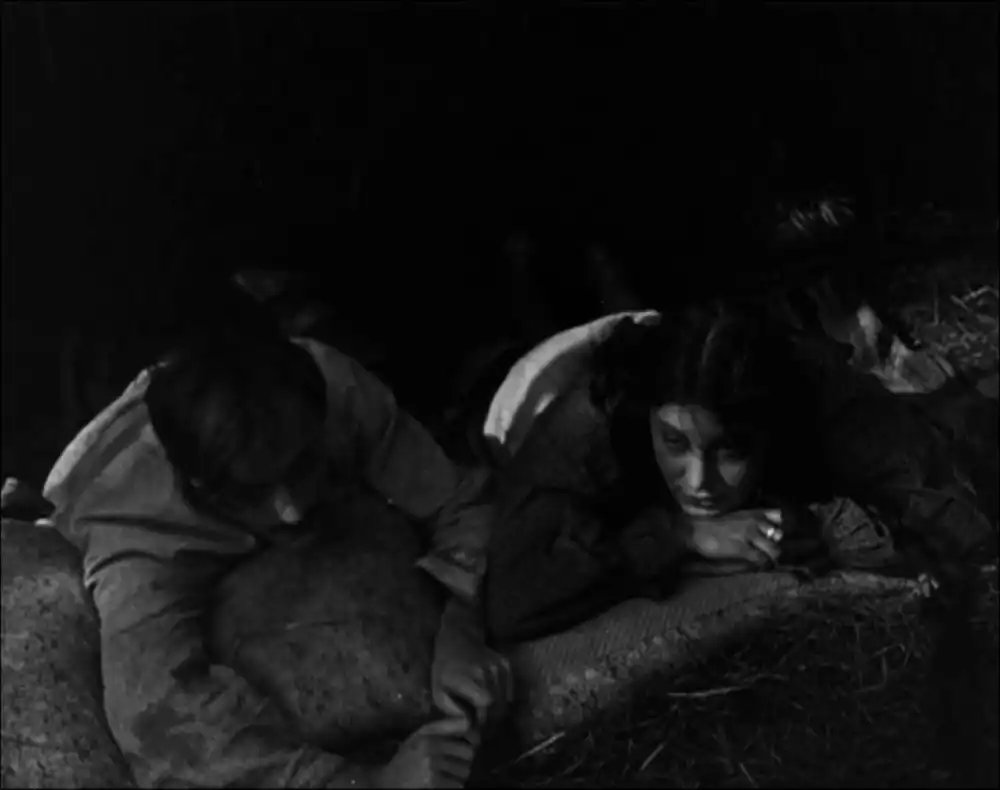
The first time you watch Halálítélet, you swear you can smell the rust of manacles. Cinematographer József Bécsy treats celluloid like damp parchment: every frame appears singed at the edges, as though the film itself is being executed alongside the protagonist. Lajos Réthey’s gaunt cheekbones become a topographical map of moral erosion; when he lifts his eyes toward the courtroom skylight, the camera tilts up to a fresco of cherubs that suddenly look like winged coroner’s reports.
There is no score on the surviving print—only the percussive clatter of the projector and the wheeze of your own breath. In that sonic vacuum, Mór Jókai’s adapted dialogue becomes a ghost: intertitles flicker like subpoenas written in candle soot. Compare this aural void to the sanctimonious organs that swell through Heroes of the Cross or the ecclesiastical choirs that gild Christus; here, silence is the real executioner, tightening its grip one sprocket-hole at a time.
Director Alfréd Deésy blocks scenes like a forensic reconstruction. When the aristocratic murderer—Eugen Jensen in frock-coat armor—saunters across the parquet of his palace, the camera retreats instead of advancing, as though repulsed by the stench of privilege. A cutaway to the servant quarters reveals Lisbeth Steckelberg’s wife folding her husband’s nightshirt into perfect squares; the symmetry of her gesture rhymes with the magistrate folding the death warrant. Domestic order and judicial order share the same origami of doom.
Watch the flicker of sea-blue (#0E7490) in the wife’s shawl when she bargains with the monk; the color is so anomalous in this universe of tallow and charcoal that it feels like a bruise on the negative. That hue resurfaces in the Danube’s nighttime waters when the monk drops the forged affidavit—paper sinking like a baptized soul. Déesy inverts the baptismal trope: immersion does not cleanse; it buries.
Scholars often bracket Halálítélet with Within Our Gates and The Gates of Eden as triumvirate of 1920 meditations on institutional cruelty. Yet while Micheaux indicts racial terror and Sjöström wrestles with Lutheran guilt, Deésy’s target is the Byzantine scaffolding of Austro-Hungarian bureaucracy: the quill pens that sign death faster than any blade.
Consider the montage of signatures: a extreme close-up of a quill scratching “Lajos Réthey” onto the verdict, followed by a match-cut to the same name carved into his wife’s mourning locket. The state and the souvenir become co-authors of identity. Semiotically, the film anticipates Guy Debord’s Society of the Spectacle by half a century: life reduced to document, flesh to annotation.
Mid-film, a bravura sequence inside the prison chapel stages a Pietà in chiaroscuro. Réthey collapses across the stone altar; moonlight stripes his torso like prison bars. The monk lifts the condemned’s hand—not to bless but to press ink-stained fingertips onto a petition for clemency. In this perverse communion, wine is replaced by indigo ink, sanctity by bureaucracy.
The gender politics sting. Steckelberg’s wife never gets a courtroom monologue; her rebellion is sartorial. She swaps widow’s weeds for a washerwoman’s apron, infiltrating the magistrate’s villa to pilfer the sealed dossier. When guards apprehend her, the camera lingers on her shredded hemline—fabric as testimony, body as evidence. Compare that quiet resistance to the flamboyant avenging angel in Red Powder; Deésy argues that under absolutist rule, the most radical act is to survive documentation.
Emil Fenyvessy’s hangman deserves an essay. With his baby-face and dimpled chin, he looks like a Viennese pastry chef; yet when he tests the noose’s knot, his tongue darts across his lips with erotic precision. The film refuses to grant him monstrosity—he’s merely another civil servant punching the clock. The horror lies in the bland efficiency, the same banality that Hannah Arendt would later dissect.
Restorationists at the Hungarian National Film Archive discovered tinting notes scrawled on the negative’s edge: the gallows scene was originally bathed in sulphur-yellow (#EAB308) stock, a hue that translates on orthochromatic film as sickly green. When the print was screened at Pordenone in 2019, that chromatic nausea rippled through the audience like a collective faint. We were not watching an execution; we were inhaling it.
Narrative ellipsis is weaponized. The actual murder occurs off-screen; we only glimpse the victim’s gloved hand dropping a monogrammed handkerchief into the Danube. That fragmentary image haunts subsequent frames: steam from a locomotive resembles the handkerchief’s unfolding linen; a blood-streaked bandage in the prison hospital rhymes with the embroidered initials. Jókai’s novel spills 400 pages of motive; Deésy’s film needs twelve feet of celluloid to indict an entire class.
Temporal instability permeates. The story unfolds across six days, yet calendar pages whip past like autumn leaves in a timelapse. Intertitles read “Eve of Judgment,” “Dawn of Confession,” “Midnight of Mercy,” but the city’s bells never strike the same hour twice. Time is not chronology; it is judiciary ritual, a liturgy of postponement that culminates in the ultimate punctuality: sunrise at the scaffold.
Film historians hunting for proto-noir signposts will salivate over the Venetian-blind shadows that stripe the magistrate’s chambers. Yet those shadows are cast not by slatted shutters but by the bars of the prison gatehouse visible through the window. Interior and exterior spaces bleed into each other, prefiguring the carceral cityscapes of Whispering Smith and even Lang’s M.
One cannot discuss Halálítélet without confronting its near-mythical lost ending. The surviving print ends on the scaffold’s trapdoor yawning open—freeze-frame mid-fall. Production stills unearthed in 1974 suggest Deésy shot an epilogue: the aristocrat confessor on his deathbed, a belated pardon scuttled across parquet by a contrite clerk, the widow kneeling in snowfall. Whether the footage was destroyed in the 1945 studio fire or censored by Horthy’s moral guardians remains academic. The truncated version indicts us more savagely: we are left suspended in moral freefall, denied catharsis.
The film’s afterlife rivals its plot. During the 1956 revolution, university students projected a bootleg dupe onto the façade of the Parliament building; the image of the gallows loomed above the Danube like a prophecy. In 1989, on the eve of democratic transition, the National Theatre reissued the film with a newly commissioned score by György Kurtág—twelve minutes of silence punctuated by pizzicato that sounds like tendons snapping. Critics dubbed it “the sound of justice choking.”
Compare that civic repurposing to the museum-piece reverence accorded to The Painted Soul or An Alabaster Box. Halálítélet refuses embalming; it rots, it festers, it is dragged into each new political crisis like a stubborn corpse that will not stay buried. That is the mark of art that matters.
Technically, the film sits at the crossroads of two technological epochs. Shot on orthochromatic stock that renders skies chalk-white and faces lunar, yet edited with proto-modernist jump-cuts that anticipate Soviet montage. The prison riot sequence intercuts six separate spatial axes—kitchen, chapel, courtyard, cellblock, magistrate’s corridor, and the Danube embankment—each cut timed to the rhythm of a metronome audible only on the conductor’s cue sheet. The result is a symphony of bureaucratic panic, a celluloid panic attack.
Performances calibrated to the threshold of melodrama. Réthey’s eyelid twitch transmits more anguish than any tear. Jensen’s villain never twirls mustache; instead he caresses the velvet collar of his coat as though stroking a pet that will one day bite him. Steckelberg’s mute scream—mouth open, no breath—during the reading of the sentence became the film’s signature still, reproduced on everything from anarchist pamphlets to coffee mugs in the gift shop of the House of Terror museum.
Let us dispense with nostalgia. Watching Halálítélet in 4K is akin to viewing an autopsy under surgical LEDs; every pockmark of the era’s inequality glares. The Roma extras cast as beggars, the Jewish moneylender caricature, the virgin-whore binary clamped onto Steckelberg—all testify to the blind spots of 1920 progressivism. Yet acknowledging those scars does not diminish the film’s howl against state violence; rather, it complicates our complicity as viewers who have inherited both the critique and its prejudices.
Ultimately, Halálítélet endures because it denies the fantasy of historical distance. The scaffold is not a relic; it is a template. Every time a modern democracy resurrects capital punishment, Deésy’s ghostly projector whirs again. The trapdoor creaks open, the rope tightens, and we—spectators in the dark—feel the floor vanish beneath our feet. The film does not ask whether the condemned man is innocent; it asks whether we are.

IMDb 5.6
1932
Community
Log in to comment.