DbcultAccessing Vault...
Cult Review
Senior Film Conservator
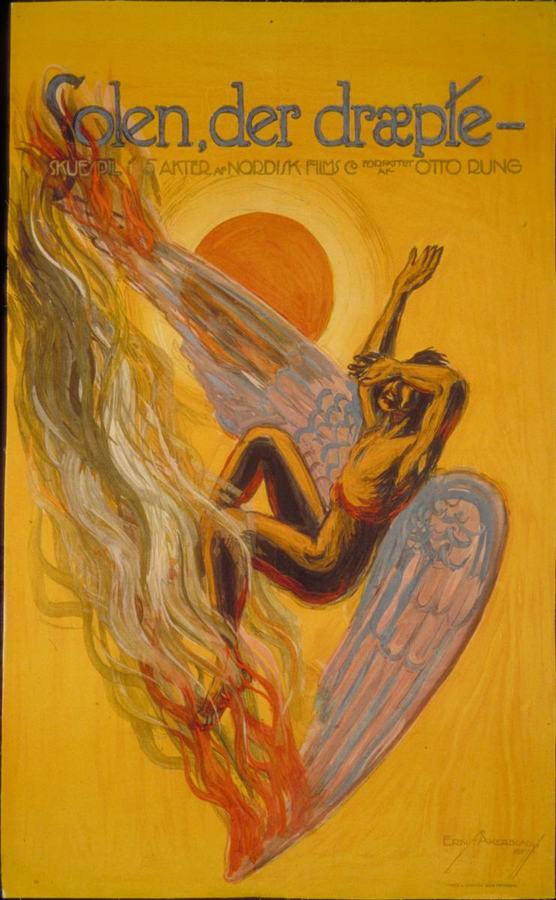
There are films that merely tell a story, and then there are those that etch themselves onto the very fabric of your being, resonating with a primeval truth that transcends the flicker of the projector. Otto Rung's 'Solen der dræbte' (The Sun That Killed) is unequivocally the latter. A profound exploration of human frailty, societal constraint, and the devastating power of unbridled emotion, this Danish silent film emerges from the archives not just as a historical artifact, but as a searingly relevant commentary on the eternal conflicts of the heart. It's a testament to the era's profound storytelling capabilities, proving that even without spoken dialogue, the human spirit's deepest anguish can be conveyed with breathtaking clarity.
The narrative unfurls in a remote, sun-baked fishing village, a place where the rhythm of life is dictated by the unforgiving sea and the relentless sky. Here, Elara, embodied with a haunting grace by Ingeborg Bruhn Bertelsen, is a woman caught between two worlds. Her betrothal to Lars (Ove Kühl), a fisherman whose stoic demeanor masks a fierce, protective love, represents the stability and tradition of her community. Kühl's performance is a masterclass in understated intensity, his eyes conveying volumes of unspoken devotion and simmering possessiveness. But into this tightly woven tapestry of duty and expectation strides Erik (Nils Asther), an artist whose arrival is as disruptive as a sudden storm. Asther, with his magnetic screen presence, imbues Erik with a charisma that is both alluring and dangerous, a catalyst for the emotional tempest that will soon engulf the village. His presence, initially a source of fascination and a breath of fresh air, quickly becomes a wedge, splitting the foundations of established order.
Rung, as both writer and director, masterfully uses the environment as a character in itself. The relentless summer drought that grips the village is not merely a plot device; it is a visceral manifestation of the spiritual and emotional aridity suffocating the protagonists. The parched earth, the cracked fishing boats baking under the infernal sun, the dwindling resources – all serve to amplify the internal struggles of Elara, Lars, and Erik. This environmental mirroring technique, while common in cinematic storytelling, is executed here with a stark, almost brutal elegance, reminiscent of the existential dread found in later works like The Long Trail, where the harshness of nature dictates human fate. The film's visual language, a hallmark of the silent era, speaks volumes through its carefully composed frames and the expressive performances of its cast.
The village elder, Mogens (Hans Dynesen), functions as the voice of traditional wisdom and communal apprehension. Dynesen's portrayal is nuanced, a figure burdened by foresight and the weight of collective memory, his warnings against Erik's disruptive influence echoing with an almost prophetic solemnity. His character grounds the film in a tangible reality, reminding us that individual desires often clash with the needs and superstitions of a close-knit, vulnerable community. This conflict between individual passion and societal expectation is a recurring motif in cinema, often explored with less subtlety than Rung achieves here. The gradual erosion of communal harmony, exacerbated by the artist's unintentional disruption, feels chillingly authentic.
The strength of 'Solen der dræbte' lies profoundly in the performances. Ingeborg Bruhn Bertelsen as Elara is simply captivating. Her face, a canvas for every conflicting emotion, conveys the agony of a woman torn between the safety of duty and the intoxicating pull of passion. There's a raw vulnerability to her portrayal that makes Elara's impossible predicament deeply empathetic. One can feel the weight of her choices, the silent screams of her heart. Ove Kühl's Lars is equally compelling; his descent from quiet strength to desperate, jealous rage is portrayed with a chilling authenticity. He is not a villain, but a man pushed to his breaking point by circumstance and the perceived threat to his world. His struggle to maintain his dignity and provide for his family in the face of dwindling resources and a romantic rival is palpable. Nils Asther's Erik, the outsider, brings a vibrant energy that, while initially refreshing, ultimately proves destructive. Asther's ability to convey charm alongside an unwitting capacity for chaos is remarkable, making Erik a complex figure rather than a simple antagonist. This trio forms a powerful dramatic core, each performance building upon the others to create a suffocating atmosphere of impending tragedy.
The interplay between these three characters is a masterclass in silent film acting. Their gestures, their glances, the subtle shifts in their posture—all contribute to a narrative richness that many modern films struggle to achieve even with dialogue. The film doesn't rely on grand, theatrical gestures, but on the quiet, internal turmoil that slowly boils over. This nuanced approach to character development, particularly for a film of its era, sets it apart. It understands that the greatest dramas often unfold in the silent spaces between words, in the unspoken desires and fears that govern human action.
The film's evocative title, 'The Sun That Killed,' is not merely descriptive of the drought, but deeply metaphorical. The sun, a source of life, here becomes an agent of destruction. It scorches the land, yes, but it also metaphorically burns away innocence, hope, and the illusion of a simple, predictable existence. It is the relentless glare under which all hidden desires and resentments are brought into agonizing clarity. This thematic depth is what elevates 'Solen der dræbte' beyond a simple melodrama. It delves into the psychological toll of environmental hardship intertwined with emotional turmoil, a theme that resonates with the stark realism found in films like The Eternal Grind, which similarly explores the crushing weight of societal pressures on individual lives.
Rung's direction is precise and unflinching. He doesn't shy away from depicting the raw, often ugly, aspects of human nature under duress. The cinematography, while constrained by the technology of the time, is remarkably effective in conveying the oppressive heat and the vast, isolating landscape. The use of natural light and shadow plays a crucial role in enhancing the mood, creating a sense of foreboding that permeates every frame. The visual storytelling is so strong that even without intertitles, much of the emotional narrative would still be clear, a testament to the director's skill and the actors' powerful expressions.
While 'Solen der dræbte' might not be as widely known as some of its contemporaries, its thematic richness and stylistic prowess place it firmly within the canon of significant silent films. Its exploration of love triangles under extreme pressure can draw parallels to films like Married in Name Only, though Rung's approach here feels more grounded in stark realism than pure romantic drama. The film's ability to convey profound psychological states without dialogue also brings to mind the expressive power seen in German Expressionist cinema, albeit with a more naturalistic Danish sensibility. It's a film that demands close attention, rewarding the viewer with layers of meaning and emotional depth.
The tragic climax, whether it be a devastating fishing accident, a village fire, or a violent confrontation born of desperation, serves as the ultimate expression of the 'sun that killed.' It's a moment that irrevocably shatters the lives of the protagonists and leaves an indelible scar on the community, symbolizing the death of innocence and hope. The film doesn't offer easy answers or neat resolutions; instead, it presents a stark, almost Greek tragedy where fate, human folly, and environmental forces conspire to bring about an inevitable downfall. This unflinching portrayal of human suffering and the consequences of unchecked passion makes it a powerful and enduring work.
Looking back, 'Solen der dræbte' stands as a powerful example of Danish cinema's early contributions to global storytelling. It's a film that, despite its age, feels remarkably modern in its psychological depth and its refusal to simplify complex human emotions. It reminds us that the fundamental struggles of love, loss, jealousy, and duty are timeless, transcending cultural and technological divides. The film's exploration of a community's struggle against nature and within itself echoes themes found in other silent era dramas that focused on the harsh realities of life, such as The Land Just Over Yonder, which similarly depicted the challenges faced by people in unforgiving environments. It’s a stark reminder that sometimes, the greatest threats come not from external villains, but from within ourselves and the circumstances that test our very humanity.
The film's impact lies not just in its narrative, but in its ability to evoke a profound sense of melancholy and contemplation. It leaves the viewer with a lingering sense of the fragility of human happiness and the overwhelming power of forces beyond our control. It’s a film that, once seen, is not easily forgotten. It compels you to ponder the choices made, the passions ignited, and the inevitable consequences that follow when human hearts are set ablaze under the relentless 'sun that killed.' For those who appreciate the artistry and emotional depth of early cinema, 'Solen der dræbte' is an essential viewing, a forgotten gem that deserves to be rediscovered and celebrated for its timeless power and profound human insight.
In an era where cinematic spectacle often overshadows genuine emotional resonance, 'Solen der dræbte' serves as a poignant reminder of the enduring power of storytelling through raw, unvarnished human experience. It’s a film that speaks directly to the soul, bypassing the need for words and instead communicating through the universal language of emotion. The performances, particularly from Bertelsen, Kühl, and Asther, are a masterclass in conveying complex inner worlds without uttering a single syllable, making the film a compelling study of the human condition. One might even draw a thematic line to the psychological complexities explored in A Study in Scarlet, where human motivations are meticulously dissected, though in 'Solen der dræbte,' the dissection is far more visceral and less intellectual, driven by primal forces.
Ultimately, Otto Rung's 'Solen der dræbte' is more than just a silent film; it is a profound artistic statement about the human spirit's resilience and its susceptibility to the forces of nature and passion. It's a cinematic poem, a tragic ballad sung without words, leaving an indelible mark on the viewer long after the final frame fades to black. Its rediscovered brilliance offers a unique opportunity to appreciate the nuanced artistry of a bygone era, proving that great storytelling, like the sun itself, can endure through time, burning brightly with a message that remains eternally relevant.

IMDb —
1919
Community
Log in to comment.