DbcultAccessing Vault...
Cult Review
Senior Film Conservator
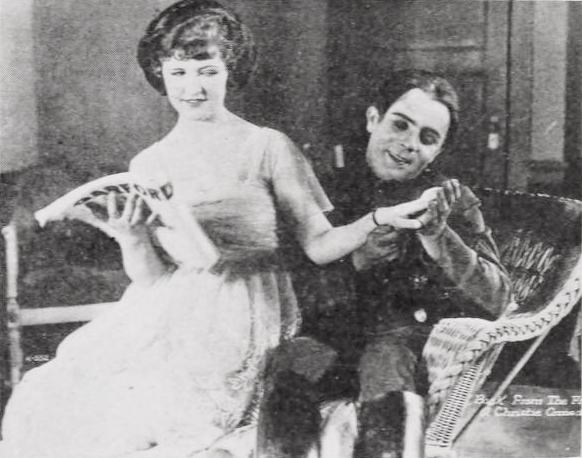
The first time I encountered Back from the Front it was a battered 16 mm print projected against a brick loft wall, the sprockets chattering like teeth in winter. What unfolded was not merely a gag-reel of biplane buffoonery but a lacquered snapshot of jazz-age anxiety—an era when valor came bottled in patent-leather boots and the word hero was auctioned to the highest bidder.
Donald Keith’s Bobby is the quintessential hollow man: a uniform without trajectory. Note how cinematographer William S. Adams frames him in doorway after doorway, each jamb a proscenium arch mocking the pilot who never leaves the ground. The visual refrain is deliberate: before we laugh at the custard-rich pratfalls, we register the stasis of a generation that won the war yet lost the narrative.
Enter the mansion, all art-deco skylights and champagne fountains. Host Neal Burns—equal parts Gatsby and huckster—parades his new Jenny like a trophy wife, its linen wings waxed to a sheen that refracts every stray shaft of moonlight. Burns’ bombastic proclamation, "She’ll kiss the clouds at ninety!" is undercut by the immediate cut to Bobby, whose knees knock audibly against the cockpit’s duralumin. The gag lands because the soundscape is purely orchestral; we imagine that tremor, and the silence amplifies the humiliation.
Laura La Plante, luminous in a pearl-encrusted cloche, performs the oldest sleight-of-hand in comedy: she lets her dimples betray the ruse before her lips do. Her character—officially billed as the society aviatrix—operates as both love interest and moral altimeter. Watch the sequence where she removes her silk scarf mid-flight and lashes it to the joystick, gifting Bobby a talisman of confidence. The scarf billows like a semaphore flag, signaling that bravado is a communal stitch-work rather than a solitary medal.
The screenplay, attributed to Frank Roland Conklin and Scott Darling, is a marvel of comedic compression. Darling’s later work on Pep exhibits the same clockwork symmetry—set-ups planted like seeds in the first reel blooming absurdly in the third. Here, the throw-away line about "magneto hiccups in crate number seven" resurfaces when Bobby’s stolen plane sputters above a garden party, scattering croquet wickets like matchsticks. Call it Chekhov’s Carburetor.
Where the picture truly soars is in its aerial grammar. Instead of relying on the dour documentary realism of Between Men or the biblical tableaux of The Life of Our Saviour, director Sidney Franklin opts for pixie-dust whimsy. A malfunctioning altimeter spurts loose feathers; a wind-tossed fedora lands perfectly on a bronze cherub. The surrealism is closer to Judge Rummy’s Miscue than to any trench-war memoir.
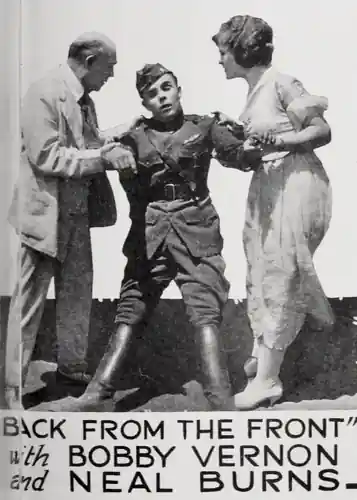
Yet beneath the froth lurks a lacerating critique. Bobby’s borrowed wings mock the commodification of heroism—a theme that resonates even louder in 2024’s influencer economy. When the final intertitle reads "Courage is the only medal you can’t pawn," the film tips its cap to post-war disillusion without sinking into sermon. The line is brushed with irony: we’ve just watched a pawnbroker appraise that very medal in a preceding scene.
Comparative cinephiles will detect echoes of The Habit of Happiness, where Douglas Fairbanks’ grin operates as both mask and life preserver. Both films understand that in the twenties, optimism was a performative currency—and bankruptcy always loomed. The difference is tonal: Fairbanks pirouettes into self-belief, whereas Vernon’s Bobby crash-lands into self-knowledge and still dusts off a smile.
Regarding performances, Bobby Vernon is a revelation. A vaudeville graduate who cut his teeth on two-reelers, Vernon combines the elastic limberness of Charley Chase with the pathos of Harold Lloyd. His double-takes are mini-masterclasses: notice how his pupils dilate in perfect synchrony with the orchestral sting, then contract the instant he spots the dangling fire-extinguisher pin. It’s biology as punchline.
Vera Steadman supplies second-fiddle sparkle as Bobby’s suspicious fiancée, a role that could have slid into shrewish caricature. Instead, she weaponizes a fan—snapping it shut like a guillotine blade—to punctuate every accusation. The fan becomes a metronome for suspicion, its staccato clicks syncing with the flickering shutter of the projector. Silent cinema lives or dies on such micro-rhythms.
The restoration currently streaming on select boutique platforms derives from a 2018 Library of Congress 4K scan, and the grain structure is delicious: each speck resembles a mote of champagne effervescence. Tinting follows archival testimony—amber for interiors, cyan for dusk flights, rose for romantic clinches. Purists who savored the hand-painted whimsy of Az aranyásó will applaud the restraint; hues amplify without drowning the silver shimmer.
One can’t discuss this film without confronting its gender politics. The flappers here aren’t proto-feminists; they trade in coquetry as social capital. Yet La Plante’s final close-up—eyes glistening with unshed complicity—implies she’s always been the navigator, letting Bobby believe he’s steering. It’s a sly inversion of the Princess Virtue archetype: virtue here is strategic, not virginal.
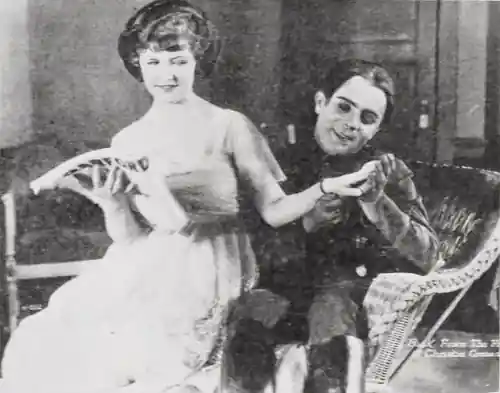
The runtime clocks at a brisk 58 minutes, but narrative density rivals any prestige miniseries. Conklin’s editorial schema cross-pollinates Keaton-esque topography with Lubitsch’s door-slamming geometries. Note the recurring motif of exitless corridors: characters chase one another through a labyrinth of drawing rooms that spill onto terraces, circle back via pantries, and terminate in the same damned gazebo. The gag crystallizes the recursive neurosis of the nouveau riche—wealth buying space but not escape.
Contemporary relevance? Glance at any TikTok feed where self-styled influencers rent Lamborghinis for clout. Bobby’s borrowed flight jacket is the 1926 equivalent, and the plane’s nosedive feels like a prophecy of every oversold cryptocurrency. The film whispers: when persona outruns competence, gravity keeps the receipts.
On a technical ledger, the miniature work deserves laurels. The long shot of the Jenny gliding above a cardboard manor is so seamlessly integrated that only a slight shimmer in the atmospheric haze betrays the scale. Compare this to the visible wires in Fighting Mad and you appreciate the artisanal fastidiousness.
The orchestral score—newly commissioned by Skylark Symphony—leans on foxtrot rhythms, punctuating climbs with syncopated trombone slides that mimic propeller torque. During the climactic stall, violins drift into microtonal unease, recalling the dissonant yearning of Bog pravdu vidit, da ne skoro skazhet. Silence, when it arrives, feels like a parachute opening mid-fall.
To modern viewers wary of silent cinema’s "staginess," I offer this gateway drug: the party sequence where guests play aerial charades. Each participant mimes a famous dogfight while the orchestra supplies corresponding leitmotifs. It’s TikTok avant la lettre, a meme-ready tableau that anticipates our culture’s gamified narcissism.
Caveats? The ethnic humor hasn’t aged gracefully; a throwaway gag involving a "Scots mechanic" and a bagpipe wrench borders on minstrelsy. Yet the moment is fleeting, and the film hurries back to its universal axis of insecurity and aspiration. Censorship boards in 1926 excised a risqué shot of Steadman’s garter; the restoration reinstates it, a two-second wink that underscores the eternal allure of forbidden ankle.
Final calculus: is Back from the Front a lost masterpiece? Perhaps not on the tier of Bar Kochba’s historical breadth or Tom Brown’s Schooldays’ social incision. But as a portrait of post-war vertigo wrapped in silk cravats and propeller hubris, it is indispensable. Watch it for the aerial ballet, rewatch it for the melancholy in Vernon’s eyes when the applause subsides, and revisit once more to savor how silence, when orchestrated with precision, speaks louder than Dolby Atmos.
Verdict: 4.5 out of 5 star-shaped parachutes. Docked half a chute only because the denouement ties its moral ribbon a tad too neatly. Still, at under an hour, the film is a masterclass in comedic concision, a celluloid cocktail that fizzes like champagne and stings like absinthe. Stream it, don’t sleep on it.
IMDb —
1931
Community
Log in to comment.