DbcultAccessing Vault...
6.1/10
Senior Film Conservator
A definitive 6.1/10 rating for a film that redefined the boundaries of cult cinema. The Honorable Mr. Buggs remains a cornerstone of transgressive art.
Short answer: Yes, but strictly for those who appreciate the architectural bones of early Hollywood comedy. This is not a film for the casual viewer who demands modern logic or high-definition pacing.
The Honorable Mr. Buggs is for the cinematic archaeologist and the fan of early physical comedy. It is absolutely not for anyone who finds the 'snooping relative' trope irritating or silent-era overacting to be a barrier to enjoyment.
1) This film works because it perfectly captures the friction between the rigid world of a scientific pedant and the fluid, dangerous world of a high-stakes thief.
2) This film fails because it leans too heavily on the 'suspicious aunt' archetype, which feels recycled even by 1927 standards.
3) You should watch it if you want to see the DNA of Stan Laurel’s writing logic applied to a cast featuring a pre-superstar Oliver Hardy and the incomparable Anna May Wong.
Yes, The Honorable Mr. Buggs remains worth watching today because it serves as a masterclass in silent-era ensemble timing. While the plot is simple, the execution by a cast of comedy veterans makes it a vital piece of film history. It offers a rare look at performers like Anna May Wong in a comedic context that differs from her later, more dramatic roles.
To understand The Honorable Mr. Buggs, one must understand the specific brand of chaos that defined late-1920s short films. Unlike the more atmospheric suspense found in Number 17, this film is built on the foundation of the 'interrupted domestic space.' The study of Dr. Buggs is not just a setting; it is a character. It represents order, which the Baroness must systematically dismantle to hide her crime.
Tyler Brooke plays Buggs with a nervous, twitchy energy that feels authentic to a man who spends more time with beetles than people. When the Baroness Stoloff enters, the chemistry is intentionally off-balance. She is predatory; he is oblivious. This power dynamic is the engine of the first act. It works. But it’s flawed because the film rushes the initial interaction to get to the 'wild scramble' promised by the genre.

Compare this to The Gasoline Trail, where the momentum is purely physical. In Buggs, the momentum is social. The threat isn't just the police; it’s the judgment of the aunt and the loss of the fiancée. The stakes are small, but the film treats them with the gravity of a Shakespearean tragedy, which is where the humor lives.
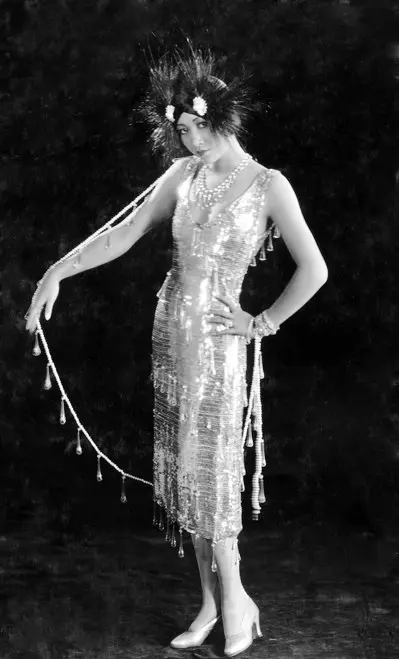
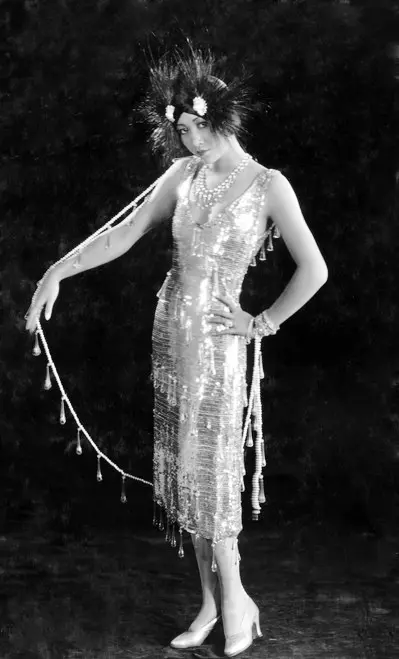
The inclusion of Anna May Wong is the film’s secret weapon. Even in a short comedy, she brings a level of sophistication that elevates the material. Her Baroness isn't just a caricature of a thief; she is a woman playing a role within a role. Watching her interact with the frantic Tyler Brooke provides a sharp contrast in acting styles—the grounded versus the theatrical.
Then there is Oliver Hardy. While he isn't the lead, his presence is a gravitational pull. You can see the refinement of his 'slow burn' technique here. It is less polished than his later work with Laurel, but the seeds of his comedic genius are evident. He doesn't need to fall over a chair to be funny; he just needs to react to the chaos around him.
The 'snooping aunt' played by Laura La Varnie is perhaps the most divisive element. Her performance is loud and aggressive. In a modern context, she is the villain of the piece, an intrusive force that nearly ruins a man's life over a misunderstanding. However, within the 1920s framework, she is the moral compass. It’s a jarring shift for a modern audience.
Alfred J. Goulding directs with a clear understanding of space. The study is shot to emphasize the clutter. When the 'wild scramble' begins, the camera remains static, allowing the actors to move through the frame like pinballs. This is a lost art. Modern directors would cut every two seconds; Goulding trusts the choreography.
The lighting is standard for the era—flat and functional—but it serves the purpose of ensuring every facial expression is visible. In silent comedy, the face is the dialogue. If you miss a squint or a raised eyebrow, you miss the joke. The film succeeds here where others like The Last Egyptian sometimes struggled with visual clarity in chaotic scenes.
Pros:
Historical Value: Seeing this specific cast together is a rare treat.
Tight Writing: With Stan Laurel involved in the writing, the gags have a logical progression.
Pacing: Once the 'scramble' starts, the film doesn't let up.
Cons:
Repetitive Tropes: The jealous fiancée and the snooping aunt are clichés that haven't aged well.
Limited Scope: The film stays largely confined to one location, which can feel claustrophobic.
It is impossible to watch The Honorable Mr. Buggs without looking for the fingerprints of Stan Laurel. While he didn't direct, his contribution to the script is palpable. There is a specific rhythm to the gags—a setup, a diversion, and then a payoff that usually involves a physical consequence. This is the same logic that would later define films like A Regular Fellow.
One specific scene involves Buggs trying to hide the Baroness while simultaneously appearing 'honorable' to his fiancée. The way he uses the physical space—hiding behind doors, moving specimen jars—is pure Laurel. It is a dance of desperation. It’s also brutally simple. A man, a secret, and a small room. That is all you need for comedy.
The Honorable Mr. Buggs is a fascinating relic. It isn't a masterpiece of high art, but it is a masterclass in functional, high-energy entertainment. It captures a moment in time when Hollywood was transitioning, when the stars of the next decade were still finding their footing in short-form farces. The film is clunky in its gender politics and its reliance on the 'nagging woman' archetype, but it redeems itself through sheer kinetic energy and the charisma of its cast.
If you are looking for a deep emotional experience, look elsewhere—perhaps toward Bristede Strenge. But if you want to see how a stolen ruby and a rare bug can turn a quiet life into a beautiful disaster, this is twenty minutes well spent. It’s loud, it’s messy, and it’s undeniably human. It works because it doesn't try to be anything other than a wild scramble.
IMDb —
1925
Community
Log in to comment.