DbcultAccessing Vault...
Cult Review
Senior Film Conservator
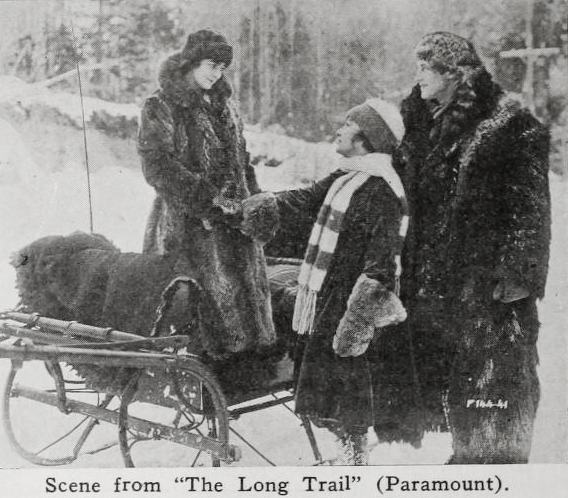
Ah, the silent era! A time when narratives unfolded not through the cacophony of spoken dialogue, but through the eloquent dance of gesture, the piercing gaze of an actor, and the carefully crafted intertitle. It was an epoch of grand emotions, distilled to their purest visual essence, and few films capture that essence quite like The Long Trail. Released in an era brimming with cinematic experimentation, this picture, penned by the insightful Eve Unsell, stands as a testament to the enduring power of a well-told story, even when voiced only by a piano and the rustle of an eager audience. It's a film that invites us to ponder the very foundations of honor, the slow, arduous path to genuine affection, and the profound weight of past grievances.
Our narrative unfurls amidst the stark, breathtaking beauty of a snow-mantled wilderness, a setting that is as much a character as any human player. Here, we meet Andre Dubois, portrayed with a compelling blend of stoicism and underlying vulnerability by Lou Tellegen. Dubois is a trapper, a man forged by the solitude and harsh realities of mountain life. His existence is one of quiet self-reliance, a testament to the untamed spirit of the wild. It is into this meticulously ordered, if isolated, world that Louise Graham, played with a captivating innocence by Mary Fuller, stumbles. A young woman from the bustling city, Louise finds herself utterly at the mercy of a ferocious blizzard, a force of nature as unforgiving as any societal judgment. Andre, embodying the innate decency of a man untainted by urban cynicism, offers her shelter in his humble cabin, an act of pure, unadulterated human kindness.
However, the ripples of this seemingly innocuous act extend far beyond the confines of Andre's mountain abode. In a society rigidly bound by convention, Louise's overnight stay, despite its utter purity, is misinterpreted, scandalized. Her fiancé, a man whose love proves as ephemeral as a snowflake, forsakes her, leaving her reputation in tatters and her spirit bruised. It is here that The Long Trail truly begins to carve its unique path. Andre Dubois, a man whose moral compass points unerringly north, steps forward. Not out of romantic love, but from an unshakeable sense of honor and responsibility, he insists upon marrying Louise. His proposal is a shield, a promise of protection, a commitment to restore her dignity in a world too quick to condemn. This initial arrangement, a marriage of circumstance rather than affection, sets the stage for a compelling exploration of how love, true and profound, can blossom from the most unexpected soil.
The dynamic between Andre and Louise in these early stages is a masterclass in unspoken communication. Fuller's portrayal of Louise is particularly poignant; her gratitude is palpable, tinged with a quiet despair over her plight, yet gradually yielding to a dawning respect for her unconventional husband. Tellegen, as Andre, conveys a profound sense of duty, his protective instincts overriding any personal desire. Their shared existence in the remote cabin is a crucible, slowly forging a bond built on trust and mutual regard. It's a testament to the power of silent cinema that such complex emotional shifts are conveyed with such clarity, relying on subtle facial expressions, body language, and the evocative framing of the shots.
Just as their nascent, fragile understanding begins to solidify, a disruptive force shatters their carefully constructed peace: Paul, Louise's profligate brother, makes an unwelcome appearance. Played by an actor (the film's cast list is long, but it's the character's impact that matters most here) with an air of desperation and moral decay, Paul arrives as a fugitive, fleeing a murder charge. This is where the narrative’s tension ratchets up considerably, delving into the darker recesses of human nature and the inescapable grip of the past. Andre, with a chilling recognition, identifies Paul as the very man responsible for the betrayal and ruin of his beloved sister, Mitchette. A lifetime of simmering vengeance, a sworn oath to retribution, suddenly confronts Andre. This is a moment of profound moral reckoning, a stark intersection of his personal quest for justice and his newfound commitment to Louise.
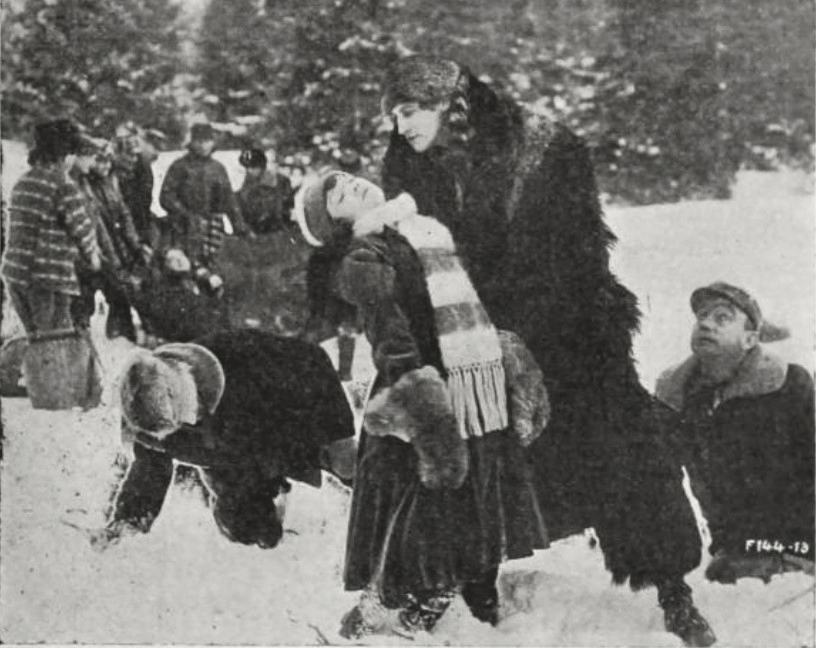
The dilemma Andre faces is agonizing. On one hand, the primal urge for vengeance, a long-held promise to himself and to his wronged sister. On the other, the unspoken, yet increasingly powerful, bond with Louise, whose happiness and security are inextricably linked to her brother's fate. In a breathtaking display of self-sacrifice, Andre makes the extraordinary decision to renounce his pledge. He allows Paul to escape, choosing the sanctity of his marital vow and Louise’s peace of mind over his own deeply ingrained desire for retribution. This pivotal moment is the true heart of The Long Trail.
Louise, witnessing this profound act of selflessness, this renunciation of personal justice for her sake, experiences a transformative shift. The spark of gratitude, which had been gently smoldering, ignites into something far more potent: a genuine, burgeoning love. It's a powerful depiction of how true affection can arise not from initial attraction or societal expectation, but from witnessing profound character, unwavering integrity, and selfless devotion. Her journey from a victim of circumstance to a woman deeply in love with her protector is depicted with a sensitive progression that avoids melodrama, opting instead for a quiet, heartfelt sincerity. This emotional arc makes the film resonate deeply, exploring the idea that love, in its purest form, is often earned through actions rather than words, through sacrifice rather than pursuit.
Eve Unsell's screenplay for The Long Trail is a masterclass in character-driven drama. Her ability to craft a narrative where the internal struggles of the protagonists are as compelling as any external conflict is truly remarkable. The themes explored—honor, sacrifice, redemption, and the slow, arduous blossoming of love—are universal, transcending the specific period in which the film was made. The wilderness setting, often used in films of this era as a backdrop for adventure, here serves as a metaphor for the raw, untamed emotions that both bind and challenge the characters. The isolation forces introspection, stripping away societal pretenses and revealing the core of who these individuals truly are.
Comparing The Long Trail to other films of its time illuminates its unique strengths. While films like Love Everlasting might explore the grand, sweeping romance of the era, The Long Trail offers a more nuanced, slow-burn depiction of affection, born from duty and respect. The moral quandary faced by Andre, where personal vengeance clashes with a higher sense of responsibility, echoes the difficult choices presented in dramas such as The Man Who Came Back, where characters grapple with their pasts and seek redemption. The societal judgment Louise faces for her innocent act, a theme not uncommon in early cinema, is handled here with a particular poignancy, highlighting the often-harsh realities faced by women in that period, much like some of the social commentaries subtly woven into films like My Official Wife. The film's examination of the consequences of reckless behavior, personified by Paul, finds parallels in cautionary tales like The Devil at His Elbow, though The Long Trail couches its moral lessons within a more intimate, character-focused narrative.
The direction, though uncredited in some records for the era, skillfully guides the audience through the emotional landscape. The use of natural light and the vast, imposing wilderness serves to underscore the characters' isolation and the magnitude of their internal struggles. Close-ups are employed effectively to capture the subtle shifts in emotion on the actors' faces, a crucial element in silent film storytelling. Mary Fuller, in particular, delivers a performance that transcends the limitations of the medium, conveying a wide spectrum of emotions—fear, gratitude, despair, and ultimately, love—with remarkable clarity. Lou Tellegen's Andre is a study in quiet strength, his presence commanding even in moments of profound internal conflict. The supporting cast, including Sidney Bracey and Winifred Allen, contribute to the film's rich tapestry, each playing their part in advancing the intricate plot.
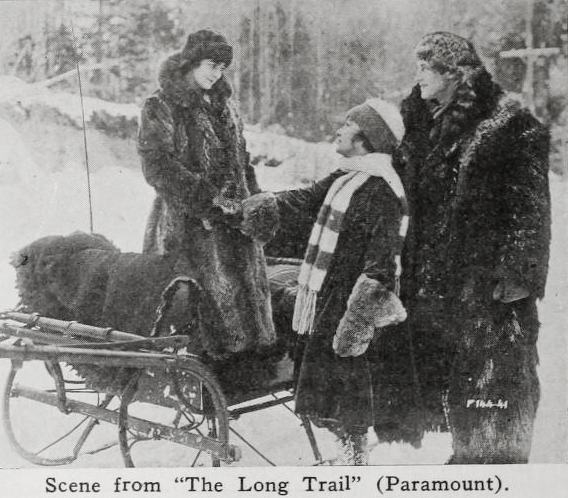
The film's enduring appeal lies in its timeless exploration of human relationships and moral fortitude. It reminds us that love isn't always a sudden, explosive force, but can often be a slow, steady burn, kindled by respect, nurtured by sacrifice, and solidified by shared adversity. The resolution, where gratitude blossoms into genuine affection, feels earned, a testament to the patient unfolding of the narrative. It’s a beautifully understated romance, far removed from the more overtly dramatic declarations seen in some contemporary films. The choice Andre makes, to forgo personal vengeance for the sake of another's happiness, is a powerful statement on the nature of true love and selflessness. It demonstrates a maturity in storytelling that distinguishes it from many of its peers, focusing on the internal landscape of its characters with a rare depth.
In an era that often favored spectacle, The Long Trail shines through its quiet intensity and profound emotional resonance. It’s a film that asks us to consider what it truly means to be honorable, to forgive, and to love without expectation. For those who appreciate the artistry and narrative depth of early cinema, this is an essential viewing experience. It’s a journey through the rugged terrain of both a snow-covered mountain and the human heart, a trail well worth traversing. The legacy of films like this, which prioritize character and theme over bombast, is crucial to understanding the foundational elements of cinematic storytelling. It reminds us that even without spoken words, the most profound human experiences can be communicated with clarity and enduring power. The film's understated elegance and rich emotional core leave a lasting impression, proving that some stories, much like the long trail itself, endure through the ages, continuing to captivate and inspire audiences with their timeless truths.
The character development, particularly for Louise, is handled with a delicate touch. Her initial vulnerability and dependence gradually give way to a quiet strength and an active embrace of her evolving feelings. This transformation is subtle, relying on Fuller's expressive acting rather than overt plot devices. Andre, too, undergoes a significant internal journey, moving from a man driven by a singular purpose (vengeance) to one whose moral compass is recalibrated by love and compassion. This shift is not a sudden epiphany but a gradual, believable progression that underscores the film's commitment to psychological realism, a rare feat for its time. The conflict presented by Paul's arrival is not merely an external threat but a catalyst for profound internal growth in both protagonists, forcing them to confront their deepest desires and moral codes. This layered approach to character and conflict elevates The Long Trail beyond a simple melodrama, positioning it as a sophisticated exploration of human nature.
The choice of the remote, snow-bound setting further amplifies the film's thematic depth. The isolation strips away external distractions, forcing the characters to confront themselves and each other without the interference of societal norms or urban complexities. The harsh environment mirrors the emotional trials they endure, suggesting that true strength and affection are forged in adversity. This use of setting as a symbolic element is a hallmark of effective storytelling, and Eve Unsell masterfully integrates it into the narrative. The 'long trail' itself becomes a metaphor for the arduous journey of the heart, a path fraught with challenges but ultimately leading to a destination of profound connection. It’s a powerful testament to the idea that some paths, though difficult, are the most rewarding. The film's ability to weave together these elements—character, plot, and setting—into a cohesive and emotionally resonant whole is what cements its place as a significant work from the silent era.
Ultimately, The Long Trail is more than just a historical curiosity; it is a vibrant piece of cinematic art that continues to speak to contemporary audiences. Its exploration of themes like duty versus desire, the slow unfolding of genuine affection, and the redemptive power of self-sacrifice are timeless. It reminds us of the profound impact silent films had on developing narrative techniques and emotional storytelling. The film stands as a beautiful example of how, even without spoken dialogue, cinema can convey the deepest human experiences with eloquence and power, leaving an indelible mark on the viewer's heart and mind. It invites us to slow down, to observe, and to truly feel the story unfold, a rare and precious experience in today's fast-paced world.
IMDb —
1926
Community
Log in to comment.