DbcultAccessing Vault...
Cult Review
Senior Film Conservator
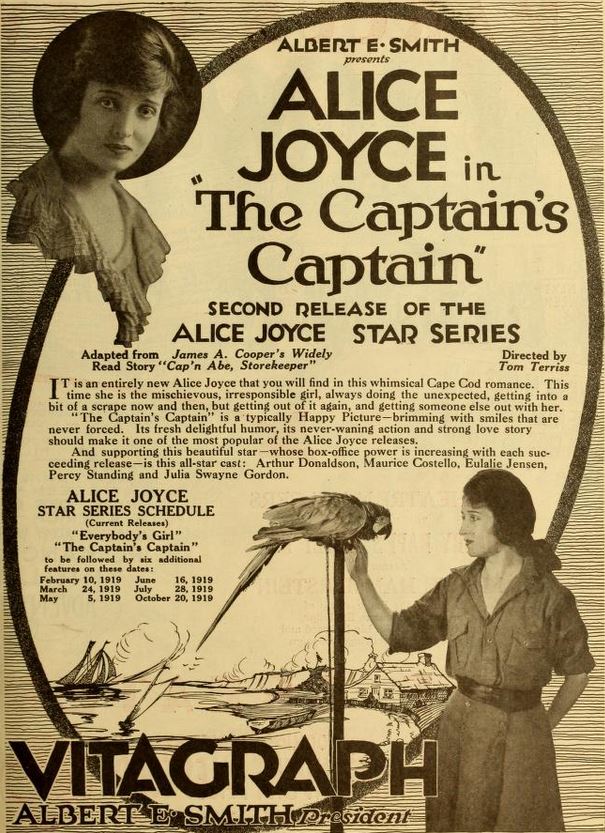
The year 1919 served as a pivotal threshold for American cinema, a period where the primitive visual language of the previous decade began to coalesce into sophisticated narrative structures. In this landscape, The Captain’s Captain emerges not merely as a whimsical comedy of errors but as a profound exploration of the performative nature of masculinity and the liberating power of artifice. Directed by the seasoned Tom Terriss, the film navigates the treacherous waters of Cape Cod’s social hierarchy with a precision that mirrors the psychological depth found in Ruggles of Red Gap, particularly in its depiction of a man struggling to transcend his perceived social station.
Maurice Costello, an actor whose gravitas often anchored early Vitagraph productions, delivers a performance of remarkable duality. As Captain Abe, he embodies the archetype of the 'henpecked' man—a trope frequently explored in silent cinema to highlight the shifting dynamics of domestic power. Abe’s store is not a place of commerce but a theater of humiliation, where the villagers’ derision acts as a constant, grinding friction. The invention of 'Amzon' is a brilliant narrative device; it is a manifestation of Abe’s suppressed id, a repository for all the courage and ferocity he lacks in his waking life. Unlike the protagonist in The Pinch Hitter, who finds redemption through athletic prowess, Abe seeks it through the creation of a myth.
When Louise Grayling (played with a vivacious, modern energy by Alice Joyce) enters the frame, she acts as the catalyst for the film's structural shift. Louise is not the passive heroine common to the era; she is the director of the drama within the drama. Her decision to force Abe into the role of Amzon is a fascinating subversion of Victorian morality. She recognizes that in a world that respects only strength, a convincing lie is often more potent than a pathetic truth. This thematic thread resonates with the character-driven nuances of The Eyes of Julia Deep, where female agency is the primary engine of the plot’s resolution.
Tom Terriss utilizes the Cape Cod setting with an atmospheric intensity that borders on the gothic. The cinematography captures the isolation of the coast, transforming the shoreline into a liminal space where identities can be shed and donned like oilskins. The arrival of the shipwrecked East Indians introduces a jarring element of the 'exotic'—a common, albeit problematic, trope of the period. However, within the context of the film, these characters serve as the physical manifestation of Abe’s lies coming home to roost. The irony is palpable: Abe has invented a pirate to escape his mundane reality, only to be confronted by a reality that believes in pirates far more fervently than he does.
The tension between the 'domestic' and the 'foreign' mirrors the anxieties of post-WWI America, where the world was suddenly perceived as a much smaller, more dangerous place. This sense of impending catastrophe is handled with a lighter touch than in contemporary dramas like Darkest Russia, yet the underlying fear of the 'Other' remains a potent driving force for the third-act conflict. The villagers, quick to believe the worst of the 'Amzon' persona, reflect a collective fragility that Terriss critiques with subtle, stinging wit.
The resolution of The Captain’s Captain hinges on a classic silent-era trope: the wealthy man in humble clothing. This narrative choice serves two purposes. First, it provides a 'deus ex machina' to save Louise from the literal and metaphorical storm of the villagers' wrath. Second, it reinforces the film’s central theme that appearances are inherently deceptive. The 'fisherman' who is actually a millionaire is the perfect foil to the 'shopkeeper' who is actually a 'pirate.' Both are performing a role, but while the millionaire’s performance is a choice born of privilege, Abe’s is a desperate bid for survival.
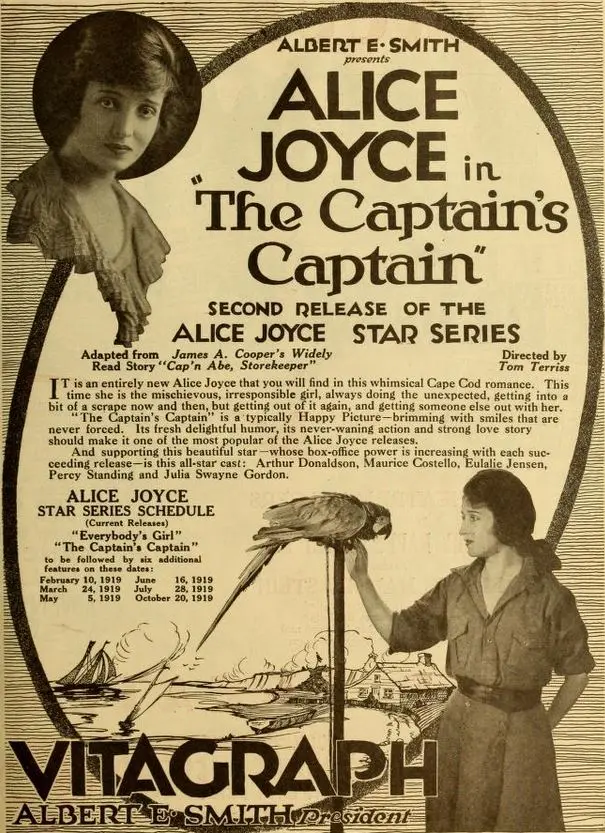
This preoccupation with class and identity is a recurring motif in the works of writers Tom Terriss and A. Van Buren Powell. We see similar explorations of societal expectations in Mrs. Plum's Pudding, though The Captain’s Captain possesses a more rugged, elemental texture. The final transformation of Abe—not back into his old, weak self, but into a man who has integrated the strength of his alter ego—is a satisfying psychological arc that predates the more complex character studies of the 1920s.
Comparing this film to European contemporaries like Lebenswogen or the Swedish Dockan eller Glödande kärlek, one notes a distinctly American optimism. Despite the threat of mob violence and the specter of international incident, the film maintains a rhythmic levity. The pacing is impeccable, avoiding the sluggishness that occasionally plagued long-form silent narratives like Sixty Years a Queen. Instead, Terriss keeps the viewer anchored in the escalating absurdity of Abe’s predicament.
The supporting cast, including Eulalie Jensen and Arthur Donaldson, provides a sturdy foundation for Costello and Joyce to shine. Jensen, in particular, portrays the overbearing housekeeper with a comedic severity that makes Abe’s initial plight feel genuinely suffocating. Her presence is a necessary anchor; without the weight of her disapproval, Abe’s flight into fantasy would lack its emotional stakes. It reminds one of the domestic tensions found in The Woman Who Gave, albeit played for laughs rather than tears.
From a technical standpoint, the film showcases the burgeoning sophistication of Vitagraph’s production values. The interior of the general store is a marvel of set design, cluttered with the detritus of a maritime life, creating a sense of lived-in reality that contrasts sharply with the high-concept plot. The outdoor sequences, particularly those involving the 'shipwreck' and the subsequent arrival of the East Indians, demonstrate a burgeoning mastery of location shooting and crowd control. These scenes possess a visceral energy that anticipates the grander scales of films like North of Fifty-Three.
Ultimately, The Captain’s Captain stands as a testament to the versatility of the silent medium. It manages to be a slapstick comedy, a romantic adventure, and a character study all at once. It avoids the mawkish sentimentality that often bogged down films like Should a Baby Die? or the overly simplistic morality of The Midnight Burglar. Instead, it offers a nuanced look at the lies we tell ourselves to survive and the truths we discover when those lies are challenged.
In the pantheon of 1919 cinema, this film deserves a prominent place. It captures a specific moment in time—the end of an era of innocence and the beginning of a more cynical, yet more imaginative, cinematic language. Whether viewed as a showcase for Maurice Costello’s range or as a delightful romp through the eccentricities of New England life, The Captain’s Captain remains a vibrant, essential piece of film history. It is a reminder that even in the quietest corners of the world, there are pirates waiting to be born, and heroes waiting to be unmasked.
Final Thought: If you find yourself charmed by the identity-swapping antics of The Goose Girl or the patriotic fervor of Stripes and Stars, this Cape Cod caper will surely anchor itself in your heart.

IMDb 5.9
1930
Community
Log in to comment.