DbcultAccessing Vault...
6.6/10
Senior Film Conservator
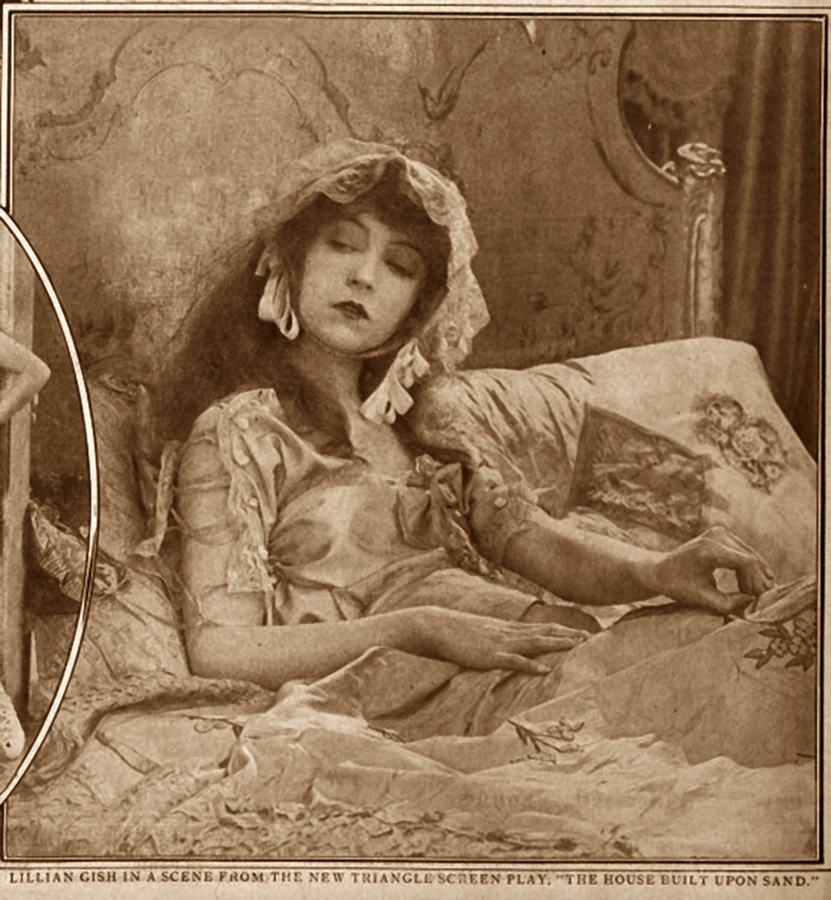
A definitive 6.6/10 rating for a film that redefined the boundaries of cult cinema. The House Built Upon Sand remains a cornerstone of transgressive art.
Stepping back into the hallowed halls of early cinema, one often encounters narratives that, despite their age, resonate with an uncanny contemporary relevance. Such is the case with Mary H. O'Connor's "The House Built Upon Sand," a film that, even in its silent grandeur, speaks volumes about class disparities, marital expectations, and the arduous journey of personal transformation. This cinematic endeavor, anchored by the incomparable Lillian Gish, isn't merely a period piece; it's a poignant exploration of an idealism confronting reality, and a superficial existence finding profound purpose. It invites us to consider the very foundations upon which our societal structures and personal relationships are built, questioning their inherent stability when tested by the winds of change and the shifting sands of human nature.
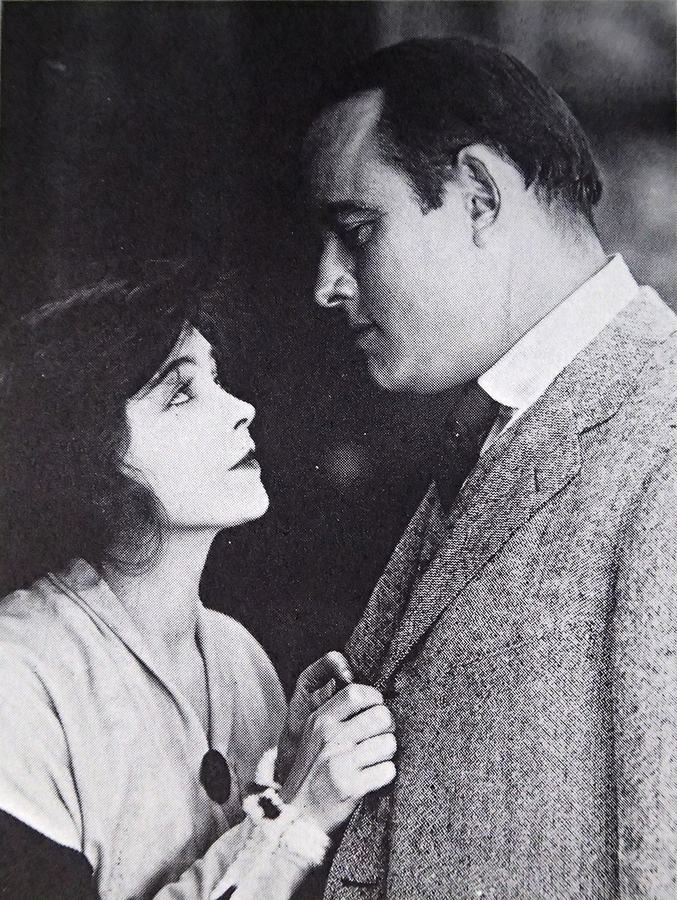
At the heart of this compelling drama lies the stark dichotomy between its two protagonists. Evelyn Dare, portrayed with characteristic nuance by Lillian Gish, embodies the zenith of metropolitan fashion and societal expectation. Her world is one of elaborate gowns, sophisticated soirées, and the carefully choreographed rituals of high society. She is, to all appearances, a delicate butterfly, seemingly destined for a life of exquisite leisure. Her fiancé, David Westebrooke, however, inhabits an entirely different universe. An altruist with a deep-seated interest in sociology, David has eschewed the comforts of his background to immerse himself in the gritty reality of Oreville, a factory town where he serves not just as a manager but as a committed social engineer among his employees. Their engagement, forged by parental decree, initially appears to be a curious mismatch, yet the film deftly establishes an underlying, undeniable attraction that transcends their disparate lifestyles.
The initial conflict ignites not from a lack of affection, but from a clash of core values. David, upon discovering Evelyn's plans for an extravagant wedding and a grueling schedule of social functions, rebels with a quiet but firm resolve. His vision of marriage is one rooted in shared purpose and genuine connection, not ostentatious display. Through a legal maneuver, he orchestrates a swift, unceremonious marriage, immediately informing Evelyn that she is to accompany him to Oreville and, quite remarkably, telegraph her friends that she has 'run away.' This audacious act, a unilateral declaration of marital terms, sets the stage for Evelyn's forced immersion into a world utterly alien to her. It’s a compelling opening gambit, immediately establishing David's uncompromising nature and the profound challenge that lies ahead for Evelyn. This early narrative choice highlights the societal pressures of the era, where even arranged marriages could be subject to individual will, albeit often by the male protagonist, echoing themes of constrained agency seen in films like Redeeming Love, albeit with a different moral compass guiding the transformation.
Evelyn's arrival in Oreville is nothing short of a cultural shock. The film visually contrasts her former life of silk and lace with the utilitarian reality of her new surroundings. David, ever the pragmatist, instructs his housekeeper to confiscate Evelyn's 'useless' finery, replacing it with attire more befitting a factory manager's wife. This act, while perhaps well-intentioned from David's perspective, is a brutal stripping away of Evelyn's identity, a forced sartorial conversion. Lillian Gish masterfully conveys Evelyn's initial misery, her expressions a testament to her profound discomfort and sense of displacement. She is a bird out of its gilded cage, suddenly finding herself in a practical, unadorned aviary, struggling to adapt. The silent screen, relying heavily on visual storytelling and the expressive power of its actors, thrives in these moments, allowing Gish to communicate volumes with a single glance or a subtle gesture.
However, the film's brilliance lies in depicting not just her suffering, but her eventual, organic evolution. Slowly, tentatively, Evelyn begins to engage with the lives of the factory workers. Her initial resistance gives way to curiosity, then to genuine interest. This shift culminates in her initiative to establish a women's club, a space for the factory women to gather, learn, and find community. It's a pivotal moment, signaling Evelyn's transition from a passive recipient of David's social experiment to an active participant, finding her own agency and purpose within the very environment that initially imprisoned her. This arc of a woman finding her voice and contributing to her community, even in the face of initial adversity, draws parallels to the resilience of characters in films like A Daughter of the Sea, where heroines often navigate challenging societal landscapes to forge their own paths.
David, meanwhile, maintains his own club for the men of Oreville, a benevolent endeavor intended for their betterment. Yet, in a stark illustration of the challenges inherent in social engineering, this club devolves into a gambling den, a testament to the unpredictable nature of human behavior when left to its own devices. The very institutions designed for upliftment can, without careful stewardship, become vectors for vice. This divergence in outcomes between Evelyn's burgeoning women's club and David's corrupted men's club subtly critiques the top-down approach to social reform, suggesting that true change often springs from genuine community engagement rather than imposed structures. The narrative further complicates matters when the men, accustomed to their traditional roles and leisure activities, express considerable anger and resentment over their 'womenfolk' having their own club. This reveals a deep-seated patriarchal resistance to female empowerment, a theme that remains unfortunately relevant even today.
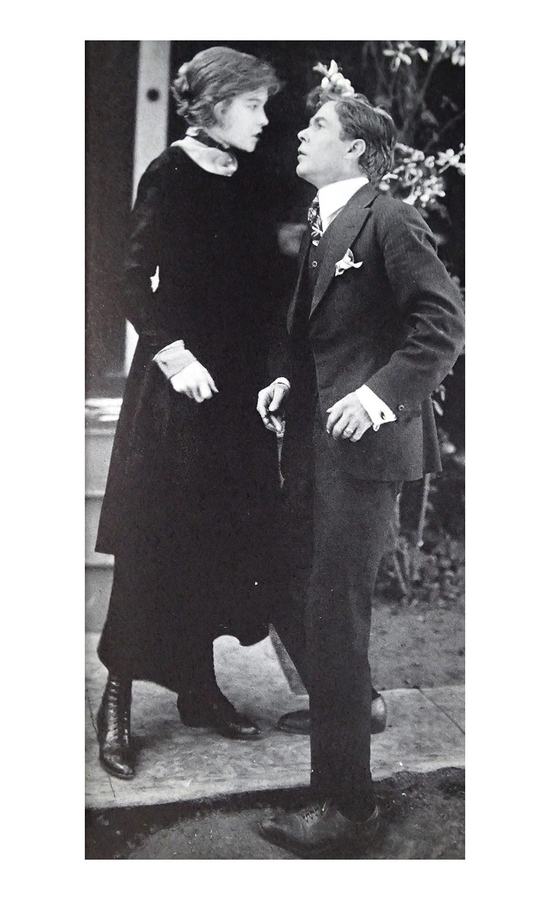
The situation escalates dramatically with the return of Ted, Josie's husband, a mill-hand who has just completed a term in prison. Ted, fueled by bitterness and perhaps a desire for revenge or simply to sow discord, becomes a malevolent force. He systematically poisons Evelyn's mind against David, painting her husband as a villain, distorting his intentions and actions. This manipulation serves as a crucial plot device, testing the nascent trust and affection between Evelyn and David, and exposing the fragility of their relationship's foundation. Ted's character embodies the darker undercurrents of discontent and suspicion that can fester within a community, a stark contrast to David's optimistic, if sometimes naive, idealism. This kind of insidious manipulation and the resulting chaos can be seen in other silent films depicting moral decline or social upheaval, such as The Temptations of Satan, where external forces undermine domestic or communal harmony.
The narrative reaches a fever pitch when the men's club, the site of their gambling and discontent, tragically burns down. In a moment of genuine heroism, David risks his own life to save both Ted and Josie from the inferno. This act of selfless bravery, performed despite Ted's earlier perfidy, highlights David's inherent goodness and unwavering commitment to the welfare of his community, even those who have wronged him. It’s a powerful visual metaphor for purging the old, corrupted ways and a testament to David’s core character, demonstrating that his altruism is not merely theoretical but deeply ingrained and action-oriented. However, blinded by Ted's earlier deceptions and perhaps still reeling from the trauma of her forced relocation, Evelyn misinterprets David’s actions or believes the worst, leading her to flee back to her original home, taking Josie's baby with her in a gesture of maternal protection and perhaps misguided solidarity.

The separation allows for a period of reflection and introspection for all parties involved. Ted, witnessing David's heroism and perhaps grappling with his conscience, eventually seeks out Evelyn to reveal the truth about his lies. This confession is crucial, unraveling the web of deceit that had driven a wedge between husband and wife. Simultaneously, David, left alone in Oreville, experiences a profound loneliness for his wife, recognizing the emotional void her absence creates despite his dedication to his work. His departure from the factory town in search of her signifies a softening of his rigid idealism, acknowledging the importance of personal connection and love alongside his social mission. The film masterfully builds towards a reconciliation that feels earned and authentic. Evelyn, now armed with the truth and profoundly changed by her experiences in Oreville, returns to David not merely out of love, but with a newfound, genuine interest in the people and the work. Her transformation is complete: she is no longer a reluctant participant but an eager partner, committed to assisting David in his endeavors, having found her own purpose and passion among the very individuals she once viewed with detached curiosity.
Lillian Gish, as Evelyn Dare, delivers a performance that solidifies her status as one of silent cinema's most compelling actresses. Her ability to convey complex emotions – from initial disdain and misery to dawning interest, frustration, and ultimately, enlightened commitment – through subtle facial expressions and body language is simply breathtaking. She embodies Evelyn's journey with an exquisite blend of vulnerability and burgeoning strength, making her transformation believable and deeply moving. The supporting cast, including Thelma Burns, Jack Brammall, and Josephine Crowell, provide solid foundations for Gish's brilliance, each contributing to the rich tapestry of the Oreville community.

Mary H. O'Connor's screenplay is a testament to the power of narrative to explore multifaceted social issues within a personal story. The film delves into themes of class conflict, the efficacy of social reform, gender roles in early 20th-century America, and the transformative power of empathy and shared experience. It questions whether true social change can be dictated from above or if it must arise organically from within a community, fostered by genuine connection. The juxtaposition of Evelyn's initial superficiality with David's rigid idealism creates a dynamic tension that propels the narrative forward, forcing both characters, and by extension the audience, to re-evaluate their preconceptions about wealth, poverty, and purpose. The film’s enduring message is one of growth, compromise, and the discovery of a deeper, more meaningful existence beyond the superficial trappings of society. The 'house built upon sand' ultimately refers not to a physical structure, but to the fragile foundations of a life lived without genuine connection, purpose, or mutual understanding, a foundation that, through shared adversity and personal growth, can ultimately be rebuilt on firmer ground.
The directorial choices, though uncredited in the plot summary, likely emphasize the visual contrasts between the opulent city and the stark factory town, using lighting and set design to underscore the emotional states of the characters. The pacing would have been crucial, allowing Evelyn's gradual awakening to feel natural rather than abrupt. The use of intertitles, characteristic of the era, would have provided necessary exposition and insight into the characters' thoughts, complementing the powerful visual storytelling. This nuanced approach to character development and social commentary places "The House Built Upon Sand" firmly within the tradition of progressive silent cinema, aiming not just to entertain but to provoke thought and inspire reflection on societal structures and individual responsibility. It's a film that speaks to the enduring human capacity for change and the often-unforeseen paths to self-discovery, demonstrating that even a forced journey can lead to a profound transformation of spirit and purpose.
In conclusion, "The House Built Upon Sand" stands as a compelling testament to the narrative power of early cinema. It's a film that, through its engaging plot and stellar performances, particularly from Lillian Gish, manages to transcend its historical context to deliver a message that remains profoundly relevant. The journey of Evelyn Dare from a fashion-conscious socialite to a compassionate advocate for the working class is a powerful illustration of personal growth spurred by challenging circumstances. David Westebrooke's own evolution, from a rigid idealist to a man who understands the crucial balance between social mission and personal connection, adds another layer of depth to the story. The film doesn't shy away from depicting the complexities and pitfalls of social reform, nor the deeply ingrained prejudices that can impede progress. Instead, it offers a hopeful, albeit hard-won, vision of reconciliation and shared purpose.
For enthusiasts of silent film, and indeed for anyone interested in the social history embedded within cinematic art, "The House Built Upon Sand" is an invaluable watch. It offers not only the mesmerizing presence of Lillian Gish but also a thoughtful, multifaceted narrative that explores the very essence of what makes a 'house' – and a life – truly stable and meaningful. It reminds us that the strongest foundations are often built not on privilege or rigid ideology, but on empathy, understanding, and a shared commitment to the well-being of others. The film's title, initially suggesting fragility, ultimately speaks to the resilience of the human spirit when confronted with adversity, and the profound strength that can emerge when one chooses to rebuild with purpose and compassion. Its exploration of societal expectations versus individual fulfillment, and the often-rocky road to finding common ground, secures its place as a significant work within the silent era's rich cinematic legacy.

IMDb 4.4
1925
Community
Log in to comment.