DbcultAccessing Vault...
7/10
Senior Film Conservator
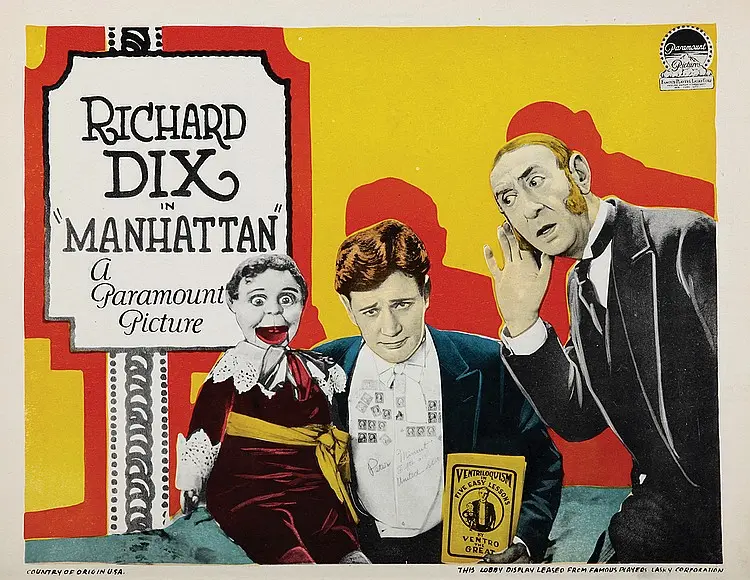
A definitive 7/10 rating for a film that redefined the boundaries of cult cinema. Manhattan remains a cornerstone of transgressive art.
In the midst of a languid existence, Peter Minuit, a wealthy New Yorker, finds himself irresistibly drawn to the thrill of the unknown. His life, characterized by ease and opulence, has become stultifying, prompting him to seek excitement through unconventional means.
The arrival of Spike Malone, a charismatic safecracker, breaks into Minuit's Fifth Avenue home, setting off a chain of events that would irrevocably alter the trajectory of his life. Minuit, masquerading as 'Gentleman George,' a fictitious persona he creates to pique Spike's interest, skillfully manipulates the thief into believing he, too, is a cunning crook.
This unlikely pairing leads to a series of daring adventures that subvert Minuit's staid and predictable life. As they navigate the underworld of New York City, Minuit becomes increasingly enthralled by Spike's audacious exploits, which serve as a catalyst for his own transformation. Through their escapades, Minuit discovers a sense of purpose and vitality he had been lacking, ultimately leading to a profound reevaluation of his character.
The performances of Oscar Brimberton Figman, Gregory Kelly, and Richard Dix are noteworthy, imbuing their characters with a sense of depth and nuance that elevates the film to a level of sophistication. The chemistry between the leads is palpable, rendering their on-screen interactions both believable and captivating.
A comparison to other films of the era, such as Love and Doughnuts and The Life of Reilly, reveals that Manhattan possesses a unique blend of action, drama, and humor. The film's direction, coupled with the writing of Jeffery Farnol, Frank Tuttle, and Paul Sloane, results in a narrative that is both engaging and unpredictable.
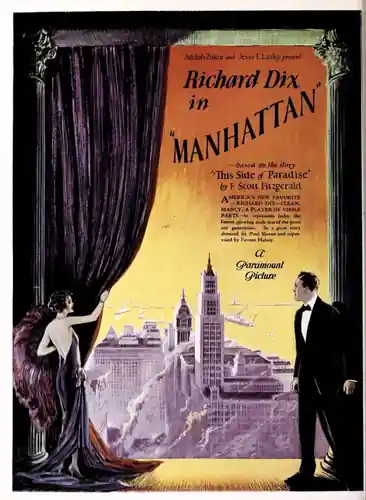
The cinematography, while not overly complex, effectively captures the essence of 1920s New York City. The film's use of shadows and lighting creates a sense of atmosphere, drawing the viewer into the world of the characters. This attention to detail is reminiscent of other notable films of the period, such as Het geheim van het slot arco and Il Fauno.
One of the most striking aspects of Manhattan is its exploration of themes. The film touches on the idea of identity and the human desire for excitement and purpose. Minuit's transformation from a bored and idle rich man to a vital and engaged individual is a compelling narrative thread. This theme is echoed in films like The Summer Girl and The Quitter, which also explore the complexities of human nature.
The supporting cast, including Alice Chapin, James Bradbury Sr., and Edna May Oliver, adds depth and richness to the film. Their performances, while not always central to the narrative, contribute to the overall sense of authenticity and immersion. The characterizations in Manhattan are multidimensional, much like those found in The Faithful Heart and Golden Rule Kate.
Manhattan is a film that defies easy categorization. It blends elements of drama, action, and comedy, creating a unique viewing experience. The film's tone, while occasionally uneven, is generally well-balanced, shifting seamlessly between lighthearted moments and more intense sequences. This tonal balance is a hallmark of skilled direction and editing.
In conclusion, Manhattan is a captivating film that merits attention from both cinephiles and casual viewers. Its engaging narrative, memorable characters, and exploration of themes make it a standout of the silent era. While not without its flaws, the film's strengths far outweigh its weaknesses, rendering it a must-see for anyone interested in the art of filmmaking. For those seeking similar films, By Divine Right, Stephen Steps Out, and The Butterfly Man are recommended.
Ultimately, Manhattan is a film that will leave viewers pondering the complexities of human nature and the importance of self-discovery. Its influence can be seen in later films, such as The Invisible Ray and Cops, which also explore themes of identity and transformation. As a work of cinematic art, Manhattan remains a compelling and thought-provoking experience, one that continues to resonate with audiences today.
IMDb —
1912
Community
Log in to comment.