DbcultAccessing Vault...
Cult Review
Senior Film Conservator
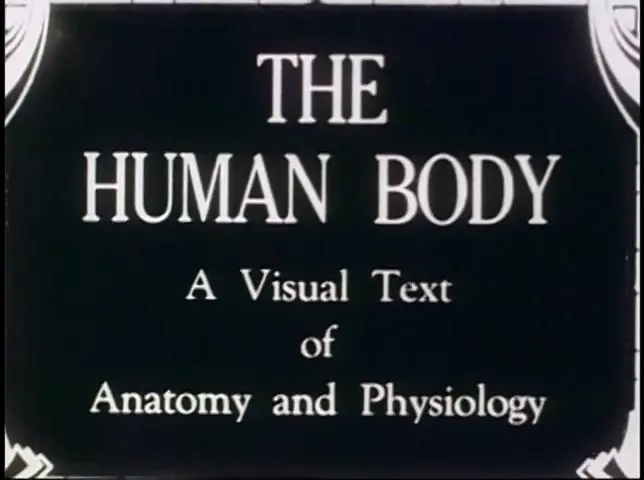
Is The Human Body worth watching in an age of high-definition digital anatomy and 3D modeling? Short answer: yes, but only if you approach it as a historical artifact and a masterclass in early scientific pedagogy. This film is designed for the clinical historian and the archival enthusiast; it is definitely not for the squeamish or those seeking the narrative escapism found in contemporary works like The Frame-Up.
Unlike the staged dramas of the 1920s, such as Puppy Love, Sarnoff’s work is grounded in a reality that is often uncomfortable. It is a film that demands a strong stomach and an appreciation for the evolution of the educational medium. It works. But it is deeply flawed by modern standards of pacing.
1) This film works because it refuses to sanitize the physical reality of the human form, treating the viewer with an intellectual respect that was rare for its time.
2) This film fails because its structure is strictly dictated by lecture logic, lacking the cinematic ebb and flow required to sustain the interest of a general audience.
3) You should watch it if you have a fascination with the history of medical science or the exact moment when cinema began to serve as a serious tool for institutional education.
Dr. Jacob Sarnoff does not perform for the camera; he instructs through it. There is a specific moment during the dissection of the heart where the lighting—harsh and unforgiving—highlights the mechanical complexity of the valves. It is a sequence that feels more honest than any modern CGI recreation. While films like Her Silent Sacrifice were busy dramatizing the human spirit, Sarnoff was busy documenting the human pump. The contrast is jarring and essential for understanding the breadth of early filmmaking.
The film utilizes a three-tiered visual strategy: static diagrams for structure, animation for movement, and cadaver footage for reality. By layering these techniques, Sarnoff ensures that the viewer understands the 'how' before seeing the 'is'. This method effectively simplifies complex physiological processes into digestible, visual bites.
The animation sequences are particularly striking. They possess a rhythmic, almost hypnotic quality that predates the sophisticated educational films of the mid-century. When Sarnoff illustrates the respiratory system, the hand-drawn lungs expand and contract with a ghost-like precision. It is a primitive beauty that holds more weight than the polished pixels we see today. It feels human because it was drawn by a human hand to explain a human life.
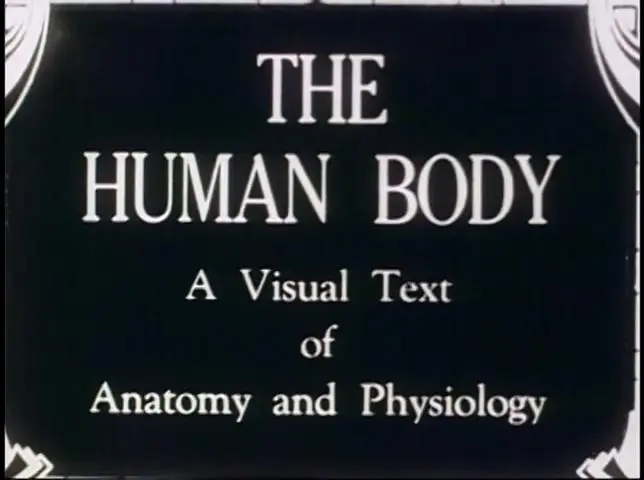
The cinematography in The Human Body is functional, yet there is an accidental artistry in its coldness. The camera remains static, much like a student sitting in the front row of a lecture hall at the Long Island Medical College. There are no sweeping shots or dramatic close-ups of weeping protagonists as seen in The Prodigal Son. Instead, the focus is entirely on the clarity of the subject matter.
However, the stillness of the frame creates a unique tension. When Sarnoff’s scalpel enters the frame, the lack of movement elsewhere makes the action feel monumental. This isn't the theatricality of Lady Windermere's Fan; it is the theatricality of the operating theater. The film’s pacing is its greatest hurdle. It lingers on diagrams for what feels like an eternity, perhaps assuming the viewer is taking notes. For a modern audience, this can feel like a test of endurance.
"Sarnoff’s hands are the most expressive characters in the film, moving with a surgical grace that conveys more authority than any title card could ever hope to achieve."
One of the most debatable aspects of this film is its use of real human remains. Today, we are used to sanitized plastic models, but Sarnoff’s reliance on cadavers presents a moral weight that is hard to ignore. It forces the viewer to confront mortality in a way that even the most tragic dramas, like We Can't Have Everything, fail to do. The cadaver isn't a prop; it’s a person who has been reduced to a map.
I would argue that this 'raw' approach is actually more ethical than modern digital versions. It removes the abstraction. It reminds us that medicine is a physical, messy, and visceral practice. There is a surprising observation to be made here: the film is actually less 'gory' than a modern action movie, yet it feels infinitely more intense because the stakes are real. It is the difference between a costume and a skin.
If you are looking for entertainment, the answer is a resounding no. You would be better served by the social critiques of The Libertine. However, if you are a student of cinema, The Human Body is a vital watch. It represents the birth of the 'explainer' video, a genre that now dominates the internet. Seeing its origins in the flickering black-and-white grain of the 1920s is a revelation.
The film lacks the emotional resonance of a narrative, but it gains a different kind of power through its objectivity. It doesn't ask you to feel; it asks you to know. In a world of misinformation, there is something profoundly refreshing about a film that simply says, 'This is how your heart works. Look at it.'
Pros:
- Unrivaled historical value as a medical document.
- Clear, concise visual explanations of complex systems.
- A fascinating look at the early 20th-century scientific mindset.
- Bold use of practical effects (dissection) over abstraction.
Cons:
- Extremely dry and lacks any form of narrative engagement.
- The visual quality of the cadaver scenes can be grainy and difficult to parse.
- May be disturbing to viewers who are not prepared for clinical imagery.
The Human Body is a towering achievement in the niche of educational cinema, even if it lacks the 'soul' of a feature film. Dr. Jacob Sarnoff created a visual textbook that remains a fascinating study in how we communicate science. It is a film of steel and bone, devoid of the fluff found in Sången om den eldröda blomman. It isn't a masterpiece of art, but it is a masterpiece of utility. Watch it for the history, stay for the strange, haunting beauty of the animation, and leave with a newfound respect for the machine you inhabit every day. It is clinical. It is cold. It is essential.

IMDb 6.4
1935
Community
Log in to comment.