DbcultAccessing Vault...
Cult Review
Senior Film Conservator
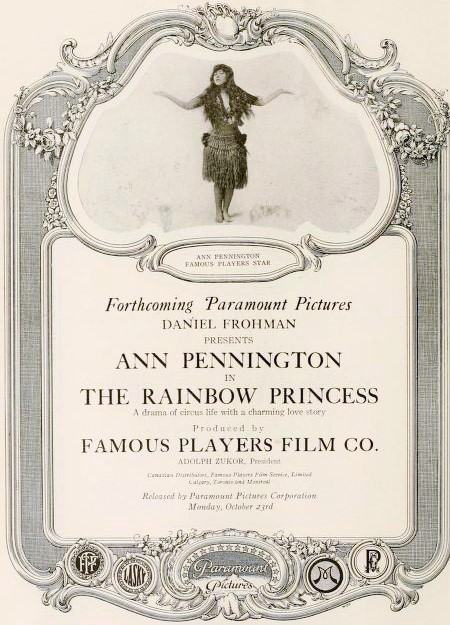
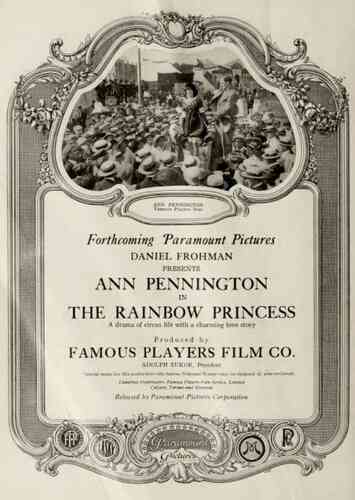
Stepping into the ethereal realm of The Rainbow Princess feels akin to unearthing a forgotten jewel box, its contents shimmering with a luminescence that defies the passage of a century. This silent era marvel, a testament to the boundless creativity of early cinema, transports its audience to a world where color, or rather its tragic absence, forms the very fabric of existence. Directed with an almost painterly precision and penned by the imaginative Shannon Fife, the film is a vibrant spectacle, even when viewed through the sepia-toned lens of historical preservation. It's a grand narrative that dares to imbue abstract concepts like hope and despair with tangible, visual manifestations, crafting a fairy tale for the ages that resonates with surprising depth.
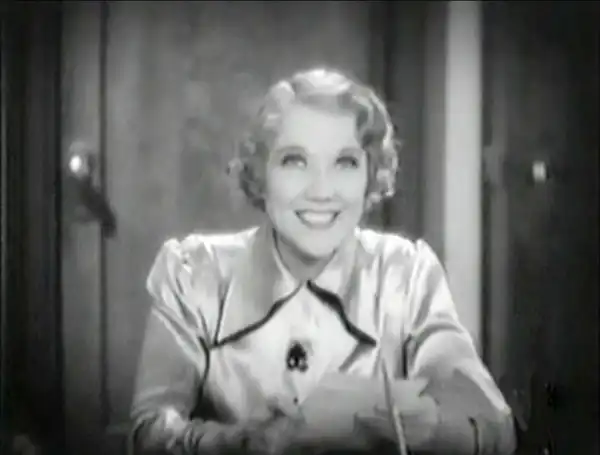
At its heart lies Princess Iris, portrayed with captivating grace and a nuanced emotional palette by the luminous Ann Pennington. Pennington, an actress renowned for her vivacity and expressive physicality, imbues Iris with a quiet strength that blossoms into formidable determination. Her journey from a cloistered royal, yearning for a world she has only heard whispered in legends, to a veritable avatar of chromatic restoration, is nothing short of mesmerizing. Her performance is a masterclass in silent film acting, conveying volumes with a mere tilt of the head or the subtle widening of her eyes. One can draw parallels to the spirited resilience seen in characters from films like The Sin Woman or Her Right to Live, where female protagonists defy oppressive circumstances, yet Iris's quest is uniquely existential, focused on the very essence of beauty and perception.
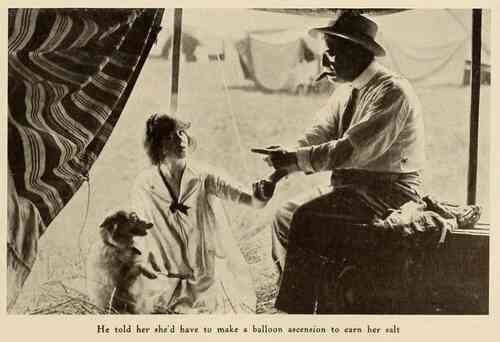
The film's visual ambition is its most striking feature. In a period when cinematic technology was still nascent, The Rainbow Princess pushed boundaries, employing innovative tinting and hand-coloring techniques to convey the narrative's central conceit. The early scenes, rendered in muted grays and desaturated blues, evoke a profound sense of melancholic desolation, effectively communicating the kingdom's plight. As Iris embarks on her quest and progressively recovers the Chroma Shards, the screen gradually bursts into carefully orchestrated splashes of color. A recovered crimson shard might bathe the screen in a fiery red, signifying courage and passion, while an azure fragment could wash over a scene with serene blues, representing wisdom and tranquility. This meticulous use of color, which was revolutionary for its time, transforms the viewing experience into a sensory journey, a visual metaphor for the reawakening of a dormant world.
The cinematography, while not attributed to a specific individual in the surviving records, demonstrates an acute understanding of composition and mood. Shots of Iris traversing desolate, monochrome landscapes are often framed to emphasize her solitude and the vastness of her undertaking. Conversely, scenes of her encountering magical elements or finally restoring color are often filled with dynamic movement and intricate details, creating a palpable sense of wonder. The transitions between the color states are handled with a fluidity that belies the technical challenges of the era, making the visual progression feel organic and deeply impactful. One might recall the early visual experiments in films like Il giardino incantato, yet The Rainbow Princess takes the concept of a 'magical garden' and expands it to an entire world, painting it anew before our very eyes.

While Ann Pennington anchors the film with her remarkable portrayal, the supporting cast delivers equally compelling performances, each contributing to the rich tapestry of the narrative. Charles Sutton, as the ailing King Theron, embodies the crushing weight of a monarch whose realm is slowly fading. His performance is subtle, relying on weary gestures and profound expressions of sorrow that resonate deeply. His initial skepticism, slowly transforming into paternal pride, provides a crucial emotional backbone to Iris’s quest.
Carl Gordon, as the sagacious Royal Chronicler, Master Elara, serves as the film’s narrative compass. His measured movements and grave demeanor convey a sense of ancient wisdom and a deep understanding of the kingdom's plight. He is the quiet catalyst, the keeper of forgotten lore, whose cryptic guidance propels Iris forward. His scenes with Pennington are particularly effective, establishing a bond of trust and intellectual mentorship that is vital to the plot's unfolding.
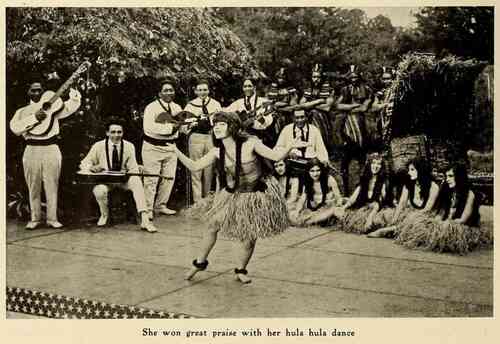
William Courtleigh Jr. delivers a deliciously menacing performance as the Shadow Baron, the film’s primary antagonist. His portrayal is a masterclass in silent film villainy, utilizing exaggerated gestures and a chillingly static presence to convey his malevolent intent. The Baron is not merely evil for evil's sake; he represents the antithesis of color and life, a force of stagnation and despair. His confrontations with Iris are imbued with a palpable tension, creating genuinely thrilling moments that pit vibrant hope against encroaching darkness.
Grant Stewart, as the steadfast Royal Guard Captain, Sir Gideon, provides a grounded counterpoint to Iris's more fantastical journey. His character arc, from initial skepticism to unwavering loyalty, is subtly rendered. He represents the courage of the ordinary man, standing beside royalty in the face of insurmountable odds. Similarly, Walter D. Nealand’s portrayal of Ranger Kael, the guardian of the Whispering Woods, brings a sense of rugged stoicism and connection to nature, a character type often seen in adventure serials of the time, such as Protéa, but here imbued with a more mystical dimension.
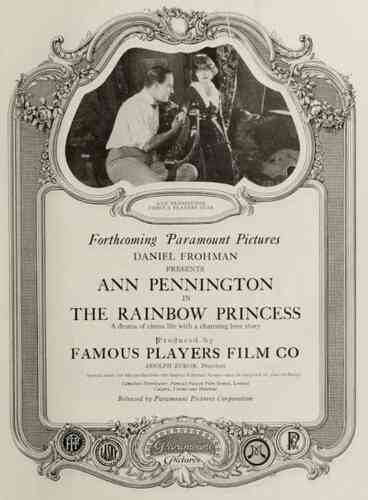
Eddie Sturgis, as the spirited court jester Faelan, offers much-needed moments of levity and heartfelt loyalty. His comedic timing, often expressed through physical gags and exaggerated expressions, lightens the narrative without detracting from its gravitas. Faelan’s unwavering belief in Iris, even when all seems lost, underscores the film’s central theme of hope. Amy Manning, Clifford Grey, Herbert Rice, Augusta Anderson, and Harry Lee round out the ensemble, each contributing memorable, if smaller, roles that flesh out the kingdom's inhabitants and the varied challenges Iris faces. Queen Pearl also has a memorable, albeit brief, appearance that adds to the courtly intrigue.
Shannon Fife's screenplay for The Rainbow Princess is a testament to the power of allegorical storytelling. The plot, seemingly a simple quest narrative, is layered with profound themes of identity, sacrifice, and the intrinsic human need for beauty and meaning. Fife masterfully constructs a world where the external environment mirrors the internal state of its inhabitants, making the restoration of color not just a physical act but a spiritual reawakening. The gradual accumulation of Chroma Shards serves as a brilliant structural device, allowing for episodic adventures that build towards a grand, cathartic climax.
The dialogue, conveyed through intertitles, is poetic and evocative, avoiding the often clunky exposition found in some contemporary silent films. Instead, Fife crafts lyrical phrases that enhance the mythical quality of the story, allowing the visual storytelling to carry the bulk of the emotional weight. The narrative pacing is expertly handled, balancing moments of tense action with periods of quiet reflection, ensuring the audience remains fully invested in Iris's arduous journey. The thematic undercurrents of environmental stewardship and the dangers of allowing despair to consume one's world are surprisingly prescient, adding another layer of enduring relevance to this century-old film.
The Rainbow Princess stands as a remarkable achievement, not only for its technical ingenuity but also for its timeless narrative. It's a film that speaks to the universal human desire for hope, for beauty, and for the courage to pursue a brighter future even when surrounded by darkness. The use of color as a narrative device was groundbreaking, paving the way for future cinematic innovations. While many silent films focused on gritty realism or melodramatic romances, The Rainbow Princess embraced fantasy with an earnestness that is both charming and profound. It reminds us of the power of early cinema to transport, to inspire, and to innovate in ways that continue to influence filmmaking today.
Comparing it to other films of its era, one finds The Rainbow Princess occupies a unique niche. It possesses the adventurous spirit of A Motorcycle Adventure, yet elevates its quest to a more mythical plane. It shares the dramatic intensity of The Devil-Stone, but channels it into a battle for aesthetic and spiritual restoration. Its exploration of a threatened kingdom and a heroic princess could be seen as a precursor to narratives found in films like The Heart of Maryland, but with a distinctly fantastical twist. The film’s thematic depth, exploring the psychological impact of a colorless world, is a nuanced approach that elevates it beyond simple escapism. It challenges the audience to consider the vibrancy in their own lives, both literally and metaphorically.
In an era dominated by rapid technological advancement in cinema, The Rainbow Princess serves as a vibrant reminder that true innovation often lies not just in new tools, but in the imaginative ways those tools are wielded. Shannon Fife's vision, brought to life by a dedicated cast and crew, created a cinematic experience that was both deeply personal and universally resonant. The film’s message—that even in the darkest of times, the pursuit of light and color can lead to profound transformation—remains as potent today as it was a century ago. It’s a compelling argument for the preservation and rediscovery of such cinematic treasures, allowing new generations to marvel at their ingenuity and timeless appeal.
The final sequence, a breathtaking cascade of restored color washing over the kingdom, is a moment of pure cinematic magic. It’s a powerful visual crescendo that leaves an indelible mark, a testament to the film’s ability to evoke profound emotion without a single spoken word. The joy and relief on the faces of the characters, now seen in their full, vibrant glory, are palpable. The Rainbow Princess is more than just a historical artifact; it is a living, breathing testament to the artistry of early filmmaking, a luminous dream that continues to enchant and inspire. Its rediscovery is not merely an academic exercise but an opportunity to reconnect with a foundational work that shaped the language of cinema, proving that even in silence, a story can sing with the most brilliant of colors.
This film, much like a precious, hand-tinted photograph, offers a glimpse into an era of grand ambition and heartfelt storytelling. Its narrative, while seemingly simple, carries the weight of universal truths about perception, resilience, and the power of individual agency to transform an entire world. It invites viewers to look beyond the surface, to appreciate the delicate artistry in every frame, and to find their own colors in a world that often threatens to fade to gray. A true masterpiece of early cinema, The Rainbow Princess shines brightly, an enduring beacon of creativity and hope.
IMDb —
1931
Community
Log in to comment.