DbcultAccessing Vault...
Cult Review
Senior Film Conservator
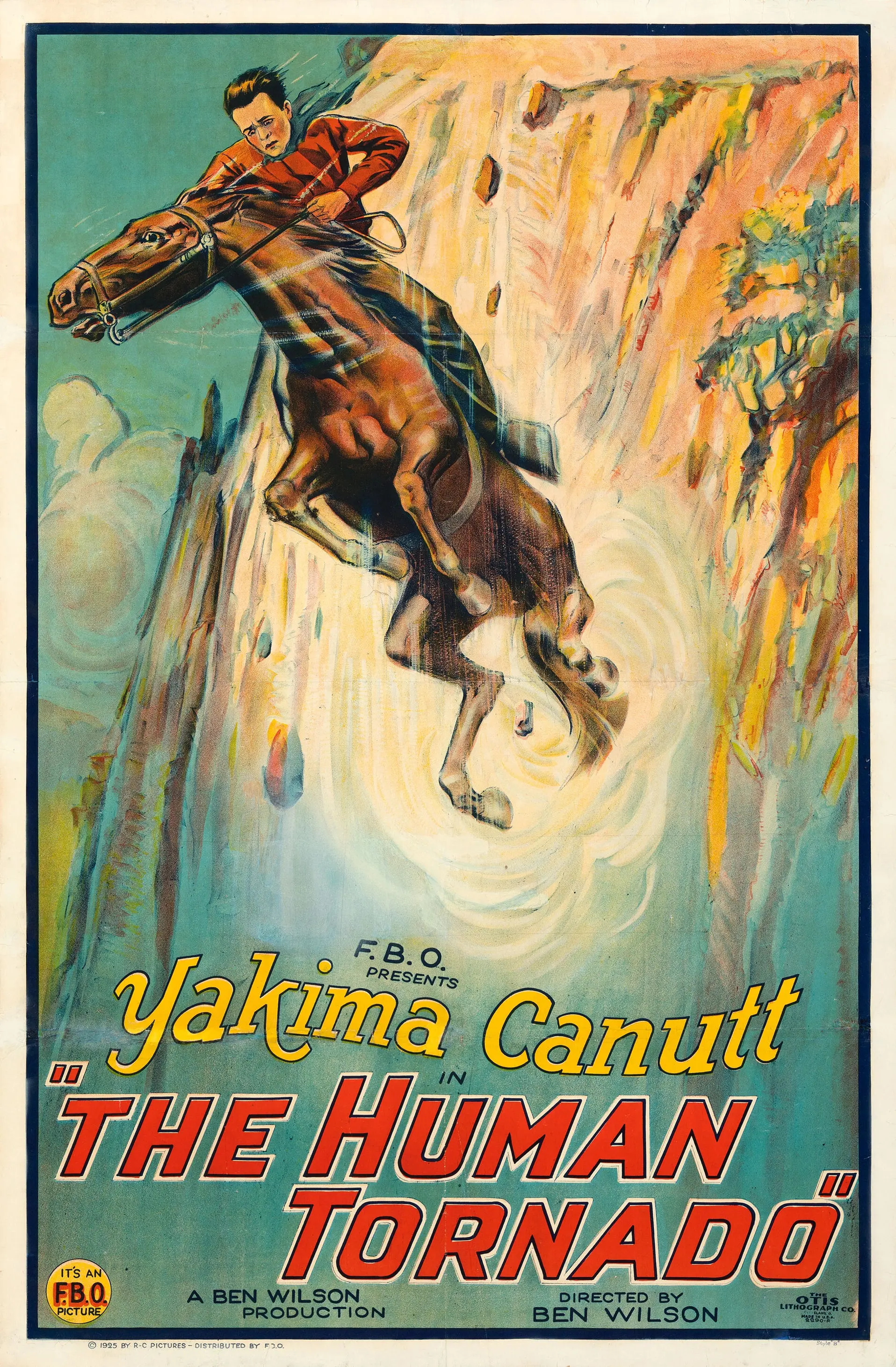
Is The Human Tornado a lost masterpiece of the silent era? Short answer: No, but it is a fascinating, high-octane artifact for anyone who values the evolution of movie stunts over complex screenwriting.
This film is for the historian of the American West and the obsessive fan of Yakima Canutt’s physical prowess. It is absolutely not for those who require high-fidelity audio or a plot that doesn't rely on the most convenient coincidences in cinematic history.
This film works because it showcases Yakima Canutt at the peak of his athletic ability, providing a blueprint for the modern action hero through pure physicality.
This film fails because the narrative relies on a series of illogical character choices and a legal resolution that feels tacked on by a writer who ran out of steam.
You should watch it if you want to see the man who taught John Wayne how to walk and talk, performing his own hair-raising stunts in a raw, unpolished environment.
The Human Tornado is a product of the late 1920s B-movie machine, and it wears its budget on its sleeve. Unlike the polished urban dramas like Manhattan, this film breathes the dust of the actual frontier. There is a lack of artifice here that is both its greatest strength and its most glaring weakness. The lighting is often harsh, the sets are sparse, and the pacing is relentless to the point of exhaustion.
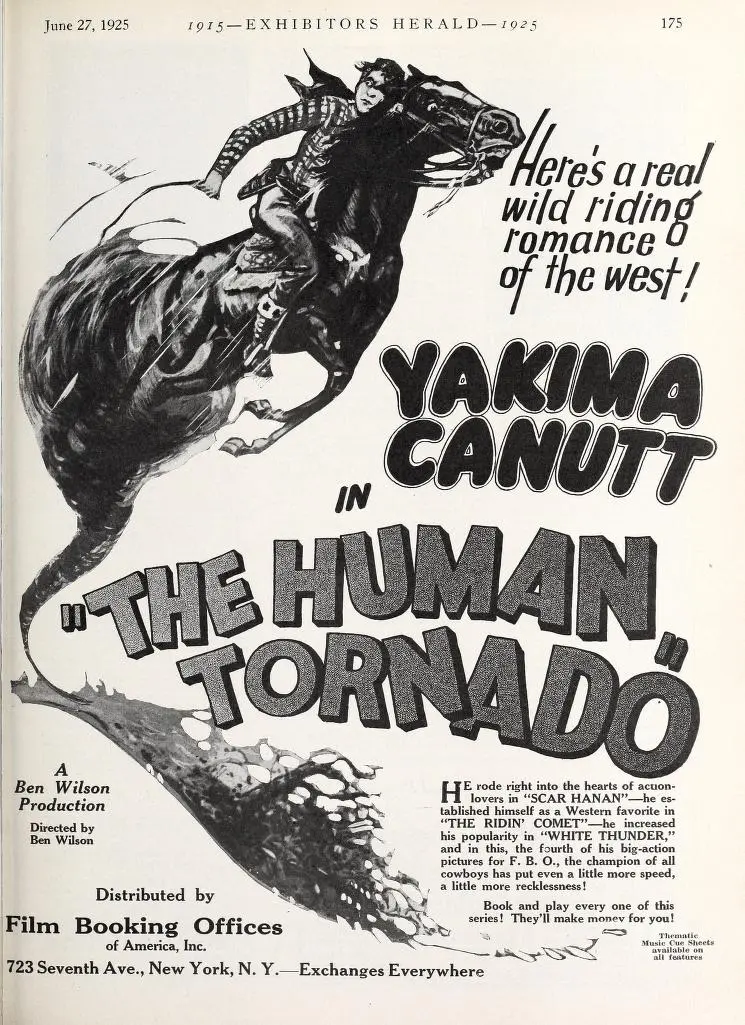
Yakima Canutt plays Jim Marlow with a stoic intensity that would later become the standard for Western protagonists. He doesn't overact with his face, which was a common pitfall of the era. Instead, he acts with his entire body. When he moves, he moves with a purpose that justifies the film's title. He is a force of nature in a landscape of static, stock characters.
The plot, written by Cliff Hill, is a standard morality play about greed and redemption. Chet Marlow is a villain without nuance. He isn't just a bad brother; he is a symbol of the corrupting influence of capital on the wild frontier. His theft of Pete Daley’s property isn't just a plot point; it's the catalyst for a total breakdown of social order in their small mining community.
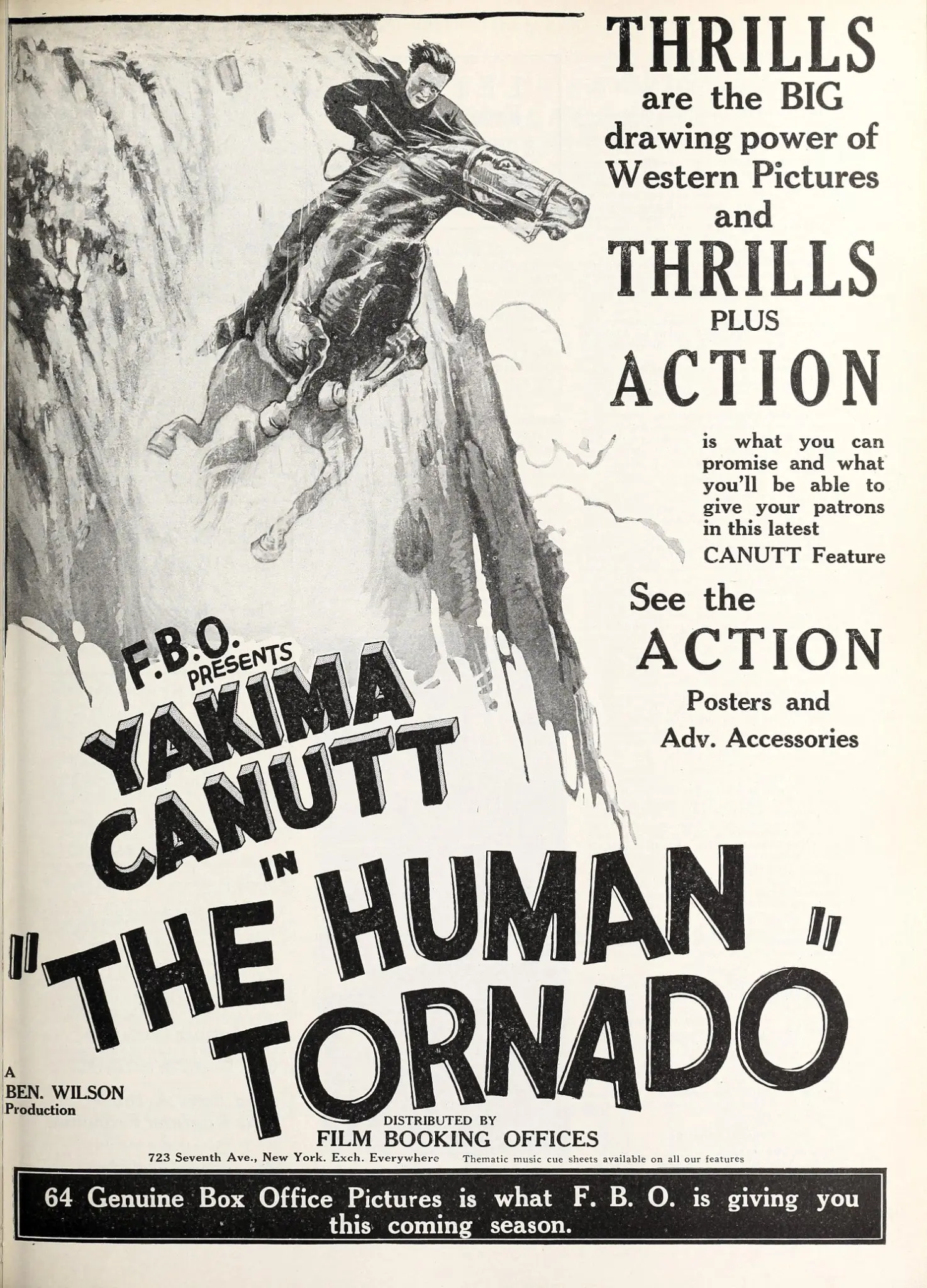
If you are watching this film for the dialogue-free acting, you are missing the point. The Human Tornado is a showcase for Canutt’s legendary stunt work. There is a sequence involving a chase toward the hidden strongbox that puts modern CGI-heavy sequences to shame. You can feel the weight of the horses and the very real danger of the terrain. This isn't the choreographed dance of a Marvel movie. This is a man risking his neck for a few feet of celluloid.
The scene where Crowley shoots Jim Marlow is filmed with a jarring realism. There is no slow-motion grace here. It is quick, ugly, and impactful. This grit is what separates the Poverty Row Western from the more romanticized versions of the West seen in higher-budget productions of the time. It feels less like a movie and more like a captured moment of historical violence.
However, the technical limitations are impossible to ignore. The editing by modern standards is jumpy. Transitions between scenes often feel like they are missing a few frames of context. Compared to the fluid storytelling found in The Masquerader, The Human Tornado feels like a collection of action beats held together by a thin thread of logic.
Yes, if you view it as a historical document rather than a piece of entertainment. It provides a raw look at the transition of the Western genre from simple morality plays to the stunt-driven spectacles that would dominate the 1930s. It is a necessary watch for anyone interested in the technical evolution of action filmmaking.
The film captures a specific moment in time when the Western was starting to find its feet as a serious genre. It lacks the polish of later John Ford films, but it has a primal energy that is often lost in more sophisticated productions. It is a loud, silent movie. It screams with its motion.
Pros:
Cons:
The script by Cliff Hill is a fascinating mess. It attempts to weave a complex web of inheritance, theft, and mistaken identity, but it frequently trips over its own feet. The character of Tom Crowley is a perfect example. He exists solely to witness the crime and then provide a deathbed confession. He isn't a character; he is a walking plot device. This was common in early Westerns, but it remains a frustration for the modern viewer.
Despite this, the film manages to build a genuine sense of dread. The betrayal of Chet against his own brother Jim is played with a surprising lack of sentimentality. There is no tearful reconciliation. There is only the cold reality of the law and the ending of a family bond. This cynicism is refreshing. It suggests that the West wasn't just a place of adventure, but a place where the worst human instincts were allowed to flourish.
The cinematography, while basic, makes excellent use of the natural light. The shadow-play during the night-time robbery of the safe is particularly effective. It creates a noir-like atmosphere years before Film Noir was a recognized style. This use of shadow to hide the identity of the thief—even though the audience knows who it is—adds a layer of tension that the script alone couldn't provide.
The Human Tornado is a rough, unpolished gem that deserves its place in the footnotes of cinema history. It isn't a film you watch for the emotional depth or the clever dialogue. You watch it for the grit. You watch it to see Yakima Canutt jump off a moving horse and realize that he’s doing it for real. It’s a relic. But it’s a fast one. It moves with a frantic energy that keeps you engaged even when the plot makes no sense. If you can forgive its B-movie origins and its clunky narrative structure, you’ll find a film that is surprisingly modern in its cynicism and breathtaking in its physical execution. It is a tornado of action that leaves the viewer exhausted but satisfied.
IMDb 3.8
1913
Community
Log in to comment.