DbcultAccessing Vault...
Cult Review
Senior Film Conservator
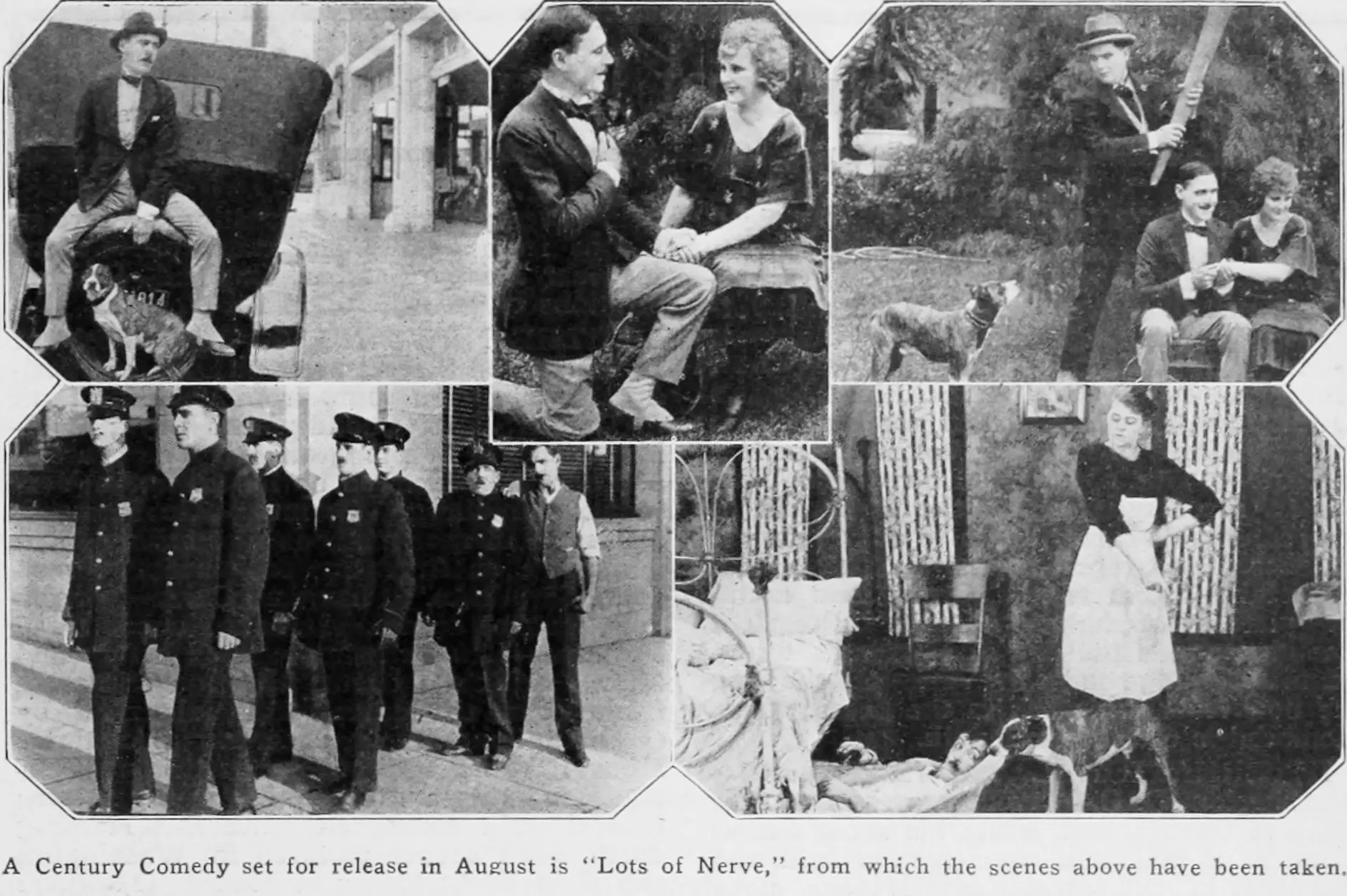
In the pantheon of silent cinema, where the physical gesture often speaks louder than the written intertitle, Lots of Nerve emerges as a fascinating artifact of early 20th-century comedic timing. It is a film that doesn't just rely on the pratfalls of its human stars but elevates the canine companion to a position of narrative agency rarely seen in contemporary shorts. While many films of the era, such as A Rural Cinderella, leaned into the pastoral or the melodramatic, 'Lots of Nerve' thrives in the gritty, high-stakes environment of the urban rooming house.
The true luminary here is Pal the Dog. Long before the industry became saturated with animal actors trained for mere spectacle, Pal demonstrated a level of screen presence that rivaled the great pantomimists. In this specific outing, he isn't just a pet; he is a co-conspirator. The plot, ostensibly about Henry Murdock’s character evading a stern landlady and outmaneuvering a rival, is actually a showcase for Pal’s tactical genius. Unlike the more structured narratives found in The Railroader, 'Lots of Nerve' operates with a frantic, improvisational energy that mirrors the desperation of its protagonist.
The chemistry between Murdock and Pal is palpable. There is a sequence involving a staircase and a strategically placed rug that requires a level of synchronization that would put modern CGI-laden comedies to shame. It’s this authenticity of performance that makes the film endure. We see a man on the edge of social extrusion—rent unpaid, romantic prospects dimming—and his only anchor is a creature that understands the mechanics of a boarding house better than he does. This dynamic shifts the film from a simple 'funny animal' short into a poignant, albeit hilarious, commentary on the proletarian struggle for space.
The presence of Otto Fries as the rival provides the necessary friction. Fries, with his imposing physicality, serves as the perfect foil to Murdock’s more lithe, nervous energy. Their conflict over the affections of Violet Campbell isn't just about romance; it's about dominance within a shared social sphere. In many ways, the film shares a DNA with Who Chose Your Wife?, exploring the domestic tensions and the often-ridiculous rituals of courtship. However, 'Lots of Nerve' strips away the middle-class veneer of the former, placing the action in a world where a missing nickel is a tragedy and a barking dog is a strategic weapon.
The landlady, a staple archetype of the era, represents the looming threat of the street. Every time she appears on screen, the lighting seems to sharpen, and the camera angles become more claustrophobic. She is the 'heavy' in a way that Fries is not—she represents the system, while Fries represents the individual competitor. The way Pal manages to distract her, often through a series of increasingly absurd diversions, serves as a cathartic release for an audience that likely knew the fear of an unpaid rent collector all too well. It’s a subversion of power dynamics that feels remarkably modern.
Visually, the film is a masterclass in using limited space. The boarding house is a character in itself, with its creaky floors and thin walls. The cinematography doesn't just capture the action; it emphasizes the cramped nature of the setting. When compared to the sprawling industrial landscapes of Britain's Bulwarks, No. 1: Women Munitioners of England, 'Lots of Nerve' feels intimate and intense. The editing is sharp, favoring a rhythmic progression that builds toward a frenetic climax. It’s a precursor to the 'breakneck speed' genre that would later define films like Speed Demons.
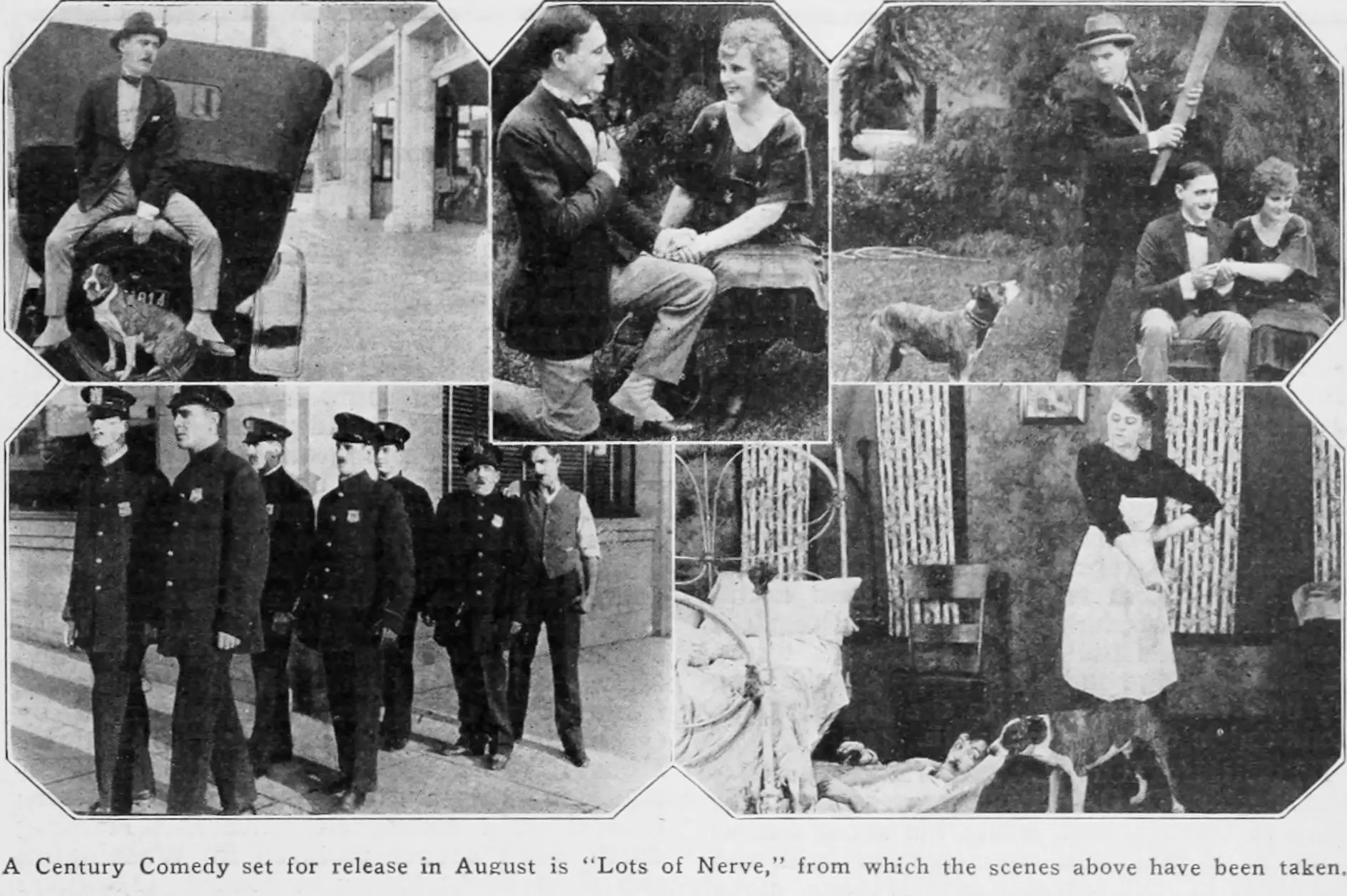
One cannot overlook the contribution of the writers and the director in shaping this chaos. While the credits for the writers remain elusive in some archives, the structural integrity of the gags suggests a deep understanding of vaudevillian timing. Each joke is set up with precision and paid off with interest. The 'rival' subplot, which could have easily been a distraction, is woven seamlessly into the primary conflict of evasion. When Pal finally 'gets rid' of the rival, it isn't just a victory for Murdock; it’s a victory for the viewer who has been rooting for the underdog—quite literally.
Is 'Lots of Nerve' a high-art masterpiece on the level of From the Manger to the Cross? Perhaps not in terms of theological weight or grandiosity. But in terms of pure cinematic craft and the ability to evoke genuine emotion through motion, it is indispensable. It captures a specific moment in time when the world was moving faster than people could keep up with, and only a dog could navigate the hurdles with any degree of success. It’s a film that demands to be watched not as a relic, but as a living piece of comedy.
We see echoes of this film in later works that deal with the shadows of urban life, like The Shadows of a Great City, though 'Lots of Nerve' chooses to laugh at the darkness rather than succumb to it. It lacks the moralizing tone of Fires of Conscience or the sentimentalism of Jess. Instead, it offers a raw, unadulterated joy that is rooted in the physical reality of the body and the environment. Whether it's the way Murdock hides under a bed or the way Pal carries a boot, every frame is packed with intent.
For those looking to understand the evolution of the 'buddy comedy,' 'Lots of Nerve' is essential viewing. It bypasses the need for dialogue, relying instead on a universal language of struggle and triumph. It avoids the exoticism of Jungle Dancers or the grit of White Meat, finding its heart in the mundane world of a rented room. It reminds us that sometimes, the only thing keeping us from total disaster is the 'nerve' to keep going—and a very smart dog to lead the way.
In a landscape of forgotten shorts, this one stands out. It doesn't have the existential dread of Hidden Fires or the heavy-handedness of The Price of Her Soul. It is, quite simply, a delight. It is a testament to the fact that even in 1923, we knew that the bond between a man and his dog was the ultimate survival strategy. If you have the chance to see a restored print, do not hesitate. It is a reminder of why we fell in love with the moving image in the first place: the ability to see our own struggles reflected in a way that makes us laugh, think, and ultimately, feel a little less alone in the great city.
Review by the Cinematheque Blogger. Exploring the fringes of film history, one frame at a time.
IMDb 9.2
1933
Community
Log in to comment.