DbcultAccessing Vault...
7.5/10
Senior Film Conservator
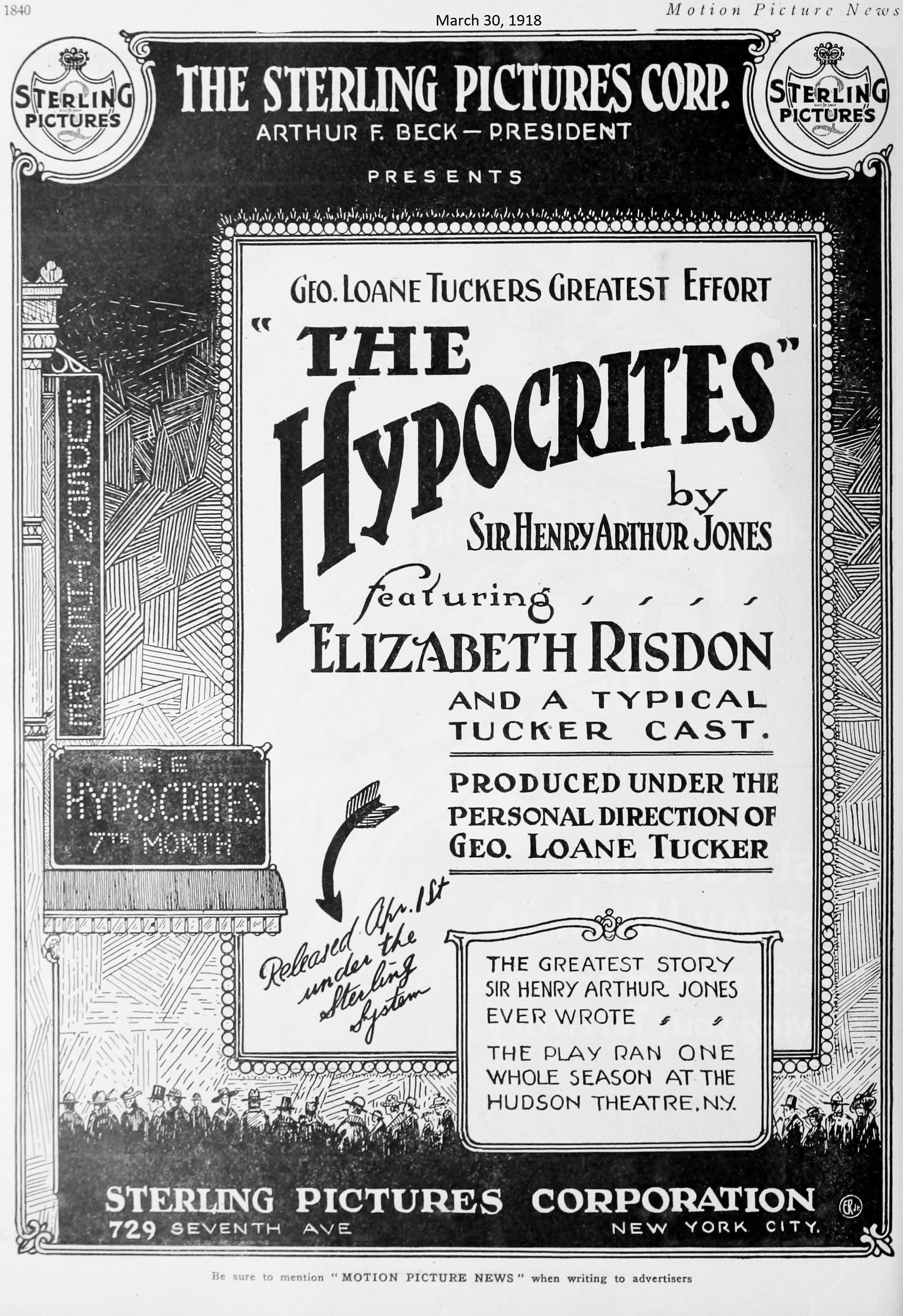
A definitive 7.5/10 rating for a film that redefined the boundaries of cult cinema. The Hypocrites remains a cornerstone of transgressive art.
Stepping into the world of Kenelm Foss’s 1915 adaptation of Henry Arthur Jones’ play, The Hypocrites, is to confront a mirror held up to the stark realities of Edwardian society, where the veneer of respectability often concealed a festering core of moral compromise. This is not merely a period piece; it's a timeless exploration of power, class, and the devastating cost of maintaining appearances. The narrative thrusts us immediately into a moral quagmire, a scenario where personal integrity is weighed against social standing, and the scales are invariably tipped by the heavy hand of ancestral pride and economic expediency. The film, even in its silent era grandeur, speaks volumes about the human condition, particularly when trapped within rigid societal constructs.
At the heart of this compelling drama stands the Squire, a figure embodying the very essence of patriarchal authority and the unyielding demands of his lineage. Portrayed with a stern gravitas that commands both fear and a begrudging respect, his character is the fulcrum upon which the entire plot pivots. His son, a young man caught between youthful indiscretion and the suffocating expectations of his birthright, finds himself ensnared in a classic dilemma: acknowledge his responsibility for a child born out of wedlock to a village girl, or succumb to his father's relentless pressure to deny paternity and marry an heiress. This isn't a simple choice; it's a profound moral battleground, where the son’s individual conscience clashes violently with the collective honor of his family name. The film meticulously charts the psychological toll of such a conflict, revealing the internal torment that accompanies the suppression of truth for the sake of social preservation. The pressure exerted by the Squire isn't just about avoiding scandal; it's about maintaining a carefully constructed edifice of power and privilege, one that cannot tolerate even the slightest crack in its foundation.
The portrayal of the village girl, a figure of vulnerability and quiet dignity, is particularly poignant. Her predicament highlights the vast chasm between the gentry and the working class, where the consequences of an elite's actions disproportionately fall upon those with the least social capital. Her silent suffering, often conveyed through subtle gestures and expressions, underscores the film's critique of a system that readily sacrifices the innocent for the comfort of the powerful. This dynamic, where the reputation of the elite is prioritized over the welfare of the less fortunate, finds echoes in other powerful cinematic narratives of social injustice. One might draw thematic parallels to films like The Great Divide, which similarly explores the moral complexities arising from class distinctions and societal expectations in the face of personal transgression. Both films, in their own ways, dissect the inherent unfairness when social standing dictates moral accountability.
The very title, The Hypocrites, serves as a direct, unvarnished declaration of the film's central theme. It's a scalpel applied to the body politic of a society obsessed with outward appearances, where moral integrity is often sacrificed on the altar of social standing. The Squire, for all his stern rectitude, is the embodiment of this hypocrisy. He demands truth and honor, yet orchestrates a grand deception to protect his family's name. This paradox is the film's beating heart, exposing the deep-seated contradictions that can fester within seemingly respectable institutions. The narrative doesn't merely present this hypocrisy; it dissects it, revealing the intricate mechanisms by which individuals rationalize their deceit, believing themselves justified in their actions for the 'greater good' of their social caste. The film argues, quite convincingly, that such a 'greater good' is often a thinly veiled excuse for self-preservation and the maintenance of an unjust power structure.
The forced engagement to the heiress is another layer in this elaborate tapestry of deceit. The heiress herself, often portrayed as a figure of innocence or, at best, a willing participant in a socially advantageous match, becomes a pawn in a game far larger than herself. Her presence underscores the transactional nature of marriage within these circles, where affection is secondary to assets and lineage. Her character often serves as a barometer for the moral climate, her reactions to the unfolding drama reflecting the societal norms she is expected to uphold. The film doesn't shy away from depicting the inherent tragedy of such arrangements, where personal happiness is often sacrificed for dynastic continuity. This theme of arranged marriages and their societal implications is a recurring motif in cinematic history, echoing the struggles seen in films like The Dancer and the King, where personal desires clash with the expectations of power and tradition, though perhaps with different stakes.
The performances in The Hypocrites, even through the lens of early silent cinema, are remarkably expressive, conveying a depth of emotion and character that transcends the lack of spoken dialogue. Douglas Munro, as the formidable Squire, delivers a performance of chilling authority. His stern countenance and imposing physicality perfectly encapsulate the unyielding nature of his character, making his moral compromises all the more jarring. He doesn't need words to convey his conviction; his very presence dictates the atmosphere of every scene he inhabits. Gerald Ames, as the conflicted son, effectively portrays the internal struggle between filial duty and personal conscience. His youthful angst and growing disillusionment are palpable, drawing the audience into his moral quandary. He is the emotional barometer of the film, registering the weight of his father's expectations and the injustice done to the village girl.
Elisabeth Risdon, likely in the role of the heiress, brings a nuanced portrayal of a woman caught in a gilded cage. Her expressions, often subtle yet profound, hint at an inner world of nascent awareness, perhaps even a dawning understanding of the moral rot beneath the surface of her privileged existence. Barbara Everest, presumably as the village girl, embodies pathos and quiet strength. Her character's plight is the moral compass of the film, and Everest’s performance ensures that her suffering is not just an abstract plot device but a deeply felt human experience. The supporting cast, including Charles Rock, Cyril Raymond, and Hayford Hobbs, contribute to the rich tapestry of the film's world, each character, however minor, adding another dimension to the intricate social dynamics at play. Their collective performances solidify the film’s critique of a society where individual agency is often crushed under the weight of communal expectation and class-driven ambition. The ability of these early actors to convey such complex emotions without dialogue is a testament to their craft and the power of visual storytelling, a skill that could be appreciated even when comparing to the nuanced performances in a film like Sherlock Holmes, where non-verbal cues are equally vital in conveying character and plot.
Kenelm Foss, as director, faced the challenge of translating Henry Arthur Jones’ popular stage play to the nascent medium of cinema. His direction is notable for its clarity and dramatic tension, successfully adapting the theatricality of the original for the screen. While early silent films often retained a certain stage-bound quality, Foss manages to imbue The Hypocrites with a visual dynamism that keeps the narrative engaging. He utilizes close-ups to emphasize emotional states, a technique still relatively new at the time, and employs effective framing to highlight power imbalances within scenes. The film’s visual language, though perhaps rudimentary by modern standards, is surprisingly effective in conveying the claustrophobia of societal expectations and the grandeur of the gentry's world. The settings, from the imposing manor house to the humble village dwellings, are carefully chosen to underscore the class divide, each location serving as a silent character in its own right, reflecting the aspirations and limitations of its inhabitants.
The adaptation itself speaks to the enduring appeal of Jones's original material. Jones was known for his social dramas, often critiquing the moral failings of Victorian and Edwardian society. Foss's cinematic interpretation preserves this critical edge, allowing the film to function not just as entertainment but as a commentary. The pacing, while deliberate, allows for the full weight of the moral dilemmas to settle upon the audience, fostering empathy for the victims of hypocrisy and disdain for its perpetrators. The visual storytelling, through careful composition and the actors' expressive performances, ensures that the film's message is conveyed with impactful clarity, even without spoken dialogue. This meticulous attention to visual narrative and character development, even in a relatively early film, showcases a burgeoning understanding of cinema's unique power to tell stories, much like the compelling narratives of social realism found in films such as Ingeborg Holm, which also masterfully uses visual cues to convey deep emotional struggles and societal critique.
More than a century after its release, The Hypocrites remains strikingly relevant. Its exploration of moral relativism, the abuse of power, and the corrosive nature of deceit transcends its period setting. The film serves as a stark reminder that the human propensity for hypocrisy, for prioritizing self-interest and social standing over truth and justice, is a timeless flaw. In an age where public image and carefully curated narratives often overshadow genuine accountability, the themes explored in this early silent film resonate with a disquieting familiarity. It prompts us to consider the ethical compromises we, as individuals and as a society, are willing to make for the sake of convenience, reputation, or perceived stability. The film, in its quiet yet powerful way, challenges us to look beyond the polished surfaces and question the true cost of maintaining a façade.
The film's strength lies not just in its dramatic plot but in its unwavering gaze at the uncomfortable truths about human nature and societal structures. It forces viewers to confront the uncomfortable reality that often, those who preach the loudest about virtue are the first to abandon it when their own interests are at stake. The film’s narrative arc, culminating in the potential exposure or concealment of the truth, leaves a lasting impression, prompting reflection on the societal forces that shape individual choices and the enduring struggle between moral courage and expediency. It's a testament to the power of early cinema to engage with profound philosophical questions, making The Hypocrites a significant artifact not only of film history but of social commentary. Its impact on subsequent narratives of class struggle and moral reckoning is undeniable, a quiet precursor to the complex character studies found in later dramas dealing with similar themes, such as Bristede Strenge, which also delves into the personal costs of societal pressures.
Ultimately, The Hypocrites is more than just a historical curiosity; it is a potent piece of cinema that continues to provoke thought and discussion. It’s a film that demands close attention, rewarding viewers with a nuanced critique of societal values and the often-painful consequences of living a lie. Its legacy endures as a powerful example of how art can hold a mirror to society, reflecting both its beauty and its profound imperfections. The film's ability to stir such deep contemplation, even through the medium of silent film, speaks volumes about the universality of its message and the skill of its creators. It's a necessary watch for anyone interested in the evolution of dramatic cinema and the timeless human struggle for authenticity in a world often defined by pretense.
IMDb —
1929
Community
Log in to comment.