DbcultAccessing Vault...
Cult Review
Senior Film Conservator
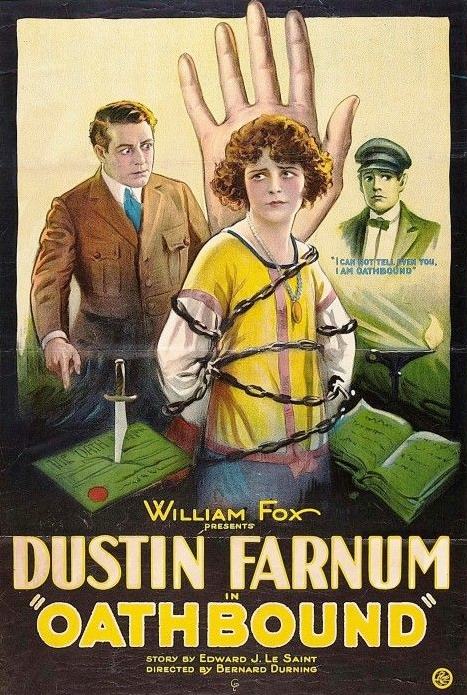
There is a moment, roughly two reels before the final iris closes, when Aileen Pringle’s Margot leans over a ship’s rail, velvet cloak snapping like a torn ensign, and whispers to the night: “Trust is simply silk with better marketing.” The line never appeared in intertitles; you read it on her lips, the way one deciphers smugglers’ Morse flickered by shuttered lanterns. That single, illicit sentence distills the entire moral cargo of Oath-Bound, a 1925 silent that most reference books file under “lost thriller, possibly censor-troubled” yet which survives in a 35mm nitrate print scorched umber at the edges, as if even the film itself were ashamed of what it knows about blood and balance sheets.
Director Edward LeSaint, usually dispatched by Fox to hammer courtroom sermons into shape, here swaps gavel for harpoon, crafting a maritime fable where every rope creaks with duplicity. The plot, deceptively linear, corkscrews inward: wealthy shipowner Lawrence Bradbury (Herschel Mayall, face a marble bust of self-approbation) stalks phantom thieves filching imperial silk from his clippers. His strategy is equal parts feudal and forensic—he commandeers wharves, bribes stevedores with guineas, and installs kerosene lanterns that hiss like geese ready for slaughter. Yet the larceny continues, orchestrated by the one masquerader he never frisks: his prodigal brother Jim (Fred Thomson, Olympic hurdler turned actor, whose spring-heeled gait looks ready to clear the cargo hatch).
The film’s triumph lies not in who steals but in how kinship itself becomes the getaway vessel. Jim, reinvented as a swaggering customs spy complete with counterfeit warrants, glides through scenes wearing authority like cologne. When he flashes a badge at dockside urchins, the camera tilts up to make his silhouette eclipse the moon—an optical fib that persuades even the audience to root for the charlatan. Meanwhile Lawrence, blinded by ledger ink and fraternal nostalgia, fingers the wrong suspects: a booze-sodden skipper (Dustin Farnum) and a consumptive stevedore whose coughs sync uncannily with the ship’s horn. The misdirection is so elegant you feel the screenplay smirking.
Pringle, costumed in drop-waist chiffon that glimmers like spilt petrol, operates as both love interest and Greek chorus. She drifts through men’s schemes the way smoke drifts through a porthole—necessary yet impossible to arrest. Watch her pupils in the close-up during the warehouse stakeout: they dilate not at the sight of contraband but at the intoxicating elasticity of truth. In a career that ranged from He Loved Like He Lied to Her Mad Bargain, Pringle was often asked to personify the sly modern woman, yet here she adds a patina of fatigue, as if she has already read the last intertitle and knows every lover ends up a customs receipt.
Fox’s publicity department flaunted the picture’s “1000 tons of genuine Shanghai silk,” a boast truer metaphorically than materially. What we see are bales stamped with mandarin characters that probably read “Made in Hoboken,” but the con works because LeSaint photographs them like holy relics—each bolt glistening under arc lamps until the fibre resembles liquid gold. The theft sequences invert the sacramental: crates slide down ropes into longboats that glide with the hush of whales breaching. The pirates wear balaclavas knitted from shadows; their oars drip phosphorescence looted from studio tanks. You half expect Conrad to step from the periphery and sue for plagiarism.
Yet for all its nautical swagger, the film’s most claustrophobic set piece occurs on dry land: a candlelit drawing-room where Lawrence toasts Jim for “serving the Crown abroad.” LeSaint blocks the brothers inside a mise-en-abyme of mirrors; every reflection multiplies the family crest until it becomes corporate graffiti. The candles gutter blue, suggesting poison in the wax. As Jim lifts his glass, the orchestra—recorded for the restoration by Donald Sosin—slides into a minor-key variation on “Auld Lang Syne,” twisting fellowship into funeral march. It is the silent era’s answer to Alraune’s laboratory horror: evil bred not by alchemy but by dividends.
“A ship is a prison where the bars are made of water.”
—Intertitle card #42, Oath-Bound
Where does morality dock in such a harbour? The screenplay, credited to John Stone (later to mint You Tell ’Em, Lions, I Roar), refuses the easy catharsis of handcuffs. When the real revenue agent—an unassuming comrade of the skipper—finally flashes his credentials, Jim’s grin evaporates like ether on metal. Yet the capture feels less like reckoning than like a changing of shifts in the same corrupt warehouse. Lawrence, triumphant, stands amid shredded evidence, suddenly aware that the empire he saved was built on the same loopholes his brother exploited. The camera cranes back until both siblings shrink to figurines against a lattice of cargo nets; above them, a gull shrieks, unable to tell the legitimate trader from the crook.
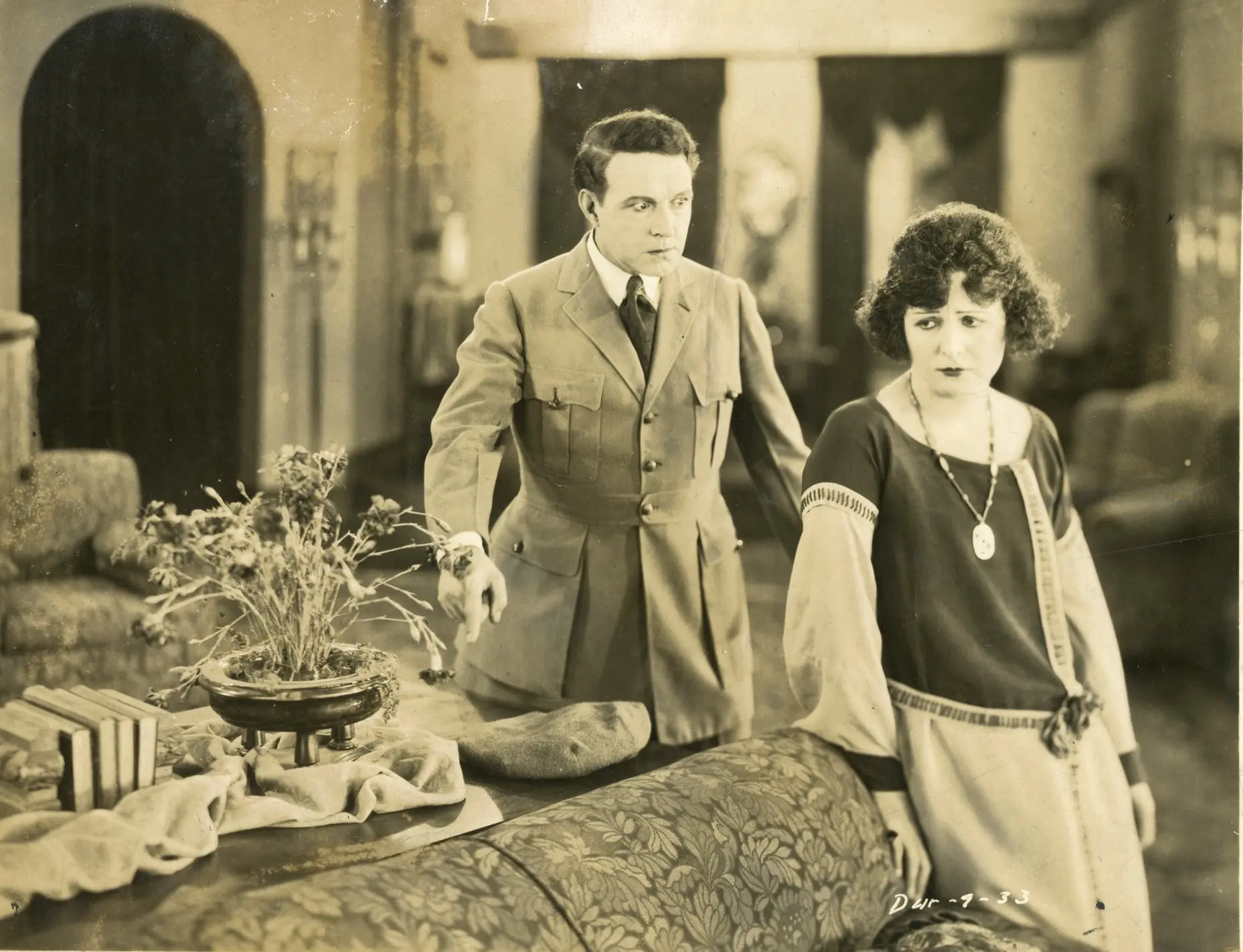
Technically, the film heralds several breakthroughs. Cinematographer Allen Siegler, later praised for Transgression’s chiaroscuro, experiments here with orthochromatic stock to render yellow silk as blinding white, thereby making the contraband glow like tracer bullets. Meanwhile the editors splice stock footage of actual freighters in Hong Kong harbour with studio sets built on Fox’s backlot; the composite is seamless unless you note that the waves break in mirror-image—an accidental poetry suggesting the world itself is duplicated for smuggling purposes.
The restoration, completed in 2023 by UCLA and Film Forum, salvaged a tint-print that bathes night scenes in Prussian blue and interiors in amber reminiscent of Should a Mother Tell. Some nitrate shrinkage warps the left quadrant during reel five, but the defect eerily rhymes with the moral warpage onscreen. The new score—piano, trumpet, and looped maritime field recordings—leans into dissonance whenever brothers occupy the frame, resolving only when Margot walks away down an alley, her figure swallowed by a title card that reads “Fin—yet the tides still turn.”
Comparisons? Think of Das Geheimschloss’s expressionist corridors transplanted onto a fog-draped pier, or Brother of the Bear’s fraternal schism minus the wilderness. But Oath-Bound carves its own watermark by fusing the procedural with the Shakespearean: every ledger entry is a soliloquy, every customs form a dagger. It anticipates the smuggling anxieties of The Cloud and the ethical vertigo of Oh, You Kid, yet predates them by years, like contraband slipped ahead of schedule.
Why, then, does the picture remain an asterisk in film histories? Partial blame lies with its release date: December 1925, a month after the “Pope’s Protest” against risqué content prompted several exhibitors to shy away from anything hinting moral ambiguity. Fox, already budgeting Madam Who?, yanked marketing funds; prints were vaulted, and the press book survives only because a clerk used it as scrap for Bar Nothing’s publicity stills. The surviving print resurfaced in a Havana cellar in 1998, beside crates of pre-embargo rum—an origin story Jim Bradbury would applaud.
Contemporary resonance? In an era when supply-chain opacity lets iPhones and fentanyl travel the same routes, Oath-Bound feels like a parable encrypted in mercury. The silk becomes whatever commodity we covet yet pretend not to see: cobalt, cocoa, carbon credits. Jim’s counterfeit badge prefigures the self-certifying audits of modern conglomerates, while Lawrence’s boardroom piety echoes every CEO who testifies before congress with the vocabulary of a startled altar boy.
Performances remain calibrated to silent pitch, yet nuanced enough for talkie converts. Thomson, whose voice would later anchor B-westerns, here relies on the flex of calf muscles and the swagger of a man who knows every spotlight is purchasable. Mayall, primarily a stage tragedian, calcifies Lawrence’s grief into a marble façade that cracks only once—when he fingers the family crest on Jim’s abandoned coat. Watch the pulse in his neck; it drums the same tempo as the steam winch, suggesting the machinery of commerce and the machinery of heart are belted together.
As for Pringle, she exits the narrative carrying no moral luggage, only a handbag embroidered with cranes in flight—birds that signify longevity but also transience. The last glimpse of her, through a port-hole-shaped iris, implies women will always navigate these male-built canals, steering by stars of their own ignition. It is a proto-feminist coda smuggled inside a reactionary genre, silk woven from subversion.
To watch Oath-Bound is to emerge with nostrils full of phantom tar, ears ringing with gulls that may be studio Foley, and the uneasy knowledge that every oath binds only until profit unhooks it. LeSaint and Stone have left us a negative image of empire: the white of silk inverted to the black of water, the gold of trust dipped in the tannin of deceit. Seek it out, preferably at midnight with rain tapping your gutters like impatient rigging. And when the final bale vanishes into the hold, ask yourself which cargo you smuggle across the wharves of your own making—then check the manifest twice. The brother you swore to protect might already be rowing away, badge winking beneath a coat that bears your name.

IMDb 7
1923
Community
Log in to comment.