DbcultAccessing Vault...
Cult Review
Senior Film Conservator
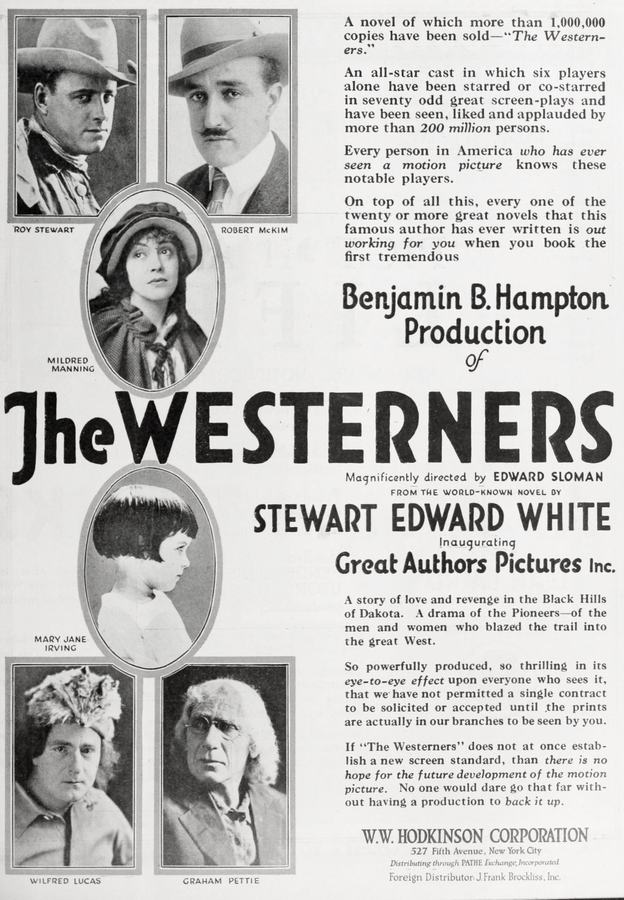
The silent era, often relegated to a quaint historical footnote, frequently birthed cinematic narratives of astounding thematic depth and emotional resonance. Among these, The Westerners (1919), penned by Richard Schayer and Stewart Edward White, stands as a stark, uncompromising testament to the genre's formative power. Directed with an unvarnished realism by Edgar Jones, this film is far more than a mere cowboy adventure; it is a sprawling, often brutal exploration of vengeance, identity, and the relentless grip of past traumas, played out against the vast, indifferent canvas of the American frontier. It's a narrative that, even a century later, retains a raw, visceral impact, compelling us to confront the cyclical nature of hatred and the profound consequences of a single, unforgivable act.
At its core, The Westerners is a tragedy born from a moment of perceived indignity. Michael Lafond, portrayed with a brooding intensity by Robert McKim, is introduced as a 'half-breed' Indian, a figure marginalized by the societal prejudices of the era. His expulsion from a wagon train by the scout Jim Buckley (Wilfred Lucas), following an insult directed at a white woman, is the inciting incident, a spark that ignites a conflagration of enduring malice. This isn't just a simple slight; it's a public shaming that strips Lafond of his dignity, a wound that festers into an all-consuming desire for retribution. The film wastes no time in illustrating the devastating fallout of this initial encounter, as Lafond’s vengeful spirit leads him to commit an act of unthinkable cruelty: the murder of Prue Welch (Mildred Manning), the innocent wife of a New England professor, and the abduction of her infant daughter, Molly. This act of kidnapping is not merely a crime; it is a meticulously planned, long-game strategy of psychological torment, a living embodiment of Lafond's festering hatred, designed to inflict maximum pain upon those he holds responsible for his own suffering.
Fifteen years later, the narrative re-emerges with Molly (Mary Jane Irving), now a young woman, unwittingly ensnared in Lafond's elaborate scheme. He has established a dance hall in the burgeoning Black Hills, a seemingly legitimate enterprise that thinly veils his continued machinations. Molly, forced into labor within this establishment, serves as a poignant symbol of stolen innocence and a life unjustly derailed. Meanwhile, Jim Buckley, the man who set this tragic chain of events in motion, has transcended his past as a mere scout, becoming a respected and influential citizen within the community. Lafond’s return is not for a quick, bloody confrontation, but for a calculated, drawn-out campaign to dismantle Buckley’s reputation and life piece by piece, leveraging Molly as his ultimate weapon. The film thus transforms from a tale of immediate revenge into a sprawling saga of long-term psychological warfare, where the past continually haunts and dictates the present.
The characterizations in The Westerners are etched with a stark, almost operatic intensity. Robert McKim’s portrayal of Michael Lafond is particularly noteworthy. He embodies the archetype of the wronged villain, a man whose initial grievances, however understandable in a broader societal context of racial prejudice, morph into an unholy obsession. McKim conveys Lafond’s internal torment and his relentless, cold-blooded determination with a chilling effectiveness, relying solely on facial expressions and body language, a testament to the power of silent acting. His Lafond is not a caricature but a deeply scarred individual, consumed by a darkness of his own making, yet tragically shaped by the injustices he faced. This complexity elevates the film beyond a simplistic good-versus-evil narrative, prompting reflection on the origins of malevolence. One might draw parallels to the morally ambiguous figures found in films like The World, the Flesh and the Devil, where societal pressures and personal failings intertwine to create compelling antagonists.
Mary Jane Irving, as the grown Molly, delivers a performance imbued with a quiet resilience and a profound sense of pathos. Her character is a victim of circumstance, yet she is not passive. She navigates the grim realities of her life with an underlying strength, a nascent awareness that her existence is not entirely her own. Her eventual realization of her true parentage and her role in Lafond’s scheme is handled with a delicate touch, avoiding overt melodrama while still conveying the crushing weight of her predicament. Dorothy Hagan, though in a more supporting role, adds layers of emotional depth, particularly in scenes that hint at the broader community's struggle with justice and morality. Wilfred Lucas, as Jim Buckley, projects a sense of rugged integrity, a man trying to build a respectable life in a land still grappling with its wild past, only to find himself dragged back into the mire of a personal vendetta. His evolution from a frontier scout to a pillar of the community underscores the film’s thematic interest in the taming of the West, both physically and morally.
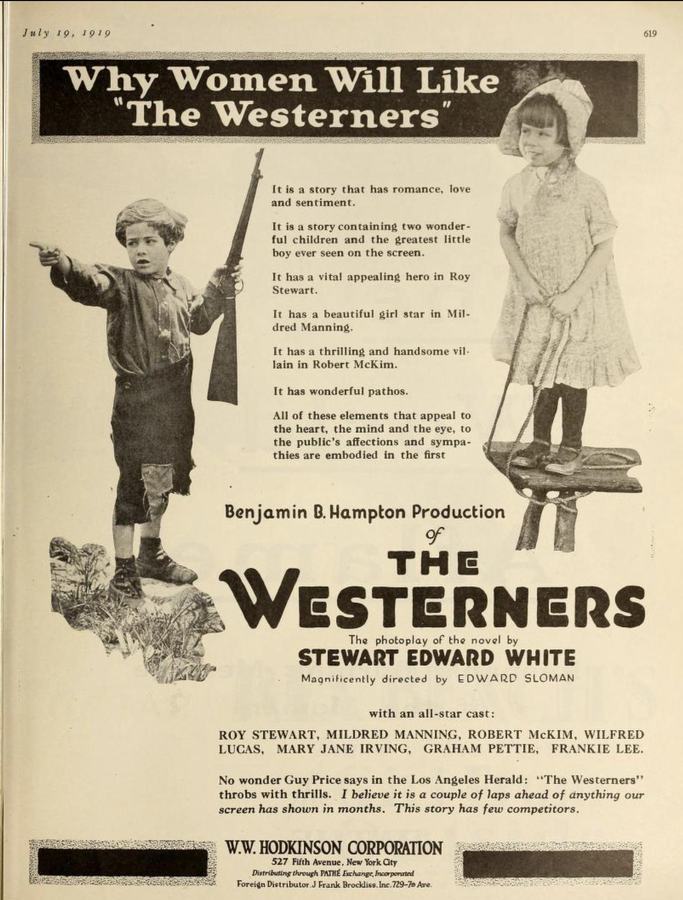
The thematic tapestry of The Westerners is rich and multifaceted. The most prominent theme, of course, is that of revenge. The film meticulously illustrates how the pursuit of vengeance, rather than bringing solace, only perpetuates a cycle of suffering, consuming both the avenger and their unwitting targets. Lafond's elaborate plan, while initially driven by a desire for justice (as he perceives it), ultimately becomes a corrosive force that threatens to destroy everyone in its path. This echoes the grim realities explored in many silent dramas, where the consequences of human actions often reverberate through generations, much like the intricate social commentaries found in films such as Samhällets dom. Beyond revenge, the film delves into questions of identity and belonging. Molly’s stolen childhood and fabricated parentage raise profound questions about what constitutes identity – is it bloodline, upbringing, or the choices one makes? Her journey is one of self-discovery, of wrestling with a past that is not truly hers, a theme explored with different nuances in films like A Son of the Hills or even the more domestic dramas of Motherhood, where the bonds of family and identity are tested under duress.
Another crucial theme is the clash of cultures and the pervasive racial prejudice of the era. Lafond’s 'half-breed' status is not merely a descriptive detail; it is central to his initial marginalization and, arguably, to the intensity of his subsequent rage. The film implicitly critiques the societal norms that would allow such an individual to be summarily dismissed and humiliated. This societal context provides a powerful backdrop for Lafond's actions, making him a more complex figure than a simple villain. It challenges the audience to consider the systemic injustices that can drive individuals to extreme measures, a nuanced perspective often present in serious silent dramas. Furthermore, the film examines the transition from frontier justice to established law. Buckley's transformation into a leading citizen represents the burgeoning order in the West, yet Lafond’s personal vendetta threatens to undermine this fragile stability, highlighting the constant tension between individual grievances and the collective need for peace and order. The law, in this context, is not always swift or absolute, and personal scores often take precedence, a common trope in classic Westerns, but here handled with a palpable sense of human cost.
From a filmmaking perspective, The Westerners showcases the evolving sophistication of silent cinema. Edgar Jones’ direction is characterized by a deliberate pacing that allows the emotional weight of the narrative to fully resonate. He masterfully utilizes the vast Western landscapes not just as a backdrop, but as an active participant in the drama, emphasizing the isolation and the harsh realities faced by the characters. The sweeping vistas often contrast sharply with the claustrophobic interiors of the dance hall, visually reinforcing the characters' emotional states. The use of intertitles is judicious, providing necessary exposition without interrupting the visual flow, allowing the actors’ nuanced expressions to carry much of the storytelling burden. The cinematography, while perhaps not groundbreaking by later standards, effectively captures the rugged beauty and inherent dangers of the frontier, creating an immersive experience for the audience. The performances, as mentioned, are a testament to the power of non-verbal communication, with actors like Robert McKim and Mary Jane Irving conveying deep emotional states through gesture and gaze alone. This reliance on visual storytelling is a hallmark of the silent era, and The Westerners is a prime example of its effectiveness.
Comparing The Westerners to its contemporaries, one can appreciate its unique blend of grand Western spectacle and intimate psychological drama. While many Westerns of the era focused on clear-cut heroes and villains, or straightforward adventure, this film dares to explore the moral ambiguities and the lasting scars of conflict. It shares some thematic ground with films like Enoch Arden, in its exploration of loss and the profound impact of time and separation on human relationships, albeit with a much darker, more vengeful twist. The focus on a child being raised under false pretenses might also evoke comparisons to narratives like The Millionaire Baby, though The Westerners frames this within a much harsher, more brutal context of deliberate malice rather than mere circumstance or greed. The film's willingness to delve into the darker aspects of human nature and societal prejudice distinguishes it from some of the more idealized portrayals of the West.
The enduring legacy of The Westerners lies in its unflinching portrayal of the consequences of hatred and the complex interplay of fate and human choice. It reminds us that even in the vast, seemingly open spaces of the frontier, individuals are often trapped by the past, by their own decisions, and by the prejudices of their society. The film’s resolution, without giving away specifics, strives for a sense of justice, but it is a justice hard-won and deeply scarred, reflecting the harsh realities it depicts. It's not a tale of unbridled heroism, but of flawed individuals navigating a morally treacherous landscape. The performances, particularly McKim’s chilling portrayal of Lafond, remain etched in the memory, serving as a powerful reminder of the dramatic capabilities of silent cinema. The film, therefore, is not merely a historical artifact; it is a compelling piece of storytelling that continues to resonate with its timeless themes of revenge, identity, and the enduring human struggle for redemption.
In conclusion, The Westerners stands as a vital, if often overlooked, entry in the canon of early American cinema. It is a film that challenges its audience, inviting them to consider the profound and often destructive impact of prejudice and personal vendettas. Its narrative ambition, coupled with strong performances and effective direction, solidifies its place as a significant precursor to the more nuanced and psychologically complex Westerns that would emerge in later decades. For anyone interested in the foundational narratives of the Western genre, or indeed, in the rich tapestry of silent film, The Westerners offers a powerful and thought-provoking experience, a gritty, human drama etched into the very fabric of the frontier myth. It is a stark reminder that even a century ago, filmmakers were grappling with profound questions of morality and justice, presenting them to audiences with an artistry that transcends the absence of spoken dialogue, leaving an indelible mark on the landscape of cinematic storytelling.
IMDb —
1924
Community
Log in to comment.