DbcultAccessing Vault...
Cult Review
Senior Film Conservator
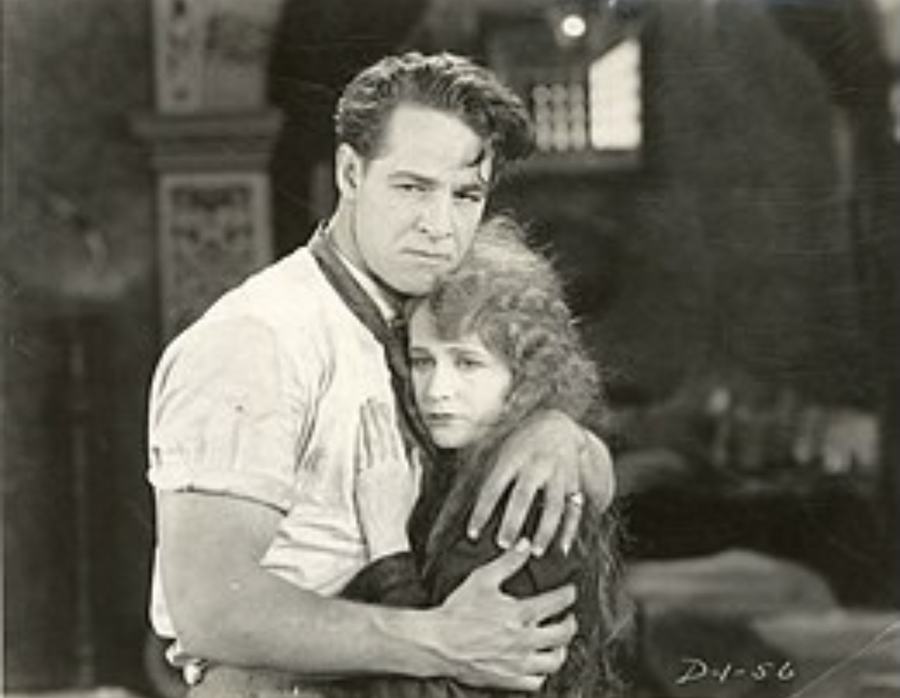
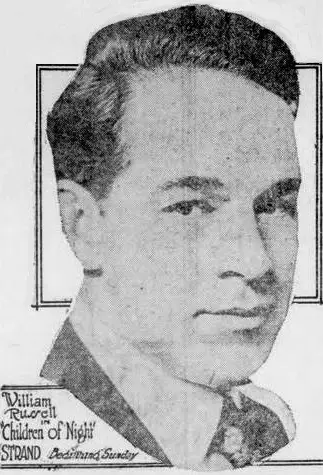
There is a specific kind of magic inherent in the silent era that modern cinema, with all its high-fidelity roar, often struggles to replicate. It is the magic of the subconscious made manifest. Children of the Night (1921) isn't just a film; it is a psychological document of the post-WWI American psyche, wrapped in the trappings of a pulp thriller. Directed by and starring William Russell, the film tackles the universal yearning for transcendence through the eyes of Jerrold Jarvis Jones, a man whose life is a series of grey permutations until he closes his eyes.
The film opens with a stifling depiction of clerical work. It’s the kind of visual storytelling that makes you feel the dust on the ledger books. Jones is a shipping clerk—a cog in a machine that doesn't care if he turns. This setup is crucial. Without the crushing weight of his reality, the liberation of his dream wouldn't carry the same emotional heft. When he falls asleep, the transition is seamless, almost liquid. We aren't just watching a dream; we are entering a metaphysical playground where the rules of social class are suspended.
As 'Tourvaine,' Russell sheds the slumped shoulders of the clerk for the rigid, confident posture of a man who owns the room. The contrast is startling and speaks to Russell’s range as a performer. This isn't just a costume change; it’s an ontological shift. The dream sequences are filmed with a certain ethereal clarity that distinguishes them from the gritty, static shots of the office. It reminds me of the stylistic risks taken in The Lonesome Chap, where character isolation is used as a narrative weapon. Here, however, the isolation is replaced by a forced, dangerous belonging.
One cannot discuss Children of the Night without acknowledging the pen of Max Brand. Known primarily for his Westerns, Brand’s involvement here brings a rugged, almost feral energy to the 'secret society' trope. The 'Children of the Night' are not your typical cartoonish villains; they are a sophisticated network that feels like a precursor to the noir syndicates of the 1940s. The writing avoids the pitfalls of melodrama by grounding the stakes in physical action and identity politics.
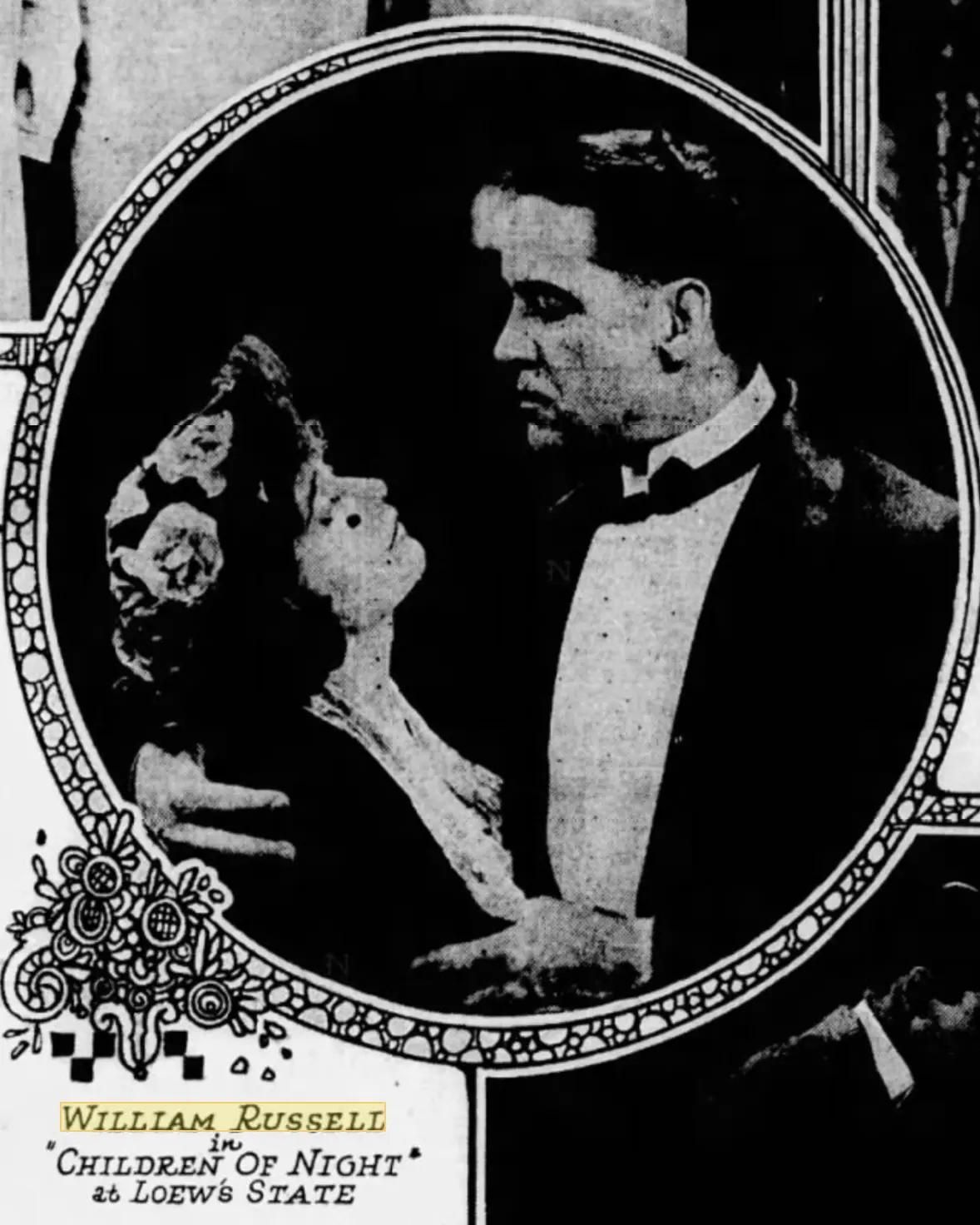
There is a sequence in the middle of the film—a high-stakes automobile ride—that captures the frantic energy of 1920s urbanism. It’s a moment of pure kinetic cinema. While films like Stop That Wedding utilized movement for comedic effect, Children of the Night uses it to build a sense of inescapable fate. The car isn't just a vehicle; it’s a vessel carrying Jones deeper into a lie he isn't sure he wants to escape.
Ruth Renick plays Sylvia, the stenographer who exists in both of Jones’s worlds. This dual role is fascinating from a feminist perspective, even within the constraints of 1921. In the office, she is ignored or treated as part of the furniture—much like Jones himself. In the dream, she is the catalyst for his heroism. The film subtly suggests that our perceptions of others are limited by the cages we inhabit. When Jones rescues her from the crooks, he is, in a sense, rescuing the idea of her from the mundanity of their shared workplace.
This theme of 'the hidden self' is a recurring motif in silent cinema, often seen in works like Why Trust Your Husband, though that film plays it for laughs. Children of the Night is far more earnest. It asks: which version of us is real? The one who collects a paycheck, or the one who fights for justice in the dark? The chemistry between Russell and Renick is palpable, transcending the lack of dialogue through meaningful glances and a shared sense of desperation that eventually turns into a shared sense of triumph.
The use of light and shadow in the 'Children of the Night' meeting is nothing short of proto-Expressionist. The way the shadows stretch across the secret society’s lair creates a sense of claustrophobia that contrasts beautifully with the wide, bright shots of the high-society parties Jones later infiltrates. It’s a visual representation of the 'underworld' vs. the 'overworld.' The cinematography doesn't just document the plot; it comments on it.
When comparing this to the visual style of Mr. Grex of Monte Carlo, one notices that Children of the Night is less interested in the glamour of the setting and more interested in the tension within it. Every frame feels loaded. The fights are choreographed with a raw, unpolished vigor that feels surprisingly modern. There’s a scene involving a struggle near a staircase that utilizes vertical space in a way that many contemporary directors could learn from.
The most radical part of the film is the ending. Typically, 'it was all a dream' endings are frustrating. They reset the status quo and render the previous hour meaningless. But Children of the Night subverts this. Jones wakes up, but he doesn't go back to being a lowly clerk. He carries the aggressive confidence of Tourvaine into his waking life. This is a powerful message: the dream was a rehearsal for reality.
When he walks out of that office with Sylvia, it’s a middle finger to the entire capitalist structure that tried to bury him. It’s a moment of catharsis that must have resonated deeply with 1921 audiences who were navigating the post-war economic shift. It shares a thematic DNA with The Tattlers or The Other Half, where social boundaries are tested and ultimately broken. Jones realizes that the only thing keeping him in his place was his own belief in his insignificance.
It is a tragedy of film history that Children of the Night isn't discussed with the same reverence as The Cabinet of Dr. Caligari or Nosferatu. While it lacks the overt horror of those films, it possesses a psychological depth that is equally compelling. It explores the 'horror' of a wasted life and the 'fantasy' of a meaningful one. The supporting cast, including the likes of Maurice 'Lefty' Flynn and Helen McGinnis, provide a solid foundation, ensuring that the world feels lived-in and populated by real threats and real allies.
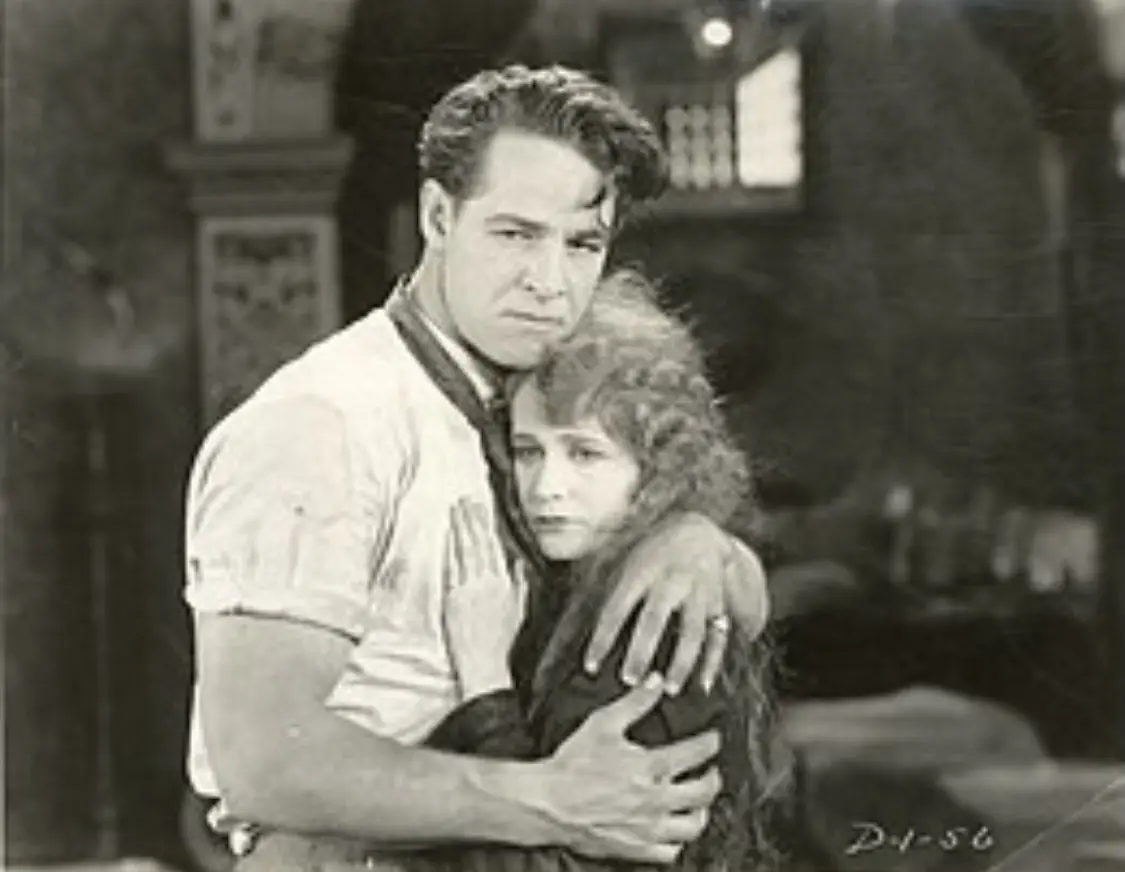
Even in its quieter moments, the film excels. The way Jones looks at his ink-stained hands before falling asleep is a masterclass in silent acting. It’s a small detail, but it tells you everything you need to know about his character's internal state. This attention to detail is what separates a good film from a great one. It’s as emotionally resonant as the struggles depicted in The Little Orphan, though focused on a different stage of life.
Ultimately, Children of the Night is a film about the transformative power of the imagination. It suggests that our dreams are not just escapes, but blueprints. By allowing himself to imagine a version of himself that was brave, capable, and loved, Jerrold Jarvis Jones was able to manifest that reality. It’s a surprisingly optimistic take on the human condition, wrapped in a dark, thrilling package.
For those who appreciate the nuances of silent film, this is essential viewing. It’s a bridge between the simplistic morality plays of the early 1910s and the complex character studies of the late 1920s. It has the grit of a crime drama, the heart of a romance, and the soul of a philosophical treatise. If you find yourself feeling like a cog in a machine, perhaps it's time to take a nap and see who you become in the dark. Just make sure you wake up with enough fire to walk out of the office.
Note: For more explorations of early 20th-century identity and social shifts, check out our reviews of The Janitor's Harem and Tangled Fates.
IMDb 4.9
1928
Community
Log in to comment.