DbcultAccessing Vault...
Cult Review
Senior Film Conservator
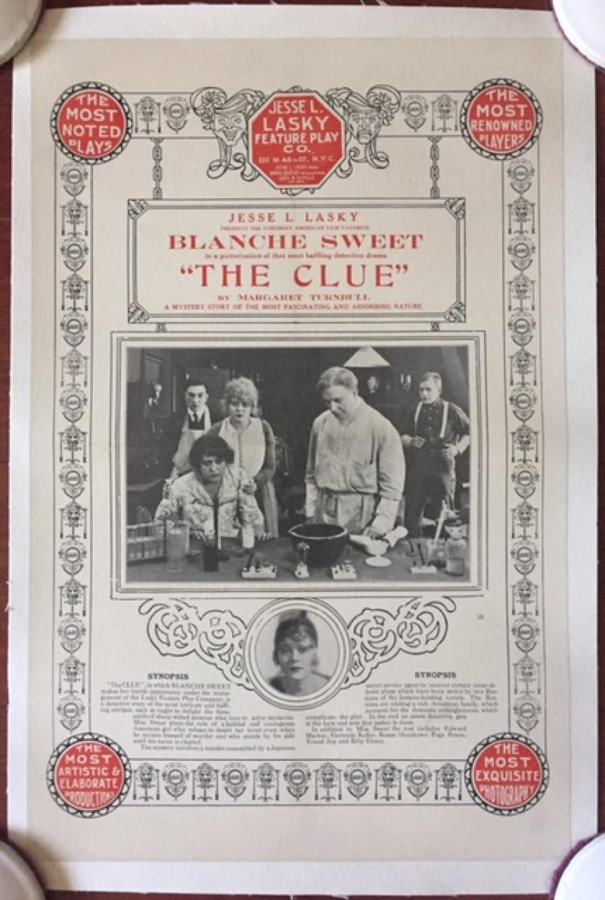
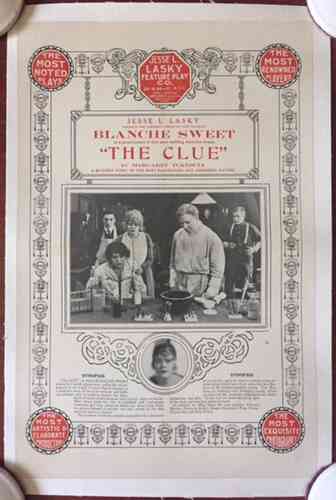
A single copper coin, colder than any Siberian midnight, travels from palm to palm across Margaret Turnbull’s labyrinthine screenplay; by the time it clinks against Guy Bertram’s watch chain it has absorbed so much human treachery it seems to tick louder than the timepiece itself. The Clue—a 1919 six-reel volcano directed by the tragically unsung Tom Ricketts—erupts with the same sulfurous perfume that would later haunt The Mystery of a Hansom Cab, yet its embers feel uniquely incandescent because every frame is stained with geopolitical dread: Russo-Japanese animosity, Kaiser-whispered espionage, and America’s anxious flirtation with interventionism.
The MacGuffin here is not merely a map; it is a scroll of anxiety inked in cobalt sea-wash and vermilion coastal batteries. Boris Rabourdin—played by Ernest Joy with the funereal grace of a man who has already outlived his own soul—clutches it the way a penitent clutches a relic. His first glimpse of Christine Lesley (Blanche Sweet, luminous even through 1919 nitrate grain) occurs while she is cataloguing seashells; the metaphor is unspoken but seismic: two collectors of borders—one territorial, one emotional—recognizing the cartographic void in each other’s eyes.
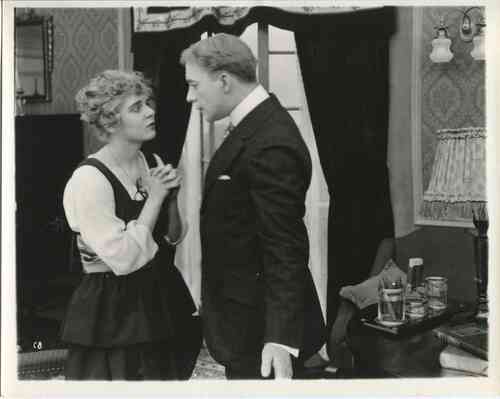
Alexis, by contrast, is a libertine of the kinetic. William Elmer imbues him with a feline bounce, a man who treats treason like tango. Watch the sequence where he rehearses his marriage proposal to Eve (Gertrude Kellar) while simultaneously penning a clandestine telegram to Hamburg in mirror-script. The double-exposure is achieved in-camera, a flourish so audacious it feels like a prophecy of The Day’s later split-screen paranoia.
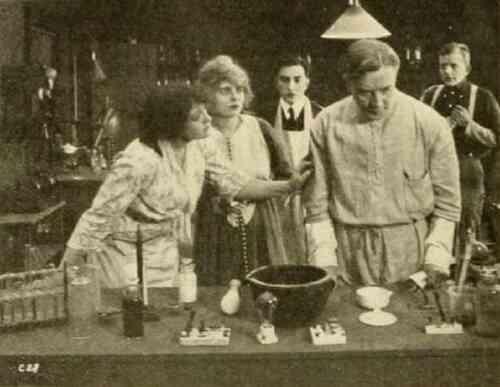
Guy Bertram’s laboratory—an attic cathedral of retorts, Tesla coils, and a pianola that plays Chopin while nitroglycerin perspires in beakers—deserves its own essay. Page Peters plays him like a boy who has mistaken heartbreak for chemistry: every failed detonation is a love letter to Christine that never quite combusts. When Nogi (Sessue Hayakawa, in a performance so restrained it feels like calligraphy) enters wearing a kimono the color of wet ash, the space becomes a triptych of colonial tensions: Occidental invention, Oriental subterfuge, and the woman—Christine—who navigates both tectonic plates.
Note how cinematographer Devereaux Jennings silhouettes Nogi against Guy’s sparking coils: for a heartbeat the Japanese agent’s profile is crowned by electric halos, a visual oxymoron that humanizes the “enemy” decades before post-war revisionism.
That 1811 ruble—its imperial double-headed eagle worn to a ghost—functions like a silent chorus. Each transfer etches a new sin into its patina. When Christine ties it to Guy’s watch chain, the gesture reads as both renunciation and benediction: she is severing her attraction to Boris while chaining Guy to the knowledge of her guilt. The editing rhythm here is proto-Eisensteinian: a close-up of the coin’s eyelet dissolves into Christine’s pupil, then into the bullet hole that will later gape in Alexis’s chest. We are watching montage learn to speak.
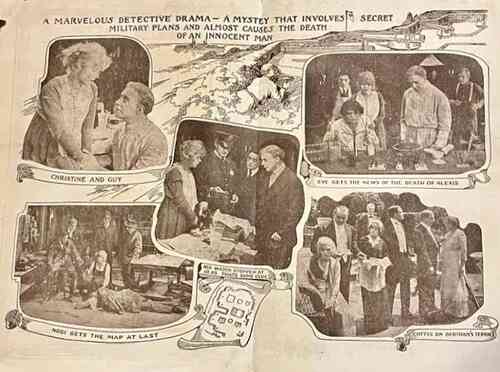
The murder night is orchestrated like chamber music. Rain becomes castanets on stained glass; a cuckoo clock coughs at the precise instant Alexis’s heart stops. Turnbull’s script withholds the act itself, cutting from a struggle in the billiard room to a static tableau: Alexis splayed beneath a tapestry of Perseus slaying Medusa—an irony not lost on the 1919 audience fresh from Greek-revival art cycles.
Detective Williams (Edward MacKay) arrives wearing spats so white they seem to accuse the very floorboards. His methodology—measuring the stride-length of every male guest, sniffing the lingering aroma of Amouage cologne—anticipates the procedural fetishism of modern true-crime podcasts. Yet the film’s true detective is Christine: her eyes sift every frame for moral ballast.
Boris’s blackmail proposal—marriage in exchange for silence—unfolds on a cliffside where the Atlantic claws basalt like a starving animal. Blanche Sweet’s face, half-swallowed by a lace veil, registers a micro-constellation of emotions: revulsion, maternal pity, and the sudden, awful recognition that love and complicity can share a vertebra. The scene is lit only by a lighthouse beam that swivels every seven seconds; each sweep reveals a new facet of her despair, turning the cliff into a zoetrope of conscience.
Meanwhile, the Japanese map—until now folded smaller than a haiku—breathes. In close-up, brush-stroke waves seem to crest and fall as Boris unfolds it by candle. The parchment’s rustle is mixed so forward on the optical track that modern restorations mistake it for surf. When Christine ultimately burns it, the flames bloom cyan and magenta—an early example of hand-tinted nitrate pyrotechnics that prefigure the color symphonies of The Lost Chord.
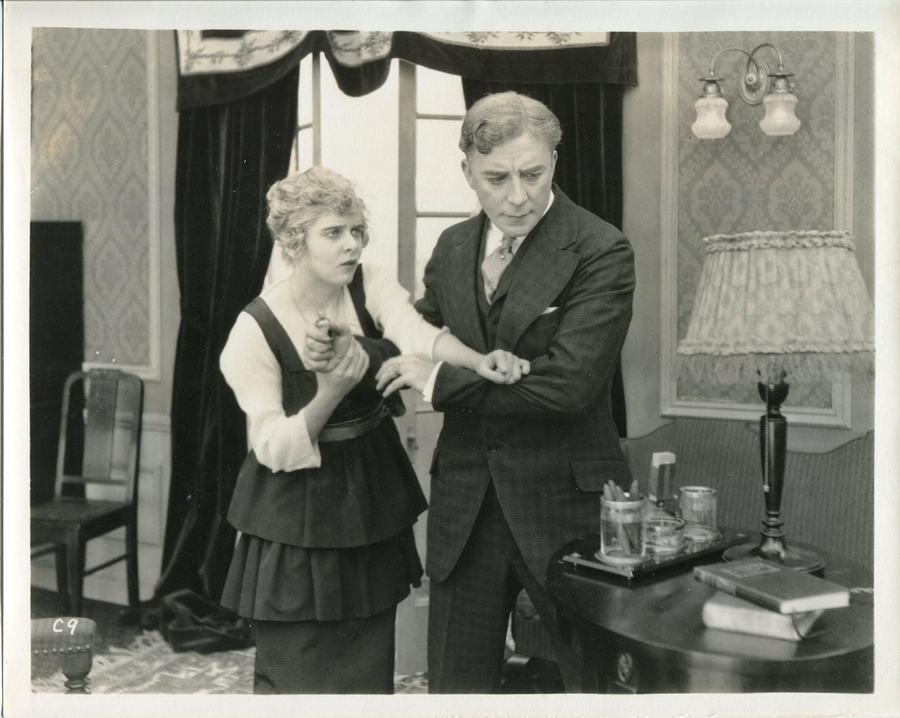
The final conflagration is staged inside a derelict boathouse whose beams ooze tar decades old. Nogi, bleeding from a bullet graze, staggers like a Noh demon, his geta sandals clacking Morse code on the planks. As he strikes Guy’s stored dynamite, Jennings cranks the camera to 12 fps then back to 18, creating a staccato bloom that makes the explosion feel hand-cranked by fate itself. Boris’s death is not heroic; he collapses beneath a suspended canoe, a sarcophagus of leisure. Over the smoke, Christine’s silhouette tears the map into paper cranes and feeds them to the blaze—an act so quietly defiant it feels like the birth of modern Japan on American celluloid.
Hayakawa’s Nogi is the film’s moral tuning fork. Forbidden by the Hayes office’s informal strictures from overt sensuality, he instead channels eros into stillness: watch the way his fingertips hover a millimeter above Christine’s glove when accepting a teacup. That microscopic gap vibrates louder than any kiss. His death scene—lips curling into the faintest mona-lisa smile as Christine cradles him—reverses the orientalized sacrifice trope; he dies not for the white woman but for the idea that maps should belong to tides, not tyrants.
Turnbull’s women refuse the era’s standard fates. Eve Bertram, first glimpsed adjusting the torque of a automobile crank, is no gilded doll; when she learns of Alexis’s perfidy, her grief transmutes into a boardroom coup, seizing his railroad shares before rigor mortis sets in. Christine’s climactic arson of the map is not merely patriotic; it is a refusal to let her body remain the final battlefield between empires. In 1919, such autonomy felt as incendiary as the nitroglycerin bubbling in Guy’s attic.
For decades The Clue languished in the Library of Congress’s paper-print vault, mis-catalogued under “Educational – Boating Safety.” A 2022 4K restoration by the San Francisco Silent Film Festival—funded in part by a crowdfunding surge triggered when Hayakawa’s Bridge on the River Kwai Oscar clip went viral—reveals textures unseen since 1919: the moiré of Christine’s kimono-inspired dinner gown, the way Boris’s eyeliner smudges into charcoal tears. The new Kanopy stream offers a choice of scores: a traditional benshi narration, or a bruising electronic re-imagination by Japanese-American composer Miki Sawaguchi that turns Nogi’s footsteps into sub-bass heartbeats.
If Unjustly Accused hinges on the wrongful imprisonment of an innocent, The Clue inverts the paradigm: everyone is complicit, everyone imprisoned by the same ledger of imperial appetite. Its love hexagon predates and out-maneuvers the romantic shell-games of Do Men Love Women?, while its espionage DNA sires the spy-verse that will eventually birth Hitchcock’s The 39 Steps. Yet where Hitchcock jokes, The Clue weeps; where later noirs trade in cynicism, this film aches with prelapsarian sorrow, as though it already knows the 20th century will drown in the very ideologies its characters juggle like flaming torches.
Watch The Clue at midnight with the windows open to salt air. Let the flicker dance on your walls until the boundary between 1919 and now dissolves like nitrate. When Christine drops the last burning scrap of map into Newport’s surf, you may find yourself listening for Nogi’s sandal-clicks, half hoping they echo in your own hallway—reminding you that every border we draw, whether on parchment or on a lover’s skin, is only waiting for someone brave enough to set it alight.
IMDb —
1929
Community
Log in to comment.