DbcultAccessing Vault...
Cult Review
Senior Film Conservator

In the annals of early cinema, where the boundaries of narrative and physical possibility were stretched with gleeful abandon, few films encapsulate the sheer audacity of silent-era slapstick quite like The Income Tax Collector. This isn't just a movie; it's a visceral, almost primal scream of public frustration channeled through the filter of a rubber-limbed, perpetually persecuted protagonist. What we witness here is a masterclass in the absurd, a relentless barrage of misfortune directed at the most universally despised figure imaginable: the tax man. It’s a bold premise, executed with a kind of manic energy that leaves the viewer simultaneously aghast and utterly captivated, pondering the very limits of human endurance, or perhaps, the boundless depths of cinematic trickery.
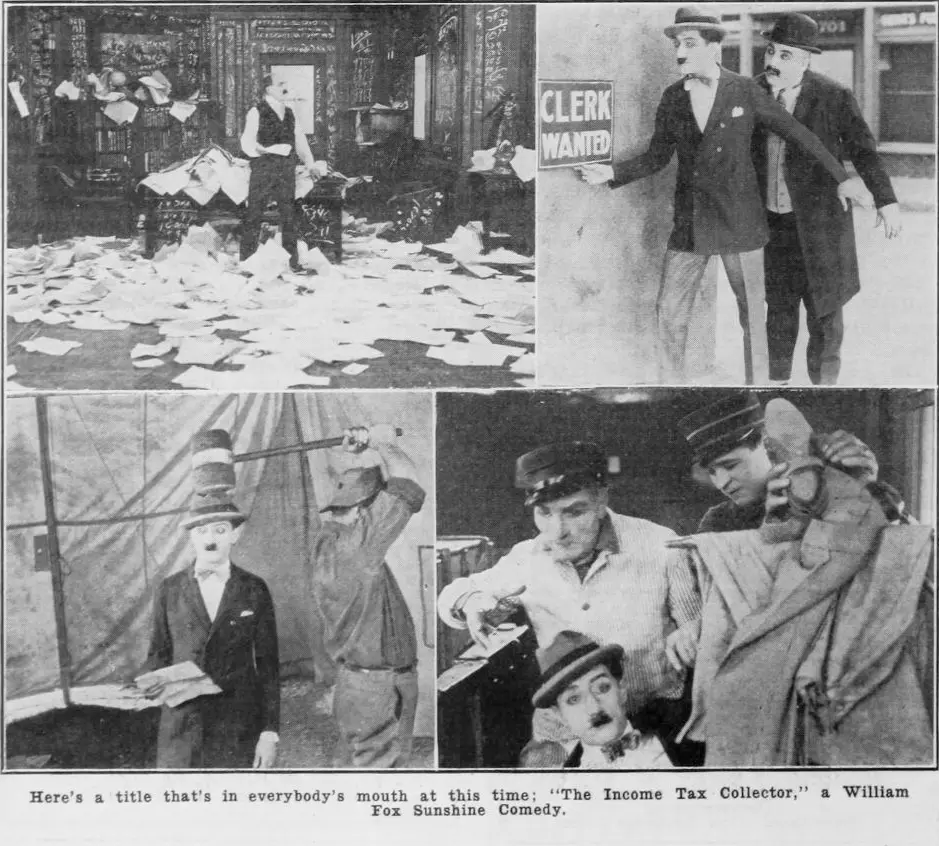
The film’s brilliance lies in its immediate establishment of its central character as an icon of collective resentment. He is not merely an individual; he is an embodiment, a living, breathing receptacle for the world's fiscal angst. Lew Brice, in a performance that must have demanded an almost superhuman commitment to physical comedy, portrays this unfortunate soul with an almost tragicomic dignity, even as he's hurled from one near-fatal predicament to the next. The film doesn't bother with exposition or character development in the traditional sense; it plunges us directly into the heart of a society that has, apparently, had enough. This isn't just a man doing his job; this is a symbolic figure upon whom an entire populace projects its grievances. His very existence is a provocation, and the ensuing chaos is the world's collective response, magnified to grotesque, yet hilarious, proportions.

Consider the sheer audacity of the opening gambit: our protagonist, minding his own business (or rather, the government's), is summarily ejected from a speeding train. This isn't a gentle push; it's a violent expulsion, a declarative statement that his presence is utterly intolerable. It sets the tone for everything that follows – a world where the laws of physics, let alone common decency, are suspended in favor of relentless, escalating persecution. This immediate plunge into peril differentiates it sharply from more nuanced character studies of societal outcasts, such as The Social Leper, where the protagonist's alienation might stem from moral failings or unfortunate circumstances. Here, the tax collector's 'sin' is merely his profession, a bureaucratic burden made flesh, and thus, fair game for the most outlandish forms of public repudiation.
What truly elevates The Income Tax Collector beyond mere novelty is the relentless, inventive succession of its perils. The narrative, if one can call such a chaotic progression a narrative, functions as a series of increasingly elaborate Rube Goldberg machines designed for human destruction. From the initial train toss, he is propelled into explosions – not just one, but multiple, each more spectacular and improbable than the last. The visual language here is key; silent cinema, devoid of dialogue, relied heavily on exaggerated physical reactions and ingenious set pieces to convey meaning and elicit laughter. The explosions, undoubtedly achieved through clever practical effects, are not meant to be realistic but rather to underscore the cartoonish indestructibility of our hero.
Then comes the cannon. To be thrown through the mouth of a cannon is a gag so preposterously over-the-top that it borders on surrealism. It’s a moment that transcends simple slapstick, entering a realm where the laws of physics are not just bent, but utterly annihilated. This particular sequence might draw a thematic parallel to the heightened stakes and physical dangers seen in films like
IMDb —
1926
Community
Log in to comment.