DbcultAccessing Vault...
6/10
Senior Film Conservator
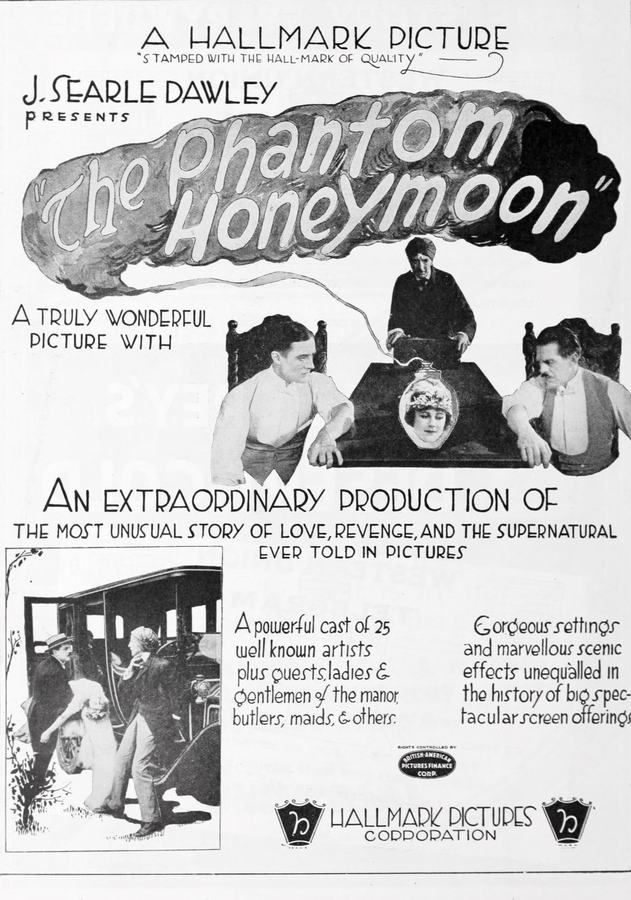
A definitive 6/10 rating for a film that redefined the boundaries of cult cinema. The Phantom Honeymoon remains a cornerstone of transgressive art.
Stepping back into the flickering glow of the early 20th century, where cinematic narratives were spun through gesture, expression, and the potent power of suggestion, we encounter a gem that, while perhaps not as widely celebrated as some of its contemporaries, offers a fascinating glimpse into the nascent stages of the supernatural mystery genre: J. Searle Dawley's The Phantom Honeymoon. Released in an era when the medium itself was still finding its voice, this film plunges us headfirst into a world where skepticism collides with the spectral, all within the confines of a wonderfully atmospheric, haunted castle. It’s a narrative tapestry woven with threads of rationalism, romantic intrigue, and an undeniable undercurrent of the uncanny, making for a compelling viewing experience that transcends its historical context.
Dawley, a director whose prolific output in the silent era saw him helm a staggering number of features, including diverse works like The Dollar and the Law and Lena Rivers, demonstrates a keen understanding of how to build suspense without the crutch of dialogue. In The Phantom Honeymoon, his directorial hand is particularly adept at crafting an environment that feels both inviting and inherently menacing. The castle itself, a character as vital as any human player, is rendered with a visual language that speaks volumes. Its ancient stones, shadowed corridors, and forgotten chambers become a canvas upon which the drama of belief versus disbelief is painted. The initial setup is classic: a pragmatic, almost dogmatically scientific, uncle (played with a delightful blend of gravitas and exasperation by Henry Guy Carleton) arrives at this very castle, accompanied by his two charming and considerably more open-minded nieces. Their presence immediately introduces a dynamic tension – the youthful exuberance and romantic inclinations of the nieces acting as a foil to their uncle's unwavering rationalism. It's a formula that still resonates today, proving the timeless appeal of pitting the known against the unknown.
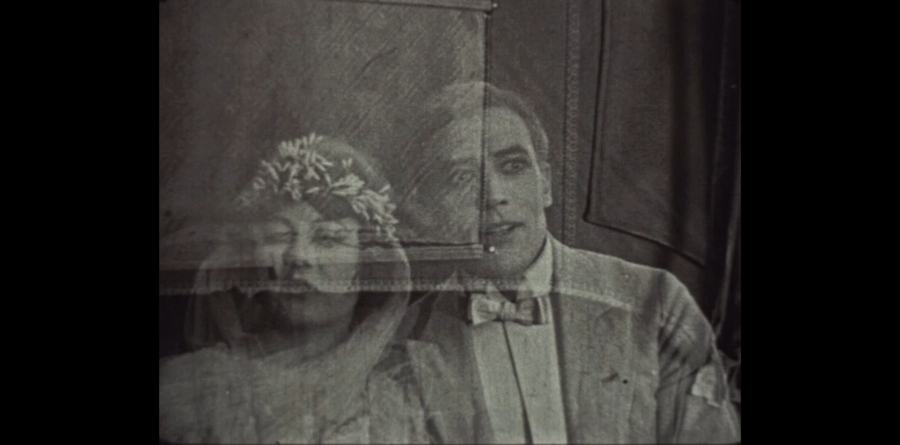
The visual storytelling in The Phantom Honeymoon is, for its time, remarkably sophisticated. Dawley and his cinematographers (though uncredited, their work is palpable) masterfully utilize chiaroscuro lighting, bathing scenes in deep shadows and stark highlights to evoke a sense of unease and mystery. This isn't just a technical flourish; it's integral to the film's thematic core. The darkness often obscures, hinting at presences just beyond the visible, while the pools of light offer moments of false security or sudden revelation. The castle's architecture, with its winding staircases, cavernous halls, and secret passages, is exploited to full effect, creating a labyrinthine quality that mirrors the complex journey of the characters' perceptions. One might draw parallels to the Gothic sensibilities found in later works, but here, in this silent precursor, the foundations of such atmospheric dread are being laid with remarkable precision. The isolation of the setting, with only a mystical caretaker (Charles P. Patterson, whose enigmatic performance adds another layer of intrigue) as a permanent resident, amplifies the sense of being cut off from the rational world, leaving the characters, and the audience, vulnerable to the supernatural.
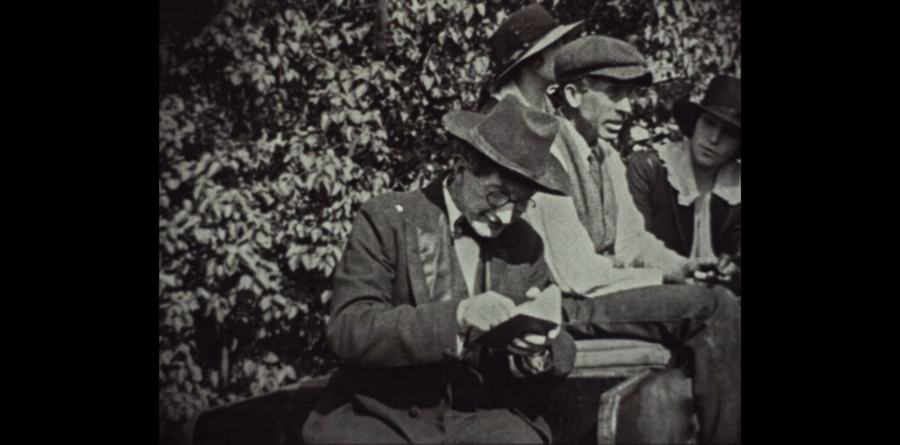
The cast, a collection of seasoned silent film actors, delivers performances that are necessarily broad yet nuanced enough to convey complex emotions without a single spoken word. Henry Guy Carleton, as the skeptical uncle, carries the weight of his character's disbelief with a tangible stubbornness that gradually crumbles under the weight of mounting evidence. His transformation from dismissive rationalist to a man confronted by the inexplicable is a central arc, and Carleton navigates it with commendable skill. Grace Bryant and Katherine Perkins, as the two nieces, bring a youthful energy and romantic sensibility that grounds the supernatural elements in human experience. Their interactions, often playful and occasionally fraught with nascent romantic tension (especially with characters like Vernon Steele and Edwin Poffley, who likely play potential suitors or other guests drawn into the castle's mystery), provide moments of levity and emotional depth. Marguerite Marsh, a prominent actress of the era known for her expressive eyes and dramatic flair, likely adds significant emotional resonance to her role, whatever its specific focus within the narrative's unfolding secrets. The ensemble, including Hal Clarendon, Harriet Cox, and Leon Danmun, contributes to the overall texture of the film, each playing their part in either fueling the mystery or reacting to its chilling manifestations.
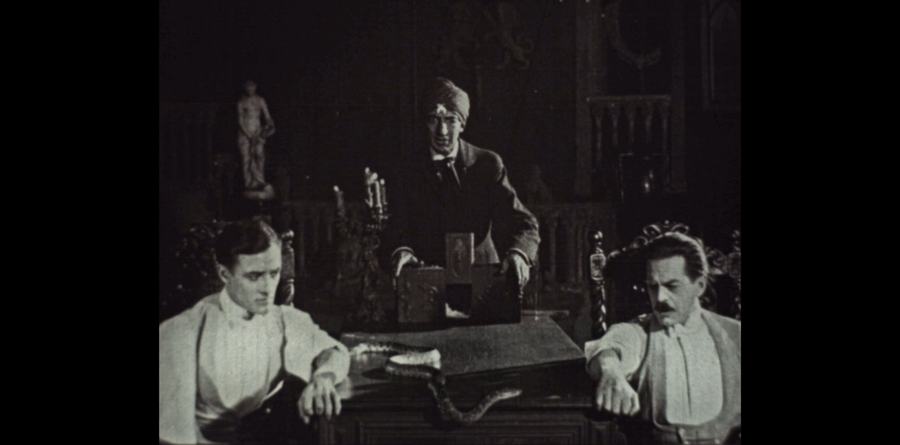
What's particularly engaging about these performances is their reliance on pantomime and facial expression. In an age before synchronized sound, actors were masters of conveying internal states through external physicality. A raised eyebrow, a subtle shift in posture, a wide-eyed gaze into the unseen – these were the tools of their trade, and the cast of The Phantom Honeymoon uses them effectively to communicate terror, wonder, and profound doubt. It's a reminder of the unique demands and artistry of silent cinema, where the audience was an active participant, interpreting and empathizing based on visual cues alone. The effectiveness of these performances is what elevates the film beyond a simple ghost story, imbuing it with genuine human drama.
At its heart, The Phantom Honeymoon is a fascinating exploration of the human encounter with the unknown. The uncle's skepticism serves as a proxy for the scientific rationalism that was gaining traction in the early 20th century, challenging older, more superstitious beliefs. His journey is one of forced enlightenment, a gradual chipping away at his preconceived notions until he is compelled to acknowledge phenomena that defy logical explanation. This thematic clash between science and the supernatural is a recurrent motif in cinema, but Dawley presents it with an earnestness that feels both quaint and profound. The nieces, with their more romantic and less rigid outlook, are perhaps more attuned to the castle's mystical vibrations, representing a different mode of perception, one open to wonder and the inexplicable.
Beyond the supernatural, there's also an undercurrent of romance, perhaps even a burgeoning one, as implied by the title itself. A 'honeymoon' suggests new beginnings, love, and intimacy. Placing this within a 'phantom' context adds a layer of irony and intrigue. Are the romantic entanglements of the living intertwined with the lingering passions of the dead? Does the castle, in its haunting, merely reflect the desires and fears of its current occupants? These questions are left to simmer, adding depth to what could otherwise be a straightforward ghost story. It’s a subtle nod to the complexities of human emotion, even amidst spectral occurrences. The film skillfully balances these elements, ensuring that the human drama is never overshadowed by the supernatural, but rather enhanced by it.
For enthusiasts of early cinema, The Phantom Honeymoon offers a valuable insight into how genre conventions were being established. It predates many of the more iconic horror films of the 1920s and 30s, yet it lays groundwork for tropes that would become staples: the isolated, haunted locale; the skeptical protagonist forced to confront the impossible; the mysterious figure who holds the keys to the castle's secrets. Comparisons to other films of its era might illuminate its place in the cinematic landscape. While not as overtly dramatic as The Iron Woman or as grand in scope as Gloria's Romance, it shares with them a commitment to narrative clarity and emotional impact, albeit through different means. One might also reflect on how the portrayal of the supernatural here differs from, say, the more fantastical elements in Phantom Fortunes, or the more grounded human dramas seen in Mr. Opp or Jim Bludso. Dawley's approach here is more about atmospheric dread and psychological tension than overt scares, a testament to the sophistication he could achieve with limited resources.
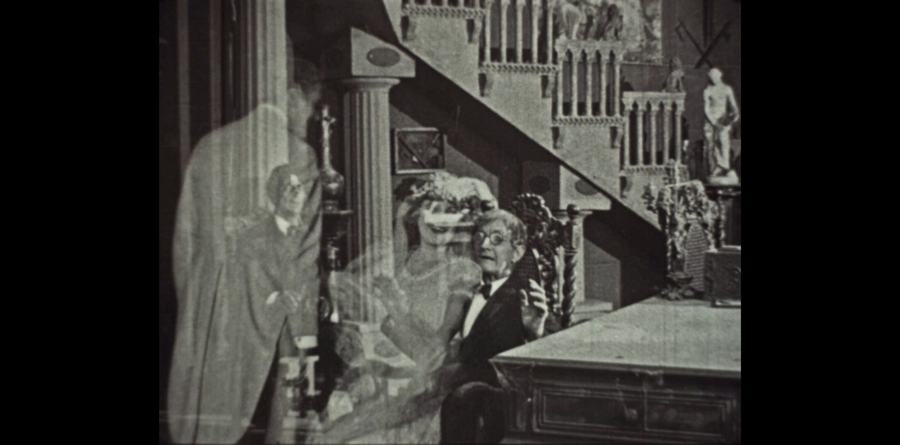
The film’s historical significance also lies in its contribution to the burgeoning film industry’s exploration of diverse subject matter. At a time when cinema was still largely seen as a novelty, films like The Phantom Honeymoon demonstrated the medium's capacity for complex storytelling, capable of evoking fear, wonder, and emotional depth. It stands alongside other silent era explorations of mystery and human nature, such as A csikós or The Flames of Johannis, in showcasing the global reach and varied narrative interests of early filmmaking. Even relatively obscure titles like Petticoats and Politics or A Bit of Kindling, while different in genre, share the common thread of utilizing the new visual language to tell engaging stories to a mass audience.
While The Phantom Honeymoon may not be as readily available or widely discussed as some of its more celebrated contemporaries, its existence is a testament to the rich and varied output of the silent era. It reminds us that even in the earliest days of cinema, filmmakers were experimenting with genre, character development, and atmospheric tension in ways that continue to influence storytelling today. The film’s ability to evoke suspense and wonder without dialogue is a powerful reminder of cinema's fundamental visual language. It encourages us to appreciate the artistry involved in conveying complex emotions and narrative twists through expression, gesture, and the careful manipulation of light and shadow.
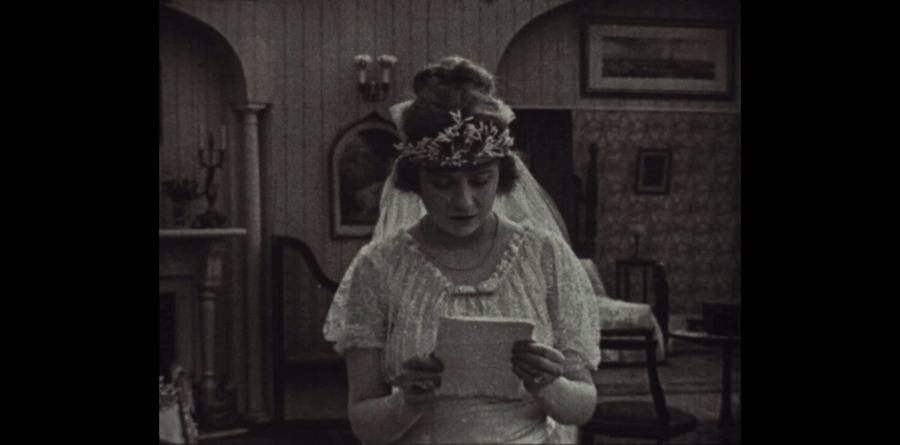
Watching The Phantom Honeymoon today is not merely an act of historical appreciation; it's an opportunity to engage with a form of storytelling that demands a different kind of attention, a more active participation from the viewer. It's a journey into a past where the silver screen was truly magical, transforming everyday realities into realms of fantasy, fear, and profound human drama. One might consider how its narrative structure compares to other character-driven pieces of the era, such as The Model or Clover's Rebellion, or even the adventure narratives of Der Bergführer and Two Men of Sandy Bar. Each film, in its own way, contributed to the evolving lexicon of cinematic expression.
The enduring appeal of ghost stories and haunted house narratives finds a compelling early articulation in Dawley's work. The film poses questions about the nature of reality, the limits of human perception, and the persistent allure of what lies beyond the veil of our understanding. It’s a fascinating artifact, a spectral whisper from a bygone era, reminding us that some mysteries are best left unsolved, or at least, perpetually explored through the lens of a camera. The artistry of J. Searle Dawley, combined with the dedicated performances of Henry Guy Carleton, Charles P. Patterson, Grace Bryant, Edwin Poffley, Vernon Steele, Katherine Perkins, Hal Clarendon, Harriet Cox, Leon Danmun, and Marguerite Marsh, ensures that The Phantom Honeymoon remains a compelling, if elusive, piece of cinematic history, inviting us to ponder the phantoms that linger not just in ancient castles, but within the very chambers of our own minds.

IMDb 6.3
1933
Community
Log in to comment.