DbcultAccessing Vault...
Cult Review
Senior Film Conservator
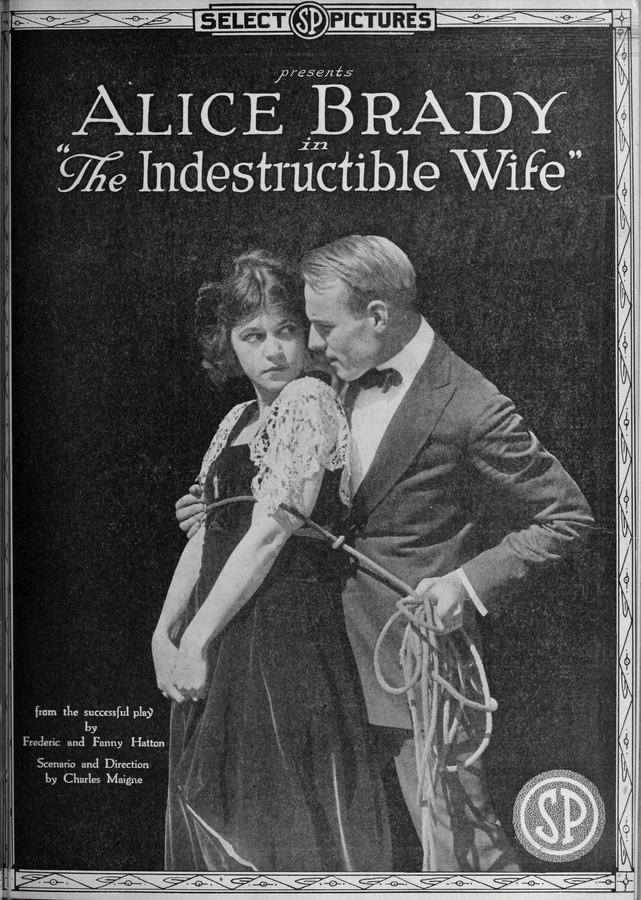
In the annals of early cinema, few narratives capture the vibrant, often tumultuous, dance of marital dynamics with the audacious spirit of "The Indestructible Wife." This isn't merely a film; it's a boisterous, insightful expedition into the very heart of a relationship where one partner's boundless vitality clashes spectacularly with the other's utter exhaustion. At its core, we meet Jimmy Ordway, a man utterly bewildered and physically shattered by the sheer, unyielding energy of his new bride, Charlotte. Their honeymoon, far from a languid idyll, unfolds as an Olympic-level endurance test: a relentless carousel of golfing, riding, boating, swimming, polo, and mountain climbing, all capped off by nightly, vigorous dancing. The film wastes no time in establishing this central comedic tension, painting Jimmy not as a weakling, but as a man simply outmatched by a force of nature he neither anticipated nor comprehended.
Upon their return, a house party thrown by Charlotte herself becomes the stage for Jimmy's desperate machinations. He’s not seeking divorce; he’s seeking a moment of peace, a respite from the whirlwind. His solution is as ingenious as it is ill-fated: a covert pact with his male friends to engage Charlotte in a non-stop relay of entertainment until her formidable energy finally wanes. This elaborate scheme, conceived in an era when gender roles were often rigidly defined, offers a fascinating inversion. Here, it’s the husband, not the wife, who yearns for domestic tranquility, and it's the wife who embodies an almost masculine vigor, challenging the very fabric of conventional expectations. The casting of Sue Balfour as Charlotte is particularly inspired; her portrayal radiates an authentic, almost infectious zest for life that makes her character’s boundless energy entirely believable. Meanwhile, Percy Marmont as Jimmy perfectly conveys the growing exasperation and love-struck bewilderment of a man utterly out of his depth.
The plot thickens with the introduction of Brandy, a professional athlete, convinced by Jimmy to join the ranks of Charlotte's would-be exhausters. What Jimmy fails to foresee, however, is the magnetic pull between two equally powerful forces. Brandy, accustomed to triumphing over physical challenges, finds in Charlotte the only woman he has ever met who can not only keep pace but perhaps even surpass him. This dynamic immediately shifts the narrative from a simple marital comedy to a more complex exploration of attraction, rivalry, and compatibility. It’s a testament to the writers, Frederic Hatton, Fanny Hatton, and Charles Maigne, that they infuse this seemingly lighthearted premise with such layered emotional stakes.
Brandy, recognizing a kindred spirit and perhaps sensing an opportunity, attempts to drive a wedge between the newlyweds. He cunningly reveals Jimmy's supposed infatuation with Julia Cleves, whose "consolatory attentions" have indeed offered Jimmy a momentary, albeit innocent, distraction from his marital woes. This revelation, designed to sow discord, works precisely as intended. Charlotte, witnessing the seemingly intimate exchange of "blowing smoke kisses," feels a pang of betrayal and confronts Jimmy, her vibrant spirit momentarily dimmed by suspicion. This dramatic turn is pivotal, moving the film beyond slapstick and into the realm of genuine emotional conflict. It explores the fragility of trust and the misunderstandings that can plague even the most passionate relationships.
One might draw parallels here to other films where external forces or misunderstandings threaten a burgeoning romance, albeit with different tones. In The Beloved Impostor, for example, identity confusion drives much of the romantic tension. Here, it's a deliberate act of sabotage, albeit one born from a peculiar admiration. The emotional stakes are high, and the audience is left wondering how Jimmy will navigate this newfound marital tempest.
Inspired by the audacious tactics of Petruchio from Shakespeare's "The Taming of the Shrew," Jimmy decides to abandon conventional diplomacy for a more theatrical approach. He abducts Charlotte, binding her within a secluded boathouse. This act, viewed through a modern lens, might seem problematic, yet within the context of the film's era and its comedic intent, it serves as a bold, almost desperate declaration of Jimmy's desire to assert control, not over Charlotte's spirit, but over the chaotic energy that defines their union. What truly elevates this segment is Charlotte's reaction: she secretly enjoys it. This subtle, yet profound, psychological twist transforms the scene from mere abduction into a complex interplay of wills, where Charlotte finds a strange satisfaction in Jimmy's forceful, if misguided, attempt to 'tame' her. It suggests that perhaps, beneath her boundless energy, there's a part of Charlotte that craves a partner strong enough to meet her, or even momentarily subdue her, on her own terms.
This "taming" motif, while controversial, is handled with a certain playful theatricality that aligns with the silent film era's broader comedic sensibilities. It's less about genuine subjugation and more about a spirited wife testing the mettle of her husband. Films like The Little Rowdy or even Runaway Romany, though different in plot, often feature strong female characters whose independence challenges societal norms, and whose eventual romantic resolutions involve a nuanced understanding rather than outright submission. "The Indestructible Wife" leans into this with a delightful self-awareness.
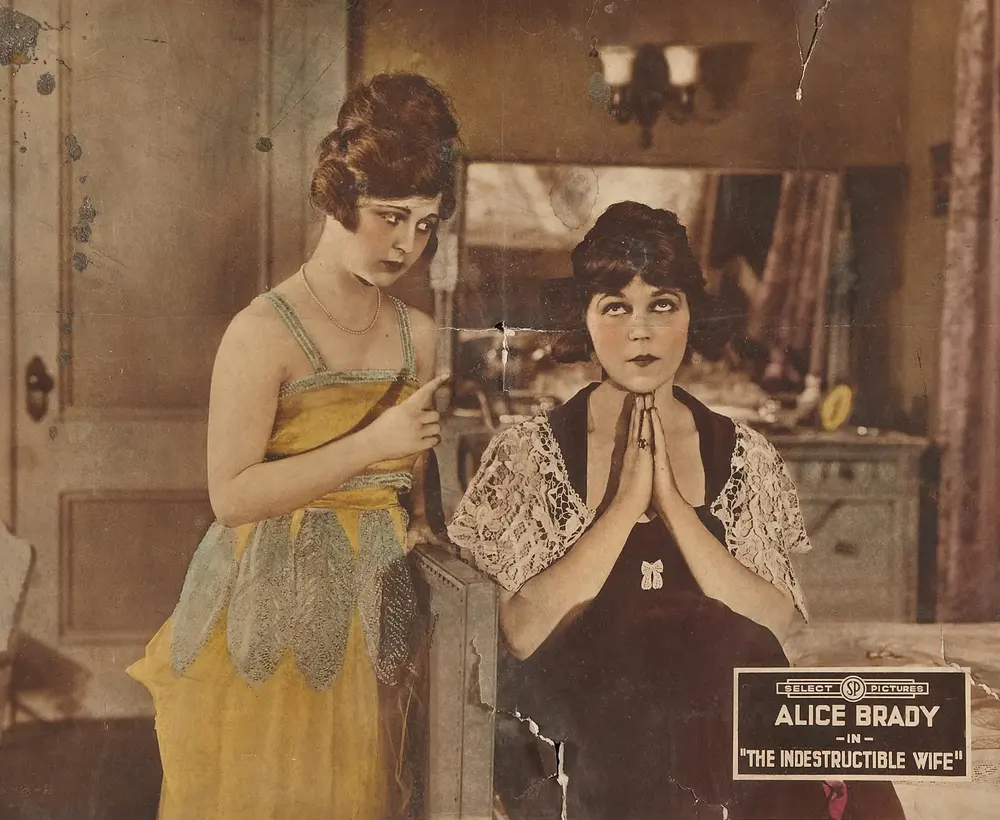
The tension culminates when Brandy arrives at the boathouse, ostensibly to rescue Charlotte. His intentions, however, quickly turn predatory as he attempts an "undesired intimacy." This is where Charlotte's true spirit, untamed despite her momentary confinement, shines brightest. Far from a damsel in distress, she swiftly and decisively throws Brandy into the water, a symbolic and literal rejection of his advances and an affirmation of her allegiance to Jimmy, however peculiar their courtship has become. It’s a moment of triumph, not just for Charlotte's physical prowess, but for her unwavering moral compass and her loyalty.
The ensuing embrace between Jimmy and Charlotte is not one of a victor and a vanquished, but of two individuals who have navigated a tempestuous journey to a deeper understanding. Jimmy's happiness is palpable, a sense of relief and renewed affection washing over him. Charlotte, in turn, accepts his embrace, her earlier enjoyment of the "taming" now translating into a willing partnership. The film’s final image—Charlotte preparing dinner for their thirty friends—is a masterful stroke, suggesting a domestic harmony achieved not through conformity, but through an acceptance of their unique, dynamic relationship. It’s a far cry from the initial exhaustion, hinting that Jimmy has found a way to appreciate, rather than merely endure, his wife's vibrant spirit.
The ensemble cast plays a crucial role in grounding this elaborate farce. Beyond Balfour and Marmont's compelling leads, Lloyd Hughes as Brandy delivers a performance that oscillates between charming rogue and genuine threat, making his character's ultimate comeuppance all the more satisfying. The supporting players, including Roy Adams, Thomas Donnelly, Saxon Kling, George Backus, Alice Brady, Leonore Hughes, William A. Williams, and Anne Cornwall, contribute to the lively atmosphere of the house party and the unfolding drama, each adding a brushstroke to the vibrant canvas of this early cinematic gem. Their collective energy, particularly in the bustling party scenes, helps to contextualize Charlotte's own boundless enthusiasm, making her less of an anomaly and more of an extreme example of the era's social exuberance.
The silent film medium, with its reliance on exaggerated expressions and physical comedy, is perfectly suited to a story like "The Indestructible Wife." The absence of dialogue forces the actors to convey emotion and intent through gesture and facial nuance, a skill perfected by the talents involved. The visual storytelling is paramount, allowing the audience to interpret the subtle shifts in character dynamics, from Jimmy's weary sighs to Charlotte's mischievous glances. This reliance on visual cues makes the film a masterclass in non-verbal communication, a characteristic often shared with other compelling silent features like The Golden Lotus or A Jewel in Pawn, where complex narratives unfold almost entirely through the power of imagery and performance. The director's keen eye for composition and pacing ensures that even without spoken words, the narrative momentum never falters, pulling the viewer through each comedic predicament and emotional beat with effortless grace. The use of intertitles, while sparse, is effective, providing crucial dialogue and exposition without disrupting the visual flow, a hallmark of well-crafted silent cinema.
"The Indestructible Wife" stands as a fascinating artifact of its time, offering a glimpse into evolving gender roles and the comedic possibilities found in challenging conventional expectations. While its themes of "taming" might raise eyebrows today, it's crucial to view it through the lens of early 20th-century entertainment, where theatricality and exaggerated scenarios were common. The film ultimately champions Charlotte’s spirit, depicting her as a woman who cannot be easily subdued, and whose unique vitality ultimately becomes a source of admiration rather than exasperation. It’s a story about finding balance, about partners learning to accept and even cherish each other's eccentricities, and about the sometimes circuitous path to true marital harmony.
Its enduring appeal lies not just in its comedic timing or its spirited performances, but in its underlying message: that love, in its truest form, often requires a willingness to embrace the unexpected and to navigate the delightful chaos that comes with a truly vibrant partner. This film, with its energetic heroine and bewildered hero, remains a testament to the fact that sometimes, the most enduring relationships are forged not in quiet conformity, but in the exhilarating crucible of wills. Much like Bobbie of the Ballet, which explores a young woman's journey through challenges, "The Indestructible Wife" celebrates resilience and character, albeit in a domestic, comedic setting. It's a film that reminds us that the best marriages aren't always easy, but they are undeniably alive. Furthermore, the film’s subtle subversion of traditional gender expectations, showcasing a woman whose physical and social energy far outstrips that of her male counterparts, offers a surprisingly progressive undertone for its era, inviting audiences to reconsider what constitutes strength and desirability in a partner.
In an era when many films explored societal anxieties or grand adventures, "The Indestructible Wife" dared to focus on the domestic sphere, elevating marital squabbles to epic proportions with wit and charm. It’s a vibrant, often hilarious, look at what happens when the force meets the immovable object, only to find that the object secretly enjoys the challenge. A delightful cinematic confection that, despite its age, still resonates with a timeless humor and a surprisingly modern sensibility regarding the complexities of partnership. Its bold characterizations and inventive plot make it a standout, proving that a truly indestructible spirit can indeed be the foundation for an indestructible marriage.
IMDb 5.6
1934
Community
Log in to comment.