DbcultAccessing Vault...
Cult Review
Senior Film Conservator
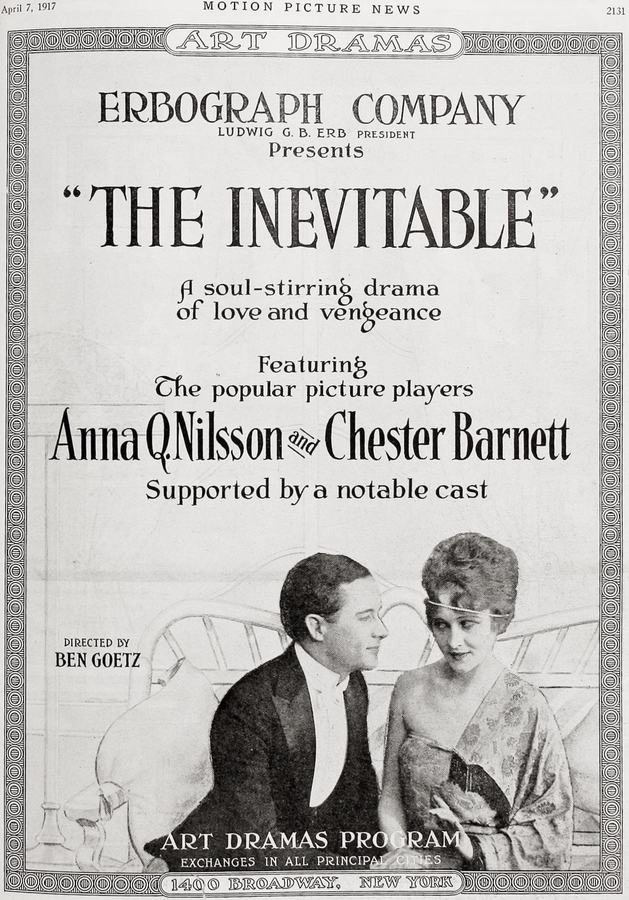
In the labyrinthine annals of early cinema, few narratives unfurl with the intricate psychological depth and relentless dramatic propulsion of "The Inevitable". This isn't merely a silent film; it's a profound exploration of human frailty, the corrosive nature of unproven accusations, and the circuitous path toward vindication. Directed with a keen understanding of emotional resonance, the film beckons its audience into a world where honor is paramount and vengeance, a potent, almost alchemical, force. From its opening frames, we are plunged into a domestic tragedy that reverberates with profound consequences, setting the stage for a saga of manipulation, mistaken identity, and eventual, hard-won truth.
The catalyst for this tumultuous journey is the unjust accusation leveled against Donald Grey by his business partner. The sheer ignominy, the public shaming, proves too much for Grey, who succumbs to the shock. His death, a silent scream against an unproven stain on his character, leaves an indelible scar on his daughter, Florence, portrayed with an arresting intensity by Anna Q. Nilsson. Nilsson, a luminary of the silent screen, imbues Florence with a captivating blend of fragility and steely resolve, charting her transformation from a grieving daughter into a formidable agent of retribution. Her father's unvindicated innocence becomes Florence's singular obsession, a burning ember that fuels her every action. It’s a compelling portrait of inherited grief morphing into an active quest for justice, transcending the passive sorrow typically ascribed to female characters of the era. This fierce determination sets her apart, echoing the independent spirit found in other complex female roles of the period, albeit with a darker, more manipulative edge than perhaps a character in Miss Robinson Crusoe might embody, yet sharing a similar self-reliance.
Florence's chosen instrument of revenge is Alan Burnham, the unsuspecting son of her father's accuser. Here, the film delves into the morally ambiguous territory of using love as a weapon. Florence, with a calculated charm that belies her inner turmoil, systematically seduces Alan, drawing him into her orbit with the express purpose of dismantling his life and career. She becomes "The Dragonfly," a moniker that perfectly encapsulates her dual nature: beautiful and captivating, yet possessing a sting that can paralyze. The film meticulously portrays her machinations, demonstrating how she skillfully weaves a web of allure and dependence around Alan. The performances here, particularly from Wilson Reynolds and Chester Barnett, who likely shared or alternated roles of similar youthful male leads during this period, convey Alan's gradual capitulation, his descent into a world dictated by Florence's whims. His initial idealism gives way to a blind devotion, a tragic vulnerability that Florence ruthlessly exploits. This narrative thread, where a woman uses her charm to exert control and achieve a personal agenda, finds thematic resonance with films like The Eternal Temptress, albeit with a distinct motivation born of tragedy rather than pure self-interest.
The dramatic tension ratchets up considerably when Alan's father, witnessing his son's precipitous decline and increasingly erratic behavior, confronts him about Florence. The ensuing quarrel is a masterclass in silent film acting, where gestures, facial expressions, and body language convey the profound chasm that has opened between father and son. In a moment of uncontrolled passion, Alan strikes his father. This act, born of frustration and loyalty to Florence, becomes a pivotal turning point, deepening the sense of tragic irony that permeates the narrative. It’s a visceral moment that highlights the destructive power of Florence's revenge, as it not only targets Alan but indirectly causes a rift in his own family, culminating in physical violence.
Adding another layer of complexity to this already intricate tapestry is the character of Burr, an employee whose presence initially seems peripheral but quickly proves to be central to the film's overarching themes of justice and hidden guilt. Burr, portrayed with a sinister subtlety by one of the supporting cast members like Albert Tavernier or William Bailey, is the true architect of Donald Grey's initial downfall. His concealed presence during Alan and his father's quarrel is a brilliant narrative device, positioning him as an unseen witness to the unfolding tragedy. This element of dramatic irony is heightened when, after Alan's departure, Burr emerges from the shadows. His attempt to exploit the situation for his own dishonest purposes is thwarted by the elder Burnham, leading to a brutal struggle and Burr’s ultimate act of villainy: the murder of Alan’s father. This shocking twist deftly shifts the blame, ensnaring Alan in a web of false culpability and deepening the film’s exploration of how appearances can deceive and how true villainy often lurks unseen, a theme perhaps explored in the darker corners of The Concealed Truth.
The subsequent scenes are a masterclass in emotional torment. Alan, reeling from the quarrel, seeks solace in Florence, confessing his impulsive act. Florence, genuinely heartbroken by the news, and perhaps recognizing the terrible cost of her revenge, urges him to leave her, a poignant moment revealing her profound inner conflict. Despite her calculated manipulation, her love for Alan is real, a powerful counterpoint to her vengeful mission. This internal struggle is conveyed with remarkable nuance by Anna Q. Nilsson, whose eyes and demeanor communicate a profound sense of anguish and regret. Alan, plunged into despair, returns home, intending to reconcile with his father and acknowledge his wisdom regarding Florence. Instead, he discovers his father's lifeless body, leading him to the agonizing, albeit erroneous, conclusion that he is a parricide. The film excels at portraying this unbearable burden of false guilt, making Alan's torment palpable to the audience.
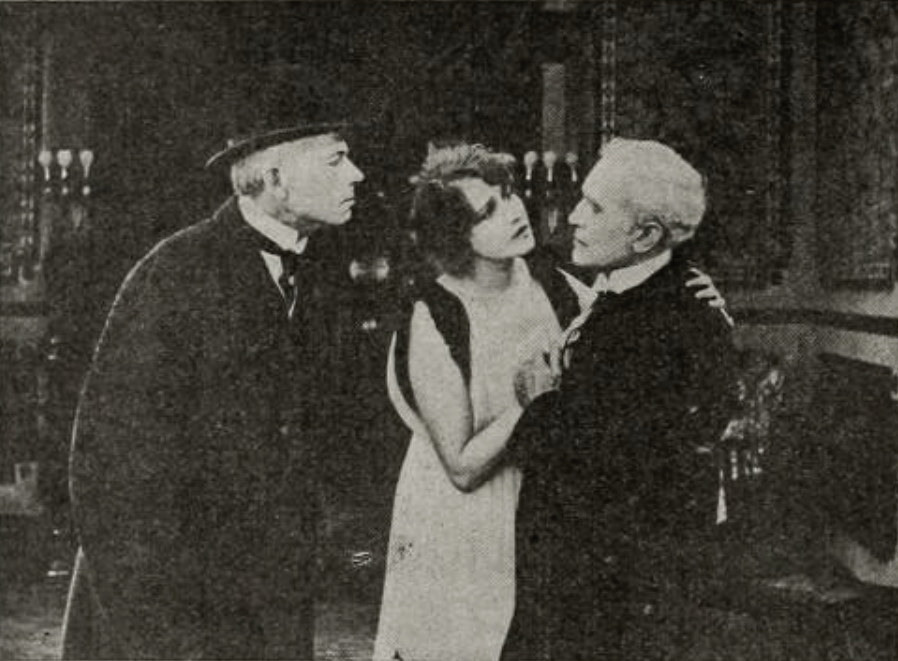
Meanwhile, the narrative skillfully maneuvers to expose Burr's culpability. Florence, demonstrating remarkable intelligence and resourcefulness, allows Burr to come to her apartment. Her strategic move to get him drunk, a clever subversion of typical femme fatale tropes, leads to his unburdening of two crucial confessions: his murder of the elder Burnham and, more significantly, his original guilt in the crime for which Donald Grey suffered. This moment is a triumph of Doty Hobart's writing, unraveling the central mystery with a satisfying, albeit dark, revelation. It elevates Florence from a mere avenger to a seeker of complete justice, not just for her father's honor but for the truth itself.
The climax is a tightly constructed sequence of high-stakes drama. Alan returns to Florence's apartment, still burdened by his perceived patricide and consumed by a bitter resentment towards her, whom he now sees as the architect of his tragedy. Florence, having just secured Burr's confession, quickly hides him, a testament to her quick thinking and her determination to bring the real culprit to justice. Alan's subsequent denunciation of Florence, accusing her of being the root cause of all his misfortunes, is a powerful moment of raw emotion. Yet, amidst his accusations, Florence declares her love, a declaration that momentarily sways him. The tension peaks when Alan discovers Burr, hidden in the adjacent room. His immediate, cynical assumption—that Florence is Burr's lover—is a devastating blow, highlighting the depths of his despair and his inability to trust. This scene is a testament to the power of silent film to convey complex emotional states through visual storytelling and the actors' expressive performances, particularly Anna Q. Nilsson and Chester Barnett or Wilson Reynolds, whose nuanced reactions drive the narrative forward.
The ultimate resolution provides a cathartic release. Florence, with unwavering conviction, unveils the truth to Alan: Burr is the actual murderer of his father, and she has apprehended him for the police. The revelation shatters Alan's misconceptions, clearing him of the heinous crime and forcing him to confront the profound depth of Florence's love and her relentless pursuit of justice. His repentance is swift and sincere, a recognition of his own misjudgment and the true nobility of Florence's character. The final embrace is not merely a romantic conclusion; it's a profound reconciliation, a testament to love's capacity to heal deep wounds and to truth's power to redeem. This narrative arc, from vengeful manipulation to ultimate vindication and love, offers a compelling study in human morality and the often-unforeseen consequences of our actions.
Doty Hobart's screenplay is a remarkable achievement, weaving a complex web of deceit, passion, and justice that consistently keeps the audience engaged. The plot's intricate layers, the careful pacing of revelations, and the nuanced character developments are all hallmarks of a sophisticated narrative design. The film avoids simplistic morality, instead presenting characters driven by a mix of understandable human emotions – grief, anger, love, ambition – making their journeys all the more compelling. The ability to craft such a convoluted yet coherent story within the constraints of the silent film medium speaks volumes about Hobart's talent and the directorial vision.
The ensemble cast, including Lucile Dorrington, Albert Tavernier, and William Bailey in crucial supporting roles, contribute significantly to the film's overall impact. Their collective ability to convey complex emotions and motivations without spoken dialogue is a testament to the artistry of silent era acting. Each gesture, each glance, each shift in posture is imbued with meaning, carrying the weight of the narrative and drawing the audience deeper into the characters' internal worlds. The film stands as a vibrant example of how expressive performances could transcend the absence of sound, creating a powerful and immersive cinematic experience. The film's reliance on visual storytelling and heightened emotional displays draws parallels to other dramatic silent epics, perhaps even hinting at the grandeur seen in films like King Charles, albeit on a more intimate, domestic scale.
From a cinematic perspective, "The Inevitable" offers valuable insights into the storytelling techniques prevalent in early 20th-century cinema. The use of intertitles is judicious, providing necessary exposition without overwhelming the visual narrative. The cinematography, while perhaps lacking the elaborate tracking shots of later eras, effectively frames the drama, utilizing close-ups to emphasize emotional states and wider shots to establish the settings. The director skillfully builds suspense, particularly in the scenes involving Burr's hidden presence and Florence's cunning interrogation. The film’s thematic depth, exploring the very nature of justice and the subjective perception of guilt, ensures its enduring relevance. It reminds us that truth is often obscured by circumstance and that the path to its revelation is rarely straightforward. This intricate dance of revelation and concealment makes it a compelling watch even today, offering a window into the narrative sophistication possible in an era often dismissed as primitive.
Ultimately, "The Inevitable" is more than just a revenge drama; it's a poignant exploration of love's resilience in the face of profound adversity. Florence's journey, from a vengeful daughter to a woman who secures justice for her father and unconditional love for Alan, is deeply moving. The film challenges its audience to look beyond initial impressions, to question perceived guilt, and to believe in the ultimate triumph of truth. It is a powerful testament to the intricate artistry of silent cinema, a compelling narrative that continues to resonate with its timeless themes of honor, betrayal, and redemption. Its ability to evoke such a wide spectrum of emotions, from despair and anger to hope and reconciliation, solidifies its place as a significant, albeit often overlooked, gem of its era. It’s a film that demands engagement, rewarding viewers with a rich, emotionally charged experience that lingers long after the final frame, much like the lasting impressions left by powerful dramas such as Evangeline or Destiny: or, the Soul of a Woman, which similarly explore the profound impacts of fate and human choice.
IMDb 6.4
1926
Community
Log in to comment.