DbcultAccessing Vault...
Cult Review
Senior Film Conservator
Step into the enthralling world of early cinema, where narratives unfolded with a silent intensity, relying on the raw power of gesture, expression, and meticulously crafted intertitles to convey the deepest human emotions. Julian La Mothe's compelling screenplay for The Inner Struggle, a cinematic artifact from an era defined by profound moral dramas, plunges viewers into a maelstrom of unrequited love, societal expectations, and the arduous path to redemption. This film, a testament to the enduring allure of human conflict, masterfully navigates the intricate emotional landscapes of its characters, delivering a narrative that resonates with timeless themes of sacrifice and self-discovery. It’s a rich tapestry woven with threads of devotion, despair, and ultimately, a quiet, profound heroism that distinguishes it from many contemporaries.
At the heart of this poignant drama stands Dr. Grant, portrayed with a stoic intensity by Franklin Ritchie. Grant is not merely a physician; he is a man of profound moral conviction, a dedicated healer laboring in the remote, challenging environment of a leper colony in the far Pacific. His life, a testament to selfless service, is shadowed by a deep, unspoken affection for Myra Hamilton, a woman whose beauty and spirit have captivated him. Myra, played by the luminous Winifred Greenwood, embodies the societal expectations and romantic ideals of her time, yet also possesses a nascent strength that will be tested by the crucible of experience. Her initial choice, however, is a classic study in misguided attraction. She succumbs to the superficial charm of Harry Elliot, a dissipated young society man brought to life by Roy Stewart with a convincing portrayal of charming recklessness. Harry’s proposal, born not of genuine affection but a cynical dare amongst his peers, sets in motion a chain of events that will irrevocably alter all their lives. Grant, with the foresight of a man who understands human nature’s darker currents, attempts to warn Myra about Harry’s true character, his inherent fecklessness and lack of moral fiber. But love, or perhaps infatuation, is blind, and Myra, caught in the intoxicating whirlwind of societal courtship, dismisses Grant’s prescient counsel. This early dynamic establishes the central conflict: the earnest, self-sacrificing love versus the fleeting, destructive passion, a theme explored with nuanced depth.
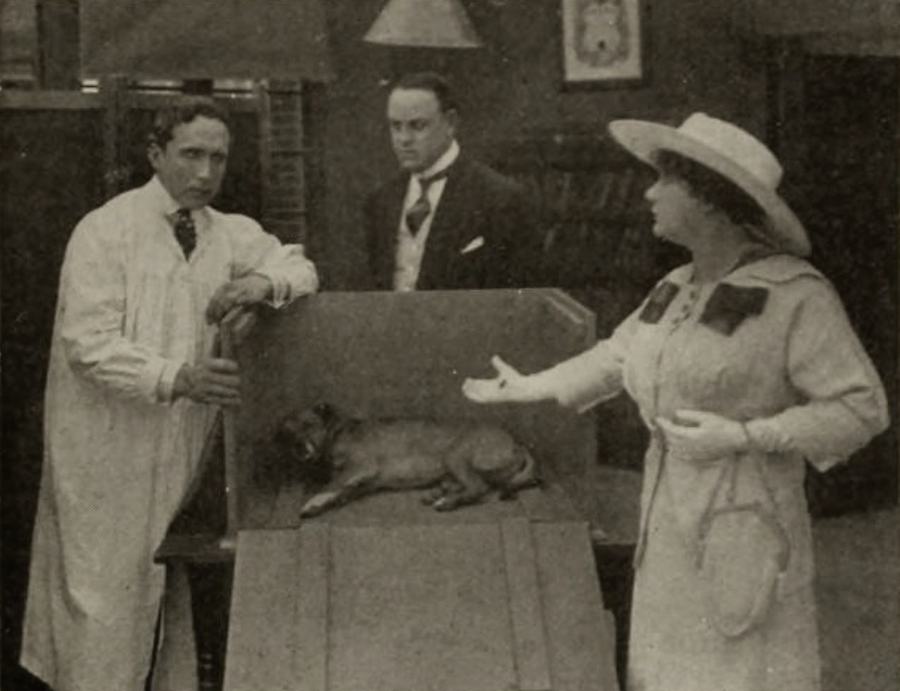
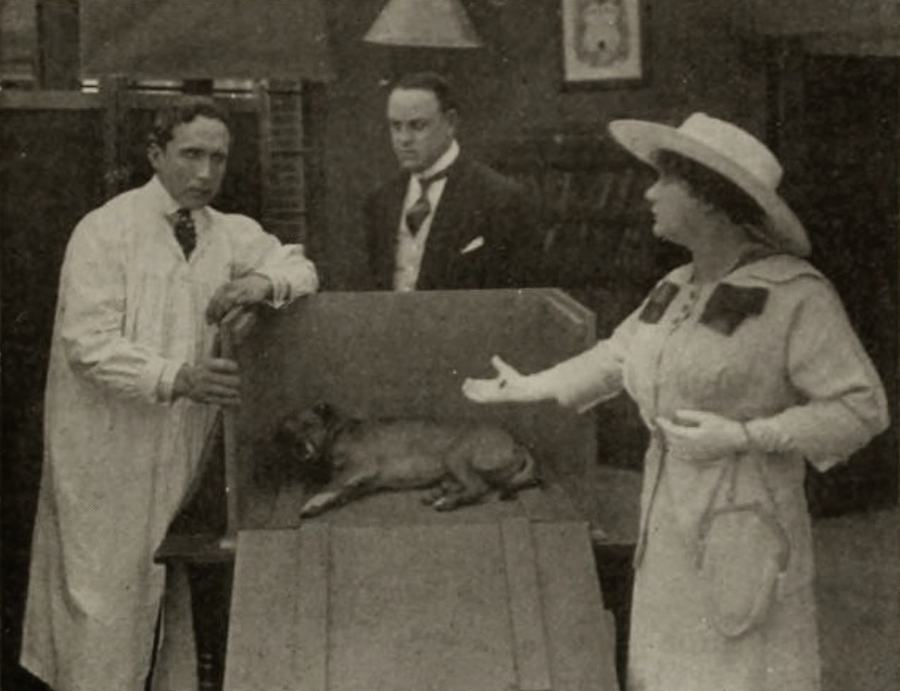
The narrative takes a sharp, dramatic turn during Myra and Harry’s visit to Grant’s laboratory. Here, the stark realities of Grant’s dedicated, if sometimes morally ambiguous, work are laid bare. Myra, confronted with the vivisection experiment Grant is meticulously conducting on a canine subject, is aghast. Her compassionate nature recoils from what she perceives as an act of profound cruelty, and she bitterly berates Grant, accusing him of a heartless disregard for life. This scene is a masterful stroke of character development, highlighting Myra’s idealism and Grant’s commitment to scientific advancement, even at a personal cost. However, the true villainy emerges not from Grant’s scientific rigor, but from Harry’s casual malevolence. While Grant attempts to explain the necessity and purpose behind his research, Harry, with a shocking display of callous indifference, chloroforms the dog, callously destroying months of Grant’s painstaking labor. This act is not merely an inconvenience; it is a profound violation, a symbol of Harry’s destructive nature and his utter contempt for the efforts and passions of others. Grant, witnessing the ruthless obliteration of his dedicated work, is consumed by a quiet, simmering fury. It is in this moment that his resolve hardens, and he silently vows that Harry will pay for his wanton destruction. This isn't a simple desire for revenge, but a deeper conviction that such heedless disregard for consequence must be met with a form of justice, a transformation if possible.
Myra’s subsequent announcement of her engagement to Harry, just a few nights after the laboratory incident, solidifies her path towards what she believes will be marital bliss. Yet, the harsh realities of Harry’s character soon begin to erode her idealistic vision. She finds herself facing a seemingly hopeless task: trying to reform a man utterly unwilling to change, whose dissipated habits and self-indulgent lifestyle are deeply ingrained. Her disillusionment grows, paving the way for a crucial shift in her perception. One day, she overhears a heated exchange between Grant and Harry. Grant, driven by his unwavering concern for Myra’s well-being and perhaps still smarting from Harry’s earlier cruelty, remonstrates with him for his actions, for the pain he inflicts upon Myra. This moment is a revelation for Myra. She begins to see Grant not as the cold, cruel scientist she once perceived, but as a man of profound integrity, nobility, and selfless concern. His words, his unwavering defense of her, pierce through the fog of her initial judgment, allowing her to appreciate the true depth of his character. This intellectual and emotional re-evaluation is central to the film's exploration of perception versus reality, a theme often found in melodramas of the era, such as The Fox Woman, which similarly delves into misunderstood intentions and societal judgment. The final straw for Myra comes when she again witnesses Harry in the company of a cabaret singer, a public display of his infidelity and disregard for their marriage vows. Overwhelmed with grief, despair, and a profound sense of betrayal, she instinctively turns to the one person who has consistently shown her genuine care and moral strength: Dr. Grant. She seeks not merely comfort, but guidance, a beacon in her darkening world.
It is during this period of vulnerability and growing intimacy that Myra, observing Harry's increasingly erratic and possessive behavior, notices his inclination towards jealousy. This observation sparks a daring plan, one born of desperation and a shared desire to salvage Harry, if not their marriage. Myra and Grant discuss a strategy to bring Harry to his senses: Grant is to pay ardent court to Myra, creating a public spectacle of affection that they hope will ignite Harry's latent possessiveness and shock him into confronting his own destructive habits. This audacious gambit is a dangerous one, fraught with emotional peril for all involved, particularly for Grant, who must feign a love he genuinely feels, yet cannot truly express. As the plan unfolds, Harry, predictably, begins to notice Grant's increasingly fervent attention to his wife. His jealousy, a bitter cocktail of insecurity and wounded pride, escalates. The tension reaches a fever pitch one day when he discovers Myra and Grant together, their staged intimacy appearing all too real. Wild with rage, Harry succumbs to his baser instincts. He leaves a frantic note, hinting at self-harm, and flees to their secluded country home, his mind clouded by drink and despair. Grant, realizing the gravity of the situation and the potential tragic outcome, races after Harry, driven by a complex blend of responsibility, concern for Myra, and perhaps, a lingering commitment to his vow of making Harry 'pay' – not with suffering, but with transformation. At the country house, the confrontation is brutal. Harry, consumed by his fury, rises with an oath and strikes Grant, his words laced with venom as he curses Myra. Bleeding but unbowed, Grant, with an extraordinary display of fortitude, makes his way to the telephone. He calls Myra, his voice imbued with an unbreakable resolve, and makes a solemn promise: he will bring Harry back to her, but he will bring him back a man, a reformed soul. This moment is the turning point, solidifying Grant's role as both a moral compass and an architect of human change. His next action is radical and profoundly impactful: he takes Harry to an insane asylum, a place where the devastating ruin caused by drink and dissipation is laid bare for all to see. It is a stark, visceral lesson, designed to shock Harry into a recognition of his own precipice. This journey of forced self-reflection and rehabilitation, a bold narrative choice for its time, underscores the film's commitment to exploring the depths of human degradation and the arduous climb towards recovery. Films like The Toll of Mammon often delved into the destructive forces of vice, but few depicted the path to redemption with such deliberate, almost clinical, precision. After weeks of arduous work, both physical and psychological, Grant feels that Harry is finally ready for the ultimate test. He deliberately places temptation in Harry's way, a bottle, a moment of weakness, a chance to revert to his old ways. But Harry, forged anew in the fires of suffering and resolve, conquers. He triumphs over his demons, proving that the transformation is real, earned through immense struggle and Grant’s unwavering guidance. And so, Grant, fulfilling his extraordinary promise, brings a truly reformed Harry back to Myra, a man reborn from the ashes of his former self.
The reunion of Myra and Harry is a moment of quiet grace. Myra, witnessing the profound change in her husband, extends her forgiveness, a testament to her own capacity for compassion and belief in redemption. With his mission accomplished, his promise fulfilled, Dr. Grant quietly, almost imperceptibly, withdraws from their lives. His departure is not one of bitterness or resentment, but of profound selflessness, a man who understands that his role in their story is complete. Soon after, Myra, seeking to express her heartfelt gratitude for the immeasurable gift Grant has bestowed upon her family, searches for him. She finds him preparing for a new chapter, a testament to his unwavering commitment to his calling. He shows her a letter, a simple document that carries immense weight: his application as physician at the leper colony has been accepted, and he is to leave at once. This decision, to return to a life of arduous service in a remote, challenging environment, is the ultimate expression of Grant’s character – a man who places duty, compassion, and a greater good above personal happiness. His departure is swift and resolute, a quiet echo of his earlier, unwavering dedication. The film then fast-forwards, offering a glimpse into the enduring impact of Grant’s choice. Sometime later, Grant receives a letter from Myra. Its contents are brief but startling: Harry has died, and Myra, now widowed and alone, implores Grant to return to her. For a fleeting moment, Grant’s human heart yearns, his first impulse is to go, to finally claim the love he has so long denied himself. But then, a deeper realization dawns upon him. He understands his mission, his unwavering commitment to his patients, to the silent suffering in the remote Pacific. The letter, a symbol of a past he has consciously transcended, is committed to the flames, its ashes representing the final, definitive act of his selfless journey. This powerful ending, reminiscent of the profound self-denial seen in films like The Shrine of Happiness, elevates The Inner Struggle from a mere melodrama to a profound exploration of human purpose and the triumph of duty over personal desire.
Julian La Mothe’s screenplay for The Inner Struggle is a masterclass in weaving complex human drama without the benefit of spoken dialogue. The narrative is taut, the character arcs well-defined, and the thematic undercurrents rich and resonant. The film is a powerful treatise on the nature of sacrifice, not just in the grand, sweeping gestures, but in the quiet, daily choices that define a life. Grant’s unrequited love, his unwavering commitment to Myra’s well-being even at the cost of his own happiness, stands as a monumental example of selfless devotion. This contrasts sharply with Harry’s initial self-indulgence and Myra’s initial naïveté, creating a dynamic exploration of human morality. The theme of redemption is equally central, portrayed not as a sudden, miraculous transformation, but as a hard-fought battle against ingrained habits and personal demons, meticulously guided by Grant’s almost paternal hand. The film also subtly critiques societal hypocrisy and the dangers of superficial judgment, evident in Myra’s initial misjudgment of Grant and her attraction to Harry’s outward charm. The visual storytelling, characteristic of the silent era, relies heavily on the actors' nuanced expressions, the evocative power of lighting, and the strategic use of intertitles to convey internal monologues and crucial plot points. The use of close-ups to capture the emotional turmoil on the actors' faces would have been paramount, drawing the audience into their inner worlds without a single spoken word. The carefully composed shots and the pacing of the narrative would have allowed emotions to simmer and build, creating a palpable tension that holds the viewer captive. In its exploration of a woman's journey through disillusionment to a deeper understanding of true character, The Inner Struggle shares thematic resonance with films like Lydia Gilmore, which also features a strong female protagonist navigating complex moral dilemmas and personal sacrifice. The film's ability to articulate such profound themes through purely visual and gestural means is a testament to the artistry of silent cinema.
The success of a silent film hinges almost entirely on the expressive power of its cast, and The Inner Struggle is fortunate to have a trio of performers who deliver compelling, nuanced portrayals. Franklin Ritchie, as Dr. Grant, masterfully conveys the quiet strength, the deep empathy, and the profound internal conflict of a man torn between personal desire and professional duty. His eyes, his posture, and his subtle gestures speak volumes, communicating an unyielding moral compass and an almost saintly capacity for sacrifice. Winifred Greenwood, as Myra Hamilton, navigates a complex emotional journey, from youthful idealism to crushing disillusionment, and finally to a mature understanding of love and forgiveness. Her portrayal is both vulnerable and resilient, making Myra’s transformation believable and deeply moving. Roy Stewart, in the challenging role of Harry Elliot, convincingly embodies the initial charm and subsequent degradation of a man lost to his vices. His descent into rage and despair, and his eventual, hard-won redemption, are depicted with a raw honesty that would have captivated audiences. The chemistry, or rather the lack thereof in the early scenes and the simmering tension in the later ones, between these three actors is expertly handled, driving the emotional core of the narrative. Their performances ensure that even without dialogue, the audience feels the weight of every decision, every heartbreak, and every moment of triumph. The subtle interplay of their expressions and body language creates a rich tapestry of human interaction, a hallmark of effective silent film acting that can be compared to the dramatic power seen in performances in films such as The Coquette.
The Inner Struggle stands as a powerful example of early cinematic storytelling, demonstrating the profound capacity of silent film to explore complex moral dilemmas and the enduring strength of the human spirit. It is a narrative that challenges viewers to consider the true meaning of love, sacrifice, and redemption, transcending the limitations of its medium to deliver a universal message. The film’s exploration of Dr. Grant’s unwavering commitment to duty, even when faced with the tantalizing prospect of personal happiness, elevates it beyond a mere romantic drama. It becomes a meditation on the nature of heroism, not in grand, theatrical gestures, but in the quiet, steadfast adherence to one’s principles and the selfless pursuit of a greater good. The film, through its compelling plot and nuanced performances, reminds us that true strength often lies not in what we gain, but in what we are willing to give up for the sake of others. It underscores the idea that transformation, whether personal or societal, often requires immense courage and the guiding hand of someone willing to believe in the possibility of change. Julian La Mothe’s vision, brought to life by the dedicated cast, ensures that The Inner Struggle remains a compelling piece of film history, a poignant reminder of the power of cinema to reflect and shape our understanding of the human condition. It’s a film that leaves a lasting impression, prompting reflection on the choices we make and the ultimate sacrifices that define our paths. Its themes continue to resonate, proving that tales of moral fortitude and selfless love are indeed timeless.
IMDb —
1920
Community
Log in to comment.