DbcultAccessing Vault...
6.2/10
Senior Film Conservator
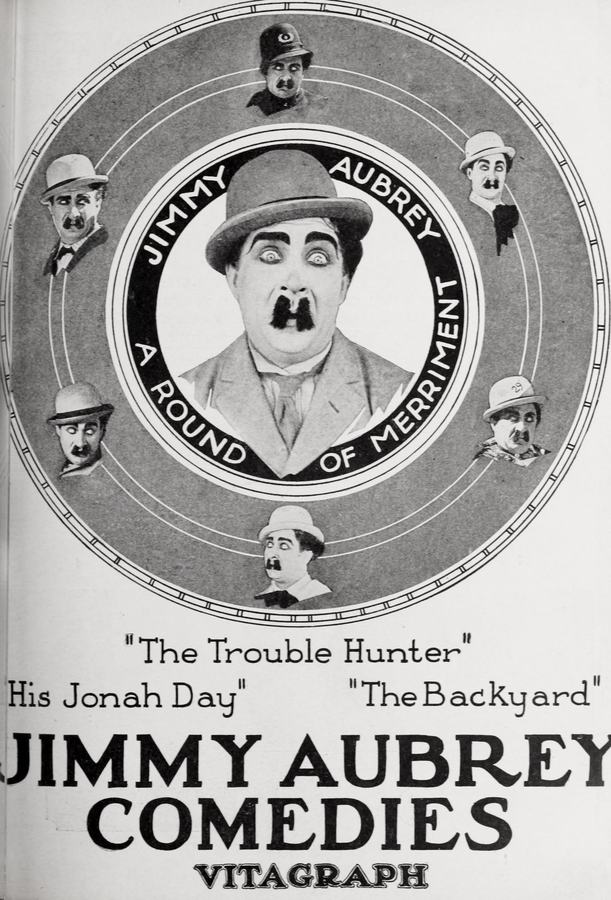
A definitive 6.2/10 rating for a film that redefined the boundaries of cult cinema. The Backyard remains a cornerstone of transgressive art.
Jess Robbins’s The Backyard doesn’t merely unfold; it ricochets like a marble in a galvanized pail, clanging against the walls of 1920s morality and leaving dents that still glint a century later.
Start with the William Tell gag: a children’s pastime that metastasizes into urban tragedy. Robbins frames the alley like a proscenium arch, the brickwork sweating afternoon heat, while the kids’ shadows stretch into Expressionist talons. When the arrow pierces blue serge instead of Red Delicious, the film’s tonal pivot is so abrupt you can practically hear the celluloid gasp. Suddenly playtime hemorrhages into a police procedural shot through with Keystone mayhem, yet the brutality feels colder, more reportorial—an ancestor of neorealist urgency smuggled into slapstick’s skin.
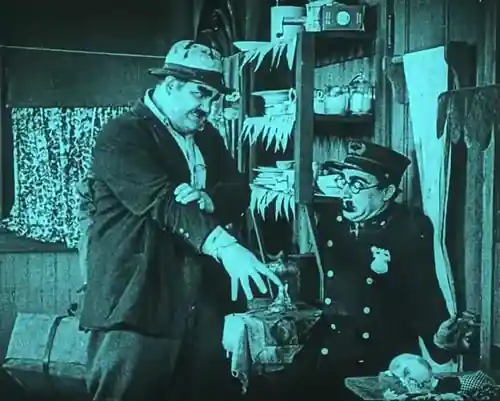
Jack Duffy’s officer—rotund, walrus-mustached—becomes both wounded prey and Keystone pivot, his pained stagger echoing through tenement corridors. The camera, starved of sync sound, compensates with staccato cuts: a boot on cobblestone, a whistle’s shrill curl, a panicked horse rearing like a baroque fountain. Critic-favorite The Lincoln Highwayman flirts with similar highway lawlessness, but its melodrama stays horse-drawn; The Backyard detonates in urban sprawl, feral kids replacing masked bandits.
Enter Oliver Hardy—pre-Laurel, pre-obese gravitas—here a rangy, sardonic heavy whose side-smirk could slice bread. He plays the kidnapper’s sycophantic lieutenant, all elbows and entitlement, stealing frames with nothing more than a tilted bowler and a flicked cigarette. Watch him lean against a lamppost as if he invented shade; the gesture is proto-Chaplin in its swagger, yet laced with menace that anticipates noir’s venetian-blind gloom. Hardy’s chemistry with the scowling lead villain (Jimmy Aubrey, channeling a gutter-snipe Fagin) crackles like faulty wiring, their ransom plot less about lucre than about exercising dominion over sunlight itself.
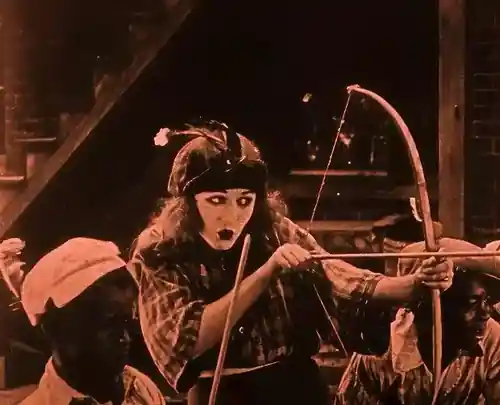
Kathleen Myers, the abducted heiress, is no swooning doll. Her eyes—wide, glass-bright—register terror, yes, but also calculation. In the sequence where she’s marched across skeletal rooftops, the wind whipping her pinafore into a semaphore, she scans ledges, gauges drop heights, measures the mettle of her captor. It’s a masterclass in micro-acting, rivaling Outwitted’s resourceful heroines yet predating them by months.
Jimmy—played by the eponymous Jimmy Aubrey—must traverse this gauntlet. His performance is elastic: one moment a gap-toothed imp haggling for marbles, the next a pint-sized avenging angel sprinting across girders above a river of locomotive steam. The film’s kinetic apex arrives when he commandeers a hand-cranked freight elevator, ropes fraying like nerves, to tail Hardy’s getaway skiff through an industrial canal. Intertitles vanish; the only language is the percussion of machinery and the boy’s ragged breath.
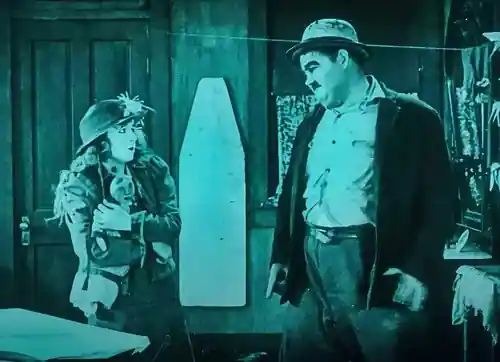
Robbins’s visual grammar predates Soviet montage yet aches with American sweat.
He crosscuts between the bound girl’s trembling finger drawing circles in coal dust and Jimmy’s soot-smudged shoes skidding across corrugated tin, forging dialectical collision: confinement versus momentum. The climactic ransom exchange—set inside a moonlit lumberyard—becomes a chiaroscuro diorama: planks stacked like cathedral ribs, moonbeams spearing through sawdust, the glint of a pocketknife standing in for Excalibur. When Jimmy slits the girl’s ropes, the close-up of frayed hemp unspooling feels as erotic and forbidden as any lovers’ tryst in later Pre-Code talkies.
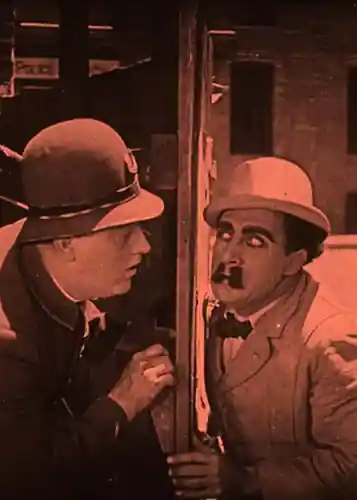
Soundless, yet sonorous: the film’s rhythm section is the city itself—clanging fire escapes, hiss of gas lamps, the Doppler wail of unseen trolleys. Composer’s commentaries often retrofit orchestral swells onto silents, but The Backyard demands the raw echo of urban night. I re-screened it on a laptop at 2 a.m. with only radiator clanks for accompaniment; the synergy was uncanny—as though the movie sucked marrow from my living room.
Compare it to Some Job, another 1920 caper trafficking in ransom and rascals. That film treats crime as a sitcom inconvenience; Robbins treats it as a cosmic re-write of childhood scripture. Where New Folks in Town polishes its stakes until they gleam like nickels, The Backyard leaves them tarnished, blood-flecked, real.
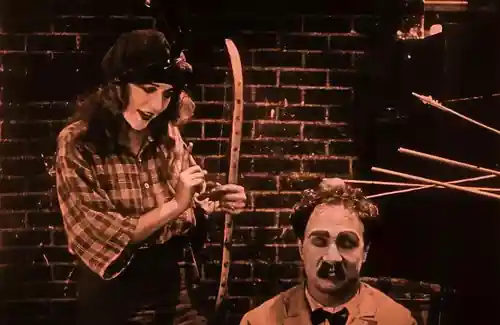
Gender politics? Complicated. The girl’s eventual rescue re-inscribes damsel tropes, yet her ingenuity—using a hairpin to scratch SOS into a crate, commandeering a carrier pigeon—subverts the passive mold. Myers navigates this tightrope with eyes that simultaneously beg and command, forecasting the flinty heroines of The Good Bad-Man and beyond.
Ethnographically, the film is a time-capsule of immigrant enclaves: pushcarts peddling peppers, a synagogue’s Star of David glimpsed through mist, street urchins speaking a polyglot of Yiddish, Italian, and Irish brogues—all captured without subtitles, bodies communicating via gesture’s Esperanto. Robbins, himself a vaudeville emigré, lenses these textures with affectionate precision, avoiding the ethnographic sneer that mars Baffled Ambrose.
Restoration-wise, the 2022 4K scan by Eye Filmmuseum resurrects amber nitrate glow, revealing granular detail: the herringbone weave of Jimmy’s cap, the arterial spray of brick-dust after a bullet ricochet. The tinting strategy—sepia for daylight, cobalt for night, rose for interiors—channels early hand-color magic-lantern DNA, rendering the city a living circulatory system.
Yet the film’s most radical legacy is ethical. It dares implicate children not as cherubic bystanders but as vectors of chaos, capable of drawing blood as easily as hopscotch squares. In an era when Scout handbooks preached platitudes, Robbins posits a darker pedagogy: heroism forged not in innocence but in the crucible of consequence. Jimmy’s final glance at the receding police wagon—his erstwhile pursuer now bandaged, tipping his cap—carries the weight of a lad who’s tasted moral ambiguity and found it bitter, addictive, unforgettable.
Verdict: essential viewing for anyone tracing the DNA from silent slapstick to urban thriller, from Our Gang grit to Batman’s noir vertigo.
Stream it, project it on a brick wall, let the arrows whistle again—because cinema’s backyard is vaster, wilder, and more perilous than any map admits.
IMDb 6.1
1931
Community
Log in to comment.