DbcultAccessing Vault...
Cult Review
Senior Film Conservator
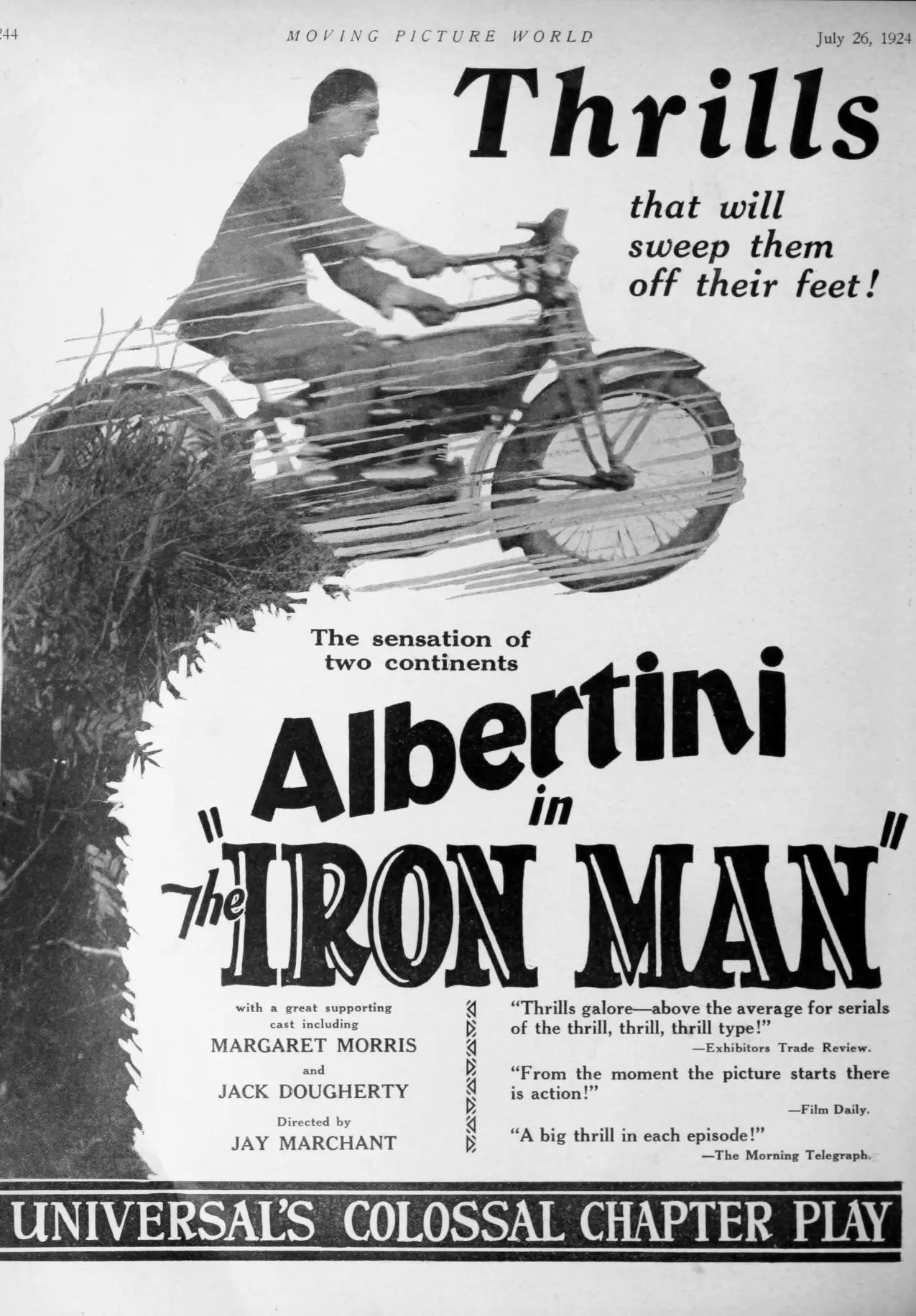
Step back into the roaring twenties, a decade of profound societal shifts and burgeoning artistic expression, particularly within the nascent world of cinema. Amidst this vibrant tapestry, we find a gem like The Iron Man (1925), a silent film that, despite its age, still possesses a remarkable capacity to captivate. It’s a foray into the thrilling domain of urban mystery, a genre that truly flourished in the silent era, leveraging visual storytelling to weave intricate narratives without the crutch of spoken dialogue. This particular feature, penned by Arthur Henry Gooden and William E. Wing, plunges us into a world where transatlantic connections intertwine with Parisian intrigue, setting the stage for a compelling journalistic quest. It’s more than just a whodunit; it’s a snapshot of an era, a reflection of societal anxieties and the persistent allure of the unknown, all conveyed through the expressive power of early filmmaking.
At the heart of The Iron Man lies Paul, a diligent and perceptive reporter for a prominent Parisian newspaper. His world, typically filled with the daily grind of city news, takes an abrupt and dramatic turn when he is assigned a case that transcends the mundane: the perplexing disappearance of the niece of a wealthy American motion picture magnate. This isn't merely a routine missing persons report; it's a high-stakes affair with international implications, demanding a level of discretion and investigative prowess that pushes Paul beyond his usual beats. The magnate, a figure of immense influence and palpable desperation, has spared no expense, turning to the Parisian press in a desperate bid to locate his kin. This setup immediately imbues the narrative with a sense of urgency and gravitas, positioning Paul not just as an observer, but as the central protagonist in a unfolding drama that threatens to spill into scandal.
Paul's investigation quickly draws him into the opulent yet clandestine circles of Parisian high society, a realm where appearances are meticulously maintained and secrets are guarded with fierce tenacity. He navigates a labyrinth of elegant salons, hushed drawing rooms, and dimly lit back alleys, each encounter potentially yielding a crucial clue or, conversely, deepening the enigma. The film masterfully builds suspense through its visual cues – lingering glances, furtive movements, and the stark contrast between the city's glittering façade and its shadowy underbelly. The disappearance itself is shrouded in a veil of ambiguity, with conflicting accounts and elusive witnesses creating a narrative tapestry that is both intricate and tantalizing. It’s a testament to the writers, Arthur Henry Gooden and William E. Wing, that they crafted a plot so dense with potential red herrings and genuine leads, keeping the audience perpetually on edge, trying to discern truth from artifice. The stakes are not just professional for Paul; the deeper he delves, the more personal the quest becomes, as he grapples with the moral complexities and potential dangers inherent in unearthing uncomfortable truths.
In the silent era, the power of performance rested almost entirely on an actor's ability to convey emotion, thought, and intention through exaggerated gestures, facial expressions, and body language. The ensemble of The Iron Man rises to this challenge with commendable skill, each performer contributing to the film's overall atmospheric tension and character depth. While the protagonist Paul, often embodied by a charismatic yet unnamed lead (as was sometimes the case in early productions, or perhaps a lesser-known actor whose performance speaks for itself), carries much of the narrative weight, the supporting cast provides essential texture and intrigue.
Rose Dione, a familiar face in silent cinema, likely brings her characteristic gravitas or comedic timing, depending on her role, adding a layer of seasoned professionalism. Margaret Morris, with her expressive features, would have been crucial in conveying the emotional turmoil or guarded secrets of her character, whether she played a femme fatale, a grieving relative, or an enigmatic witness. Jean De Briac, often cast in roles demanding a certain sophistication or villainy, undoubtedly contributes to the film's intricate web of suspects or allies, his presence alone suggesting depth and potential ulterior motives.
The presence of actors like William T. Horne, Harry Mann, and Luciano Albertini suggests a diverse range of character types, from stoic enforcers to shadowy figures, each playing their part in the unfolding drama. Albertini, known for his athleticism, might even hint at some physical sequences, a common element in thrillers of the period. Lola Todd, often portraying youthful innocence or vulnerability, would have been key to eliciting audience sympathy or adding a romantic subplot, while Jack Dougherty and Joe Bonomo, frequently seen in roles requiring physical presence or dramatic flair, would have rounded out the dynamic cast. William Welsh and Jack Pratt, seasoned character actors, would have anchored the more grounded or authoritative roles, providing counterpoints to the more flamboyant personalities. The collective efforts of these individuals, communicating solely through movement and expression, are what truly bring the Parisian underworld and its inhabitants to life, demanding an active engagement from the audience that is unique to the silent film experience. Their performances, though silent, speak volumes, creating a compelling human drama against a backdrop of mystery and suspense.
The true genius of silent cinema, and particularly evident in a film like The Iron Man, lies in its reliance on visual storytelling. Without spoken dialogue, every frame, every camera angle, every meticulously designed set piece, and every subtle gesture becomes a crucial narrative device. The film's direction, even without a credited director readily available, demonstrates a clear understanding of how to build tension and convey complex plot points through purely visual means. The use of dramatic lighting, for instance, would have been paramount in distinguishing between the glamorous public face of Parisian society and the shadowy, secretive world Paul infiltrates. A flickering gaslight in a secluded alley, the harsh glare of a detective's lamp, or the soft glow of a drawing-room chandelier – all contribute to the mood and narrative progression.
Cinematography in 1925, while perhaps lacking the sophisticated tracking shots and fluid camera movements of later eras, excelled in its ability to compose striking tableaux. The framing of characters within their environments, often emphasizing their isolation or their entanglement in a larger conspiracy, would have been key. Close-ups, though used sparingly in some early films, would have been deployed strategically to highlight crucial expressions or objects – a suspicious letter, a hidden locket, a fleeting look of fear or recognition. The set design, transporting the audience to a romanticized yet dangerous Paris, would have been equally vital, creating believable backdrops for the unfolding drama. From bustling newspaper offices to opulent mansions and grimy industrial districts, each setting would have been crafted to enhance the narrative's realism and atmospheric depth.
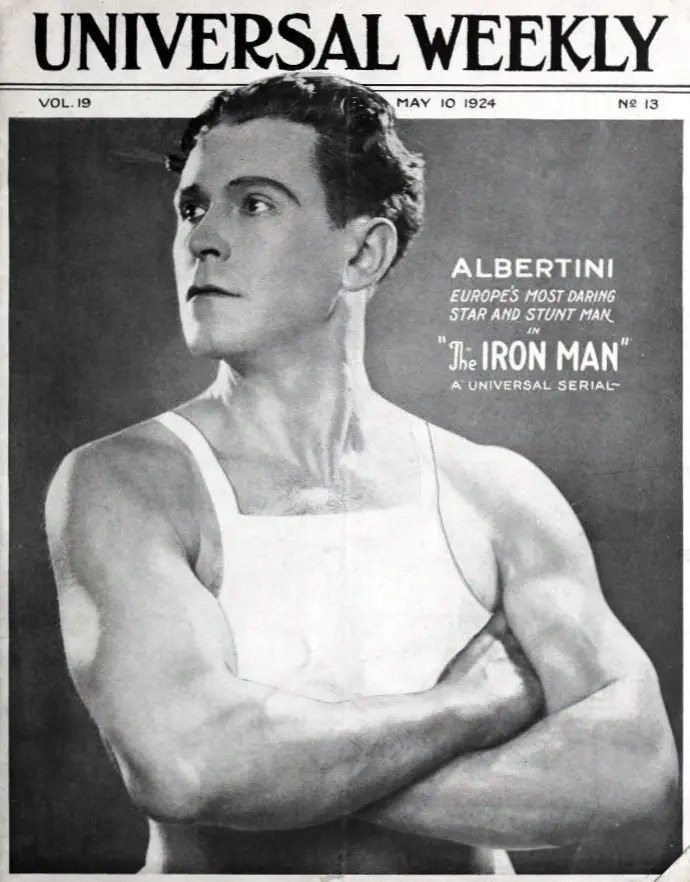
The pacing of a silent film, dictated by the rhythm of editing and the frequency of intertitles, is a delicate art. The Iron Man likely employs a deliberate, measured pace in its initial exposition, allowing the mystery to slowly unfurl and the characters to be introduced. As Paul delves deeper, the editing would become more brisk, accelerating the tension during chase sequences, confrontations, or moments of revelation. Intertitles, the textual explanations interspersed throughout the film, serve as vital bridges, providing necessary dialogue, contextual information, or internal thoughts of the characters. Their careful placement and concise wording are crucial; too many, and the film drags; too few, and the narrative becomes opaque. The writers, Arthur Henry Gooden and William E. Wing, were not just crafting a plot, but also implicitly shaping the visual and temporal flow of the story through their script, understanding that every word written would eventually be translated into a visual or textual cue on screen. This holistic approach to storytelling is what elevates films like The Iron Man beyond mere historical curiosities into genuine works of art.
Beyond its thrilling plot, The Iron Man resonates with several profound themes that were particularly pertinent to the 1920s and remain relevant even today. One of the most striking is the exploration of urban anonymity and the deceptive nature of appearances. Paris, often romanticized as a city of lights and love, is here depicted as a sprawling metropolis where secrets can thrive in plain sight, and individuals can vanish without a trace. This theme taps into a burgeoning modern anxiety about the loss of community and the impersonal nature of rapidly growing cities, a sentiment not dissimilar to the disquiet explored in films like The Wolf Man (1923), which also delved into hidden dangers lurking within seemingly ordinary settings.
The film also provides a fascinating look at the burgeoning power of the media and the role of the journalist. Paul isn't just a passive observer; he's an active agent, representing the public's right to know and the press's capacity to uncover truth, even when powerful figures wish it to remain buried. This portrayal reflects a growing awareness of journalism's influence in shaping public opinion and holding the powerful accountable, a theme that would continue to evolve throughout cinematic history. The tension between journalistic ethics and the pursuit of a sensational story, though perhaps subtly presented in a silent film, would have been implicit in Paul's choices and struggles.
Furthermore, the narrative touches upon the allure and potential corruption associated with immense wealth and the burgeoning motion picture industry. The American magnate's desperation underscores the vulnerabilities that even the most powerful individuals face, while the glamour of the film world provides a seductive backdrop for potential deception and intrigue. This juxtaposition of old-world European charm with new-world American industrial power offers a subtle commentary on transatlantic cultural exchange and its inherent complexities. The film, in its own silent way, critiques the superficiality that can accompany wealth and fame, suggesting that beneath the glittering surface often lie darker currents of ambition, betrayal, and desperation. It's a morality play subtly woven into a thrilling mystery, much like the social commentary found in dramas such as The Evil Thereof, albeit with a different narrative approach.
To fully appreciate The Iron Man, one must consider its place within the broader landscape of 1920s silent cinema. This was an era of immense experimentation and rapid evolution in filmmaking. Techniques were being refined, narrative structures were becoming more sophisticated, and the very language of cinema was being invented and codified. The Iron Man stands as a competent example of a genre film from this period, demonstrating the industry's ability to produce engaging, commercial entertainment alongside its more artistic or epic endeavors like The Birth of a Nation (though vastly different in scale and ambition).
The mystery-thriller genre, to which The Iron Man firmly belongs, was a popular staple, providing audiences with escapism and intellectual puzzles. Films like Chains of Evidence would have similarly engaged audiences with their intricate plots and investigative elements. What sets The Iron Man apart, or at least makes it noteworthy, is its specific blend of Parisian glamour with American commercial interests, creating a unique transatlantic flavor. It's not just a local Parisian mystery; it's one with global connections, reflecting the increasing interconnectedness of the world in the post-WWI era.
The film also showcases the archetypal character of the intrepid reporter, a figure who would become a cinematic mainstay. This portrayal, while perhaps less overtly glamorous than the leading ladies of films like The Misleading Lady or the romantic leads of The Girl of My Dreams, is nonetheless compelling for its realism and relatability. Paul represents the everyman thrust into extraordinary circumstances, a narrative device that continues to resonate with audiences. The writers, Arthur Henry Gooden and William E. Wing, were contributing to the evolving language of cinematic storytelling, demonstrating how to craft a compelling narrative purely through visual means and carefully constructed intertitles. Their work, alongside the efforts of the cast and crew, solidified the conventions of the mystery genre in a medium still finding its voice.
While perhaps not as widely remembered as some of its contemporaries, The Iron Man offers a valuable glimpse into the craftsmanship and narrative ambition of the silent film era. It’s a testament to the enduring power of a well-told story, even when stripped of spoken dialogue and modern special effects. For cinephiles and historians, it serves as a fascinating artifact, showcasing how early filmmakers tackled complex plots, developed characters, and built suspense with the limited tools at their disposal. Its ability to transport viewers to a specific time and place, to immerse them in a compelling mystery, speaks volumes about its inherent quality and the timeless appeal of a good story. Revisiting such films is not merely an exercise in nostalgia; it's an opportunity to appreciate the foundational artistry upon which all subsequent cinema has been built, revealing the ingenuity and passion that defined the dawn of moviemaking.
IMDb 6
1936
Community
Log in to comment.