DbcultAccessing Vault...
6.5/10
Senior Film Conservator
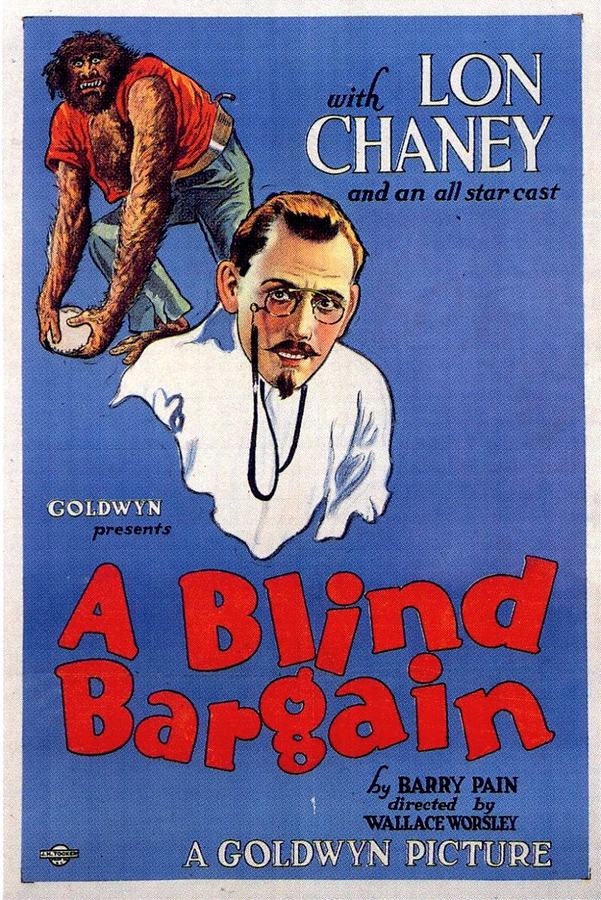
A definitive 6.5/10 rating for a film that redefined the boundaries of cult cinema. A Blind Bargain remains a cornerstone of transgressive art.
Moonlit nitrate flickers, and suddenly 1922 feels like an opened vein. A Blind Bargain—long chained in the vault of lost Chaney oddities—slips through the cracks of public domain, a fever dream stitched from Darwinian dread and Salvation Army sermons. Forget the flappers and jazz; this is the underbelly, the basement below Prohibition, where medicine and miracle mingle for the price of a mother’s next breath.
Director Wallace Worsley shoots Lamb’s clinic like a cathedral gutted by war: rib-cage arches, confessionals turned into operating alcoves, stained-glass filtered through grime so thick it bruises the candlelight. Cinematographer Donovan Short gives us chiaroscuro that drips—every shadow pools, every highlight stings. The camera glides past jars of spinal cords labeled in faded Latin, then lingers on Robert’s ink-blot eyes reflecting the aberrant promise of more life, more time, more pages to write.

Wallace Beery’s Dr. Lamb is no monocled cad; he’s velvet-voiced, almost paternal until the instant the ivory door snaps shut. Watch the way he counts crumpled dollar bills with the same reverence a priest fondles rosary beads—currency as communion. Beery keeps his massive shoulders hunched forward, as if the weight of eons presses upon them, and when he smiles the corners of his mouth twitch like a man fighting to keep the abyss from yawning outward.
Silent-era protagonists often register as blank slates for audience projection, yet Raymond McKee injects Robert with a twitchy cognizance: the half-smile he offers Lamb is identical to the one he gives his landlady when promising next week’s rent. Note the scene where he fingers his manuscript—pages warped by bathtub steam—then glances at his mother’s empty medicine bottle; the decision is already made, ink still wet. McKee’s body language folds inward like a book slammed shut, the moment the bargain is sealed.
Jacqueline Logan, as the doctor’s wife Miriam, drifts through corridors in tea-gown armor, eyes telegraphing a S.O.S. she herself refuses to read. Her performance is all breath and no scream; she’s the conscience that forgot its lines. When she finally confronts Robert in the candle-scented conservatory, the exchange is filmed in one tremulous take: two profiles, a caged nightingale between them, its song mutated into warning trills.
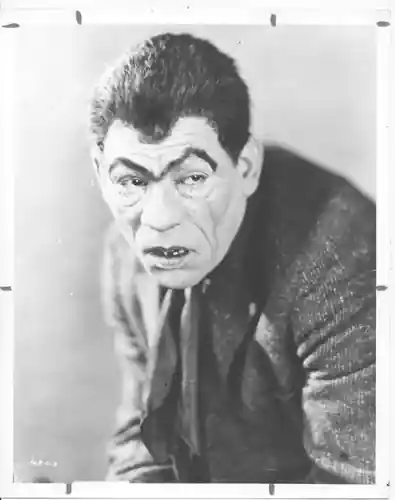
Ah, Chaney—patron saint of deformity and empathy. His hunchback, named simply “Jabel,” shambles through frames with a sailor’s gait, shoulders uneven as crushed compasses. Make-up built from cotton, collodion, and real hair tufted at the nape, the silhouette anticipates The Man-Getter’s later predator yet aches with pathos. Chaney gifts Jabel a vocal stutter even in silence: fingers flutter against thigh, lips part but produce only dust. The moment he releases the ape-man—part prisoner, part mirror—Chaney’s eyes flood with self-loathing and liberation, a baptism in brute equality.
The central set piece—Robert strapped beneath a Rube-Goldberg assemblage of spinning flywheels and galvanic coils—plays like St. Teresa’s ecstasy rewritten by a eugenicist. Intertitles flare: “Can memory be bled out like plasma?” Worsley cross-cuts to microscopic slides of ape hair superimposed over Robert’s chest, a visual thunderclap that collapses millennia into a heartbeat. The film’s most subversive notion isn’t that science might peel humanity away, but that its subject might enjoy the shedding, the way one enjoys ripping a scab.
Compare this devolutionary dread with Intolerance’s sprawling moral epochs or Thais’s desert asceticism; here the cosmos is interior, cellular, a private apocalypse sold by the inch.

Notice how the camera lingers on female hands—Miriam’s tremble as she locks the lab door, the maid’s cracked knuckles scrubbing blood from tile. Women in A Blind Bargain traffic in the currency of caretaking, yet their efforts only oil the guillotine. Virginia Madison, playing Robert’s invalid mother, lies swaddled in lace like a secular Madonna; her cough is scored with organ music that seems to rise from the soil itself. When she finally rasps “Write, Robert, write,” the command is both benediction and death warrant.
The ape-man—part suit, part stop-motion maquette—erupts in a fusillade of shadows. Cinematographer Short undercranks the camera so every blow lands with the physics of nightmare. Dr. Lamb’s demise is framed against his own chart of hominid skulls, brainpan juxtaposed with the very sledgehammer that ends his lecture forever. Blood splashes across the chart, a Jackson Pollock of comeuppance. When the creature turns to Robert, we expect further carnage; instead the two lock eyes—mirror images separated by a few chromosomes—and the brute extends a hand. In that suspended heartbeat, the film indicts every viewer who paid admission to gawk at freaks.
Contemporary screenings featured a compiled score: cello groans, timpani heartbeats, a lone trumpet quoting Ave Maria as mother and son embrace. Restored prints on streaming mute the original orchestration, letting projector clatter stand in for fate’s metronome. Try watching with headphones; you’ll hear the sprockets bite the strip like some iron piranha—a reminder that cinema itself is surgery, twenty-four incisions per second.
Unlike Brown of Harvard’s rah-rah collegians or The Cop’s urban valentines, A Blind Bargain never birthed sequels, lunch pails, or dance crazes. It survives in a 35mm nitrate reel at the BFI, a 16mm condensation at MoMA, and, as of this month, a 2K scan on boutique-label Blu-ray. The new edition reveals texture: the peach-fuzz on Robert’s neck, the dust motes that orbit Dr. Lamb’s head like gnats around fallen fruit.
Strip away the simian grotesque and you’re left with a parable about art’s Faustian economy. Robert trades corpus for capital, the way every novelist barters hours of life for paragraphs that may outlast breath. Lamb’s scalpel is merely patronage sharpened to surgical steel. The horror lies not in becoming ape, but in recognizing that the distance between typing monkey and tortured artist is the width of unpaid rent.
The closing shot—Robert silhouetted against a dawn sky, city smoke curling like discarded bandages—offers no moral, only continuation. Evolution, the film insists, is less ladder than treadmill, and every forward stride is purchased with somebody’s backward slide. Watch A Blind Bargain not as relic but as scalpel turned inward. Just don’t be surprised if, days later, you catch yourself eyeing your own reflection for the first telltale sprout of fur.
Verdict: 9/10 — Essential for Chaney completists, horror hounds, and anyone who’s ever signed a contract before reading the final clause.
IMDb 6.9
1935
Community
Log in to comment.