DbcultAccessing Vault...
7.1/10
Senior Film Conservator
A definitive 7.1/10 rating for a film that redefined the boundaries of cult cinema. The Iron Nag remains a cornerstone of transgressive art.
Is The Iron Nag worth watching today? Short answer: yes, but with a significant caveat. This kinetic silent-era comedy offers a fascinating glimpse into early cinematic slapstick and chase sequences, making it a compelling watch for film historians and enthusiasts of vintage cinema. However, its narrative simplicity and reliance on broad physical humor might test the patience of viewers accustomed to modern storytelling and comedic sensibilities.
This film is unequivocally for those who appreciate the foundational elements of film comedy, the raw energy of an emergent art form, and the sheer audacity of early stunt work. It is decidedly not for audiences seeking complex character development, nuanced dialogue (for obvious reasons), or sophisticated humor that delves beyond the immediate visual gag. If you find joy in the foundational building blocks of the cinematic language, you’re in for a treat.
At its core, The Iron Nag is a masterclass in escalating absurdity. The premise itself — a man mistaken for a jockey, jailed with his equine charge, and then on the run from a cadre of overzealous police — is a perfect setup for the kind of relentless physical comedy that defined the era. It’s a film that doesn’t waste a single frame on exposition, plunging the viewer directly into the escalating predicament.
The film works because it commits entirely to its chaotic premise, delivering a relentless stream of gags and a surprisingly effective chase sequence. It fails because its comedic rhythm, while groundbreaking for its time, can feel repetitive and occasionally uninspired to a modern audience. You should watch it if you have an appetite for pure, unadulterated silent-era slapstick and appreciate the historical context of cinematic comedy.
The narrative, penned by a team including the legendary Frank Capra (among Jefferson Moffitt, Felix Adler, and Al Giebler), is less about intricate plotting and more about creating a framework for escalating physical comedy. Our unnamed protagonist, portrayed by Billy Bevan, finds himself in an unenviable bind. A simple misunderstanding transforms him from an ordinary man into a notorious jockey, an identity that quickly leads him into a jail cell. His cellmate? The very horse he’s meant to ride in the Kentucky Steeplechase. This bizarre incarceration sets the stage for a jailbreak that is as clumsy as it is ingenious, culminating in a cross-country pursuit that forms the bulk of the film's runtime.
What follows is a testament to the ingenuity of early filmmakers in orchestrating thrilling, albeit comedic, action. The pursuit by the 'trigger-happy cops' is a recurring motif, a cartoonish menace that provides constant propulsion. It’s a simple story, yes, but its strength lies in its relentless forward momentum and the sheer audacity of its central conceit. The race itself becomes a MacGuffin, a distant goal that fuels the immediate, frantic energy of the escape.
While specific directorial credit often blurs in early cinema, the execution of The Iron Nag demonstrates a clear understanding of visual storytelling and comedic timing. The pacing is breathless, a continuous sprint from one gag to the next, rarely allowing the audience a moment to catch their breath. This relentless rhythm is crucial for silent comedy, where sustained energy must compensate for the absence of dialogue.
Consider the jailbreak sequence. It’s not just a simple escape; it’s a meticulously choreographed ballet of slamming doors, confused guards, and a surprisingly cooperative horse. The camera work, while often static by today's standards, is always positioned to capture the full scope of the physical comedy, ensuring that every pratfall and bewildered expression lands with maximum impact. One could argue the use of parallel editing during the chase, cutting between the escaping duo and the pursuing police, was quite sophisticated for its time, building genuine suspense amidst the laughs.
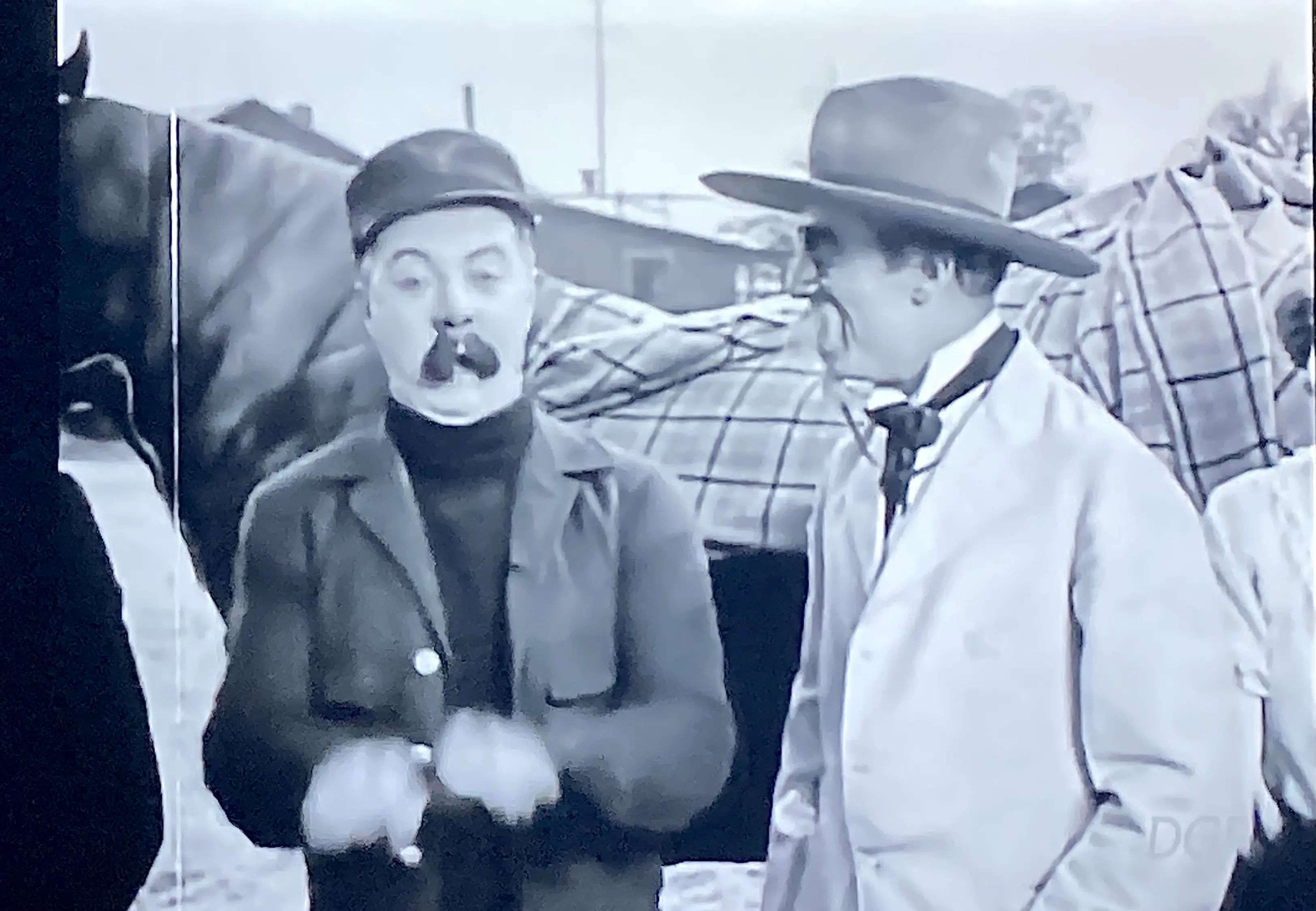
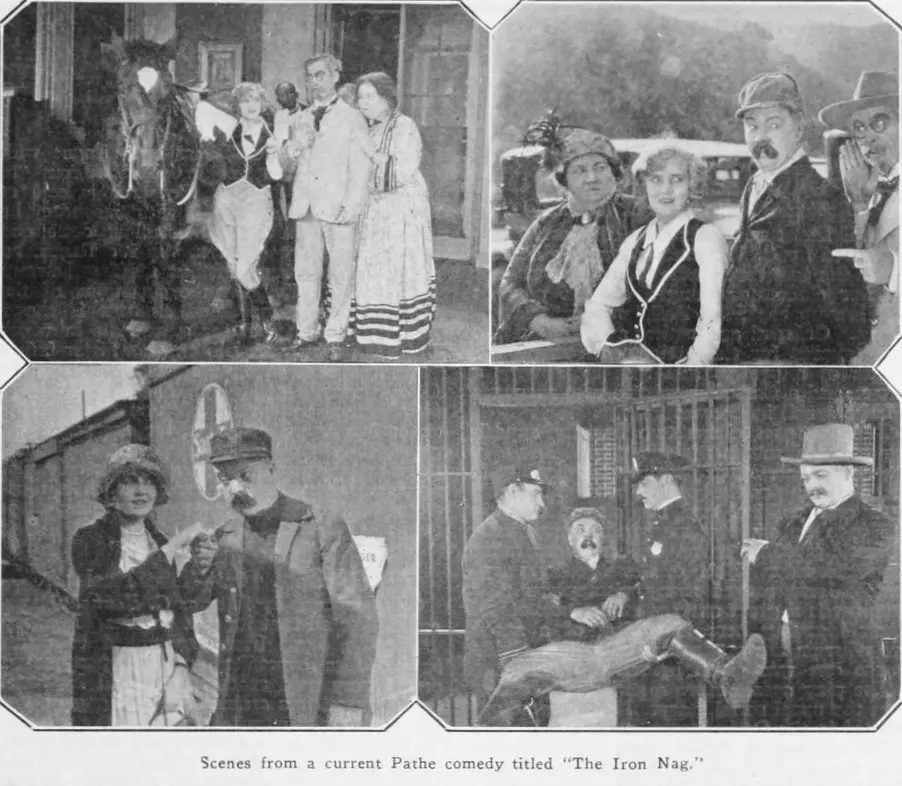
The cast of The Iron Nag is a who's who of silent-era comedic talent, each bringing a distinct flavor to the escalating chaos. Billy Bevan, as the unwitting jockey, anchors the film with his expressive physicality and knack for portraying bewildered desperation. His wide-eyed reactions to the absurdity unfolding around him are priceless, often communicating more than any subtitle could.
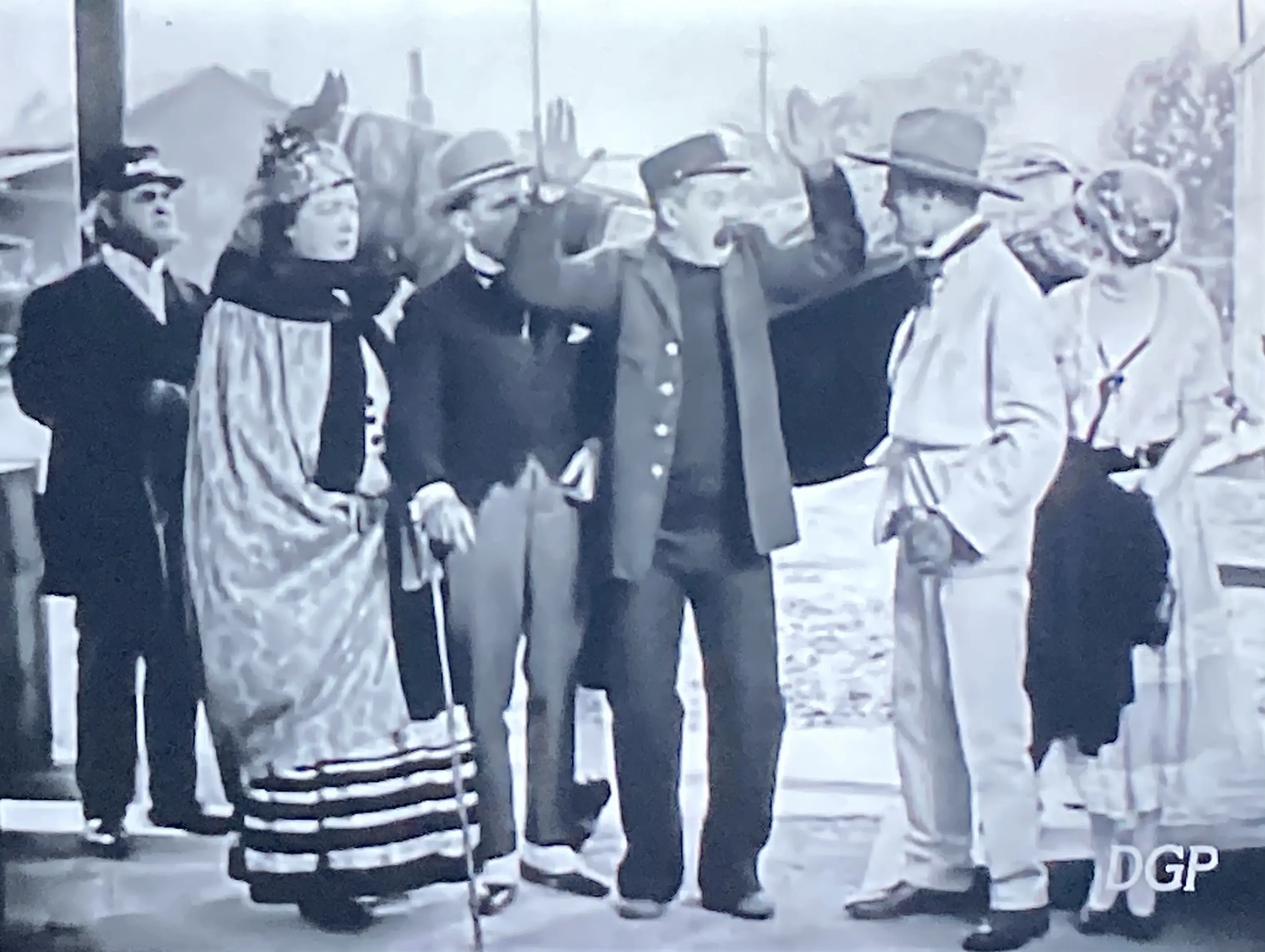
Ruth Taylor, a prominent figure of the era, brings a spirited presence, even in what might be considered a supporting role. Her ability to hold the frame and react to the frantic energy of Bevan and the horse adds layers to the comedic tapestry. Roger Moore, not the 007 we know, but a silent-era contemporary, contributes to the ensemble, often playing the straight man or an equally flustered authority figure. The collective effort of this ensemble, including stalwarts like Andy Clyde and Bobby Dunn, ensures a consistent level of manic energy.
It’s a debatable point, but I believe the exaggerated, almost theatrical performances, particularly from the police officers, are not merely a product of the era but a deliberate artistic choice to heighten the film's cartoonish reality. They are less characters and more forces of nature, embodying relentless, albeit incompetent, authority.
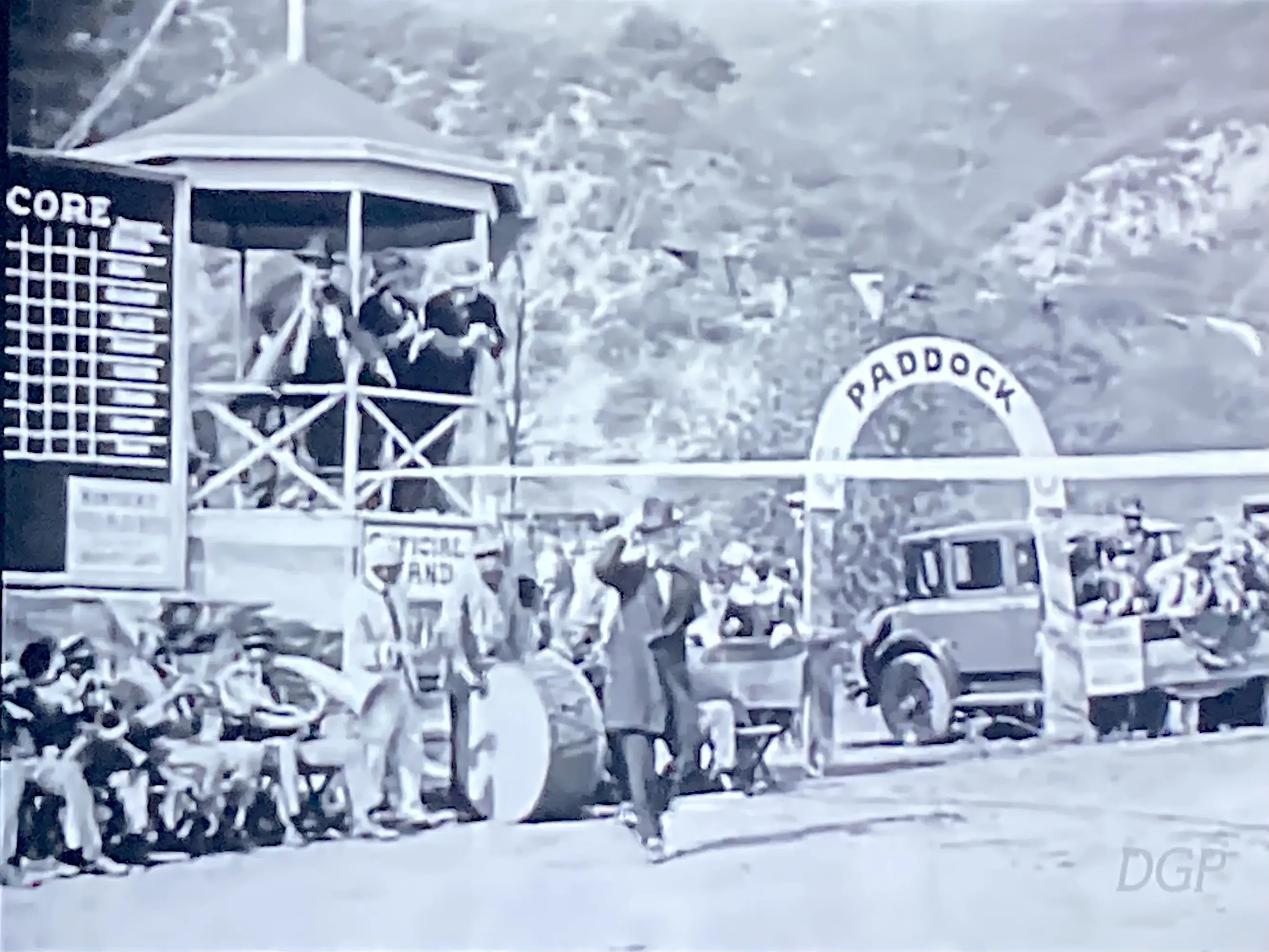
The visual language of The Iron Nag is remarkably effective for its time. Cinematography, though lacking the elaborate camera movements of later eras, is functional and often quite dynamic. The use of location shooting for the chase sequences provides a sense of authenticity and scale, grounding the fantastical premise in tangible environments. The dusty roads, open fields, and rickety fences all become obstacles and opportunities for gags.
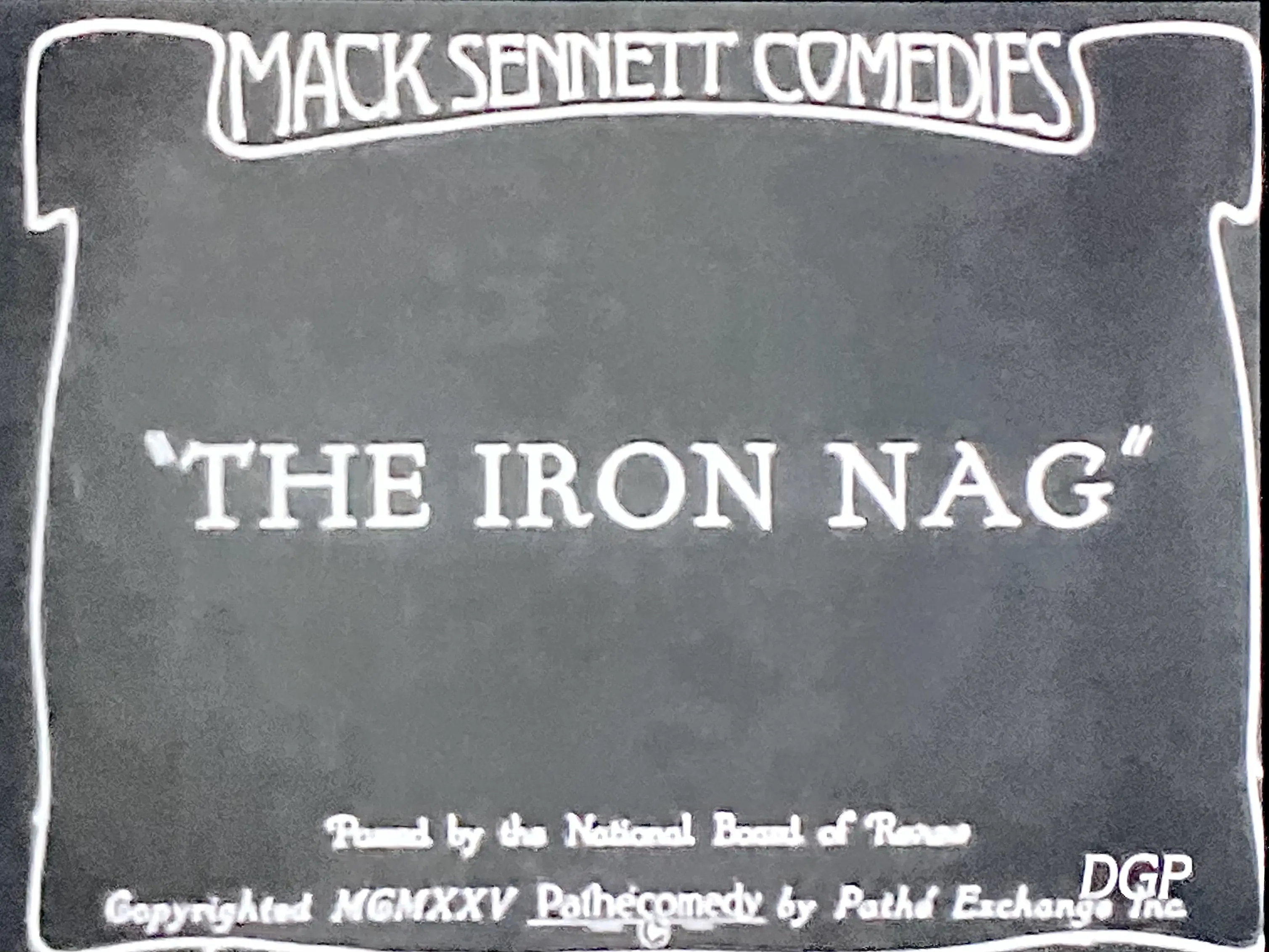
There's a raw, almost documentary-like quality to some of the chase footage, capturing the genuine speed and movement of the horse and car. The framing consistently emphasizes the physical action, whether it's a tight shot on Bevan's face as he struggles with the horse or a wide shot capturing the entire pursuit across a sprawling landscape. It’s not 'visually stunning' in the modern sense, but it is undeniably effective in its purpose.
The pacing of The Iron Nag is its heartbeat. It starts fast and rarely lets up, a crucial element for maintaining audience engagement in a silent film. The tone is consistently lighthearted and comedic, even during moments of apparent peril. The 'trigger-happy cops' are never truly menacing; their threat is purely for comedic effect, their incompetence a running gag.
An unconventional observation: the horse itself acts as a character. It's not just a prop; its reactions, its stubbornness, and its surprising moments of cooperation are integral to the comedy. There's a particular scene where the horse seems to intentionally obstruct the police, almost as if it's in on the joke, which adds a delightful layer of anthropomorphism that elevates the slapstick.
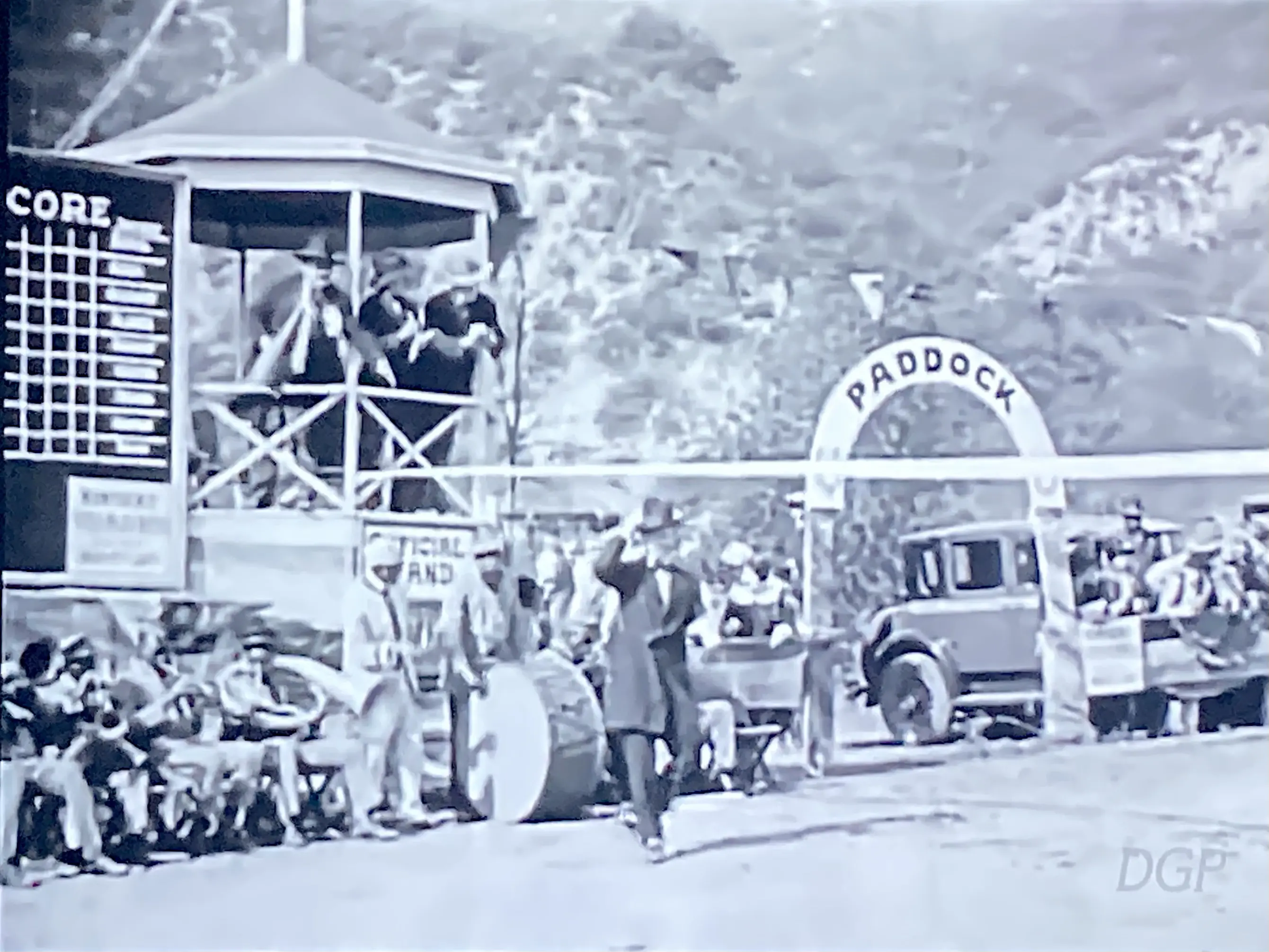
The film’s humor relies heavily on exaggeration and repetition, a common trope in silent comedy. While some might find this tiresome, it builds a comfortable rhythm. It works. But it’s flawed. The gags, such as cars comically overturning or characters narrowly avoiding disaster, are repeated with variations, creating a cumulative effect of escalating chaos.
For those with an interest in the origins of cinematic comedy, The Iron Nag is absolutely worth seeking out. It's a foundational text for understanding how physical humor and chase sequences were constructed in the early days of film. Its historical significance alone makes it a valuable viewing experience.
However, if you're looking for a film to simply unwind with, expecting the polished narratives and sophisticated humor of contemporary cinema, you might find it a challenging watch. Its charm is undeniable, but it requires a specific appreciation for its era.
It's a testament to the enduring power of simple, effective storytelling. The film’s ability to generate genuine laughs and excitement with such basic tools is a marvel. It stands as a vibrant example of what early filmmakers could achieve with ingenuity and a willingness to embrace the absurd.
The Iron Nag is a delightful, if dated, sprint through the early days of cinematic comedy. It's a film that demands a certain appreciation for its historical context and its specific brand of humor, but for those willing to meet it on its own terms, it offers genuine laughs and a fascinating window into a bygone era. While it might not possess the enduring depth of a film like The Woman from Nowhere or the narrative intricacy of The Leap of Despair, its raw energy and commitment to chaos are infectious.
I firmly believe its legacy lies not just in its comedic value, but in how it paved the way for future action-comedies. It’s a foundational piece, a blueprint for the chase. While some might find its humor too broad or its narrative too thin, it’s an essential watch for understanding the evolution of film. It’s a reminder that sometimes, all you need is a man, a horse, and a car full of bumbling cops to create cinematic magic. Don't expect a profound emotional journey; expect to be thoroughly entertained by pure, unadulterated pandemonium.
IMDb 4.6
1921
Community
Log in to comment.