DbcultAccessing Vault...
Cult Review
Senior Film Conservator
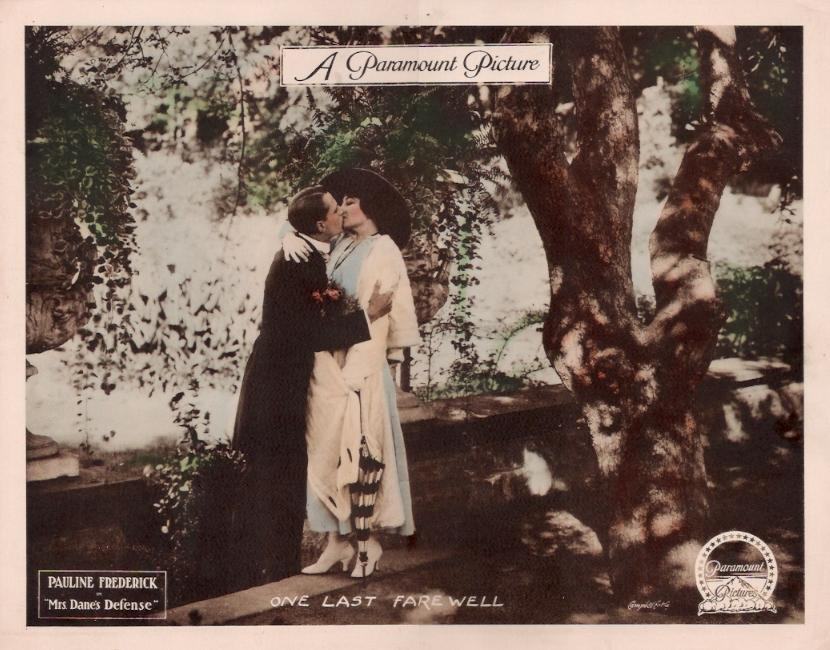
In the pantheon of silent cinema, few performances oscillate between vulnerability and calculated desperation as effectively as Pauline Frederick’s turn in Mrs. Dane's Defense. Released in 1918 and based on the stage play by Henry Arthur Jones, this film serves as a stark reminder that the 'fallen woman' trope was not merely a plot device, but a sociocultural obsession that mirrored the rigid anxieties of the early 20th century. Unlike the whimsical escapism found in contemporary works like All Night, this production plunges into the murky waters of identity, reputation, and the unforgiving nature of the British upper class.
The narrative machinery of Mrs. Dane's Defense is deceptively simple, yet it functions with the precision of a guillotine. Felicia Hindemarsh, portrayed with a haunted luminosity by Frederick, has reinvented herself as Mrs. Dane. She is a woman seeking a second chance, a quiet life in a community where her past is an unknown quantity. However, the film posits a terrifying thesis: in a society built on lineage and 'purity,' a woman’s past is never truly her own. When she becomes engaged to Lionel Carteret, her past is subjected to the microscopic gaze of his father, Sir Daniel Carteret (played with a chilling, legalistic coldness by Frank Losee).
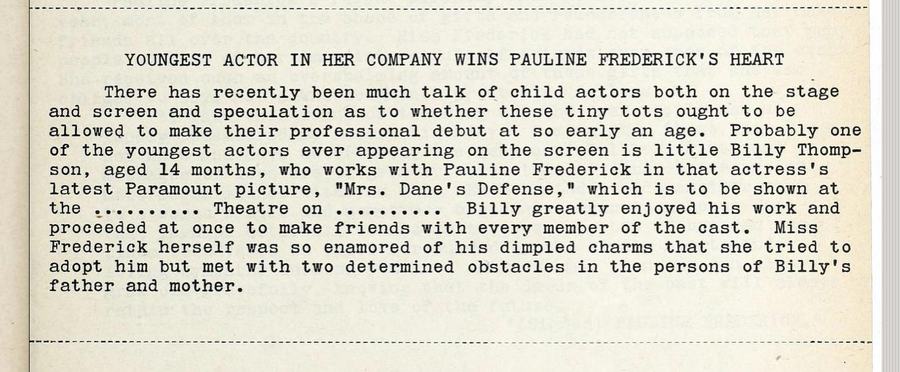
What makes this film distinct from other period dramas like The Woman Who Dared is its focus on the 'defense' rather than the 'sin.' The cinematic language here is not concerned with the salacious details of Felicia’s early life, but with the methodology of her concealment. We see the mental gymnastics required to maintain a false persona—the constant monitoring of one’s own speech, the forced composure, and the sheer, exhausting labor of performance. It is a proto-noir psychological thriller disguised as a drawing-room melodrama.
The centerpiece of the film, and indeed the play upon which it is based, is the grueling cross-examination of Mrs. Dane by Sir Daniel. In an era where editing was often rudimentary, director Frank Losee utilizes the frame to heighten the claustrophobia. The camera lingers on Frederick’s face, capturing the minute tremors of her lips and the widening of her eyes as Sir Daniel systematically dismantles her story. It is a masterclass in silent acting; Frederick does not need intertitles to convey the moment the lie breaks. We see the soul retreat as the logic of her deception fails.
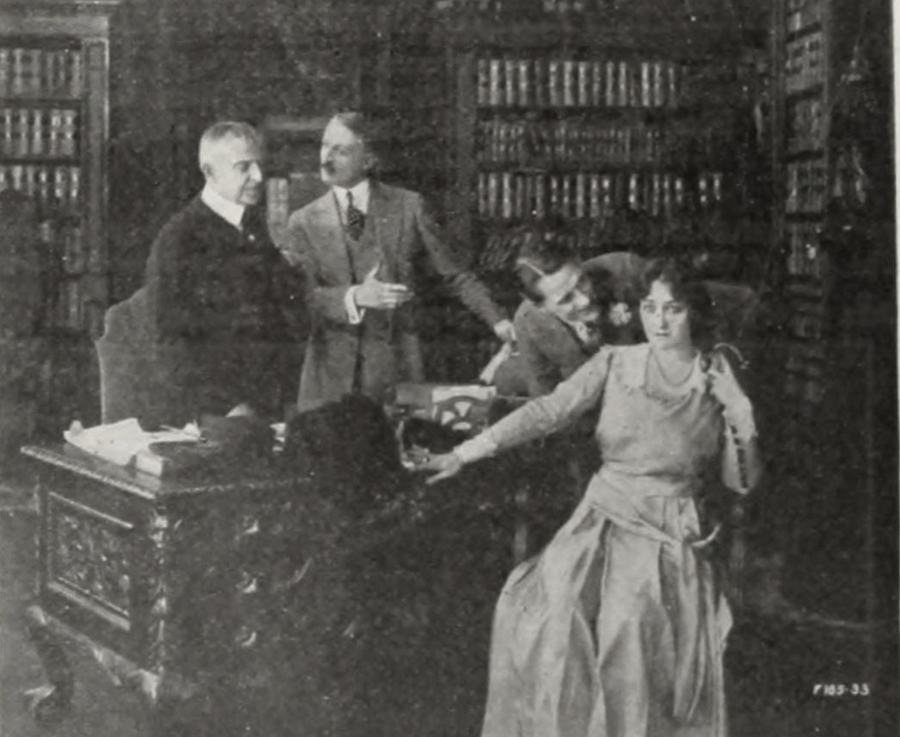
"The tragedy of Felicia Hindemarsh is not that she was found out, but that she was forced to live in a world where being 'found out' meant the end of her humanity."
This scene stands in stark contrast to the more action-oriented narratives of the time, such as Sylvia of the Secret Service. While other heroines were fighting physical battles, Mrs. Dane is fighting an existential one. The stakes are not her life, but her right to exist within the social fabric. The sea blue (#0E7490) tones of the set design—if we imagine the original tinting—would have underscored the cold, intellectual environment of the Carteret study, a place where emotion is a weakness and logic is a weapon.
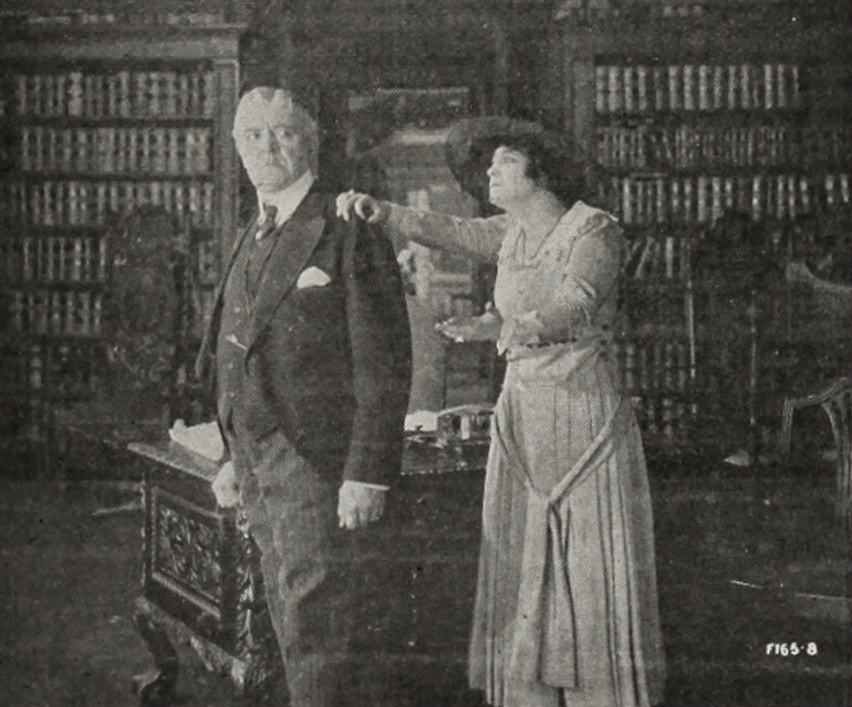
When we look at Mrs. Dane's Defense alongside Man's Woman, the double standard of the era becomes glaringly apparent. In the latter, male transgressions are often framed as youthful follies or hurdles to be overcome, whereas in Mrs. Dane’s world, a woman’s indiscretion is an indelible stain. Even the more adventurous narratives like The Pines of Lorey or the lighthearted The Venus Model fail to capture the sheer psychological weight of social exile that this film portrays so vividly.
The supporting cast, including Howard Hall and Ida Darling, provide a sturdy framework for Frederick’s central performance. They represent the 'chorus' of society—those who are ready to embrace a newcomer but are equally ready to cast them out the moment a shadow of doubt appears. This collective hypocrisy is the true villain of the piece. Unlike the overt antagonists in Riders of the Night, the enemies here are politeness, tradition, and the law.
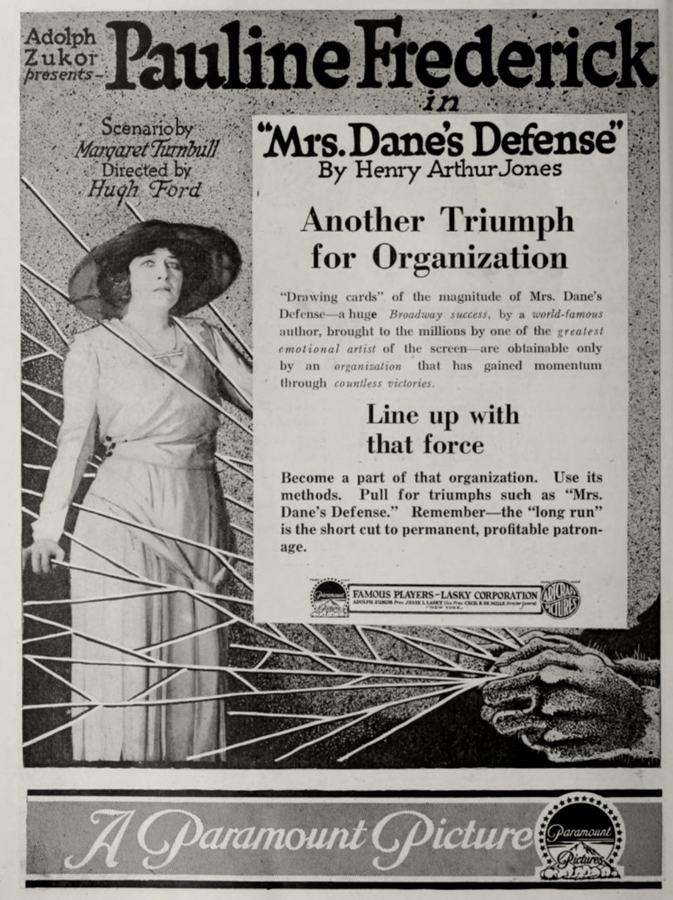
For a film from 1918, the visual storytelling is remarkably sophisticated. The use of light and shadow during the interrogation scenes anticipates the German Expressionist movement that would soon dominate European cinema. The writers, Margaret Turnbull and Henry Arthur Jones, managed to translate a dialogue-heavy stage play into a visual medium without losing the intellectual rigor of the source material. They avoided the pitfalls of excessive intertitles, allowing the actors' physicality to carry the narrative weight.
Consider the thematic echoes in Seven Deadly Sins or the dramatic intensity of V ikh krovi my nepovinny. Mrs. Dane's Defense occupies a unique space where it is both a product of its time and a timeless critique of human judgment. The dark orange (#C2410C) warmth of the domestic scenes early in the film serves as a cruel irony, a fleeting glimpse of the happiness that Felicia is ultimately denied.
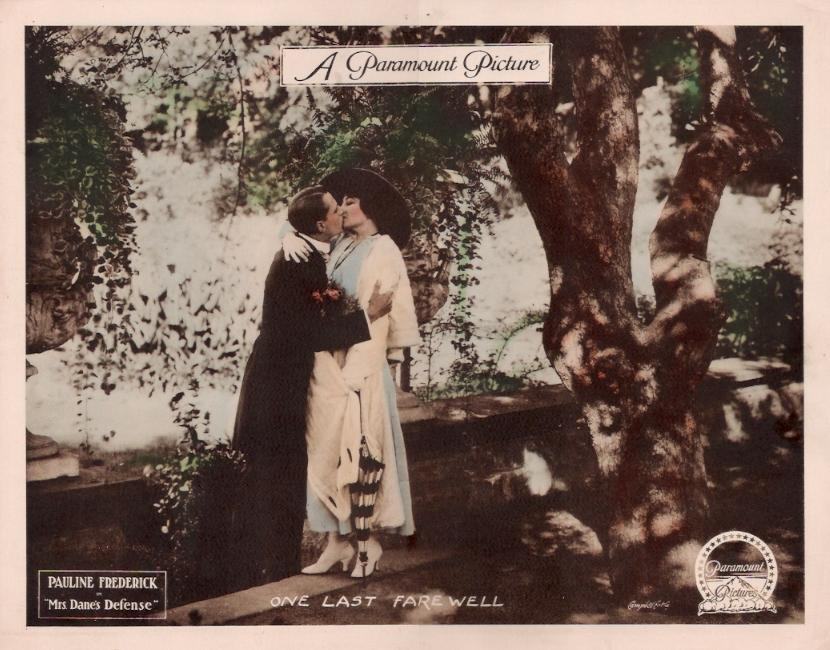
Watching this film today, one is struck by how little has changed in the court of public opinion. While the specific 'indiscretions' may have evolved, the mechanism of the 'scandal' and the subsequent 'defense' remains a central part of our cultural dialogue. The film doesn't offer a happy ending because, in the world it depicts, there can be no happy ending for someone who has broken the cardinal rule of transparency—even if that transparency is a death sentence for one’s social life.
It is far more somber than Just for Tonight and lacks the mystery-solving catharsis of The Mystery of the Black Pearl. Instead, it offers a sobering reflection on the cost of survival. Pauline Frederick’s performance remains one of the high-water marks of the era, a portrayal of a woman who is both the architect and the victim of her own elaborate cage. The film is a haunting, essential piece of cinematic history that demands to be viewed not just as a relic, but as a living, breathing document of human frailty.
In conclusion, Mrs. Dane's Defense is a triumph of silent drama. It eschews the grandiosity of epics like Life and Passion of Christ or the nationalistic fervor of Ostpreussen und sein Hindenburg, focusing instead on the internal collapse of a single human being. It is intimate, brutal, and profoundly moving. For those interested in the evolution of the dramatic form on film, it is as essential as Tempest and Sunshine or The Lifeguardsman, proving that the most intense battles are often fought in silence, across a mahogany table, under the judgmental gaze of those we wish to love.
IMDb —
1927
Community
Log in to comment.