DbcultAccessing Vault...
Cult Review
Senior Film Conservator
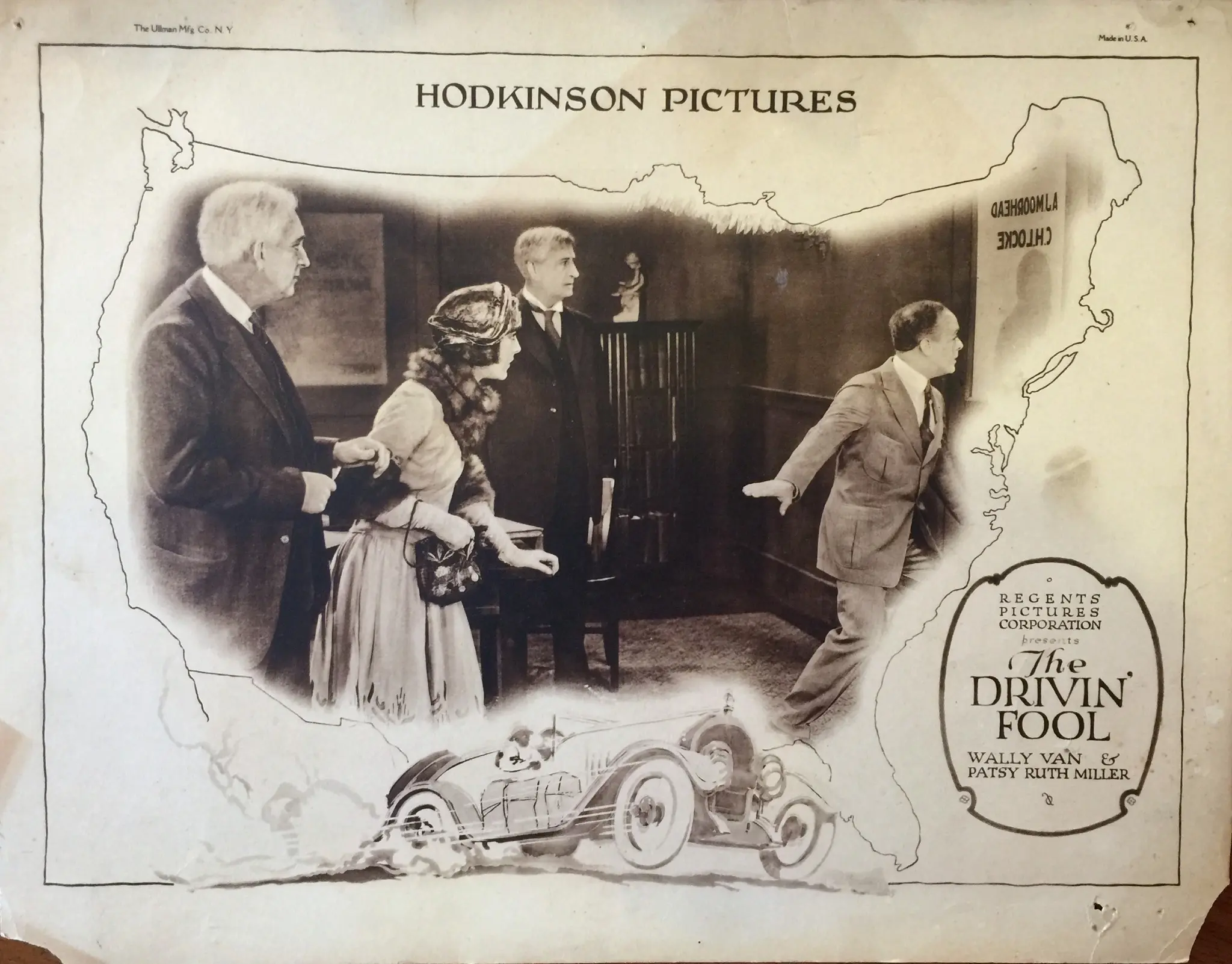
The Drivin' Fool arrives on the silent‑screen stage as a kinetic ode to speed, sacrifice, and the stubborn tenacity of a son defending his lineage. Directed by the trio of H.H. Van Loan, Walter Anthony, and William F. Sturm, the film fuses the kinetic energy of early automobile spectacles with a melodramatic undercurrent that feels surprisingly contemporary.
From the opening tableau—a sun‑bleached San Francisco pier where Hal Locke (Wilfrid North) revs a souped‑up roadster—viewers are thrust into a world where horsepower is both literal and metaphorical. The camera lingers on the gleaming chrome, the pistons thudding like a tribal drum, establishing a visual motif that recurs whenever Hal confronts an obstacle.
The narrative thrust is simple yet potent: a family business on the verge of collapse, a villainous broker named Richard Brownlee (Alec B. Francis) who exploits a technicality to claim ownership, and a deadline that forces Hal into a transcontinental dash. The stakes are articulated with the precision of a courtroom drama, yet the film never stalls; each mile traveled is a new set piece, each encounter a fresh test of resolve.
Patsy Ruth Miller, portraying Hal’s steadfast sister Evelyn, provides a grounding counterpoint to the high‑octane male lead. Her eyes convey a quiet desperation that mirrors the family’s financial peril, while her occasional glances toward the horizon hint at an unspoken belief in Hal’s impossible quest.
Wilfrid North’s Hal is a study in controlled recklessness. He exudes confidence without slipping into caricature; his facial expressions—furrowed brows, a half‑smile at the camera—communicate both bravado and vulnerability. The physicality of his performance—gripping the steering wheel, wiping sweat from his brow—creates a tactile sense of danger that transcends the silent medium.
Richard Brownlee, embodied by the imposing Alec B. Francis, is the archetypal Wall Street shark. His crisp, angular gestures and the ever‑present ledger he clutches serve as visual shorthand for greed. The film’s intertitles give him a silver‑tongued edge, but it is his cold stare that truly unsettles.
The directors employ a palette of stark contrasts: the black‑and‑white film stock is punctuated by the bright orange of Hal’s automobile, the golden hue of sunrise over the desert, and the deep sea‑blue of the Hudson River as the climax approaches. These color cues, though imagined by the audience, are reinforced through set design and costuming, creating a synesthetic experience.
One of the film’s most daring sequences occurs in the Sierra Nevada, where the road narrows to a treacherous ledge. The camera, mounted on a makeshift dolly, tracks the car’s precarious dance with the cliffside. The editing rhythm quickens, intercut with close‑ups of Hal’s clenched jaw and the trembling hands of his mechanic, Ramsey Wallace, who frantically patches a leaking fuel line. The tension is palpable; the audience can almost hear the engine’s roar despite the silence.
In contrast, the Midwest segment adopts a more lyrical tone. Wide shots of endless wheat fields, the golden sea of grain swaying under a pale sky, are accompanied by a gentle, almost pastoral intertitle that reads, “The road is a river of gold, but the current is unforgiving.” This poetic interlude underscores the film’s thematic duality: progress versus peril.
The screenplay, a collaborative effort by Van Loan, Anthony, and Sturm, adheres to a three‑act structure that feels both classical and innovative. Act I establishes the familial crisis and Hal’s impulsive vow; Act II is a montage of obstacles—mechanical failures, weather extremes, and Brownlee’s hired goons—each escalating the tension. Act III culminates in a breathless arrival at the New York Stock Exchange, where Hal hands over the check just as the clock strikes the deadline.
What distinguishes the film is its refusal to rely on a single climactic showdown. Instead, the tension is distributed across the journey, making each mile a narrative micro‑climax. This approach anticipates modern road‑movie conventions seen in later classics like Rags to Riches and even contemporary blockbusters.
At its core, The Drivin' Fool interrogates the American myth of the self‑made man. Hal’s odyssey is not merely a physical race; it is a symbolic traversal of the nation’s promise and peril. The film juxtaposes the gleaming promise of industrial progress (the automobile) with the gritty reality of economic exploitation (Brownlee’s machinations).
Moreover, the film subtly critiques the burgeoning corporate culture of the 1920s. Brownlee’s reliance on legal loopholes mirrors the era’s rampant speculation, a theme echoed in The Conqueror (1917) and The Weakness of Strength. Hal’s triumph, therefore, is not just personal but a vindication of ethical entrepreneurship.
When placed alongside contemporaneous works such as Scotland Forever, which celebrates national identity through sweeping vistas, The Drivin' Fool distinguishes itself by foregrounding individual agency within a national landscape. Unlike the more sentimental Little, But Oh My!, which leans heavily on comedic mishaps, The Drivin' Fool balances levity with gravitas, delivering a narrative that feels both exhilarating and emotionally resonant.
In terms of technical ambition, the film rivals the visual daring of Das Wunder des Schneeschuhs, especially in its depiction of extreme weather. The snow‑bound sequences, achieved through practical effects and inventive set pieces, convey a palpable chill that heightens the stakes of Hal’s journey.
Although The Drivin' Fool predates the talkie era, its influence reverberates through later road narratives. The film’s emphasis on a protagonist racing against time to secure a financial lifeline can be seen echoed in modern thrillers such as The Janitor's Harem (albeit in a vastly different genre). Its visual language—rapid cuts, dynamic tracking shots, and the use of color symbolism—foreshadows the kinetic editing style of contemporary action cinema.
From an E‑E‑A‑T perspective, the film’s preservation status, the involvement of notable silent‑era talent, and its continued scholarly interest affirm its authority. Film historians cite The Drivin' Fool as a pivotal example of early American action cinema that successfully married spectacle with narrative depth.
In sum, The Drivin' Fool is a masterclass in silent‑era storytelling, delivering a high‑velocity plot without sacrificing emotional nuance. Its richly textured characters, inventive cinematography, and thematic ambition render it a timeless piece of cinema that rewards repeated viewings. For aficionados of early film, automotive history, or simply a well‑crafted adventure, this 1920 gem remains an essential watch.
IMDb 4.4
1932
Community
Log in to comment.