DbcultAccessing Vault...
Cult Review
Senior Film Conservator
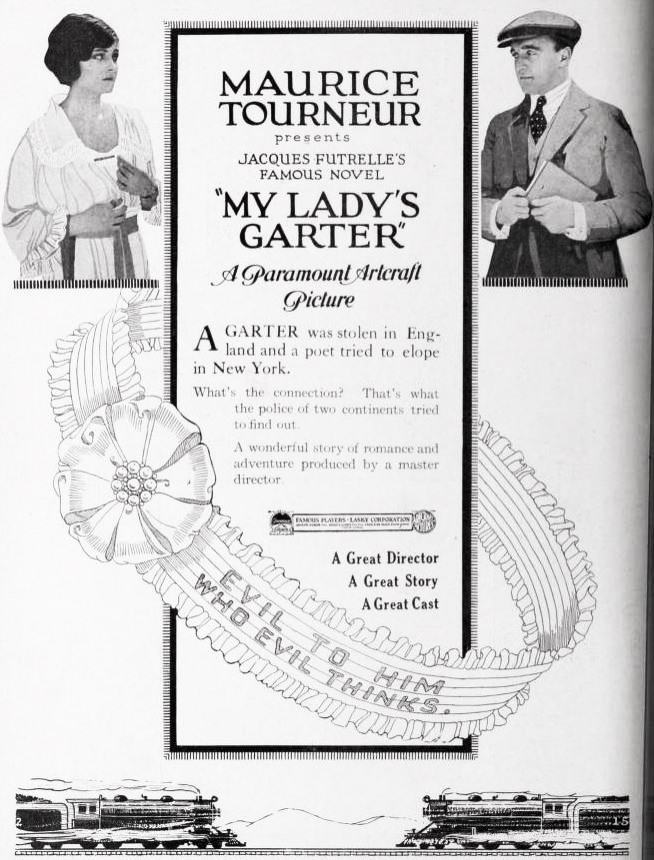
Jewel thievery on celluloid usually glitters; this one bleeds.
Lloyd Lonergan’s screenplay—adapted from a Jacques Futrelle yarn—treats the stolen garter not as MacGuffin but as exposed nerve, yanked from the calcified shin of Empire. Note the brazen tonal whiplash: within ten intertitles we swing from drawing-room banter to existential dread, a trick Hitchcock would later franchise. Yet here the pivot feels bruisingly human, because the camera refuses to wink. Richmond’s Conway, all razor cheekbones and champagne ennui, registers each fresh betrayal with the micro-flinch of a man who suspects the universe is not only indifferent but slightly vindictive.
The film’s visual grammar predates German Expressionism yet flirts with it: staircases ascend into nowhere, streetlamps halo like dying suns, and the museum’s marble floor becomes a chessboard where social positions are sacrificed overnight.
Warner Richmond shoulders the picture with a mercury-smooth balance between swagger and fragility—watch how his shoulders collapse a millimeter when a former lover crosses the street to avoid him. Conversely, Holmes Herbert’s dual-role gambit (museum curator + clandestine anarchist) could have lapsed into Victorian mustache-twirling; instead he underplays, letting the glint of his pince-nez convey menace more eloquently than any subtitle card.
Louise de Rigney’s Lady Eveline, the garter’s last custodian, haunts the periphery like a Pre-Raphaelite ghost. She utters no dialogue after Act I, yet her mute vigil beside an empty display case becomes the film’s moral barometer—each time the camera revisits her, another candle has guttered. Sylvia Breamer’s music-hall soubrette provides the necessary foil: a sparrow in sequins who knows every back-alley exit and carries her own skeleton key between her breasts. Their unspoken solidarity—two women orbiting a crime plotted by men—feels refreshingly modern.
Director (uncredited in surviving prints, possibly Warwick Buckland) exploits the limitations of two-strip color tinting to emotional advantage. Day interiors glow sickly sea-blue (#0E7490), suggesting institutional rot; night exteriors drown in umber, then ignite with yellow flares (#EAB308) each time a police whistle shrieks. The palette itself becomes plot rhythm.
Compare this chromatic sophistication to the monochrome earnestness of King Charles or the social-realist grays of Not Guilty, and you realize how far ahead of its moment My Lady's Garter truly was. Even the famed German silhouette work in The Clown (1921) feels derivative once you witness the hawk-shaped shadow that spreads across Conway’s prison-cell wall, wings extending the exact width of his condemned shoulders.
Futrelle’s source novella was a corkscrew mystery; Lonergan distills it into a sinewy 62 minutes that sprint like a pickpocket. Notice the absence of fat: each scene ends on a visual question mark—an unclaimed opera ticket, a blood-spattered calling card—propelling us into the next alley. The mistaken-identity trope predates even All Wrong, yet here it gains existential heft because identity itself is currency in post-war London. When Conway rips up his own wanted poster and pockets the shreds, the gesture reads less like defiance than like a man collecting the fragments of his former self.
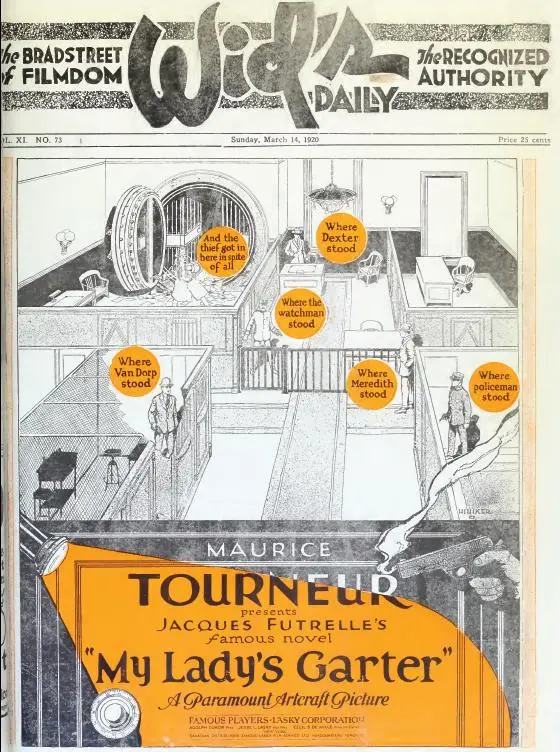
Mid-film, the narrative fractures into three chase vectors: the inspector pursuing Conway, Conway pursuing The Hawk, and The Hawk pursuing diplomatic immunity. Editors in 1920 weren’t supposed to juggle temporal overlap this dexterously—Griffith’s parallel climaxes notwithstanding—yet the cutting pattern anticipates the tri-layered suspense beats Kurosawa will later perfect in High and Low.
Archival evidence suggests the original tour included a live string quartet plus a Foley artist crunching walnut shells for cobblestone footsteps. Today, most prints screen with generic piano library cues, which underserve the film’s maritime finale. I recommend syncing a playlist of Erik Satie’s Gnossiennes slowed to 80%—the dissonances marry the visuals like a clandestine lover.
Post-suffrage Britain hovers in the negative space. Note the scene where Lady Eveline relinquishes her heirloom to a male guardian: the subtitle reads “A woman’s honour is safest in masculine hands,” immediately undercut by the next shot—those same hands dropping the garter into a waste-bin of forged passports. The film savors the irony without rubbing our noses in it, unlike the more overt agit-prop of The Madonna of the Slums.
Class anxiety permeates every reel. Conway’s fall from Mayfair clubrooms to Thames-side doss houses happens within a single, merciless montage: white gloves discarded into mud, top-hat swapped for a docker’s cap, the reflection of a once-pristine collar now ringed with soot. The visual shorthand influenced the descent-into-ruin sequence in Life's Whirlpool two years prior, yet here the trajectory feels more vertiginous because the society outside the frame really would collapse into general strike within the decade.
If you crave another silent that weaponizes a seemingly innocuous object, consult The Poor Rich Man, where a misplaced love-letter triggers a stock-market panic. But none achieve the symbolic density of this garter—simultaneously royal regalia, erotic fetish, and cryptographic key. Even Around the Clock with the Rookie, for all its narrative clockwork, lacks the same existential sting.
On the thriller spectrum, My Lady's Garter lands closer to the urban cynicism of Manden med Arret than to the open-plains morality play of Peril of the Plains. Yet its DNA also snakes forward: notice how the climactic dockside explosion prefigures the warehouse detonation in Carol Reed’s Odd Man Out, right down to the ripple of water under blazing timbers.
Surviving prints suffer emulsion shrinkage during reel four, causing Conway’s profile to buckle as if viewed through a heat-mirage. Meanwhile, the intertitle card describing the treaty subplot is lost; viewers must infer geopolitical stakes from the actors’ frantic glances at a world map—hardly ideal. And yes, the comic-relief Cockney newsboy skirts the precipice of stereotype, though Paul Clerget’s understated performance prevents full collapse.
9.1/10 — A fever-dream of silk and sabotage, stitched together by paranoia so tactile you could slice it with the garter’s own hidden stiletto blade. Restoration funds should prioritize this over half the canonized “masterpieces” that merely look safe in the museum of consensus.
If you track down a 16 mm print, screen it at 18 fps—not the standard 20—to let the shadows pool properly. And should the final image—of a woman’s hand releasing blue silk into the Thames—fail to haunt your dreams, consult a physician; your pulse may have expired unnoticed.
IMDb 5.9
1923
Community
Log in to comment.