DbcultAccessing Vault...
2.2/10
Senior Film Conservator
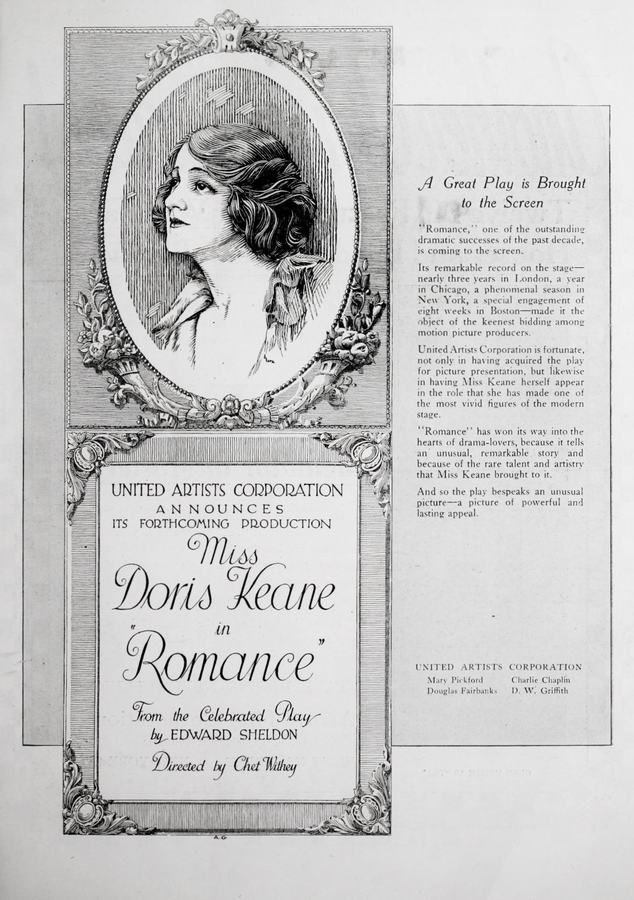
A definitive 2.2/10 rating for a film that redefined the boundaries of cult cinema. Romance remains a cornerstone of transgressive art.
The projector’s carbon arc spits blue ghosts across the nickelodeon’s velvet dark, and suddenly 1920 is a living artery again—Romance unspools like a soot-smudged love letter fished from a coal scuttle. Edward Sheldon’s scenario, distilled from a stage hit, refuses the faddish flapper fizz of its year; instead it offers a chiaroscuro meditation on betrothal as both sacrament and scaffold.
Amelia Summerville’s dual register—giddy bloom then ash-gray resignation—courses through the celluloid with the volatility of ether. Watch her pupils in the garden scene: they dilate when Basil Sydney’s seminarian slips a buttercup under her chin, contract when he confesses that his stipend won’t stretch past candle-wicks and communion wafers. The performance is not silent; it is pre-verbal, a vocabulary of clavicular breath and knuckle-whitening.
Love here is a coin with ember on one face, frost on the other; every flip scars fingerprints.
Basil Sydney, in his first screen role, carries the brittle eroticism of a Keats sonnet too long shelved. His clerical collar is less a vocation than a yoke he clamps onto desire; when he breaks the engagement his mouth forms a perfect ellipse of horror, as though he has just swallowed the Host and found it glass. The camera lingers at medium range—no Eisensteinian montage, no vertiginous close-up—yet the stillness feels radical against the kinetic slapstick flooding rival studios.
Comparative glances: When a Man Loves luxuriates in masochistic grandeur, its protagonist flagellating himself beneath Venetian chandeliers; Romance scalds with Puritan brevity—three rooms, a garden gate, a death-bed. The austerity is closer to There Goes the Bride, but where that farce flees pain via confetti, Sheldon’s film kneels in it, presses the wound until the bruise blooms purple.
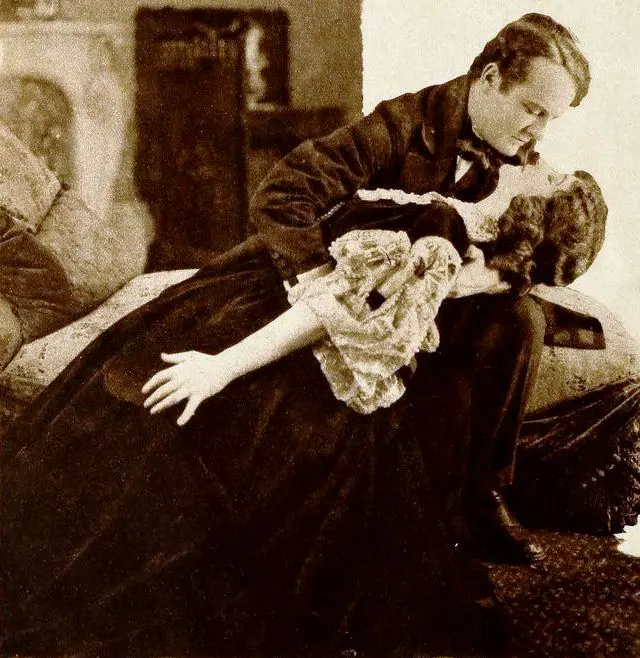
Cinematographer Hal Young shoots courtship through lattice shadows: every embrace is fractured by window mullions, rose stems, the ribcage of a parasol. The motif whispers that affection, once scrutinized by church or purse, becomes a thing of shards. Later, when the rupture ossifies into regret, the mise-en-scene empties: chairs like accusatory skeletons, a single gloves index finger still curled as though beckoning a touch that will never land.
Note the palette: nitrate blues corrode into sulfuric yellows during the consumptive-sister subplot, a pre-Technicolor anticipation of illness as moral hue. The tinting is not sentimental; it is diagnostic.
Because the disc is mute, every spectator becomes an involuntary foley artist. I caught myself supplying the rasp of a locket hinge, the wet crunch of a corset stay snapping under grief. The absence of synchronized speech transmutes small gestures into thunder: Summerville’s sniff—barely a flare of nostril—felt more intimate than any of the raucous talkie proclamations that would swamp screens a decade later.
Contemporary critics mocked the film’s “staginess,” yet the theatrical provenance is its marrow. The bishop’s monologue—delivered in one protracted take—echoes Jacobean soliloquy: conscience as Grand Guignol. Try comparing it with Let’s Get a Divorce, whose rapid cutting modernity now feels quaint; Romance trusts the human face to contain universes.
Sheldon, a Harvard dramatist who would later pen The Jazz Singer, embeds a covert treatise on dowry as weaponized liquidity. Amelia’s dowry evaporates when her father’s rubber plantation succumbs to blight; instantly she plummets from marriage-able angel to “problem.” The film indicts not individual avarice but structural misogyny: women’s worth pegged to futures markets thousands of miles away. Even the bishop’s eventual ascension—purple robe, gilt cross—reads as compensation for the bride-price he once could not pay.
Betty Ross Clarke, as the thwarted fiancée’s confidante, supplies a secondary axis of resistance: she flirts with but ultimately rejects a banker’s son, choosing wage-work in a millinery. Her brisk exit—hatpins glinting like tiny spears—offers a fleeting feminist reprieve within a narrative otherwise saturated in sacrificial iconography.
Most Hollywood romances rehearse redemption; Romance canonizes catastrophe. The frame story—the older bishop counseling a tremulous groom—doesn’t seek to avert tragedy but to anoint it as pedagogical. Love’s function is to fail, spectacularly, publicly, so that the next generation might opt for prudence. The moral chills because it resonates beyond the footlights: how many of our elders’ cautionary tales are merely scars seeking company?
Contrast this with For Husbands Only, where marital error is a sitcom punch-line corrected by the final reel; or with Seventeen, whose adolescent yearning is a hiccup preceding suburban equilibrium. Romance insists that some wounds calcify into architecture; the cathedral itself is built from the limestone of renounced desire.

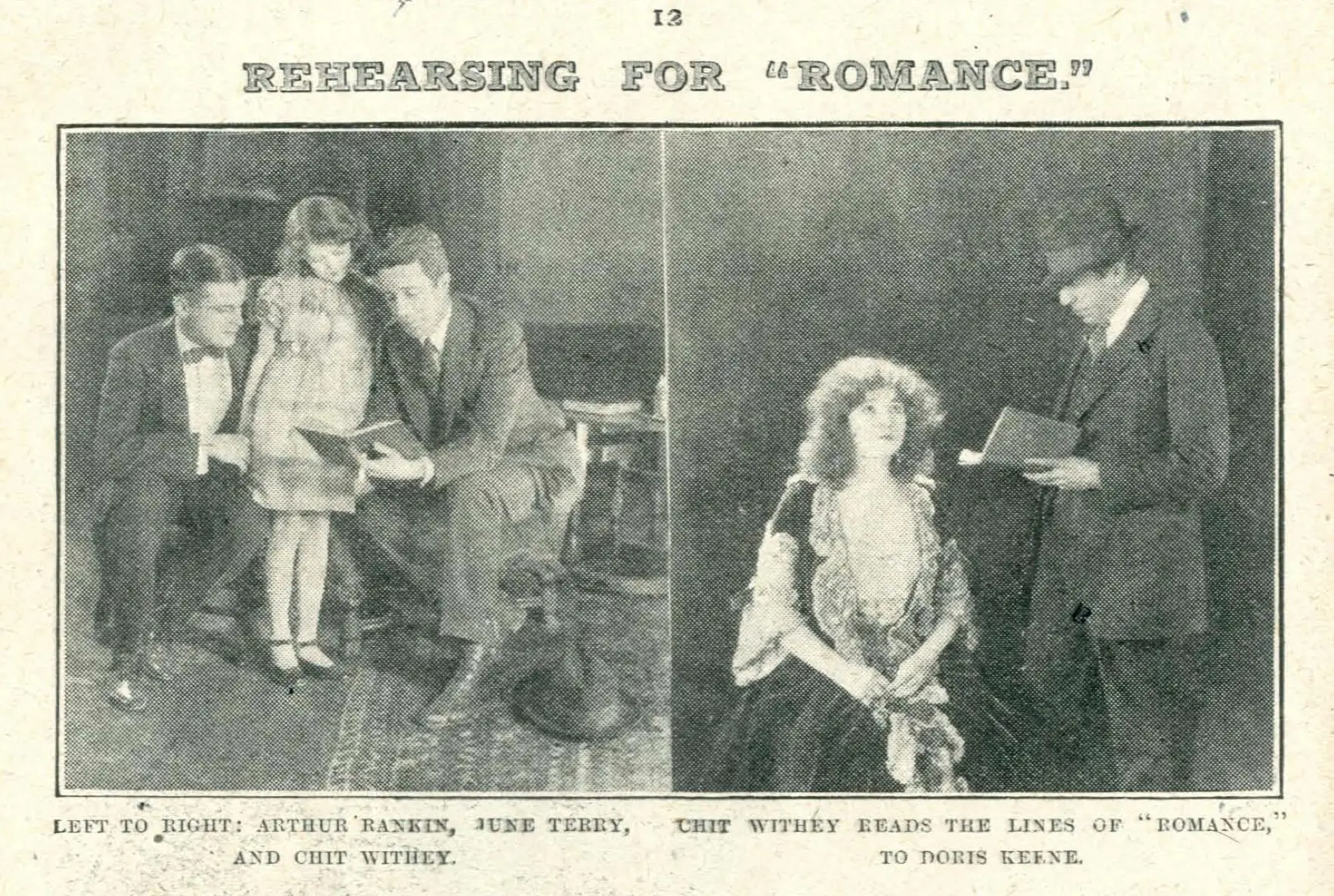
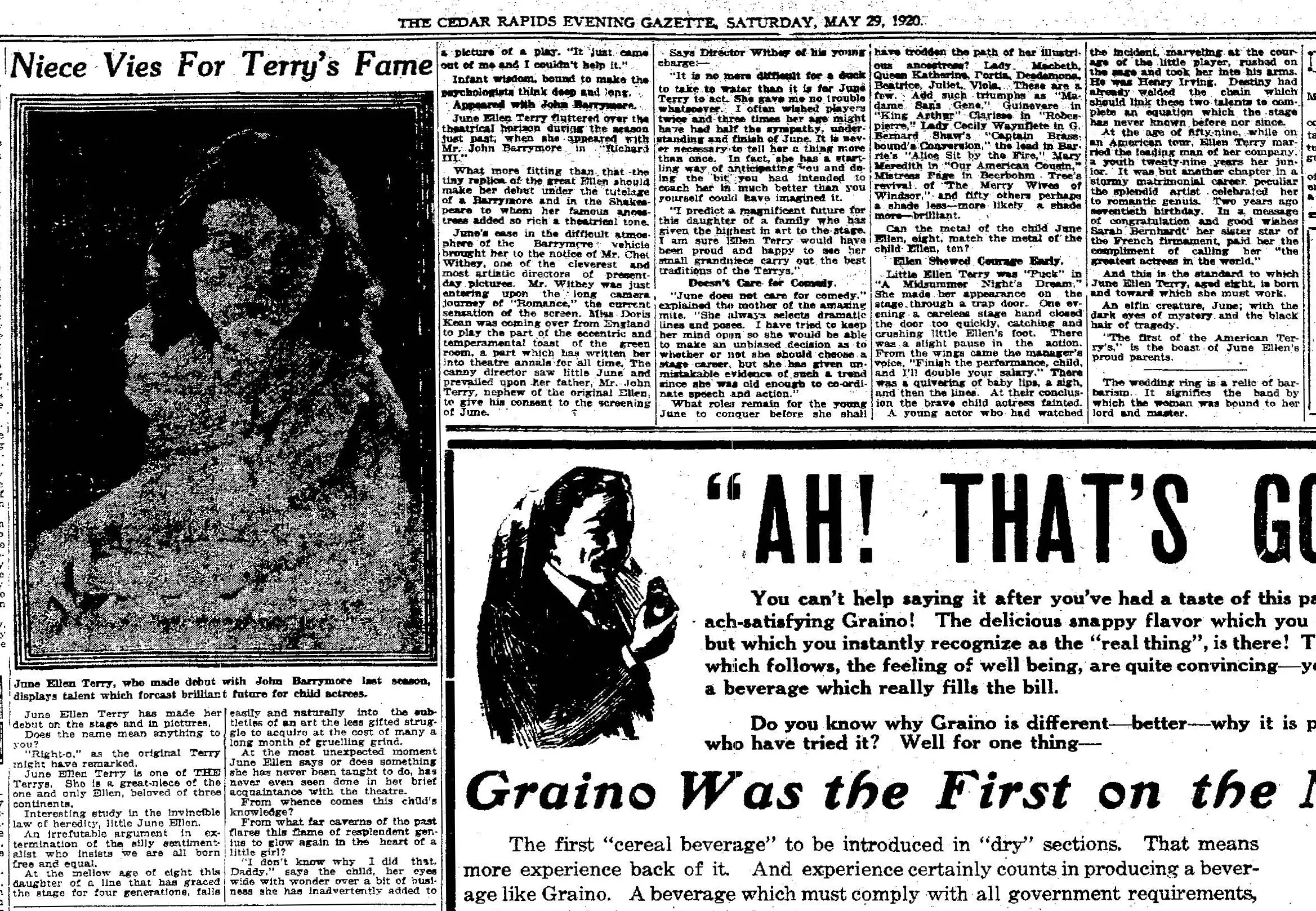
June Ellen Terry, scion of the great Ellen, embodies the jilted girl’s spectral future: she glides through the final reel in mourning lilac, a cautionary wraith. Her single tear—caught in profile against stained glass—rivals Falconetti’s later passion for minimalist heartbreak.
Sheldon’s dialogue interweaves Corinthians with Wall Street tickertape. "Though I speak with the tongues of men and of angels, and have not a sufficient bond portfolio, I am become as sounding brass." The anachronism stings because it is whispered, never underlined; modern viewers will catch the snide parallel to contemporary wedding budgets that balloon into mortgage territory.
Scholars of queer subtext will note the intense communion between the bishop and his younger self—an auto-erotic split akin to Proust’s narrator loving Albertine as both subject and object. The film’s refusal to marry him off in the epilogue reads, today, as a tacit admission that some desires are unnameable in the lexicon of 1920.
Romance premiered at the Central Theatre, NYC, on 8 September 1920, opposite headlines of Black Sox gambling trials. Critics praised Summerville’s "virgelic gravity" while mocking the film’s "tableau mortem" pacing. It grossed a respectable but unspectacular $380,000—roughly 5.5 million today—then slumbered in vaults, resurfacing only for occasional 16mm campus screenings funded by Anglican seminaries.
Centennial restorations reveal a miracle: the original tinting notes scrawled on the negative margins—"amber for memory," "lavender for shame"—have been meticulously recreated via digital LUTs. Streaming on boutique platforms, the film now seduces cine-essayists who splice its cathedral vistas into TikToks about situationship trauma.
I emerged from my most recent viewing with the taste of iron on my tongue, as though I had bitten down on the rusted hinge of every vow I never uttered. Romance does not ask us to believe in love’s salvific power; it demands we inventory the cost of its forfeiture. In an era when dating apps monetize attention and weddings balloon into IPOs, the film’s minimalist austerity feels almost insurgent.
Verdict: a fossilized valentine that still cuts the finger which pries it open. Handle with reverence—and maybe iodine.
Stream or purchase restored edition | Runtime: 70 min | Rating: ★★★★½
IMDb —
1917
Community
Log in to comment.