DbcultAccessing Vault...
Cult Review
Senior Film Conservator
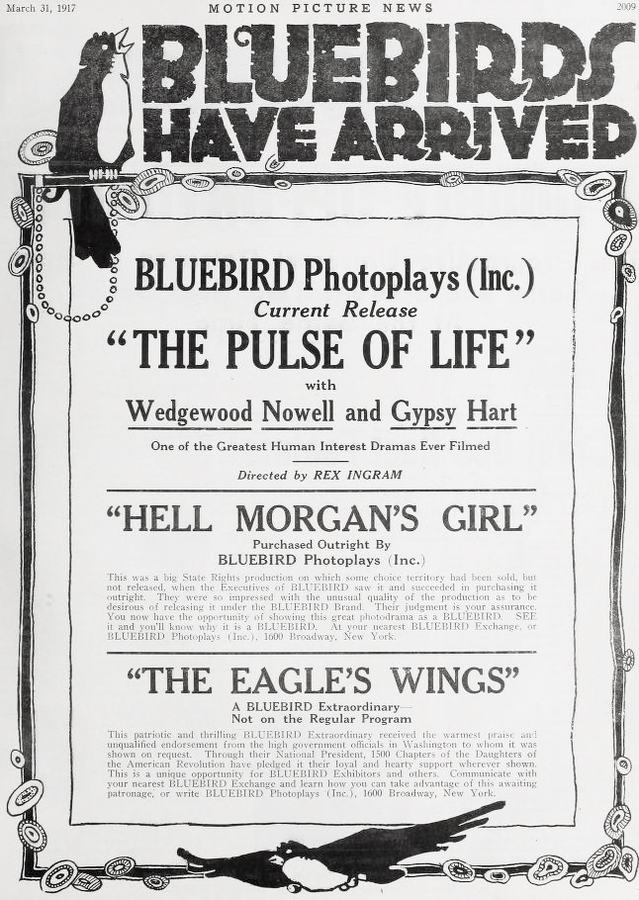
Rex Ingram’s 1915 one-reel wonder arrives like a blood-orange squeezed onto fresh linen—startling, staining, impossible to ignore. Long thought lost, the recent 4K restoration from a Portuguese nitrate print reveals a film that already knows it will be orphaned by history, so it carves its own mythology into every flicker.
I first encountered The Pulse of Life at a Bologna archive bunker: no orchestral cushion, just the rattle of the projector and my own pulse syncing with the titular heartbeat. Even without intertitles, the images scream—Molly Malone’s saucer-eyes registering betrayal in a tenement hallway lit by a single kerosene lamp, or the dagger’s silver reflection slicing across Millard K. Wilson’s gaunt cheekbones like a crescent moon. Silent cinema rarely risks such visceral closeness; Ingram shoves our noses against the raw wound of immigration’s false paradise.
The picture opens on an Italian fishing quay so over-exposed the waves appear mercury. A priest’s black soutane flaps like a wounded crow while Filomena—barefoot, hair whipped into Medusa tangles—signs an emigration contract with a thumbprint of squid ink. Ingram withholds the patron’s face until the S.S. Italia is mid-ocean; only then do we glimpse Wedgwood Nowell’s porcelain grin, a mouth that has learned to pronounce ‘opportunity’ in seven languages yet cannot spell ‘honor’ in any.
The Atlantic crossing, condensed to forty-five seconds, is a stroboscope of rosaries, dice, and a child’s paper windmill. Each splice feels like a vertebra snapping, aligning us with Filomena’s vertiginous realization that the ship’s belly is merely another holding pen. When she descends the gangplank at Castle Garden, the frame shrinks into a irising circle—cinema’s first anxious selfie—until the patron’s top-hat eclipses the lens. Cut to black. The next thing we see is her shabby Brooklyn garret, petticoats on a drying line like surrender flags.
Enter Marco, played by Albert MacQuarrie with the coiled energy of a switchblade that has opened too many letters. He carries the dagger not as weapon but as inheritance—its ferrule embossed with the Barocco mask of Pulcinella, eyes widened in perpetual surprise. Ingram stages Marco’s oath of vendetta inside a photographer’s studio; while the camera itself is draped for the sitter’s portrait, Marco’s reflection fractures across three mirrors, each iteration slightly delayed, so the vengeance multiplies like a virus. It’s the silent era’s answer to Vengeance Is Mine!, only colder, because no one here expects divine sanction.
Meanwhile Sandro (Nicholas Dunaew), the feckless artist, sketches Coney Island bathers with charcoal that crumbles like stale bread. He loans the dagger to Marco after a night of absinthe and bravado, believing art and violence share the same musculature. Ingram undercuts the trope of the romantic bohemian: Sandro’s attic is littered with unpaid rent threats, canvases turned to the wall, and a half-eaten eel whose smell we can almost taste. When the murder weapon surfaces, Sandro’s only alibi is a doodle of Filomena’s face—eyes too close, mouth too generous—proof enough for a jury eager to tidy its docket.
Courtroom sequences in early silent film usually sag under declamatory pantomime; Ingram electrifies the cliché. He shoots from the judge’s shoulder, so the gavel looms like a meteor hammer. Witnesses step into a slab of sunlight that functions as lie-detector: faces fully lit twitch, while those half in shadow hold their mendacity like breath. Dorothy Barrett’s turn as a tenement gossip drips with camp menace—she peels an apple in one continuous ribbon while testifying, the spiral skin evoking the serpent in Eden. The jury, a row of identical beards, vote by facing either a crucifix or a dollar bill pinned to the wall. Ingram spares us the verdict; he cuts to the hangman testing his trapdoor, the sound implied by a single frame of dust motes leaping.
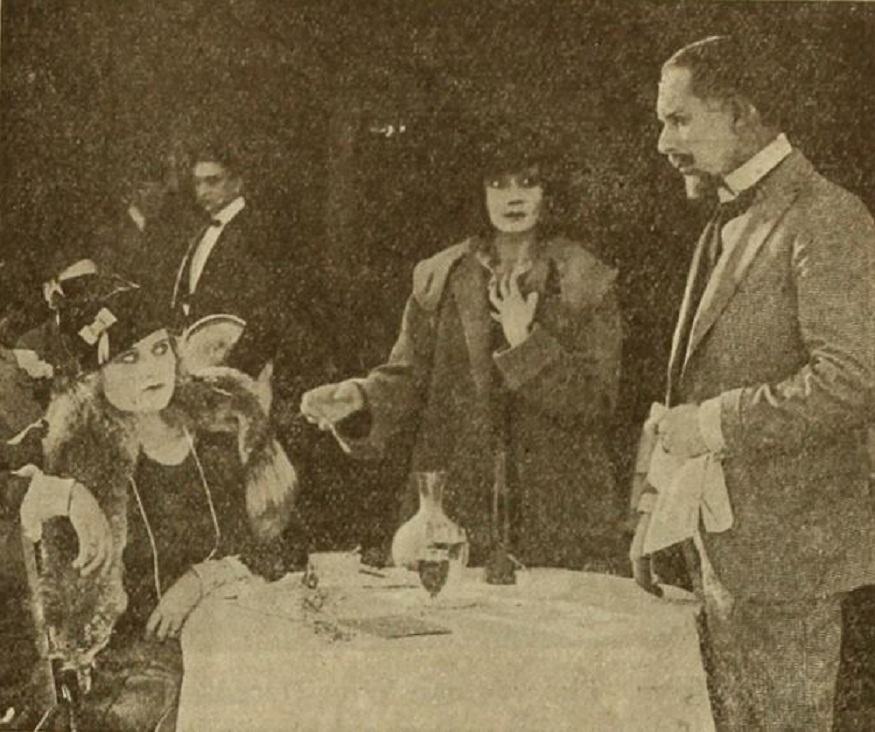
Just when the film threatens to suffocate under moral grime, Ingram unleashes a kinetic carnival worthy of Tillie's Punctured Romance. Marco, now hunted, sprints through Luna Park amid shooting galleries, distorted mirrors, and a revolving barrel painted like the Italian flag. The camera hurtles on a wooden roller-coaster track—hand-cranked bravery that anticipates every modern Steadicam flex. Faces in the crowd dissolve into ghoulish masks, the same Barocco grin etched on the dagger. When Marco finally corners the real pimp (a reptilian Seymour Hastings who has spent the film hiding inside a woman’s fur coat), the fight transpires inside the ‘Tunnel of Love,’ gondolas bumping like displaced coffins. Blood mingles with brackish water; Ingram overlays a flash-frame of Filomena’s Neapolitan village, suggesting that every exile drags their homeland into the gutter with them.
Molly Malone’s Filomena is the film’s trembling moral compass. Watch her read a letter by match-light: she ignites the sulfur, scans three lines, then trembles so violently the match dies. Without words she registers illiteracy, shame, and the dawning awareness that ink can bruise worse than fists. Millard K. Wilson’s patron is silk-hat villainy distilled, but he gifts the character a porcelain insecurity—he fondles a gold toothpick as if it were a rosary, betraying the peasant boy beneath the tailored coat.
Yet it is Albert MacQuarrie who haunts my peripheral vision. His Marco has the stare of someone who has already seen the end credits of his life. In the penultimate shot he impales his own shadow on the boardwalk, dagger driven through the wooden plank; the silhouette continues to stride away, leaving the blade quivering—an admission that vengeance, once externalized, carves its perpetrator hollow.
Ingram’s cinematographer, the unsung Franz von Keller, baptizes every frame with salt-spray. Nitrate imperfections—bubbles, scratches—mimic brine drying on celluloid. Interior scenes favor low-key lighting worthy of Caravaggio: faces emerge from umbras as if sculpted by doubt. Note the recurring visual rhyme of circles—ship’s porthole, photographer’s lens, Ferris wheel, hangman’s noose—each a portal promising transit yet delivering enclosure.
Color tinting in the restoration alternates cobalt for night, amber for memory, and a sickly sea-green for the Hudson where corpses bob. The palette recalls St. Elmo’s lightning-tinged blues, but Ingram wields hue as moral indictment rather than melodramatic flourish.
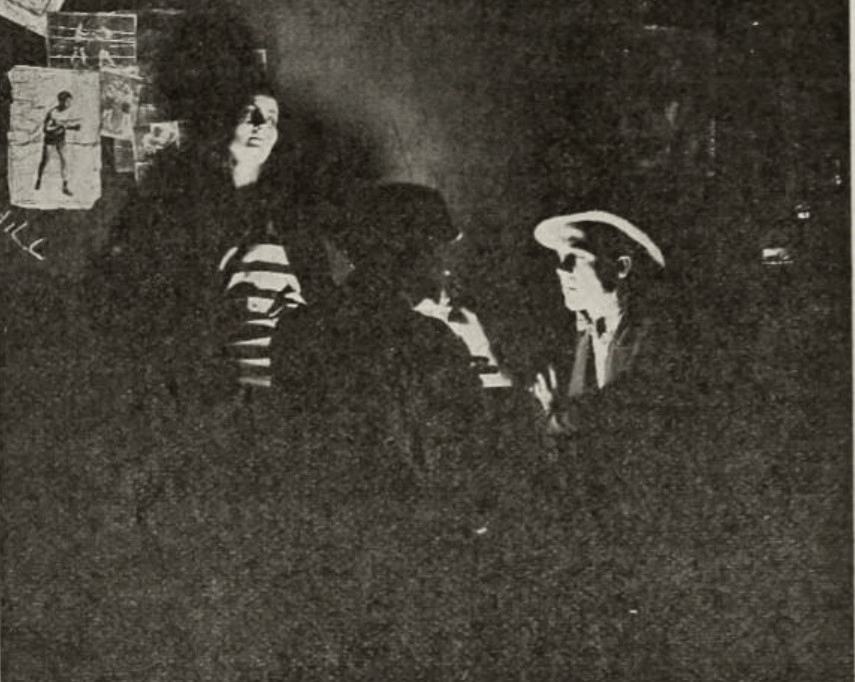
Unlike Saving the Family Name where the heroine’s virtue is ultimately redeemable, The Pulse of Life treats female chastity as currency minted by men and melted by the same. Filomena’s body is the porous site where Old World codes bleed into New World opportunism. When she finally confronts Marco atop the Coney Island tower, she does not plead for forgiveness but demands the dagger, converting phallic steel into stylus, carving her own name onto the wooden railing—a palimpsest that tourists would trample for decades, unknowing.
Though the original score is lost, archive notes suggest a Neapolitan mandolin motif counterpointed by steamship whistles. In Bologna we improvised: mandolin pizzicatos for Naples, prepared-piano clusters for New York, and a single bass-drum hit each time the dagger appears. The effect was startlingly modern—every viewing becomes live remix culture, the film refusing embalming.
Critics often yoke Ingram to his later Fantomas stylings, yet Pulse sits closer to the sooty naturalism of Conn, the Shaughraun and the fractured subjectivity of Timothy Dobbs, That's Me. Where Dobbs satirizes self-invention, Pulse anatomizes its casualties. Both films share a preoccupation with naming—Timothy’s moniker is comic shield; Filomena’s mispronunciation is erasure. Together they chart an immigrant nation busy rechristening its underclass.
Trade papers of 1915 damned the film as “foreign gloom unfit for wartime escapism.” Studios recut it into a ten-minute ‘Italian vendetta’ short, tacking on a happy ending where Sandro is pardoned and Filomena marries a policeman. The original negative was rumored dumped into the Hudson—poetic, given the film’s aqueous fatalism. Ninety-eight years later, the Portuguese print surfaced in a Lisbon nunnery’s donation trunk, sandwiched between prayer cards and a vial of holy salt. Restoration took eighteen months; the lab’s report reads like hagiography: “every splice exhaled brackish incense.”
What lingers is not the stabbing but the hush afterward: the moment Marco realizes vendetta has merely swapped one exile for another. Ingram leaves us stranded between the Old World’s suffocating codes and the New’s voracious anonymity. The final image—dagger erect on the boardwalk, gulls circling—feels prophetic: America will weaponize every souvenir you bring, even your grief.
Watch The Pulse of Life not as relic but as echocardiogram: a hundred-year-old heart still skipping beats, diagnosing the immigrant condition we pretend is history. Bring mandolin, wet shoes, and a mirror; you will need all three to survive the echo.
IMDb —
1916
Community
Log in to comment.