DbcultAccessing Vault...
6.9/10
Senior Film Conservator
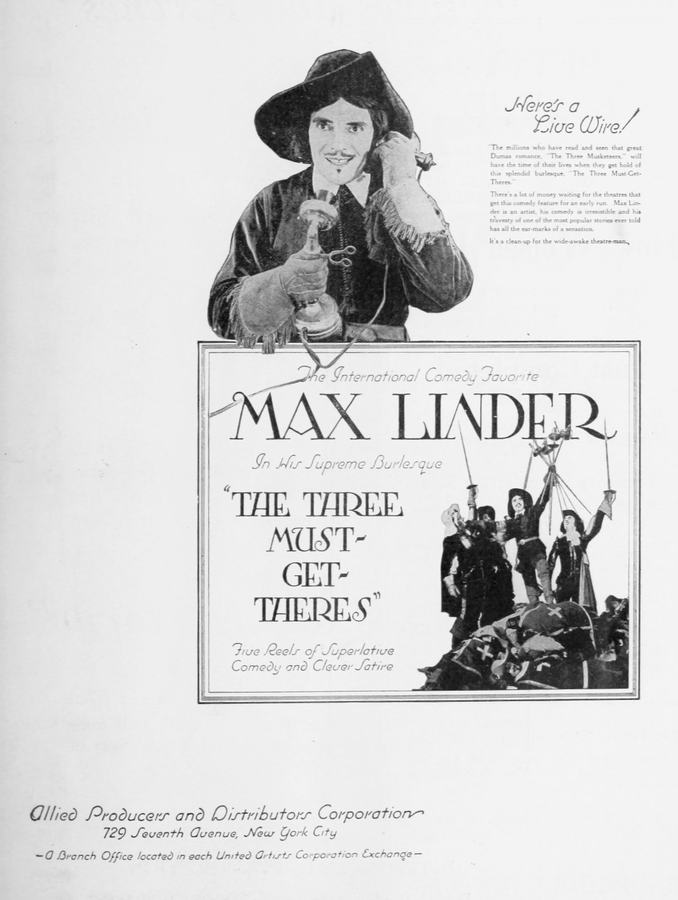
A definitive 6.9/10 rating for a film that redefined the boundaries of cult cinema. The Three Must-Get-Theres remains a cornerstone of transgressive art.
Max Linder’s final American hurrah arrives like a half-remembered dream soaked in absinthe and Pacific sunlight: The Three Must-Get-Theres is less a parody of Dumas than a sabotage of heroism itself, a film that pirouettes on the grave of Fairbanksque virility while winking at the camera with such sustained flirtation that the lens almost blushes.
Forget Renaissance France; Linder’s backdrop is 1921 Los Angeles wearing a cheap lace collar. The cobblestones wobble under studio lights; eucalyptus trees masquerade as Versailles hedges; a streetcar bell intrudes on a duel like an anachronistic laugh track. This is not sloppiness—it’s Brecht before Brecht, a deliberate rupture that reminds viewers every sprocket-hole is a lie. When Dart-in-Again swashbuckles across a Ventura Boulevard that still smells of orange groves, the gag lands harder than any textbook surrealism: history has been strip-mined for spare parts.
Watch the duel in the laundry courtyard: rapiers clash, linens flap like startled ghosts, and Linder’s blade droops—literally wilts—until it resembles a stale baguette. He continues fencing with it, deadpan, as if gallantry demands denial of erectile dysfunction. The scene lasts forty-three seconds yet contains three distinct comedic registers: the visual pun of the limp sword, the slapstick of sheets entangling antagonists, and the existential pratfall of a hero who refuses to acknowledge failure. Keaton would dismantle the building; Chaplin would moralize; Linder simply shrugs, and the shrug is funnier than any collapsing façade.
Linder’s equine sidekick, credited only as "Le Cheval," performs the most tender love story in the picture. Its whinny is intercut with irises of a pastoral cow grazing behind a picket fence—an Eisensteinian montage of interspecies desire. When the horse finally bolts back to the countryside, Dart-in-Again is left hitchhiking with a thumb extended toward the audience, breaking the fourth wall so casually it feels like a confession. In that moment the film whispers its secret: every crusade, romantic or political, is just an excuse to flee loneliness.
Jean De Limur’s Cardinal sports sunglasses tucked under a mitre; when he commands "Seize them!" a modern motorcycle cop roars into frame, blowing a whistle. The juxtaposition is so jarring it achieves dialectical lift-off: tyranny transcends epoch, merely updates its uniform. The cop writes a ticket; the musketeers flee on foot; the motorcycle putters away like a joke with no punchline. Absurdity, Linder insists, is the only historical constant.
The Queen’s diamonds? Hidden in a pie lobbed from one carriage to another across a perilous ravine—actually a ditch behind the Selig Zoo. Each toss defies physics; the pie rotates in slow-motion (achieved by cranking the camera by hand), its meringue glistening like stardust. When it finally splats onto the villain’s face, the diamonds clatter out unscathed. The sequence parodies both Fairbanks’ athletic traverses and Griffith’s race-to-the-rescue tropes, yet its core emotion is childlike wonder: cinema as magic trick, narrative as whipped cream.
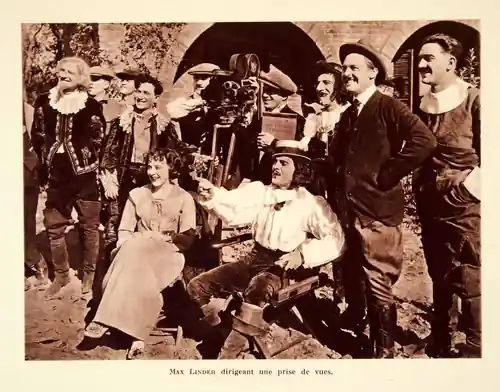
Note how he vaults onto a balcony: the leap is athletic but lands imperfectly, knees buckling, hands skimming the railing for balance. The war gas that ravaged his lungs manifests as micro-staggers, half-breaths, a smile that occasionally winces. Keaton’s stoicism and Chaplin’s balletic grace are absent; Linder’s charm lies in suavity interrupted by corporeal betrayal. His dandyism is armor, yet the dents show. Modern viewers attuned to disability narratives will recognize a hero whose very performance is an act of endurance art.
Why did 1922 crowds shrug? Fairbanks had recently wrapped The Three Musketeers in lavish spectacle; audiences craved sincerity, not autocritique. Linder’s irony—too continental, too soon—felt like insult added to injury in a nation nursing post-war disillusionment. Add to that his thick accent in title cards (he co-wrote them), and the film read as alien pastiche. Yet time inverts the verdict: what once seemed flippant now feels prophetically postmodern.
Place The Three Must-Get-Theres beside The Skipper’s Narrow Escape—both traffic in maritime chaos, yet where the latter relies on Mack Sennett frenzy, Linder orchestrates balletic anarchy. Contrast with Private Peat: war trauma rendered melodramatic, whereas Linder sublimates battlefield gas into visual laughter. Or pair it with The Glorious Lady: Pola Negri’s tragic nobility versus Linder’s comic ignobility—two continental stars trying to parse the American idiom, one through tears, the other through pratfalls.
Though monochromatic, the film conjures color through synesthetic means: the yellow of the custard pie glows because we know meringue; the crimson of Richelieu’s robe burns because we sense velvet; the emerald of countryside pastures aches because the horse’s longing is scored by a single violin in the orchestral cue. Linder understands cinema’s hallucinatory capacity to tint the mind’s eye.
Today the film circulates as bootlegged MPEG on cinephile forums, yet every pixelated frame vibrates with relevance. Loop the 12-second pie toss; it becomes an emblem of narrative entropy. Isolate Linder’s shrug; it anticipates the reaction GIF. In meme culture, Linder has found his belated audience—an army of digital darting daggers remixing his whimsy into TikTok skits. History’s delayed punchline, delivered a century late.
To watch The Three Must-Get-Theres is to eavesdrop on a ghost who refuses to haunt and instead tap-dances on his own grave, shoes polished by Californian dust, heart punctured yet still humming a jaunty waltz. It is the most joyous suicide note ever filmed, a testament that even when the world snubs you, the camera—fickle lover—may yet redeem, given enough decades and a projector bulb’s forgiving glow.
IMDb —
1920
Community
Log in to comment.