DbcultAccessing Vault...
1.7/10
Senior Film Conservator
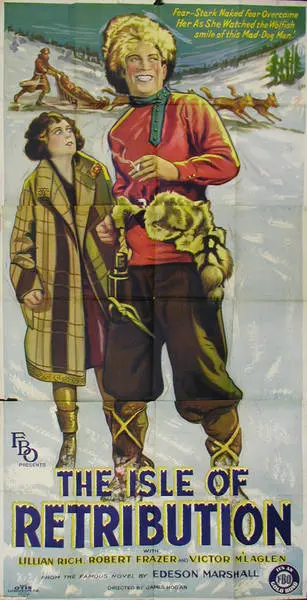
A definitive 1.7/10 rating for a film that redefined the boundaries of cult cinema. The Isle of Retribution remains a cornerstone of transgressive art.
Is The Isle of Retribution a forgotten masterpiece of the silent era? Short answer: No, but it is a fascinating artifact for those interested in early 20th-century social commentary and the rugged physicality of Victor McLaglen.
This film is for dedicated cinephiles who enjoy seeing how early cinema handled survivalist tropes and those interested in the evolution of the 'tough guy' archetype. It is definitely not for viewers who require fast pacing, modern special effects, or a story that avoids the heavy-handed moralizing common in 1920s melodrama.
1) This film works because: It utilizes its claustrophobic, frozen setting to effectively heighten the interpersonal tension between the rich and the poor, making the environment a character in its own right.
2) This film fails because: The central conflict relies on a romantic triangle that feels increasingly trivial compared to the life-and-death stakes of the Alaskan wilderness.
3) You should watch it if: You want to witness the early, raw screen presence of Victor McLaglen before he became a staple of John Ford’s legendary filmography.
The Isle of Retribution is less about the mechanics of survival and more about the fragility of social standing. In the gilded drawing rooms of the 1920s, Lenor Harderworth (played with a brittle arrogance by Mildred Harris) holds all the cards. But on the Alaskan coast, her wealth is as useless as a screen door on a submarine. The film takes great pleasure in watching her composure crack under the pressure of real-world hardship.
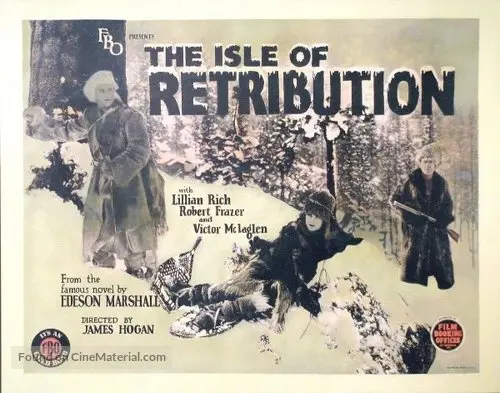
Conversely, Bess Gilbert (Lillian Rich) represents the resilient working class. Her character is built for this environment, not because she is a survivalist, but because she has never had the luxury of being soft. The tension between Rich and Harris is the film's strongest engine. While the romantic pursuit of Ned Cornet (Robert Frazer) provides the plot's skeleton, the meat of the story is found in the glares and subtle power shifts between these two women.
It works. But it is flawed. The film occasionally retreats into the very sentimentality it seems to be critiquing. For every moment of gritty realism, there is a sequence of exaggerated longing that reminds you this is, first and foremost, a product of its time. However, the sheer visual contrast between the actresses—Harris’s curated elegance versus Rich’s earthy determination—tells a story that the title cards don't even need to explain.
Victor McLaglen’s presence in the film is a significant draw. Even in 1926, McLaglen possessed a physical gravity that few of his contemporaries could match. Here, he provides the necessary brawn that grounds the film’s more ethereal romantic elements. His performance is a reminder of why he would eventually become a favorite of directors like John Ford; he carries a sense of history in his shoulders.
In one specific scene involving the rationing of supplies, McLaglen’s character displays a weary pragmatism that stands in stark contrast to Robert Frazer’s more traditional 'hero' posturing. It is in these moments—where the film stops trying to be a romance and starts being a study of human nature under duress—that it truly finds its voice. McLaglen doesn't need to overact; his size and his stillness do the work for him.
For a film produced in the mid-20s, the technical representation of the Alaskan wilderness is surprisingly effective. While much of it was undoubtedly filmed on California sets or more accessible snowy locales, the cinematography captures a sense of vast, indifferent emptiness. The lighting, often harsh and high-contrast, emphasizes the isolation of the five stranded souls.
Then there is the snow-slide. In many ways, the snow-slide is a script doctor in a white coat. It arrives precisely when the narrative has painted itself into a corner. Is it a deus ex machina? Absolutely. But it is also a stunning visual set piece for the era. The way the film uses this natural disaster to 'resolve' the moral quandaries of its characters is brutally simple. It suggests that nature doesn't care about your bank account or your romantic entanglements; it only cares about physics.
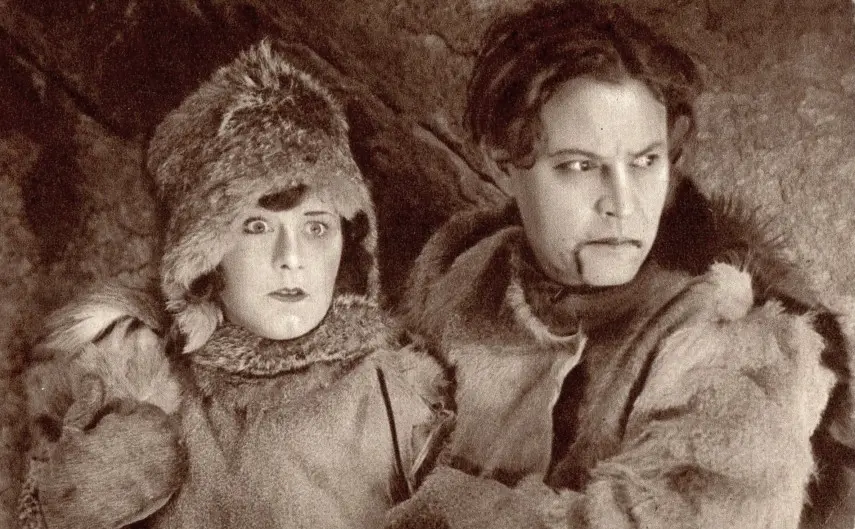
Compare this to the more whimsical tone found in Hands Up! from the same year. While that film uses its setting for comedy and light adventure, The Isle of Retribution is far more interested in the grim reality of the elements. It shares more DNA with the atmospheric dread of The Northern Code, though it lacks that film's consistent focus.
The pacing of The Isle of Retribution is, admittedly, a challenge for modern sensibilities. The first act spends a significant amount of time establishing the social dynamics in 'civilization' before getting to the island. This prologue is necessary to understand the stakes of the class conflict, but it can feel like a different movie entirely. The transition from high-society drama to survivalist thriller is jarring.
Once the group is stranded, the film settles into a repetitive rhythm of arguments and longing looks. However, the writers, Edison Marshall and Fred Myton, manage to inject enough small-scale crises—a failing fire, a dwindling food supply—to keep the plot moving. The dialogue on the title cards is often poetic, sometimes overly so, but it captures the heightened emotional reality of the silent era.
Does the film hold up for a modern audience? No, not as a piece of mainstream entertainment. The gender roles are antiquated, and the plot resolution is far too convenient. However, it holds immense value as a historical document of 1920s filmmaking. The performance of Lillian Rich is genuinely moving, and the film’s willingness to address class warfare in such a literal way is surprisingly bold.
Pros:
Cons:
The Isle of Retribution is a fascinating, if uneven, journey into the frozen heart of human nature. It lacks the polish of Sally of the Sawdust or the innovative spirit of Where Are My Children?, but it carves out its own niche as a rugged melodrama. The snow doesn't care about your bank account, and by the time the credits roll, the audience is left with the cold realization that character is the only currency that matters when the world freezes over. It’s a 6/10 for the casual fan, but an 8/10 for the silent film enthusiast. It works. But it’s flawed. And that’s exactly why it’s worth a look.
IMDb —
1929
Community
Log in to comment.