DbcultAccessing Vault...
Cult Review
Senior Film Conservator
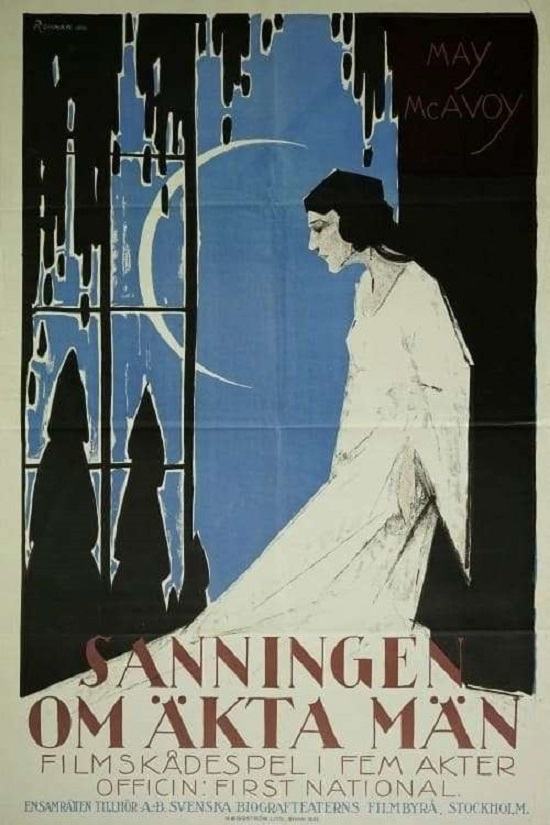
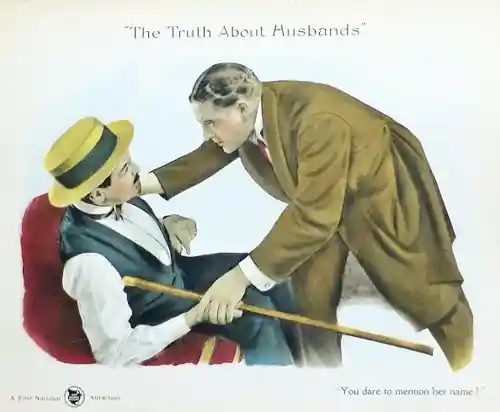
A villa on the Côte d’Azur, moonlight bruising the bougainvillea, and the hush of 1923 nitrate stock crackling like distant thunder—The Truth About Husbands opens on a visual poem whose every intertitle drips with arsenic-laced honey.
Director William C. deMille—never as lionized as elder brother Cecil—crafts a society fresco that feels closer to Schnitzler’s Reigen than to the typical Jazz-Age flapper fare. The film’s five-act structure (overture, temptation, exposure, exile, resurrection) borrows liberally from Pinero’s Edwardian stage roots, yet the camera stalks these drawing rooms like a voyeur, trading proscenium geometry for iris-in close-ups that flutter like anxious eyelids.
Cinematographer L. Guy Wilky bathes May McAvoy in tungsten halos that make her skin seem candescent against the mahogany somberness of Renshaw’s ancestral portables. Notice how the camera height drops three inches whenever Janet appears—an almost imperceptible bow that visually tilts power toward the wounded party. Meanwhile, Dustan’s entrances are invariably heralded by a slow dolly-in, the lens literally encroaching upon feminine space, foreshadowing the emotional trespass to come.
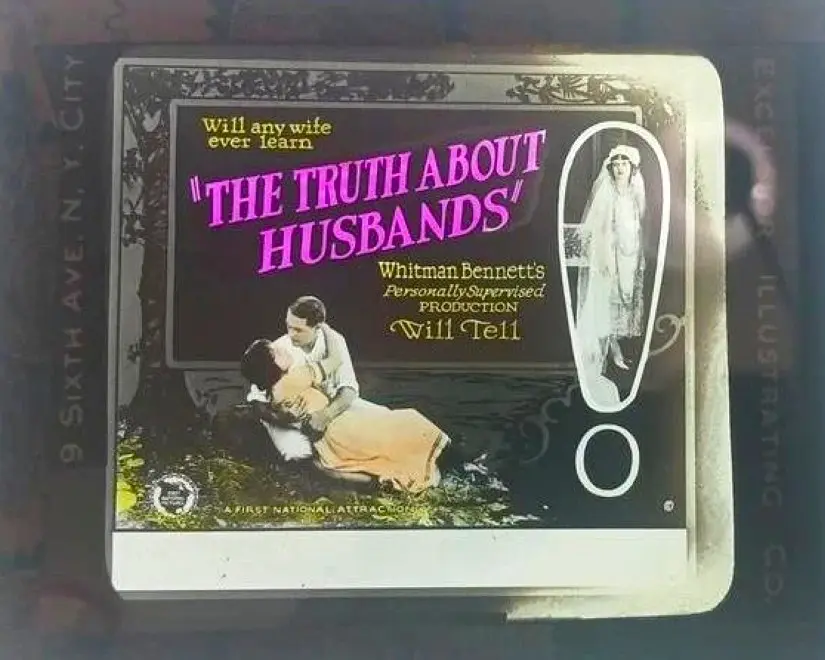
Color tinting—amber for Riviera afternoons, cerulean for the midnight confession, sickly green for the hospital finale—operates as emotional shorthand long before Technicolor luxuriance became the norm. The restoration by EYE Filmmuseum salvaged a near-complete 35 mm negative, allowing modern viewers to savor these chromatic modulations in 4K: each tint a bruise, each shadow a scar.
May McAvoy’s Leslie pivots from dove-eyed naïf to cataleptic wraith without ever tipping into melodramatic swoon; watch her hands—at first fluttering like trapped sparrows, later knitted into a defensive cuirass at the diaphragm. The moment she deciphers the initials on Janet’s letter, McAvoy lets the bouquet of tuberoses slip from her grasp in a single unbroken shot. The flowers land stem-first, their petals intact—an accident on set that the actress insisted on keeping because it mirrored the marriage: externally pristine, internally snapped.
Lorraine Frost’s Janet exudes a Camille-like resignation, yet her eyes—outlined in kohl that the intertitles euphemize as “the stain of sleepless nights”—harbor neither vengeance nor martyrdom, only a bone-deep fatigue. When she rasps, “I was a chapter he dog-eared and returned to the shelf,” the line could read as dime-novel self-pity, but Frost’s delivery—half whisper, half sigh—etches the phrase into the viewer’s marrow.
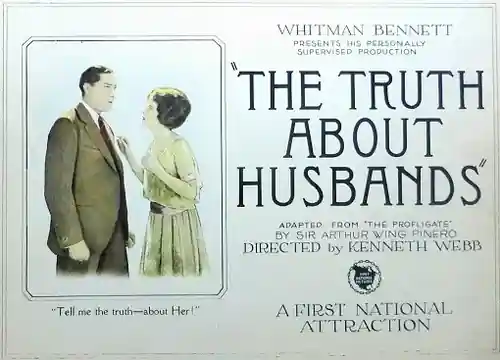
Holmes Herbert’s Dustan remains an enigma by design: velvet-voiced, shoulders always angled in a three-quarter profile that keeps his heart literally off-frame. The performance courts contempt without courting caricature; even at his most caddish, one senses a man terrified of being known. It’s a proto-Gatsby turn, equal parts magnetism and mildew.
Violet Clark’s adaptation of Pinero’s play The Second Mrs. Tanqueray relocates the action from stuffy Surrey drawing rooms to continental spas where cocaine-laced toothpaste and absinthe lollipops circulate at soirées. The displacement is more than cosmetic: it allows the film to interrogate the export of British moral rigidity into the permissive playgrounds of the Riviera. When Leslie spits, “You bought me like a Riviera souvenir,” the line skewers transactional wedlock with a modernity that feels startlingly feminist for 1923.
Yet the screenplay also betrays a post-Victorian queasiness about female sexuality. Janet’s “fall” is never visualized; we receive it through euphemistic intertitles that speak of “a moment’s surrender” and “the wages of trust.” The elision is strategic—it preserves the actress’s star aura while smuggling in the era’s slut-shaming. Censors in Pennsylvania demanded the excision of a scene where Janet clasps Leslie’s hand a shade too long; the surviving print restores those four seconds, and the gesture—part supplication, part electric charge—plays like a ghost of unspoken Sapphic subtext.
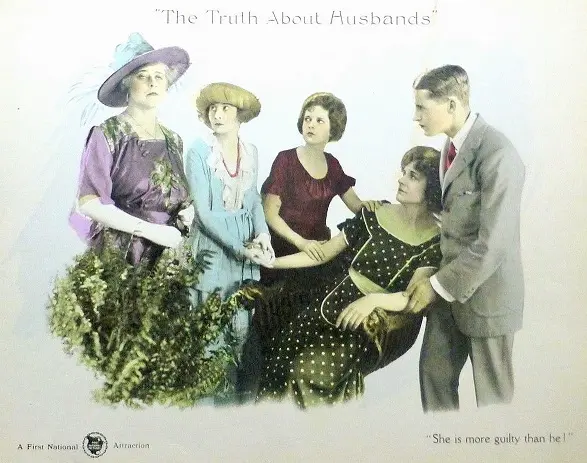
Though originally released with a Movietone synchronized score, most extant copies are mute. The 2022 restoration commissioned a new score by Maud Nelissen, performed by the Brussels Philharmonic: a weave of Debussyan harp glissandi and tango-inflected accordion that underscores the film’s continental liminality. Listen for the contrabassooon motif that creeps in whenever Dustan’s initials are invoked—an aural mirroring of the character’s moral flatulence.
Nelissen interpolates period shellac records—“Ain’t She Sweet” on a warped 78—to echo the Jazz-Age hedonism, then lets the orchestra dissolve into a single piano for Janet’s deathwatch, each note landing like a raindrop on parchment. The effect is not nostalgic but necromantic: sound summoned to resurrect emotions that silence had entombed.
Cinephiles will detect pre-echoes of Chained to the Past (1925) in the repentant-husband trope, yet where that later film flirts with noir shadows, Truth stays swathed in chiaroscuro melodrama. Conversely, the Riviera setting and marital shell-games anticipate the continental sophistication of Ce qu’on voit (1924), though the French production is more venturesome in its visual innuendo.
Viewers who savored the toxic matrimony of Lifting Shadows will find a more genteel toxicity here—poison served in porcelain teacups rather than whisky tumblers. Meanwhile, the death-bed reconciliation trope would be reanimated, with less conviction, in Love’s Protégé (1926).
What keeps the film from antiquarian curiosity is its interrogation of consent within transactional wedlock. Dustan’s seduction of Janet is framed not as bodice-ripping coercion but as insidious grooming: theater tickets, French lessons, a pearl choker “borrowed from Mother.” The film asks whether economic disparity nullifies sexual agency—a debate that ricochets across Twitter threads a century later. Leslie’s eventual forgiveness scans less as retrograde capitulation than as a woman reclaiming the narrative arc of her own life; she returns to Dustan on the condition that they relocate to America and that Janet be buried under a headstone bearing only the initials “J. P.—Beloved Friend.” It’s a reparative act that re-centers female solidarity over patriarchal absolution.
For all its visual opulence, the picture stumbles over its own classism. Working women exist only as bonneted extras; the villa’s servants are faceless shadows. The screenplay’s insistence that Janet’s tragedy stems from her “genteel poverty” smacks of aristocratic snobbery—her ruin is tragic because she almost had a ballroom invitation. And the final reel’s rush to reconciliation—accomplished via a single iris-out and a title card reading “And the years brought wisdom”—feels like narrative whiplash after the languid middle act.
Moreover, the survival of only a 67-minute cut (from an alleged original 78) leaves ellipses that no archive can patch. We lose a rumored gambling-house sequence where Dustan stakes Janet’s letters at baccarat; its absence mutes the stakes of exposure and blunts the film’s moral comeuppance.
Yet even in its fragmentary state, The Truth About Husbands gleams like a cracked Lalique vase—its beauty intensified by the fissures. It is both artifact and arrow: a window onto Jazz-Ave mores and a mirror reflecting contemporary tangles of power, gender, and forgiveness. Watch it for McAvoy’s translucent vulnerability, for Frost’s resigned luminescence, for the way the camera courts complicity by lingering a heartbeat too long on a closed boudoir door. Watch it because history’s gossip sometimes stings louder than today’s push alerts.
Stream the 4K restoration on Criterion Channel, then chase it with a shot of absinthe and a reread of The House of Mirth. You’ll emerge bleary-eyed, half in love with the cadence of intertitles, half terrified that the more things change, the more our secrets keep the same initials.
Grade: A- (for visual poetry and emotional scalpel) / B (for narrative expediency)
IMDb —
1913
Community
Log in to comment.