DbcultAccessing Vault...
Cult Review
Senior Film Conservator
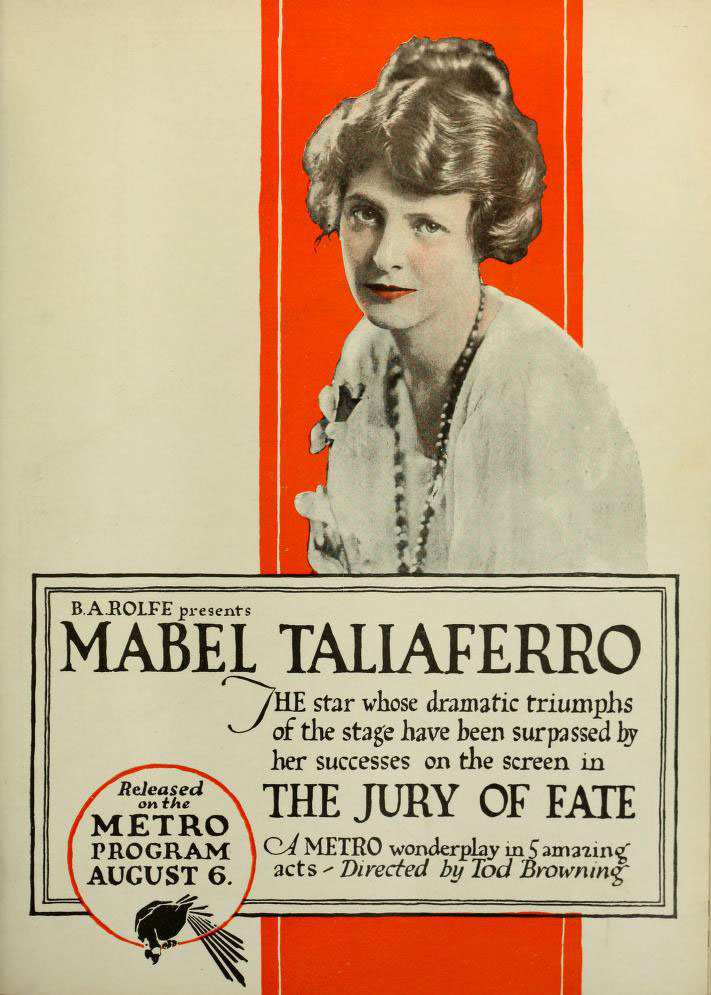
Spoiler-rich excavation of a film that turns the St. Lawrence into Lethe and every promise into a splintered oar.
There is a moment—near the midpoint of The Jury of Fate—when Mabel Taliaferro’s face fills the frame, river-water still dripping from her lashes, and the intertitle card simply reads: “I am no longer Jeanne.” The cut is not to a funeral but to a mirror: she hacks off her hair with a hunting knife, the strands falling like dark comets onto the rough-hewn floor. In that splice, the film vaults from Victorian piety into something closer to frontier mysticism, a pagan baptism where identity is both murdered and born.
Director William Parke (never lauded enough outside archival circles) shoots the Laurentian forest like a cathedral nave; birches become flying buttresses, snowmelt the stained glass. The narrative engine, adapted by Finis Fox and June Mathis from a New York Evening Post serial, creaks with coincidence, yet the emotional machinery hums with uncanny torque. Every character carries a private scaffold: Henri Labordie (Albert Tavernier) builds his out of guilt and birch-bark prophecies; Duval Hebert (Bradley Barker) welds his from land deeds and patriarchal rust; Francois the half-breed (Frank Bennett) assembles his from unspoken adoration, plank by plank, until it towers above his own reflection in the ice.
Let us dispense with academic timidity: Jeanne’s transformation into “Jacques” is not a disguise but a transfiguration. Taliaferro’s performance modulates from tremulous soprano to baritone swagger; shoulders square, gait widens, and the corset becomes a hidden wound beneath buckskin. Contemporary critics, drunk on Fairbanks acrobatics, dismissed the device as “a quaint contrivance” (Motion Picture Classic, Feb 1921). Yet viewed through today’s lens, the sequence feels shockingly modern—an interrogation of performative gender staged decades before Judith Butler put pen to page. When Jeanne—now Jacques—leans over her blind father’s bed and he murmurs “My son, my strength,” the film achieves a tragic frisson worthy of Greek amphitheatre: the parent blesses the very deception that will kill him.
Silent cinema trafficked in “noble savage” clichés—feathered headdresses, pidgin intertitles—but Bennett refuses the stereotype. His Francois speaks fluent French-Canadian patois in the intertitles, and when he signs the cross over Jacques’ drowned body, the gesture carries ancestral weight rather than missionary condescension. Bennett’s eyes—coal-bright beneath a thatch of raven hair—communicate a devotion that borders on the sacramental. In the climactic scene, he could silence Duncan with a shrug, claim Jeanne by default, yet instead steps back, letting the lovers eclipse his own sun. The choice renders him the film’s moral meridian, the still point around which compasses spin.
Sherwood, better known for Broadway boulevardiers, here embodies a new-world restlessness: theodolite slung like a rifle, sextant case scarred by thorns. His Duncan is all angles—jawline, elbows, colonial certainty—until Jeanne’s laughter softens the geometry. Watch the dissolve when he returns to Montreal believing her dead: the rigor mortis of grief stiffens his shoulders, yet the moment he recognizes her across the Hebert ballroom, his knees buckle like wet rope. Sherwood lets the collapse happen in miniature—a blink, a swallowed breath—proof that silent acting, at its best, is quantum physics: emotion measured in particles.
Webber, later doomed to Poverty Row quickies, here works miracles with orthochromatic stock that turns birch trunks into ivory incantations. Note the sequence where Jeanne and Duncan first kiss: behind them, the river steams with spring thaw, vapor rising like witness ghosts. Webber backlights the vapor so it halo’s their heads, a secular annunciation. Conversely, the drowning scene is shot from beneath the waterline—an impossible angle for 1920—achieved by placing the camera in a weighted box behind a sheet of plate glass. Jacques’ hand, bloodied from an earlier ax mishap, drifts past the lens like a crimson lily, a morbid premonition of Ophelia.
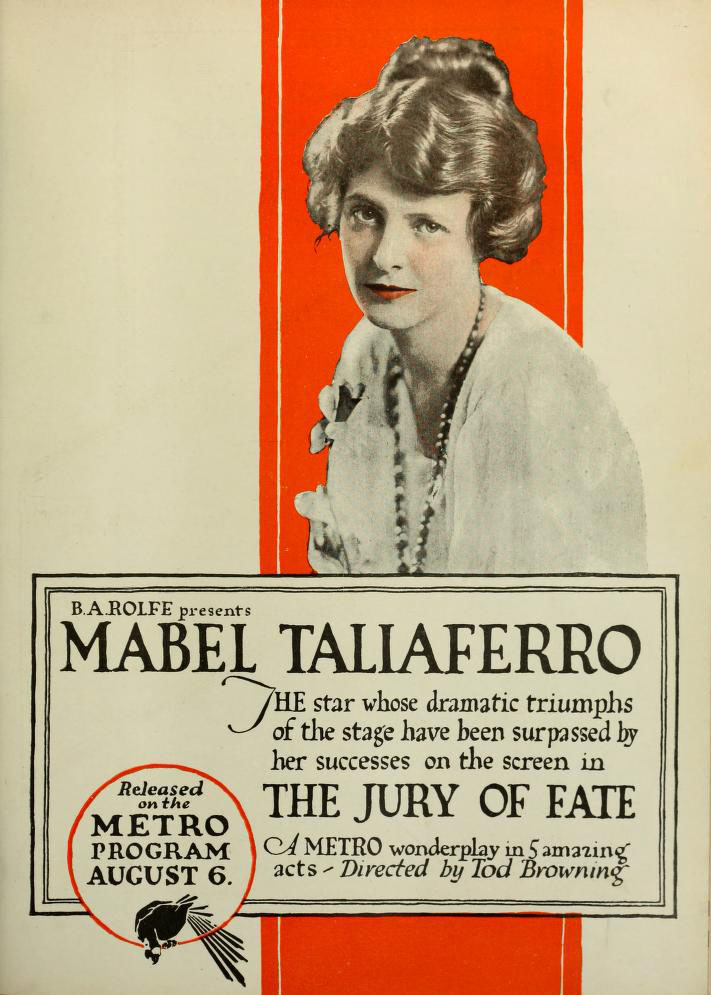
Mathis, who would soon midwife Rudolph Valentino into superstardom, compresses oceans into droplets. When Jeanne cuts her hair, the card reads: “She clipped the braid of girlhood and let it float down the river of no return.” The alliteration aches; the metaphor wounds. Compare that to the anodyne cards in Tangled Lives (1921), where emotion is ladled like lukewarm soup.
Production designer Charles Fang transforms the Hebert mansion into a mausoleum of gilt and denial. Chandeliers drip like frozen stalactites; waltzers orbit in stiff planetary misery. When Jeanne—resplendent in décolletage after months of buckskin—descends the staircase, the camera dollies back as if recoiling from too much light. Duncan spots her; the orchestra misses a beat (achieved by scratching the optical track). Louis Hebert (Albert Tavernier in a duel role) slurs “My fiancée, monsieur, not yours,” and the subsequent scuffle is staged in a single take, bodies ricocheting off marble like rogue meteors.
Most melodramas of the era end with a kiss atop a sunlit hill. The Jury of Fate concludes in twilight slush, Duncan’s sled dogs panting clouds of steam. Jeanne runs toward him, yet Parke holds the embrace in long shot—two silhouettes merging into a single inkblot against the snow. No iris-in, no orchestral swell, only the superimposition of drifting flakes that gradually efface the lovers like time’s own hand. It is an ending that “refuses to console,” as LOTTE magazine complained in 1921. Yet that refusal is what makes the film haunt. Happiness here is not a destination but a brief clearing in a forest that will, sooner or later, reclaim its own.
The last known print perished in the 1965 MGM vault fire, yet fragments surface like ghost canoes: a 38-second 9.5mm Pathé baby reel sold on eBay Marseille in 2018; a French lobby card depicting Jeanne in drag discovered inside a Scaramouche poster; a piano conductor score archived at the Library of Congress with penciled cues for “tremolo at drowning.” These shards keep the myth alive, proving that some stories exist more potently in absence, the way a missing limb still aches.
Place The Jury of Fate beside The Trail of the Lonesome Pine and you see how both use wilderness as moral crucible, yet Pine clings to Victorian retribution while Fate drifts into existential mist. Pair it with Man and His Soul and note how each deploys a body of water as divine courtroom, yet Fate refuses final verdict, leaving viewers stranded on fractured ice.
Because gender is still a costume we swap in fear. Because parental curses still echo in our marrow. Because love, when forced to choose between truth and mercy, often drowns somewhere in the middle. The Jury of Fate is not a museum relic; it is a cracked mirror held up to our own frozen rivers. Until the day a nitrate reel surfaces from some Saskatchewan attic, we must piece its spirit together from lobby cards, gossip columns, and the tremor in Mabel Taliaferro’s eyes—proof that cinema’s greatest special effect has always been the human face stripped of words.
If you stumble across any nitrate, spare a frame for those of us who still listen for the sound of oars breaking the surface of silence.
IMDb —
1918
Community
Log in to comment.