DbcultAccessing Vault...
6.7/10
Senior Film Conservator
A definitive 6.7/10 rating for a film that redefined the boundaries of cult cinema. Lo más sublime remains a cornerstone of transgressive art.
Short answer: yes, but only if you possess the patience for the deliberate pacing of early 20th-century regional cinema. For the casual viewer, the stylistic hurdles may be high, but for the historian, it is an essential piece of the Spanish silent era.
This film is for the cinephile who finds beauty in the grain of old celluloid and the earnestness of pre-sound acting. It is NOT for anyone seeking a fast-paced thriller or modern narrative polish.
1) This film works because it grounds its high-stakes treasure hunt in a tangible sense of place and genuine communal grief.
2) This film fails because the transition from a somber maritime tragedy to an adventure plot feels tonally disjointed.
3) You should watch it if you want to understand the roots of Spanish social realism before it was codified by later masters.
The opening sequences of Lo más sublime are surprisingly modern in their bleakness. Unlike the more theatrical approach seen in The Marionettes, Enrique Ponsa uses the natural landscape of San Cebrián to do the heavy lifting. When Rosa stands by the shore, the camera doesn't just record her; it captures the oppressive vastness of the sea that has just widowed her. It’s a sequence that rivals the emotional weight of Lily of the Dust in its portrayal of a woman adrift.
The introduction of Juan’s death isn't treated as a plot point, but as a visceral reality. The way the village reacts—a mixture of weary resignation and sharp sorrow—sets a high bar for the rest of the film. However, the movie takes a sharp left turn when the treasure map is introduced. Suddenly, we are no longer in a gritty social drama but in a territory closer to The Border Legion, where maps and villains dictate the rhythm.
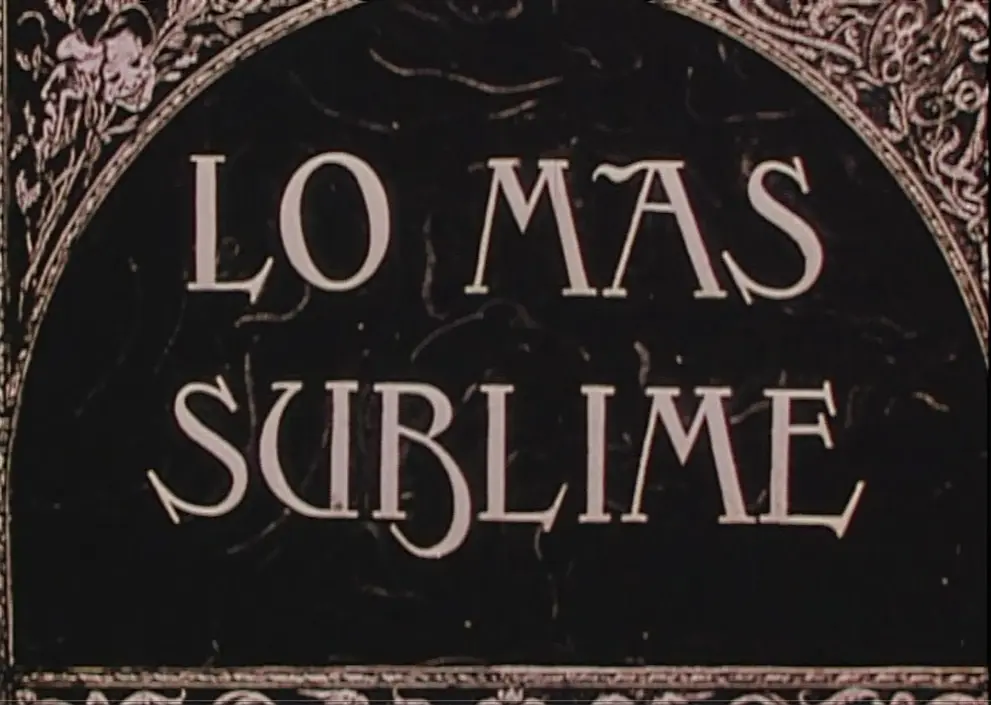
Antonio Granell delivers a performance that is remarkably restrained for 1927. In many films of this era, such as Tennessee's Pardner, actors relied heavily on pantomime. Granell, however, uses his eyes to convey the burden of protecting Rosa’s family. His chemistry with Rosita Ponsa provides the film's emotional anchor, even when the plot becomes convoluted by the machinations of Tomás and Andrés.
The character of Sardinilla, the godson, acts as the film's moral compass. He is the bridge between the dead Juan and the living Antonio. In one specific scene, where Sardinilla watches the villains plotting from the shadows, the tension is palpable. It isn't just about the treasure; it's about the loss of innocence. This performance is a far cry from the slapstick seen in A Milk Fed Hero; here, the stakes are life and death.
Enrique Ponsa’s direction is at its best when he is outdoors. The use of natural light on the Spanish coast gives the film a texture that studio-bound productions like Her Honor, the Governor lack. There is a specific shot where the map is unfurled against a backdrop of crashing waves that perfectly encapsulates the film's dual nature: the lure of wealth versus the power of nature.
The camera doesn't just sit there; it stares. It demands that you acknowledge the harshness of the fisherman's life before it allows you the fantasy of the treasure.
However, the pacing is where the film stumbles. The middle act, involving the deception by Tomás, drags. It lacks the tight editing found in contemporary thrillers like Black Friday. Ponsa seems enamored with the landscape, sometimes at the expense of narrative momentum. It is a slow burn that occasionally threatens to extinguish itself before the climax.
The most interesting narrative choice is the arc of Andrés. Initially a pawn of Tomás’s greed, his injury and subsequent care by Antonio and Sardinilla provide the film’s titular "sublime" moment. It’s a bold choice to spend so much time on the redemption of a secondary antagonist. It elevates the film from a simple 'good vs. evil' story into something more human. It reminds me of the moral complexities explored in Gengældelsens ret.

When Antonio and Sardinilla decide to help the wounded Andrés rather than pursue the treasure, the film makes its final statement: humanity is the real gold. It’s a bit sentimental, yes. But in the context of 1920s cinema, it’s a powerful rejection of the cynicism often found in adventure tales.
Yes, if you view it as a cultural artifact rather than a Friday night blockbuster. The film provides a rare window into the regional identity of 1920s Spain. The costumes, the boats, and the social hierarchies are captured with a documentary-like precision that survives the melodramatic plot. It is a flawed but fascinating piece of history.
The tone of Lo más sublime is its most inconsistent feature. It begins with the gravity of a funeral and ends with the light of a moral victory. While this journey is intentional, the bridge between these two states is shaky. Unlike Les deux gamines, which maintains a consistent sentimental thread, this film feels like two scripts stitched together.
Yet, the specificity of the setting saves it. Every time the plot feels like it’s drifting into generic territory—like the scenes involving the map—the director pulls us back to the reality of San Cebrián. We see the nets being mended; we see the poverty in the corners of the frames. This grounding makes the eventual treasure hunt feel less like a lark and more like a desperate act of survival. It’s a gritty reality that you won't find in lighter fare like Golf or The Duck Hunter.
Lo más sublime is a testament to the ambition of early Spanish filmmakers. It tries to be many things: a tragedy, an adventure, and a moral lesson. It doesn't succeed at all of them, but its failures are more interesting than the successes of more formulaic films. It is a work of rough edges and deep heart. It works. But it’s flawed. If you can look past the flickering frames and the occasional narrative lurch, you will find a story that still breathes with the salt air of a century ago. It is a minor classic that deserves its place in the conversation alongside Whispering Shadows and other rediscovered gems of the era.

IMDb 6.4
1933
Community
Log in to comment.