DbcultAccessing Vault...
Cult Review
Senior Film Conservator
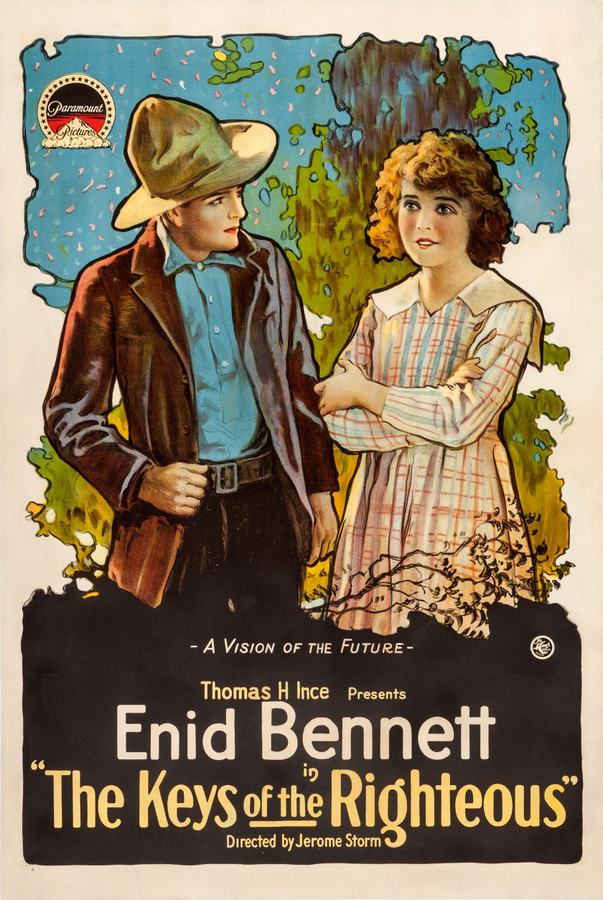
There is a moment—quiet, almost offhand—when Mary Manning, framed against knotty-pine walls the color of dried blood, closes her mother’s dead eyes and in that gesture inherits not only grief but the entire moral ledger of her bloodline. Director Rupert Julian lets the camera linger until the silence grows oppressive, as though the celluloid itself were holding its breath. In that hush you can feel the film tilt: what began as dime-novel piety mutates into something colder, more feral, and infinitely more interesting.
Paul’s return is no tearful embrace on the threshing floor. He arrives during a blizzard that howls like a banshee choir, stumbling into the yard with the shambling gait of a man who has slept in culverts. Josef Swickard plays him as a human bruise—eyes ringed, voice (via eloquent intertitles) cracked by regret and cheap rye. The film dares you to pity him, then snatches pity away when he filches the household’s egg money for another bottle. Screenwriter C. Gardner Sullivan, ever the moral accountant, refuses the easy arithmetic of forgiveness.
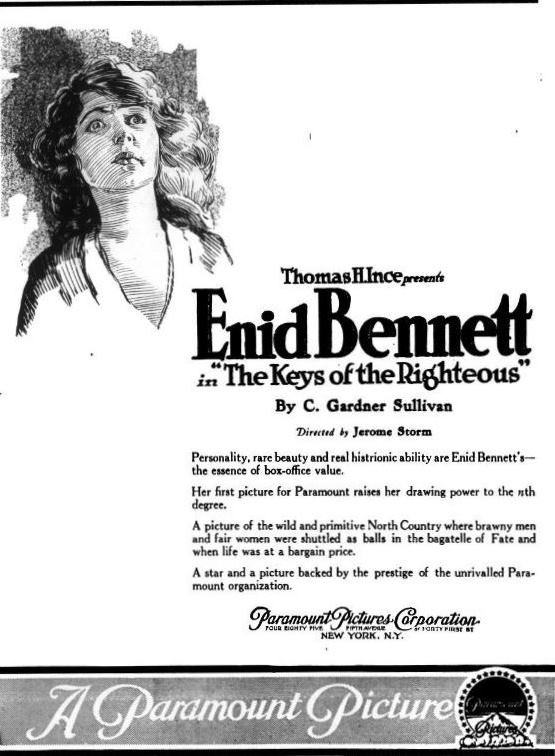
Enid Bennett’s face—wide prairie cheekbones, eyes that seem to absorb more light than they reflect—carries the whole movie. Watch her in the courtroom scene: she steps forward to perjure herself for a man who squandered her childhood, and every muscle in her throat quivers like a drawn bow. The judge, played by Melbourne MacDowell with the weary authority of a man who has sentenced his own appetites, dismantles her lie not with wrath but with a calm dismantling of generational myth. The dialogue card reads: “Your honor, guilt is a deed, not a surname.” It is one of those aphoric flashes that feel carved into stone rather than typed.
Cinematographer Edward Ullman shoots the forest as a dialectic: birch trunks like pallid pillars of some abandoned basilica, snow crusted with animal blood, thawing rivers that groan like old iron. Interiors are staged at Dutch-angle tableaux—kerosene lamps placed low so shadows crawl upward, turning humble faces into gargoyles. Compare this to the urban expressionism of Les Vampires; Julian’s nightmare is rural, Protestant, claustrophobic.
At Reuben’s Roadhouse, fiddle music saws the smoky air while couples jitter in frayed gabardine. The camera glides past a one-legged miner dancing on a table, past a woman whose mascara has melted into rivulets of asphalt. Paul sits at the bar, coins clinking like tiny funeral bells. When Mary enters—calico dress a flag of domesticity—Julian cuts to a medium shot that places her haloed against a cracked mirror reflecting infinite replicas of the scene, each iteration murkier. The raid erupts not with Keystone chaos but a slow-motion tableau: lanterns smashed, fists colliding with jaws, constables silhouetted like Presbyterian deacons rooting out heresy.
MacDowell’s judge does not sermonize. He produces a daguerreotype of his own deceased daughter, places it beside the family Bible, and invites Paul and Mary to stare until the photos seem to accuse. The rhetoric is gestural: a finger tapping the glass, a sigh that fogs the silver plate. Reconciliation here is not cathartic but contractual—signed in the ink of shared shame. Sullivan’s Protestant ethic will not allow cheap grace.
Earle Rodney’s Tom is lantern-jawed virtue on a tractor—he embodies the future America of soil-enrichment pamphlets and Rotary luncheons. Yet the film subtly queers his certainty: note how he lingers on Paul’s ruined dignity with something akin to voyeuristic pity. Mary’s betrothal to Tom, sealed in the final reel, feels less like romantic culmination than societal foreclosure, the last lock on a door that Paul’s return cracked open.
Gertrude Claire as the dying mother achieves transcendence with a mere flutter of eyelids; George Nichols’s grandfather radiates patriarchal granite; Lydia Knott’s spinster aunt supplies a Greek-chorus of sighs. Even the invalid chair becomes character—its squeaking wheel a metronome marking the dwindling heartbeats of the clan.
Where The Stolen Voice traffics in melodramatic coincidences and Silence of the Dead wields death as a gothic prop, The Keys of the Righteous locates doom inside the bloodstream of family. It is closer in spirit to Shore Acres’ domestic crucibles, yet bleaker, because salvation is transactional, not transcendent.
Read the title as double entendre: “keys” unlock both heavenly gates and the shackles of hereditary sin. The film insists that righteousness is not a state but a labor, passed like blisters from palm to palm. When the final iris closes on Mary and Tom walking toward a sunrise barely distinguishable from the previous dusk, you sense that the lock has merely clicked; the door remains shut.
Prints languished for decades in a Madison archive until a 4K photochemical resurrection in 2022 revealed subtleties—burlap textures, frost on whiskers—previously lost to nitrate decay. The new tinting hews to archival notes: amber for interiors, viridian for exteriors, a sickly lavender for the dancehall, all grading toward bruised indigo in the penultimate courtroom.
This is not a film that comforts; it indicts. It asks whether love can survive the corroding drip of memory, whether a daughter can carry the freight of paternal guilt without fracturing her own future. Long after the projector’s clatter fades, you will taste peat smoke on your tongue and feel frost needling your scalp—proof that silent cinema, at its most ruthless, can still raise welts on the skin of the soul.

IMDb 4.5
1934
Community
Log in to comment.