DbcultAccessing Vault...
Cult Review
Senior Film Conservator
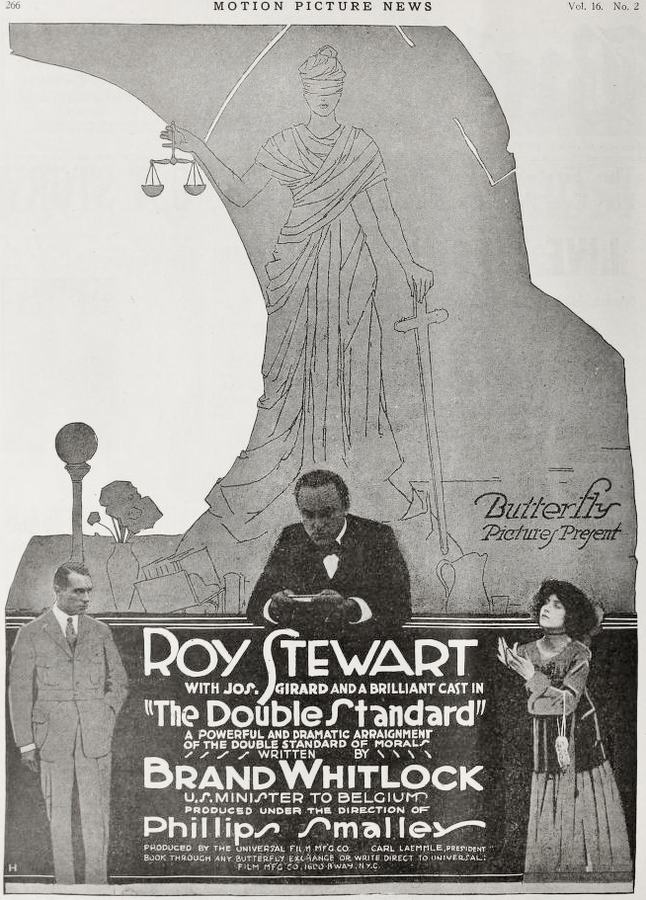
There's a certain timeless resonance to films that dare to peer into the murky waters of societal hypocrisy, and in this regard, 1918's The Double Standard stands as a remarkably prescient piece of early cinema. It’s not merely a historical artifact; it's a vibrant, if sometimes stark, reflection on justice, personal conviction, and the insidious ways in which moral codes are often selectively applied. As a film critic, I often find myself drawn to these foundational narratives, the ones that laid the groundwork for complex storytelling, and this particular offering, penned by Elliott J. Clawson and Brand Whitlock, is a rich tapestry indeed.
At its core, The Double Standard introduces us to John Fairbrother, portrayed with a compelling gravitas by Dana Ong. Newly ascended to the police court bench, Fairbrother isn't just a judge; he's a crusader, a man fueled by a personal tragedy. The loss of his sister, her life irrevocably marred by the siren call of the infamous Johnson Café, has forged in him an unyielding resolve to cleanse the city's underbelly. His pronouncements of equal justice for all, delivered with fervent conviction, initially strike one as admirable, even heroic. Yet, the astute observer quickly discerns the thinly veiled personal vendetta beneath the judicial robe. This isn't merely about upholding the law; it's about exorcising a personal demon, a quest for retribution cloaked in the noble pursuit of civic order. This narrative choice immediately elevates the film beyond a simple morality play, imbuing Fairbrother with a human frailty that makes his eventual reckoning all the more impactful.
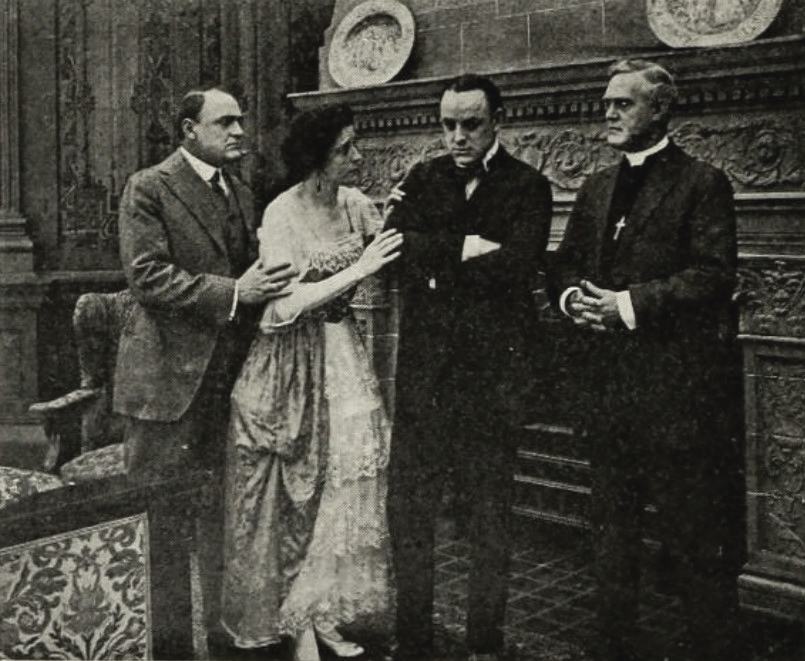
The political machinations behind Fairbrother's election, orchestrated by his wife Grace's influential brothers—George Ferguson, the powerful newspaper editor (Joseph W. Girard), and Bishop William Ferguson (Frank Brownlee)—add another layer of intrigue. Their initial puzzlement at Fairbrother's single-minded focus on dance halls and cabarets, quickly assuaged by his confidences about his fallen sister, underscores the era's complex interplay between public morality, personal reputation, and political power. It's a subtle but potent commentary on how easily personal narratives can be co-opted or manipulated to serve broader, often self-serving, agendas. The film, even in its early form, doesn't shy away from these uncomfortable truths, presenting a world where appearances often supersede genuine conviction.
The true genius of The Double Standard unfolds on Fairbrother's very first day on the bench. The arrival of Mace (Hazel Page) and Lily (Irene Aldwyn), two young women arrested for disorderly conduct during a raid on the very same Johnson's Café, sets the stage for a dramatic confrontation. Lily, depicted as a brazen city girl, and Mace, a shy 'country mouse' tragically drawn into bad company, represent the archetypal 'fallen women' of the era. Their plight immediately evokes parallels with Fairbrother's sister, intensifying his righteous indignation. This scene, undoubtedly, was designed to elicit a strong emotional response from contemporary audiences, who would have been well-versed in the moral panic surrounding such establishments and the precarious position of women caught in their orbit. One might draw a thematic comparison to films like The Lure of Heart's Desire, which similarly explored the perils and temptations that could lead individuals astray from perceived virtue.
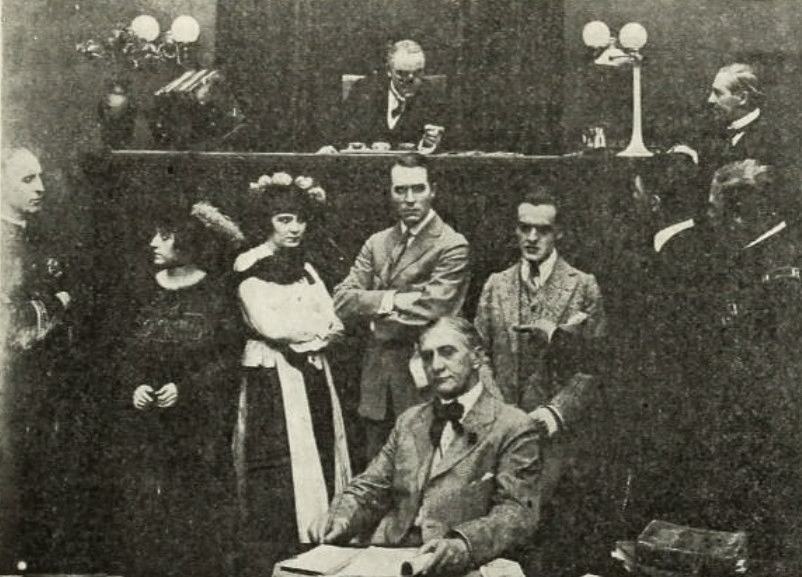
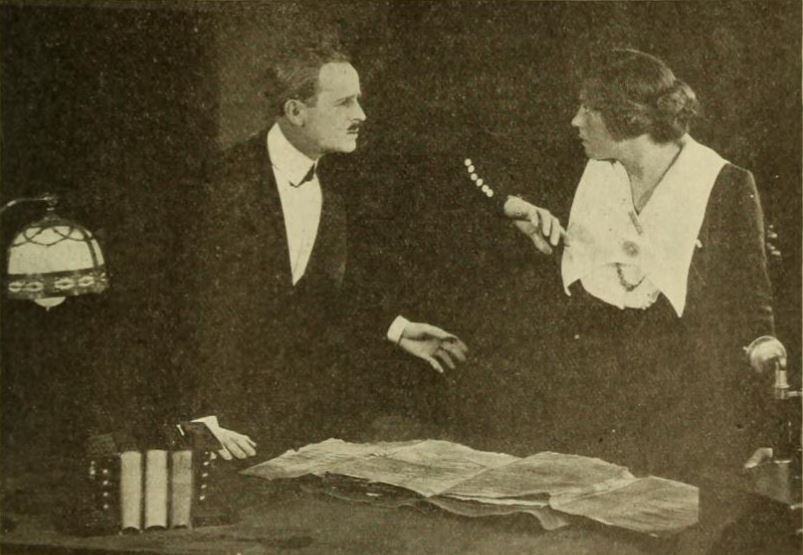
The film, however, is not content with a straightforward condemnation. The dramatic pivot occurs when Fairbrother, consistent with his espoused principles, demands the names of the men accompanying Mace and Lily. The revelation that one is Charles Ferguson (Maxfield Stanley), the editor's son, and the other the bishop's nephew (Roy Stewart), shatters Fairbrother's carefully constructed moral universe. This isn't just about anonymous 'bad company'; it's about the very pillars of his support system, his family, being implicated in the very 'evil' he so vehemently decries. The shock delivered by the arresting detectives (perhaps Frank Elliott and Clarissa Selwynne in supporting roles, though specific assignments are often fluid in early film records) is palpable, not just for Fairbrother but for the audience, who are forced to confront the pervasive nature of the 'double standard' that gives the film its title. It's a moment that echoes the broader societal critique found in films like The Defeat of the City, where the urban landscape becomes a crucible for moral failings that touch all strata of society.
Fairbrother’s initial reaction is one of unyielding principle: the young men must be sentenced alongside the women. This stance, while morally consistent with his public declarations, causes immense consternation within his powerful family circle. It's here that the film truly earns its stripes, moving beyond a simple exposé of hypocrisy to explore the more challenging terrain of genuine justice and rehabilitation. Instead of merely punishing, Fairbrother devises a solution that is both fair and profoundly compassionate. He declares all four guilty, acknowledging their transgression, but then suspends their sentences pending good behavior. This act of judicial leniency, born not of weakness but of a newfound understanding, is a powerful statement about the potential for redemption over mere retribution.
His subsequent actions solidify his transformation: he convinces Mace to return to her country home, a symbolic return to innocence and simpler virtues, and secures an office job for Lily, offering her a tangible path to respectable employment and self-sufficiency. This active, rehabilitative approach contrasts sharply with the often-punitive justice systems depicted in many films of the era, and indeed, in much of real-world history. It suggests a progressive outlook, hinting at the nascent ideas of social work and restorative justice. Such a nuanced approach to characters like Lily and Mace, who might otherwise be dismissed as mere cautionary tales, lends them a dignity and potential for agency that was not always afforded to women in similar predicaments in media or society. One could even see echoes of this compassionate, redemptive arc in later, more complex portrayals of societal outcasts, albeit with different thematic foci, perhaps even touching on the societal pressures seen in works like Anna Karenina, where societal judgment is often harsher on women.
The film delivers its final, most stinging blow with the revelation that the young ladies' apartment building is owned by Fairbrother's wife's family. This is the ultimate indictment, exposing the deep, interconnected web of complicity that often underlies societal ills. The 'dives and cabarets' are not isolated pockets of moral decay; they are often financially supported, directly or indirectly, by the very 'respectable' elements of society who publicly condemn them. This final twist transforms Fairbrother's personal quest into a profound realization: the 'roots of evil' are not always in the shadowy corners of the city, but sometimes grow disturbingly close to home, intertwined with one's own familial and financial interests. It’s a powerful, uncomfortable truth that resonates deeply, challenging the audience to look inward and question the sources of their own moral outrage.
This thematic depth, particularly for a film of its time, is remarkable. It moves beyond simplistic good-versus-evil narratives to explore the nuanced, often hypocritical, nature of human morality. The film suggests that true justice isn't just about punishing the obvious transgressors, but about understanding the systemic issues and challenging the comfortable illusions maintained by those in power. Films like The Marked Woman, though perhaps more melodramatic, similarly explore the societal stigma and the interconnectedness of fate for those on the margins, often at the hands of those in positions of authority or influence. The Mysteries of Souls, too, might offer a philosophical parallel in its exploration of the deeper, often hidden, motivations and societal pressures that shape individual destinies.
While detailed performance reviews from this era are scarce, the narrative structure itself demands a certain theatricality and emotional range from its actors. Dana Ong's Fairbrother must convey conviction, shock, and ultimately, enlightened compassion. Hazel Page's Mace would have needed to embody vulnerability and the weight of circumstance, while Irene Aldwyn's Lily would have required a portrayal of resilience, perhaps even defiance, beneath a veneer of brazenness. The supporting cast, particularly Joseph W. Girard and Frank Brownlee as the influential Ferguson brothers, would have been crucial in establishing the power dynamics and the societal pressures that Fairbrother navigates. Their initial support, followed by consternation, paints a vivid picture of the elite's self-preservation instincts.
The Double Standard, in its examination of moral relativism and the pervasive nature of hypocrisy, remains astonishingly relevant today. The core questions it poses—about who defines morality, who benefits from its selective application, and the true meaning of justice—are as pertinent now as they were over a century ago. It’s a film that serves as a powerful reminder that our crusades, however well-intentioned, often require an unflinching look in the mirror. It challenges us to consider not just the obvious transgressions, but the subtle, systemic complicities that allow such 'double standards' to persist. Its narrative arc, from righteous indignation to profound self-reflection and ultimately, compassionate action, offers a compelling blueprint for how individuals might navigate the complex ethical landscapes of their own lives and societies. It stands as a testament to the power of early cinema to not only entertain but also to provoke thought and stimulate critical self-examination, a true gem in the annals of social commentary through film.
The film's exploration of personal transformation, particularly Fairbrother's journey from a judge driven by personal grievance to one embracing a more holistic understanding of justice, is a testament to the nuanced storytelling of its era. It's a journey that many modern narratives still strive to capture, highlighting the enduring human struggle with bias, empathy, and the pursuit of genuine fairness. The way it ties the 'fallen' women's circumstances directly to the financial interests of the 'respectable' elite is a particularly sharp critique, demonstrating an understanding of economic and social structures that belies its age. This kind of incisive social commentary, woven into a compelling personal drama, is what makes films like The Double Standard endure, offering lessons that transcend the specific historical context in which they were created. It’s a compelling argument for the preservation and study of these early cinematic works, as they often hold keys to understanding the perennial human condition and the evolving nature of societal ethics.
In conclusion, The Double Standard is more than just a period piece; it is a vibrant, thought-provoking drama that masterfully dissects the intricate layers of morality and hypocrisy. Its bold narrative, challenging the very foundations of its characters' beliefs and revealing uncomfortable truths about societal complicity, ensures its place as a significant work that continues to resonate with contemporary audiences. It's a powerful reminder that justice, in its truest form, often requires confronting the inconvenient truths that lie closest to home.
IMDb 6
1931
Community
Log in to comment.