DbcultAccessing Vault...
6.5/10
Senior Film Conservator
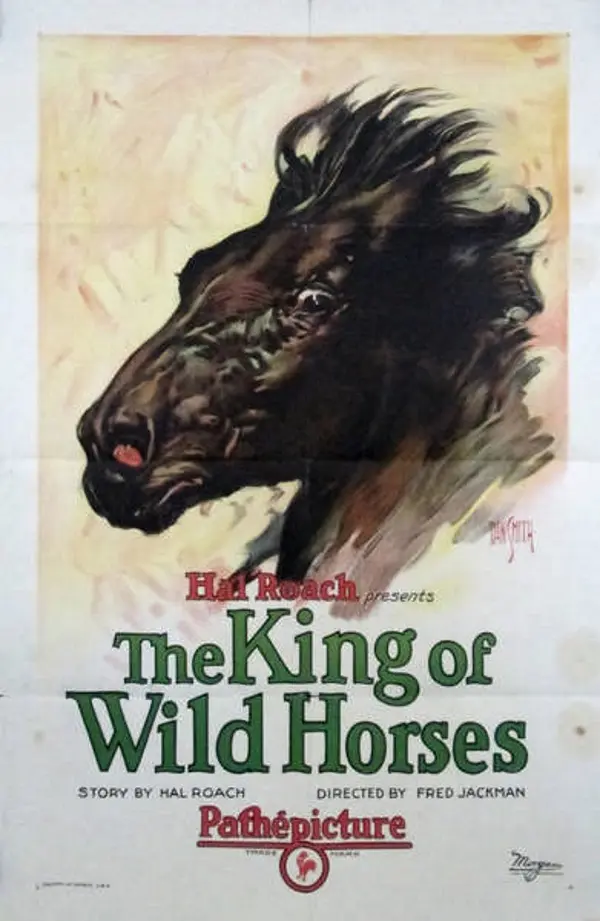
A definitive 6.5/10 rating for a film that redefined the boundaries of cult cinema. The King of Wild Horses remains a cornerstone of transgressive art.
Stepping back into the golden, dust-laden epoch of silent cinema, one encounters a peculiar magic, a narrative prowess that transcends the absence of spoken dialogue, relying instead on the sheer power of visual storytelling and the raw emotive force of its performers. Among these cinematic relics, The King of Wild Horses (1924) emerges as a fascinating artifact, a testament to the enduring allure of the American West and the captivating mystique of its most iconic inhabitant: the wild horse. This picture, brought to life by the creative minds of Carl Himm and Hal Roach, doesn't merely present a story; it unfurls a saga, a primal confrontation between the untamed spirit of nature and the relentless, often misguided, ambition of humankind. It's a film that, despite its age, still possesses a palpable energy, drawing viewers into a world where freedom is a tangible, galloping force.
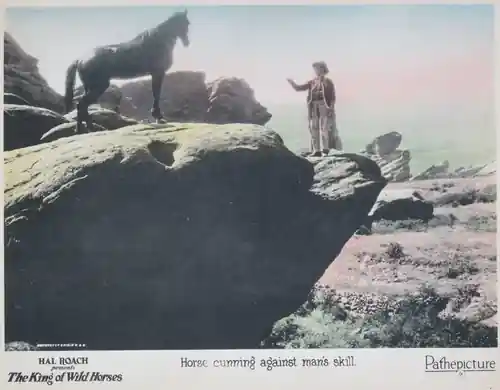
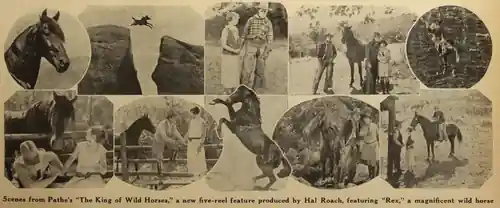
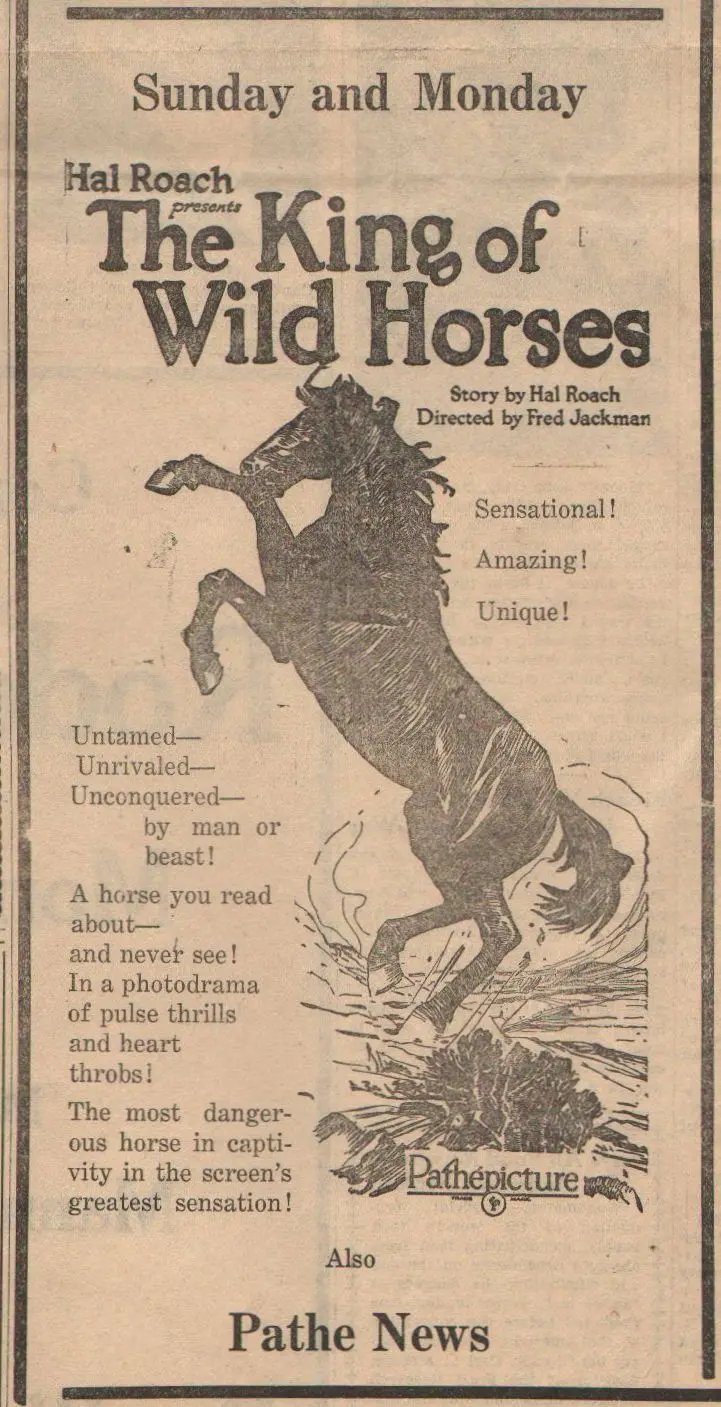
At the heart of this cinematic endeavor is "The Black," a magnificent stallion whose very name evokes a sense of both awe and impending challenge. He is not merely an animal; he is a symbol, a living, breathing embodiment of the wild frontier's unyielding essence. His leadership over a formidable band of wild horses is portrayed with a reverence that elevates him beyond simple beast to an almost mythic figure, a monarch of the plains whose reign is dictated by instinct and the boundless expanse of his domain. The film meticulously crafts this portrayal, allowing Rex, the equine star, to convey an extraordinary range of emotions and an undeniable presence that anchors the entire narrative. His every movement, from the thunderous charge across the prairie to the wary glance over his shoulder, speaks volumes, communicating a fierce independence that is both majestic and profoundly moving. It's a performance, if one can call it that for an animal, that rivals the intensity of any human actor, proving that charisma knows no species.
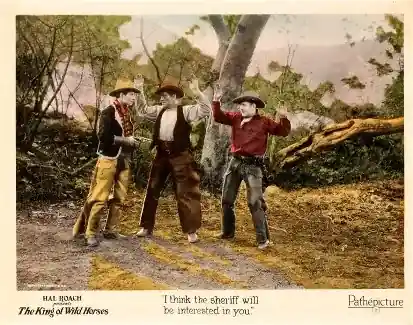
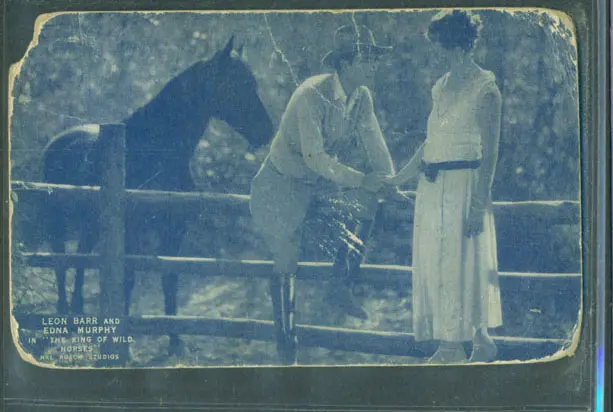
Opposing this force of nature is the archetypal cowboy, a figure driven by the singular, almost obsessive desire to capture and "break" The Black. This isn't just a pursuit; it's a deeply ingrained cultural imperative, a symbolic struggle that pits the pioneering spirit of conquest against the elemental right to remain wild. The human characters, including Charley Chase, Léon Bary, and Edna Murphy, navigate this landscape of ambition and consequence. Charley Chase, often celebrated for his comedic timing, here assumes a role that hints at a more dramatic depth, his determination etched onto his face as he grapples with the formidable challenge presented by the stallion. Léon Bary's portrayal adds another layer to the human element, embodying perhaps a different facet of frontier life, while Edna Murphy grounds the narrative with a touch of humanity and emotional resonance amidst the rugged action. These actors, through their expressions, gestures, and physical presence, carry the weight of the story without uttering a single word, a testament to the power of silent film acting. Their performances are not grandstanding but nuanced, conveying internal struggles and external pressures with remarkable clarity.
The writing by Carl Himm and Hal Roach, though lacking dialogue, constructs a surprisingly intricate narrative arc. They understand that the true drama lies not just in the chase, but in the psychological battle, the clash of wills. The screenplay orchestrates moments of breathtaking action alongside quieter, more contemplative scenes, allowing the audience to fully appreciate the vastness of the stakes. Hal Roach, primarily known for his comedic genius with Laurel and Hardy, demonstrates a remarkable versatility here, directing a feature that is both visually stunning and emotionally resonant. His vision for the Western landscape is expansive, treating it not just as a backdrop, but as an active participant in the story, a character in itself. The cinematography captures the raw beauty and unforgiving nature of the West, with wide shots that emphasize the smallness of man against the grandeur of the mountains and plains, and close-ups that highlight the fierce intelligence in The Black's eyes.
The thematic undercurrents of The King of Wild Horses are profoundly compelling. At its core, it's a meditation on freedom versus domestication, a timeless struggle that resonates deeply within the human psyche. The Black represents an idealized form of liberty, unburdened by societal constraints, living purely by instinct and the dictates of nature. The cowboy, conversely, embodies the human desire to tame, to control, to impose order upon the chaotic wild. This conflict extends beyond the immediate narrative, touching upon broader philosophical questions about humanity's place in the natural world. Is it our right to conquer and subdue, or should we marvel at and protect the untamed? The film doesn't offer easy answers, instead allowing the audience to witness the raw, often brutal, consequences of both perspectives. This nuanced approach elevates it beyond a simple adventure tale, imbuing it with a depth that lingers long after the credits roll.
Furthermore, the film can be viewed as an elegy for a vanishing frontier. By the 1920s, the "wild West" was rapidly becoming a romanticized memory, its vast expanses increasingly carved up and settled. The King of Wild Horses, therefore, captures a sense of nostalgia for a time when such untamed beauty was still prevalent, when the clash between man and nature was a daily reality rather than a cinematic spectacle. It plays into the mythology of the American West, contributing to the very narratives that would define the genre for decades to come. The film's pacing, characteristic of many silent-era action features, is often brisk, punctuated by exhilarating chase sequences that keep the audience on the edge of their seats. Yet, it also allows for moments of quiet reflection, particularly when focusing on The Black's solitary majesty, allowing the audience to absorb the visual poetry of the landscape.
In comparing The King of Wild Horses to its contemporaries, one finds both shared conventions and unique strengths. While films like Sunlight's Last Raid (which also explored themes of the Western frontier and human-animal relationships, albeit with a different focus) provided their own interpretations of the genre, The King of Wild Horses distinguishes itself through its singular focus on the equine protagonist. Where other Westerns might foreground human drama, this film dares to place an animal at its epicentre, trusting in the power of its visual representation to carry the emotional weight. Similarly, while a film such as The Evil Eye might delve into human obsession and pursuit, The King of Wild Horses elevates this pursuit to a more profound, almost spiritual level, where the prize is not just an object but an ideal. The sheer scale of the landscape, often a character in itself in Westerns, feels particularly pronounced here, echoing the vastness of the conflict.
The casting, beyond the central animal, is also noteworthy. Charley Chase, a name often synonymous with slapstick comedy, showcases a different facet of his abilities, proving that silent film actors were often far more versatile than their most famous roles might suggest. His earnestness in the pursuit of The Black lends credibility to the cowboy's relentless drive. Léon Bary and Edna Murphy, while perhaps not as widely remembered today, contribute significantly to the human drama, their interactions providing the necessary counterpoint to the animal's untamed existence. The film’s approach to character development, particularly for the human figures, relies heavily on visual cues and subtle acting, a hallmark of the era. The audience is invited to infer motivations and emotions from facial expressions and body language, a skill that silent cinema honed to an art form. This reliance on non-verbal communication fosters a more immersive experience, demanding active engagement from the viewer.
Considering other silent films of the era, the production values of The King of Wild Horses stand out. While not a grand historical epic like Sixty Years a Queen, nor a character study like The Foolish Age, it invests heavily in capturing authentic Western landscapes and ensuring the animal sequences are both thrilling and believable. The challenges of filming with wild or semi-wild animals in the 1920s were immense, yet the crew managed to create scenes that feel genuinely perilous and exhilarating. The film's technical execution, for its time, is commendable, demonstrating a commitment to realism within the bounds of a dramatic narrative. Even compared to more overtly narrative-driven films like Cameo Kirby, The King of Wild Horses carves out its own niche by foregrounding the natural world and the elemental conflict it inspires, rather than complex interpersonal dramas or intricate plot twists. Its simplicity is its strength, allowing the raw power of its central premise to shine through.
The enduring legacy of films like The King of Wild Horses lies in their ability to evoke a sense of wonder and connection to a bygone era. They remind us of the nascent stages of cinematic art, when filmmakers were experimenting with novel ways to tell stories, to move audiences without the crutch of synchronized sound. This film, in particular, contributes significantly to the iconography of the Western genre, solidifying the image of the wild horse as a symbol of untamed spirit and the vast, romanticized wilderness. It's a foundational text for understanding how the silent era shaped our collective imagination of the American frontier. The emotional resonance of The Black's struggle for freedom, and the cowboy's relentless pursuit, transcend the limitations of its medium, speaking to universal themes that remain relevant today. It's a narrative that continues to provoke thought about humanity's relationship with the natural world, and the eternal tension between civilization and the wild.
Ultimately, The King of Wild Horses is more than just a historical curiosity; it is a vibrant, compelling piece of cinema that stands as a testament to the power of visual storytelling. It captures the grandeur of the American West and the profound, almost spiritual, conflict between man and nature with an artistry that belies its silent origins. For those willing to immerse themselves in its wordless narrative, it offers a deeply rewarding experience, a powerful journey into the heart of the wild, and a poignant reflection on the price of freedom and the cost of conquest. It reminds us that sometimes, the most eloquent stories are told not with words, but with the thunder of hooves and the vast, silent sweep of the horizon.
IMDb 6.1
1922
Community
Log in to comment.