DbcultAccessing Vault...
Cult Review
Senior Film Conservator
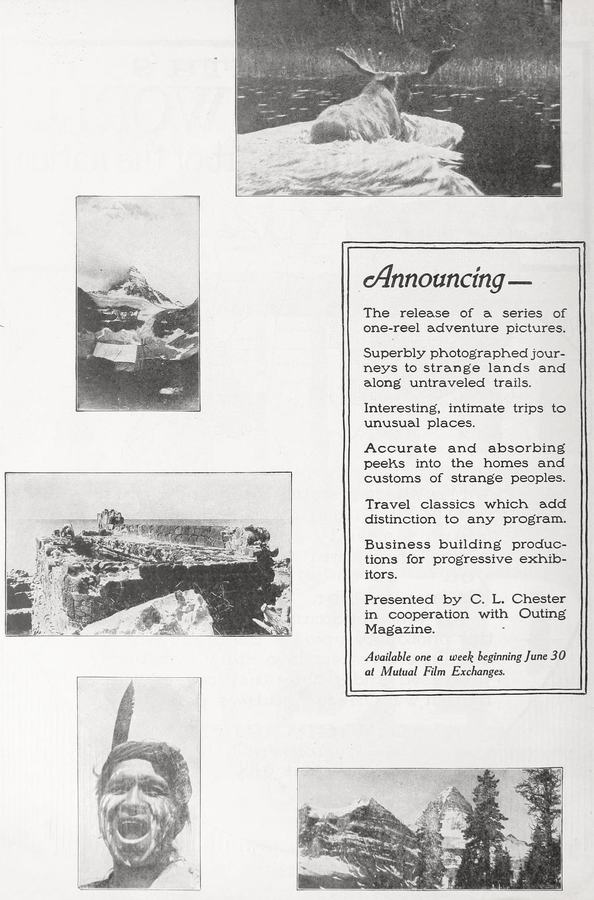
In the annals of early cinema, where the moving image was still finding its voice and defining its purpose, certain films emerged not just as entertainment but as profound acts of witness. Kaieteur, the Perfect Cataract stands as one such monumental achievement, a silent, black-and-white chronicle of an expedition that, even by today's standards, would be considered audacious. This isn't merely a film; it's a captured fragment of history, a visceral journey into a world largely untouched, and a testament to the indefatigable spirit of early 20th-century explorers and cinematographers. The very premise – C. L. Chester’s quest to photograph a waterfall five times the height of Niagara – resonates with an almost mythical grandeur, beckoning viewers into a narrative that transcends mere plot points to become an exploration of human will against the formidable might of the natural world.
The film, released in 1917, arrives at a curious juncture in global history. While the Western world was embroiled in the cataclysm of the Great War, Allies' Official War Review, No. 1 undoubtedly dominated newsreels, offering stark, often harrowing glimpses of trench warfare and nationalistic fervor. Yet, simultaneously, there was a profound human need to look beyond the immediate horrors, to seek out the sublime, the pristine, the untouched. Kaieteur, the Perfect Cataract provides that essential counterpoint, a breathtaking escape into the raw, untamed beauty of British Guiana. It’s a powerful reminder that even amidst chaos, the human spirit yearns for discovery, for the quiet majesty that exists independent of human conflict.
C. L. Chester, the central figure and likely the driving force behind this venture, embodies the quintessential explorer of his era. His expedition into the dense, unforgiving jungles of British Guiana was no casual stroll. It was an arduous undertaking, demanding immense physical fortitude, meticulous planning, and an almost reckless courage. Imagine the logistical nightmares: transporting heavy, cumbersome photographic equipment through swamps, over rivers, and across treacherous terrain, all without the aid of modern technology. Every step was a battle against the elements, against unseen dangers, against the sheer oppressive weight of the jungle itself. The film, in its silent eloquence, manages to convey this struggle, painting a vivid picture of a world where nature truly held dominion.
The very act of capturing moving images in such a remote and challenging environment was a feat of technological and human endurance. Early film cameras were bulky, hand-cranked devices, requiring constant attention and delicate handling. The preservation of film stock in humid, tropical conditions was another hurdle, not to mention the development process back in civilization. When we consider these factors, the clarity and scope of the images presented in Kaieteur, the Perfect Cataract become even more astonishing. It speaks to a dedication that borders on obsession, a singular focus on bringing the unseen wonders of the world to a curious public.
The narrative, while factual, unfolds with a dramatic tension usually reserved for fictional adventures. One can almost feel the humidity, hear the unseen creatures rustling in the undergrowth, and sense the growing anticipation as the expedition presses deeper into the wilderness. Unlike the contrived perils of a fictional narrative such as Miss Robinson Crusoe, where the dangers are fabricated for dramatic effect, the threats faced by Chester and his team were undeniably real. Disease, venomous creatures, navigation errors, and the sheer isolation of their endeavor loomed large, making every successful day a small victory.
And then, the revelation. Kaieteur. The very name evokes a sense of the ancient, the powerful. To encounter a waterfall five times the height of Niagara is to confront the sublime in its purest, most overwhelming form. The film’s climax, the visual unveiling of this natural wonder, must have been nothing short of breathtaking for audiences of the time. In an era before pervasive global media, before satellite imagery and instant communication, such a visual feast would have been an almost spiritual experience. It’s an immersion in raw, unadulterated power, a testament to the Earth’s enduring capacity for grandeur that humbles and inspires in equal measure. The sheer scale, the thundering roar (imagined, of course, in a silent film hall), the mist rising like a primeval breath – it all contributes to an unforgettable cinematic moment.
The genius of Chester’s work lies not just in reaching the destination but in capturing the journey itself. The film is a meticulous record of the indigenous flora and fauna, the challenging terrain, and the interactions with local populations who undoubtedly aided and guided the expedition. These elements add layers of anthropological and ecological significance, transforming the documentary into a valuable historical artifact. It offers a window into a specific place and time, preserving images that might otherwise have been lost to the relentless march of progress.
Comparing it to other films of its period further illuminates its unique standing. While narrative features like Easy Money or The Good for Nothing focused on social dramas and comedic escapades, Kaieteur ventured into the realm of pure, unadulterated reality, albeit filtered through the lens of early documentary filmmaking. It shares a spirit of grand ambition with films like His Own Home Town, but where that film explores the internal landscape of a man returning home, Kaieteur charts an external, geographical quest. The sheer audacity of its subject matter places it in a category all its own, distinct from the urban narratives or romanticized adventures that dominated the silver screen.
The visual composition throughout the film, even within the technical limitations of the era, is remarkably astute. Chester, or his primary cameraman, understood the power of the wide shot to convey scale and the intimacy of the close-up to reveal detail. The framing of the waterfall itself, undoubtedly from various vantage points, would have been crucial to impart its monumental size and dynamic force. One can imagine the carefully chosen angles, the patient waiting for the right light, the sheer physical effort involved in positioning the camera for each shot. It’s a testament to the nascent artistry of cinematography, demonstrating that even without sound, powerful visual storytelling was already taking root.
The film also touches upon themes of empire and colonial exploration, though perhaps unintentionally. British Guiana was, at the time, firmly under British rule, and Chester’s expedition, while ostensibly scientific and photographic, implicitly reinforces the prevailing imperial gaze. The 'discovery' of such a wonder by a Western explorer, even if already known to indigenous populations, was framed within a narrative of conquest and appropriation for Western consumption. This historical context, while not central to the film’s explicit plot, is an undeniable undercurrent that enriches a contemporary viewing, prompting reflections on who gets to 'discover' what, and for whom.
What must it have been like to experience Kaieteur, the Perfect Cataract in a bustling movie palace of 1917? The flickering images on the screen, accompanied by a live orchestra or piano, would have transported audiences far from their urban realities. The thunderous crescendo of music as the waterfall finally appeared, the hushed awe of the crowd – these unrecorded elements are crucial to understanding the full impact of such a film. It was more than just a moving picture; it was an immersive, multi-sensory event, a collective journey into the unknown. This communal experience of wonder is something often lost in our modern, individualized consumption of media.
The enduring legacy of Kaieteur, the Perfect Cataract lies in its pioneering spirit. It paved the way for countless nature documentaries and adventure films, demonstrating the power of cinema to educate, inspire, and transport. It stands as a proto-IMAX experience, a grand spectacle designed to overwhelm the senses with the majesty of the natural world. While contemporary audiences might be accustomed to high-definition color footage and sophisticated digital effects, the raw authenticity and sheer effort encapsulated in Chester’s silent expedition retain a profound resonance. It reminds us of a time when the world still held vast, uncharted territories, and the act of seeing them, let alone filming them, was an extraordinary feat.
In a cinematic landscape often dominated by narrative structures, whether the moral quandaries of The Disciple or the psychological depths of The Black Butterfly, Kaieteur offers a different kind of drama: the drama of reality. It’s a compelling argument for the intrinsic value of documentary filmmaking, a genre that seeks not to invent but to reveal. It captures not just a place, but an era – an era of grand exploration, technological innovation, and an insatiable human curiosity about the furthest reaches of our planet. This film, though silent, speaks volumes about the human desire to confront, understand, and ultimately, capture the untamed beauty of Earth.
The film’s focus on a singular, monumental natural phenomenon also draws a fascinating parallel with the human-centric narratives of the time. While films like The Heart of a Police Officer or The Idol of the Stage celebrate individual human endeavors and emotions, Kaieteur elevates nature itself to the status of a protagonist, a sublime force worthy of cinematic veneration. C. L. Chester becomes less of a hero in the traditional sense and more of a conduit, a dedicated observer whose purpose is to bring this natural marvel to the wider world. His journey is a pilgrimage, and the waterfall, his sacred destination. This shift in focus from human drama to natural spectacle was, and remains, a powerful artistic choice.
Considering the constraints of its production – the weight of equipment, the lack of infrastructure, the sheer physical toll on the human body – the film's existence is a miracle in itself. It’s a testament to the pioneering spirit not only of explorers but of early filmmakers who saw the potential of the camera to document and preserve. In an age where digital cameras are ubiquitous and geographical barriers seem to have dwindled, Kaieteur, the Perfect Cataract serves as a poignant reminder of the true cost and monumental effort involved in capturing such images a century ago. It’s a cinematic relic that continues to inspire awe, not just for its subject matter, but for the sheer human audacity that brought it into being. Its place in film history is assured, not merely as a curiosity, but as a foundational piece of documentary art, a daring visual symphony celebrating the untamed heart of our world.
IMDb 5.3
1931
Community
Log in to comment.