DbcultAccessing Vault...
Cult Review
Senior Film Conservator
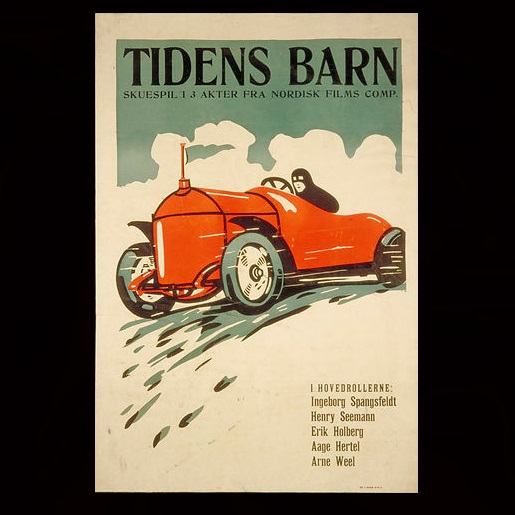
Step back into an era when moving pictures spoke volumes without uttering a single word, when emotions were writ large across faces and grand gestures conveyed the weight of human experience. We delve today into the profound depths of Tidens Barn, a Danish cinematic marvel whose title, 'Child of Time,' resonates with an almost prophetic accuracy. This isn't merely a film; it's a meticulously crafted social commentary, a visceral exploration of morality, hypocrisy, and the unyielding spirit of a woman caught in the unforgiving machinery of early 20th-century societal judgment. Penned by the insightful Otto Rung, this silent drama transcends its historical context to speak to universal truths about human frailty and resilience. To truly appreciate its genius, one must discard modern cinematic conventions and embrace the immersive, often melodramatic, power of its storytelling.
At its core, Tidens Barn presents the harrowing journey of Elsa, brought to life with heartbreaking vulnerability and defiant strength by Ingeborg Spangsfeldt. Her portrayal is a masterclass in silent acting, her eyes conveying volumes of hope, despair, and ultimately, an unshakeable resolve. Elsa begins as an embodiment of youthful aspiration, a vibrant spirit from the tranquil countryside, drawn to the glittering promise of the city, believing it holds the key to her artistic dreams. Her initial encounters are steeped in a deceptive glamour, orchestrated by Baron von Hertel, played with insidious charm and chilling detachment by Aage Hertel. Hertel's Baron is not a cartoonish villain, but a far more dangerous archetype: the respected figure whose benevolence is merely a veneer for exploitation, a predator cloaked in societal approval. His manipulation of Elsa, promising her a grand stage for her singing talent, is a slow, insidious process, gradually eroding her innocence until she finds herself irrevocably compromised, abandoned, and pregnant with his child, Lille Hans.
The film then shifts focus to the crushing weight of societal condemnation. Elsa's 'fall' is not merely a personal tragedy; it's a public spectacle, a lesson for all those who dare to stray from prescribed moral paths. The city, once a beacon of hope, transforms into a labyrinth of scorn and ostracization. This aspect of the narrative resonates deeply with other films of the era that tackled similar themes of social disgrace and moral judgment. One cannot help but draw parallels to films like The Social Leper, which similarly dissected the brutal consequences of societal outcasting, or As a Woman Sows, where the moral choices of women are put under an unforgiving spotlight, often leading to tragic outcomes. Tidens Barn, however, distinguishes itself by the sheer visceral intensity of Elsa's struggle, making her plight not just a narrative device but a deeply felt experience for the audience.
The supporting cast forms a fascinating microcosm of the society Elsa navigates. Erik Holberg, as Dr. Erik Holm, embodies the agonizing dilemma of a good man caught between personal integrity and rigid social decorum. His character represents the internal conflict faced by many who witnessed injustice but were paralyzed by fear of reprisal or social ostracization. Holm, Elsa's former suitor, finds her in her darkest hour, his compassion battling against the ingrained prejudice of his professional and social circles. This internal struggle is subtly yet powerfully conveyed through Holberg's nuanced expressions, a testament to the sophistication of silent film acting. His desire to help is palpable, yet his hesitation speaks volumes about the pervasive power of public opinion.
Contrasting with Holm's conflicted benevolence is the unwavering, albeit often ineffectual, support of Carl Jensen, portrayed by Henry Seemann. Seemann's Jensen is the embodiment of working-class honesty and quiet steadfastness. He observes Elsa's descent with a clear-eyed understanding, offering a hand not out of romantic interest or social obligation, but from a genuine sense of human empathy. His presence provides a crucial counterpoint to the judgmental chorus, suggesting that true virtue often resides in unexpected corners, far from the gilded halls of power or the self-righteous pronouncements of the elite. This dynamic interplay between characters highlights Rung's keen understanding of social strata and the varied ways individuals react to moral crises. The film doesn't offer easy answers; instead, it presents a complex tableau of human behavior, forcing the audience to ponder the true meaning of compassion and justice.
On the other end of the spectrum stands Henny Lauritzen as Matron Johansen, a character who perfectly encapsulates the era's rigid, often hypocritical, moral guardianship. Lauritzen's portrayal is formidable, her stern countenance and unyielding demeanor projecting an aura of absolute conviction in her own righteousness. Matron Johansen is not merely a judgmental figure; she is an active force in Elsa's ostracization, a symbol of the institutionalized prejudice that crushes individual lives in the name of preserving social order. Her actions serve as a stark reminder of the devastating power of collective judgment, particularly when wielded by those who believe themselves to be morally superior. This character's impact is not just on Elsa, but on the audience, challenging them to question the very foundations of such uncompromising moral codes. One might even see echoes of the oppressive social structures depicted in films like The Monster and the Girl, where societal 'monstrosity' is often found not in the outwardly grotesque, but in the heartless judgment of the seemingly respectable.
The brilliance of Tidens Barn extends beyond its narrative and performances into its masterful visual storytelling. While Otto Rung is credited as the writer, the directorial hand (whether his own or another's, under his strong influence) demonstrates an acute understanding of how to leverage the silent medium for maximum emotional impact. The cinematography, though perhaps rudimentary by today's standards, is remarkably effective. Close-ups on Spangsfeldt's expressive face, particularly during moments of profound despair or defiant love for her child, are devastatingly effective, allowing the audience an intimate glimpse into her tortured soul. The use of shadow and light, a hallmark of early cinema, is employed to great effect, often mirroring Elsa's internal state or the moral ambiguity of her surroundings. Dark, oppressive shadows frequently engulf her during her lowest points, while fleeting moments of light signify hope or the purity of her maternal bond. The set designs, from the rustic charm of the village to the opulent yet morally corrupt salons of the Baron, and finally to the squalid tenements where Elsa finds herself, are meticulously crafted to underscore the vast social chasm she traverses.
The pacing of the film is deliberate, allowing moments of quiet reflection to imbue the more dramatic sequences with greater weight. Intertitles are used sparingly but powerfully, providing crucial narrative beats and occasionally offering profound, almost poetic, commentary on the unfolding events. This careful balance ensures that the audience remains deeply invested in Elsa's fate, feeling every blow and celebrating every small victory. The film’s exploration of themes like maternal love, societal hypocrisy, and individual resilience is remarkably sophisticated for its time. Elsa's unwavering devotion to Lille Hans, despite her own suffering, forms the emotional bedrock of the film, elevating it beyond a simple melodrama into a profound testament to the strength of the human spirit. This central theme of a mother's sacrifice and enduring love can be seen in other powerful films of the era, such as Mother o' Mine, which similarly celebrated the fierce protective instinct of motherhood against overwhelming odds.
What makes Tidens Barn enduringly relevant is its unflinching gaze at the mechanisms of social judgment. It dissects how quickly a person can be condemned, not for inherent malice, but for transgressing arbitrary societal norms, particularly when those norms are enforced by a powerful, self-righteous elite. The Baron, despite his clear moral failings, largely escapes public censure, his status shielding him, while Elsa bears the full brunt of society's wrath. This glaring double standard is a central critique of the film, challenging the audience to look beyond superficial morality and consider the true nature of justice and compassion. The film doesn't shy away from depicting the grim realities of Elsa's struggle, but it also imbues her with an inner fortitude that ultimately allows her to reclaim her dignity, if not her former social standing. Her redemption is not granted by society, but earned through her own perseverance and unwavering love for her child. This narrative choice is particularly potent, suggesting that true liberation comes from within, rather than from external validation.
The power dynamics explored in Tidens Barn also invite comparisons to films that delve into the manipulation of individuals by more powerful forces. One might consider the psychological grip depicted in Trilby, where an innocent is ensnared by a manipulative figure. While the nature of the manipulation differs, the core theme of an individual's agency being compromised by a more dominant will is strikingly similar. The film masterfully uses its narrative to highlight how easily power can corrupt and how vulnerable individuals, especially women, were to societal and economic pressures in that era. The lack of legal recourse or social safety nets for someone in Elsa's position makes her struggle all the more harrowing and her eventual resilience all the more inspiring. Her journey is a testament to the fact that even in the darkest of times, the human spirit possesses an incredible capacity for endurance and self-definition.
In an era often dismissed as primitive in cinematic terms, Tidens Barn stands as a towering achievement of emotional depth and social consciousness. It is a film that demands engagement, rewarding the attentive viewer with a rich tapestry of human experience. The performances, particularly Spangsfeldt's, are deeply affecting, conveying a range of emotions with a precision that belies the absence of spoken dialogue. The film's message, that true character is revealed not in adherence to rigid dogma but in compassion and resilience, remains profoundly relevant. It prompts us to reflect on our own societal biases, the ease with which we judge, and the courage it takes to stand against the tide of popular opinion. This is not just a historical artifact; it is a living, breathing commentary on the human condition, a reminder that the 'children of time' are forever shaped by the societies they inhabit, yet possess the power to forge their own paths, however arduous.
The meticulous attention to detail in its production, from the authentic period costumes to the evocative sets, transports the audience directly into the world of early 20th-century Denmark. Every frame feels deliberate, contributing to the overall atmosphere of both beauty and despair. The climax of the film, whether a dramatic courtroom confrontation or a poignant personal revelation, serves as a powerful release of tension, affirming Elsa's hard-won autonomy. It’s a narrative arc that speaks to the enduring power of hope against overwhelming odds, a theme that resonates across all generations. Tidens Barn is a vital piece of cinematic history, a testament to the artistry and social conscience of its creators, and a powerful reminder that some stories, told without words, can echo through time with an unparalleled resonance. Its themes are as fresh and pertinent today as they were upon its initial release, making it a film truly deserving of rediscovery and profound appreciation.
IMDb —
1920
Community
Log in to comment.