DbcultAccessing Vault...
Cult Review
Senior Film Conservator
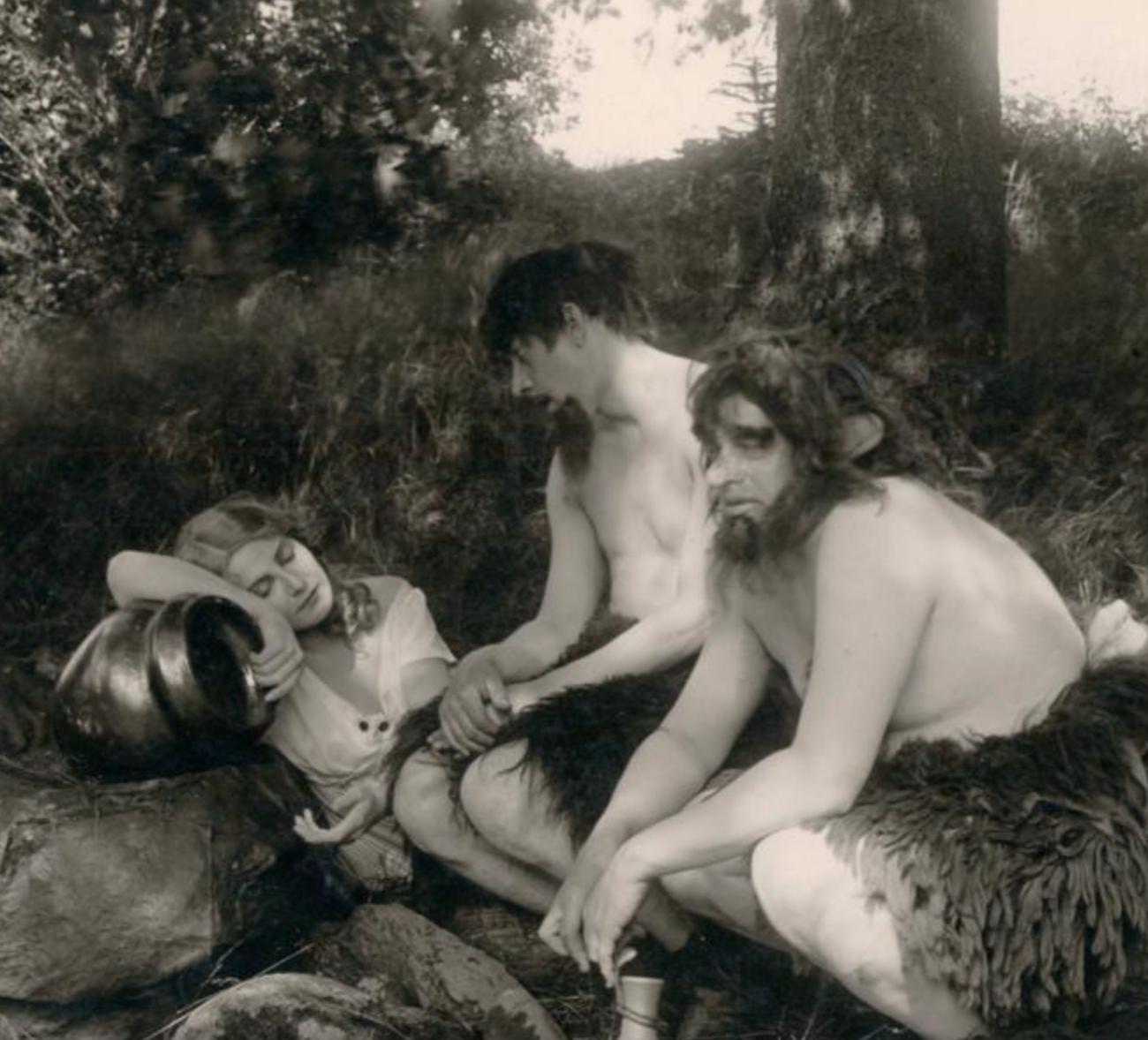
Stepping back into the nascent days of cinema, one encounters works that, despite their technological limitations, pulsate with an artistic ambition that rivals any contemporary production. Among these venerable relics, Vilhelm Glückstadt and Stellan Rye's 1913 Danish silent film, The Isle of the Dead (Dødeøen), emerges not merely as a historical artifact but as a profoundly evocative piece of allegorical storytelling. Inspired by Arnold Böcklin’s iconic painting of the same name and Adam Oehlenschläger’s poetic interpretations, this film transcends its period constraints to deliver a timeless contemplation on the eternal struggle between light and shadow, purity and corruption.
The very premise of The Isle of the Dead is rooted in an extraordinary artistic lineage. Böcklin’s series of five paintings, particularly the first, depicting a solitary boatman ferrying a white-clad figure and a coffin towards a rocky, cypress-laden island, is one of the most recognized and reproduced images in art history. It’s a vision steeped in melancholy, mystery, and an almost palpable sense of finality. To adapt such a static, yet profoundly atmospheric, work into a moving picture was an audacious undertaking for its time. The film’s writers, including Oehlenschläger himself (posthumously, through his poem), Stellan Rye, Vilhelm Glückstadt, and Palle Rosenkrantz, faced the formidable challenge of injecting narrative dynamism into a concept inherently about stillness and contemplation. They chose to build a stark, moralistic drama around the painting’s evocative power, transforming its existential dread into a palpable conflict of good versus evil.
This deep artistic foundation sets The Isle of the Dead apart from many of its contemporaries. While films like From the Manger to the Cross or Life and Passion of Christ sought to dramatize biblical narratives, and epics like Cleopatra or Quo Vadis? aimed for historical spectacle, The Isle of the Dead ventures into the realm of pure allegory, using its visual source material as a springboard for a spiritual battle. The film’s ambition wasn't merely to recount a story but to evoke a mood, to translate the profound symbolism of Böcklin’s canvas into a living, breathing cinematic experience. It becomes a testament to the early filmmakers' understanding that cinema could be more than mere documentation; it could be a vehicle for abstract thought and emotional resonance.
At the heart of the film’s conflict is Prince Udo, portrayed with chilling efficacy by Richard Jensen. Jensen, a staple of early Danish cinema, embodies Udo not as a mustache-twirling villain of melodrama, but as a more insidious, almost spectral force of malevolence. His evil is not born of grand schemes but rather an inherent, corrupting influence that seems to emanate from his very being and the island he commands. Udo’s performance relies heavily on subtle gestures, piercing gazes, and a general aura of oppressive stillness that hints at a deep-seated depravity. In an era where acting often veered towards overt theatricality, Jensen manages to convey a quiet, menacing power that feels remarkably modern. He is less a personification of evil and more an embodiment of its pervasive nature, a dark lord whose dominion is psychological as much as it is territorial. His presence alone seems to drain the vibrancy from the screen, setting a somber tone that permeates every frame.
Opposing Udo’s darkness is Flora, played by the luminous Gudrun Houlberg. Houlberg’s Flora is the epitome of innocence and nascent purity. As the goddaughter of the gardener, she represents a connection to nature, to untainted beauty, and to a spiritual light that Udo seeks to extinguish. Her performance is delicate yet resolute, conveying vulnerability without weakness. Flora’s struggle is not just against Udo’s direct advances but against the pervasive gloom and spiritual decay that he represents. Her presence on the island is a challenge to its established order, a vibrant splash of color in a monochromatic world. The narrative hinges on whether her innate goodness can withstand the prince’s corrupting influence, a tension that Houlberg skillfully maintains through her expressive acting, a hallmark of silent cinema that demanded actors convey complex internal states through external physicality and facial nuance. Her character becomes the moral compass, the fragile hope amidst the encroaching despair, making her journey a captivating and emotionally resonant experience.
Beyond its human protagonists, the titular Isle of the Dead itself functions as a central character, a brooding, atmospheric entity that dictates much of the film’s mood and narrative progression. The filmmakers masterfully recreate the visual essence of Böcklin’s painting, transforming a static image into a dynamic, yet still haunting, landscape. The island is depicted as a place of stark contrasts: moments of serene natural beauty are juxtaposed with shadowy groves and ominous architectural features that hint at its darker, more ancient history. The cinematography, though rudimentary by today’s standards, effectively captures the island’s isolation and its almost mystical quality. Long shots emphasize its remoteness, while closer compositions highlight the oppressive grandeur of Udo’s domain. The play of light and shadow, a crucial element in silent film to convey mood, is expertly utilized here, with Flora often bathed in soft, ethereal light, while Udo lurks in deeper, more forbidding gloom.
This environmental storytelling elevates the film beyond a simple good-versus-evil tale. The island becomes a microcosm of the human soul, a battleground where the forces of grace and depravity contend for supremacy. Its craggy cliffs, ancient trees, and secluded coves are not just backdrops; they are extensions of the characters’ internal states, mirroring the spiritual turmoil unfolding within. The film's ability to imbue its setting with such potent symbolic weight is a testament to the visionary direction of Glückstadt and Rye, who understood that in silent cinema, atmosphere and visual allegory could speak volumes where dialogue could not. It’s a technique that echoes in other visually driven films of the era, such as The Student of Prague, which similarly used its urban landscape to reflect psychological fragmentation and moral decay. The island's ominous presence foreshadows the looming conflict and intensifies the sense of peril that Flora faces, making every corner of this isolated world feel charged with significance.
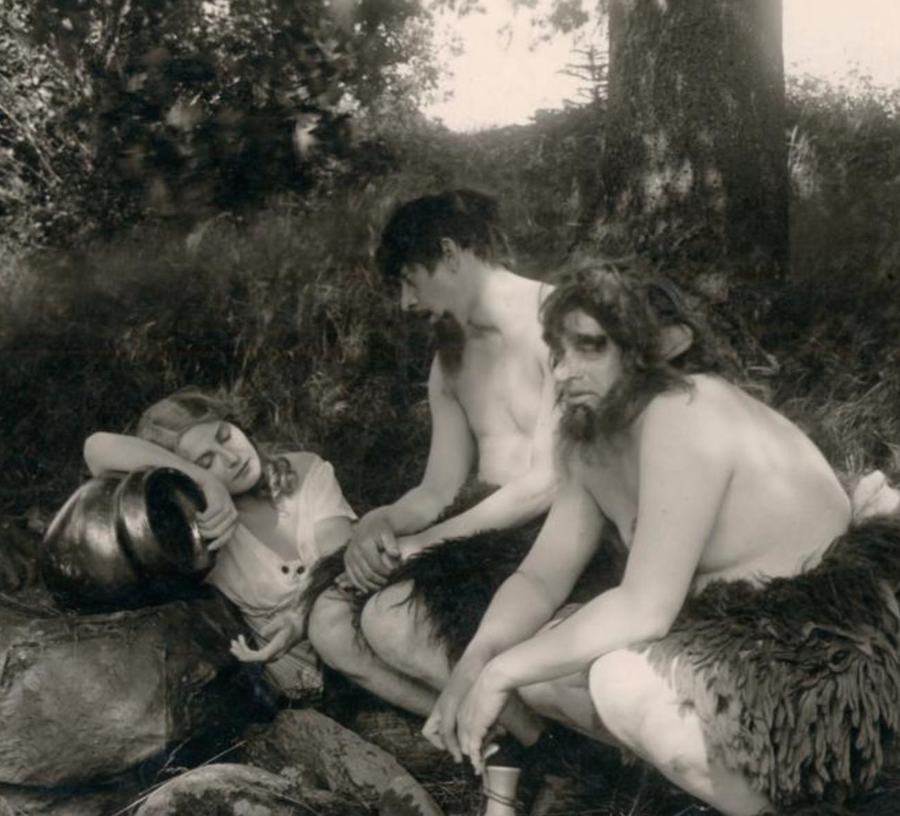
The technical prowess displayed in The Isle of the Dead, while characteristic of the early 20th century, still commands respect. The pacing is deliberate, allowing the audience to absorb the visual information and the emotional weight of each scene. Intertitles are used sparingly but effectively, serving to advance the plot or articulate internal monologues that would otherwise be lost. Crucially, the film relies heavily on visual symbolism to convey its complex themes. The white attire of Flora against Udo’s darker garments, the flourishing garden contrasted with the sterile, imposing architecture of the prince’s castle, and the changing light reflecting the ebb and flow of the spiritual battle—all contribute to a rich tapestry of meaning. This sophisticated use of visual language is a hallmark of truly great silent cinema, demonstrating an understanding that the medium's unique strengths lay in its ability to communicate through imagery and performance.
The directors, Glückstadt and Rye, along with their cinematographers, crafted a world that feels both real and dreamlike, a challenging balance to strike without spoken words or complex special effects. The camera work, though often static, is thoughtfully composed, guiding the viewer’s eye to the pertinent details. The dramatic tension builds not through rapid-fire editing but through sustained shots that allow the actors’ expressions and the mise-en-scène to tell the story. This measured approach creates an immersive experience, inviting contemplation rather than mere passive observation. It's a masterclass in how to build suspense and convey emotional depth through purely visual means, a lesson that many later filmmakers would do well to revisit. The film showcases the incredible artistry and ingenuity that defined the silent era, proving that a lack of sound did not equate to a lack of voice or profound narrative capability.
While The Isle of the Dead may not be as widely known as some of its more sensational contemporaries, its artistic merit and thematic depth secure its place in the annals of early cinema. It stands as a powerful example of how European filmmakers, particularly those from the Nordic countries, were experimenting with narrative forms and visual aesthetics that pushed the boundaries of the nascent medium. The film’s allegorical nature and its focus on an intense, almost psychological struggle between good and evil find parallels in other German Expressionist works that would emerge in the following decade, hinting at a shared artistic consciousness across national borders.
Comparing it to the more overt supernatural elements of a film like Vampyrdanserinden (The Vampire Dancer), released just a year prior, reveals a nuanced difference. While both dabble in darker themes, The Isle of the Dead’s horror is more existential, more psychological, rather than relying on overt genre tropes. It’s a slow-burn dread, a pervasive sense of corruption rather than jump scares or overt monstrousness. This makes it a fascinating precursor to later psychological thrillers, demonstrating that the terror of the unseen and the insidious can be far more potent than any overt display of evil.
Furthermore, the film's reliance on a singular, isolated setting to amplify its dramatic stakes is a narrative device that has been utilized countless times since. The confinement of the characters to the island intensifies their interactions and makes escape seem impossible, thus heightening the tension. This strategic use of locale to mirror internal conflict is a sophisticated storytelling technique, underscoring the film’s innovative spirit. Its influence, though perhaps not directly traceable to specific later works, lies in its contribution to the evolving cinematic language, particularly in its exploration of how art could be adapted and reinterpreted through the lens of a camera, offering new dimensions to established cultural touchstones.
In conclusion, The Isle of the Dead is far more than a mere curiosity from the silent era; it is a meticulously crafted work of art that leverages its inspirations to tell a compelling and universally resonant story. The performances of Richard Jensen and Gudrun Houlberg anchor the allegorical struggle, imbuing their archetypal characters with genuine emotional weight. The island itself, a character of profound symbolic significance, becomes a silent witness and active participant in the unfolding drama. Its visual splendor, even in its restored forms, is undeniable, proving that early cinema possessed an innate capacity for breathtaking artistry.
For enthusiasts of film history, art history, or simply profound storytelling, The Isle of the Dead offers a rich, rewarding experience. It serves as a potent reminder that the core tenets of cinematic excellence—compelling characters, evocative settings, and thematic depth—were being explored and perfected even in the medium’s earliest days. It's a film that asks us to look beyond the surface, to contemplate the eternal dance between good and evil, and to appreciate the enduring power of art to inspire and transform across different mediums. Its legacy is not just in its existence, but in its eloquent articulation of a timeless human struggle, rendered with an aesthetic sensitivity that continues to captivate and provoke thought over a century later. It remains a testament to the fact that some stories, and some artistic visions, are truly immortal, echoing across generations and resonating deeply with the human condition.
IMDb 6.2
1932
Community
Log in to comment.