DbcultAccessing Vault...
Cult Review
Senior Film Conservator
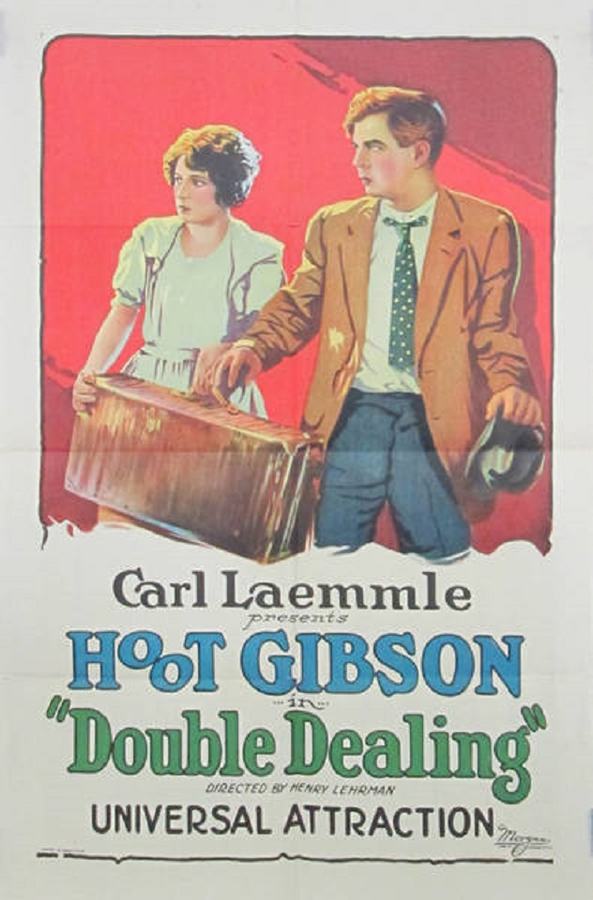
Stepping back into the flickering glow of the silent era always offers a unique cinematic pilgrimage, and Double Dealing, a 1923 offering penned by George C. Hull and Henry Lehrman, presents a fascinating vignette of its time. It’s a film that, despite its relatively straightforward premise, manages to weave a surprisingly intricate tapestry of class dynamics, unexpected heroism, and the ever-present threat of avarice lurking beneath the veneer of Gilded Age prosperity. This isn’t merely a relic; it’s a vibrant, if silent, testament to the storytelling prowess of early Hollywood, showcasing how compelling narratives could be crafted without a single spoken word, relying instead on the nuanced performances and the visual language of the camera.
The central conflict revolves around a wealthy young man, whose inherited fortune becomes the magnetic north for a band of opportunistic criminals. This isn't a fresh premise, even for 1923; the idea of a naive or vulnerable aristocrat being targeted by unscrupulous elements is a well-trodden path in fiction. However, Double Dealing distinguishes itself by shifting the locus of agency. Instead of the young man himself rising to the occasion, or a dashing detective swooping in, the narrative thrust is unexpectedly provided by his servant girl. This choice is particularly resonant when considering the social stratification of the period. Servants, often relegated to the background, were the unseen architects of daily life, privy to the intimate details of their employers' existences, yet rarely given a voice or a position of influence. Here, she becomes the linchpin, the quiet sentinel against encroaching danger.
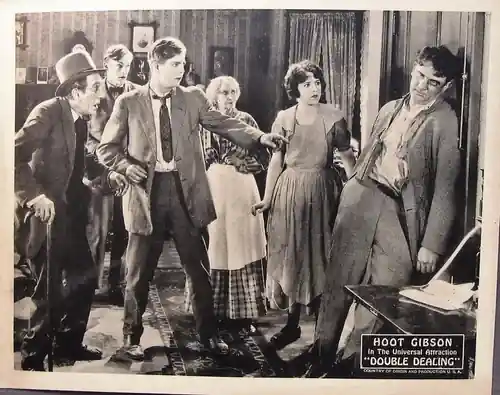
The film’s strength lies in its meticulous portrayal of this often-overlooked character. While the specifics of her background remain largely unspoken, her actions speak volumes. She isn't a caricature of subservience; rather, she embodies a blend of loyalty, intelligence, and pragmatic courage that feels remarkably modern. One could draw parallels to the resourceful, often underestimated female protagonists found in some of the more progressive films of the era, though perhaps less overtly flamboyant than a character in a romp like The Jest of Talky Jones. Her heroism is not born of a desire for glory, but from a profound sense of duty and perhaps a keen understanding of the precariousness of her own position should her employer’s fortunes collapse. This subtle motivation adds a layer of depth that elevates the film beyond a simple crime caper.
The ensemble cast, a vibrant tapestry of silent film talent, contributes significantly to the film’s texture. Hoot Gibson, known for his cowboy roles, brings a certain rugged authenticity, even if his character isn't a traditional Western hero here. His presence grounds the film in a recognizable cinematic sensibility of the time. Helen Ferguson, often lauded for her dramatic performances, likely imbues the servant girl with the necessary gravitas and inner strength, making her quiet resolve believable. It’s in these subtle facial expressions and carefully choreographed movements that the emotional core of silent cinema truly resides. Gertrude Claire and Otto Hoffman, seasoned character actors, undoubtedly lend their considerable experience to fleshing out the supporting roles, whether as additional household staff or members of the criminal contingent, adding layers of credibility to the unfolding drama. One can imagine their nuanced pantomime conveying volumes without a single intertitle, a hallmark of truly accomplished silent film acting.
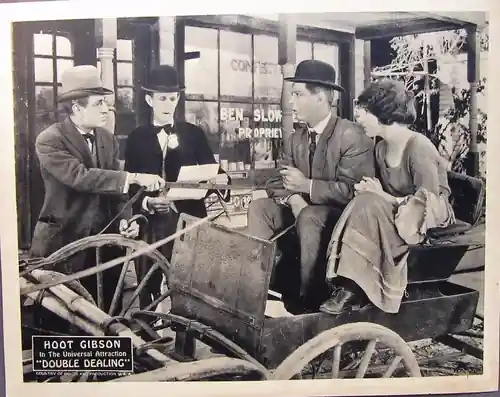
The writing by Hull and Lehrman, while adhering to the conventions of the era, demonstrates a commendable understanding of pacing and suspense. The plot isn't just a series of events; it's a carefully orchestrated escalation of threats and countermeasures. The criminals are not mere thugs; they employ a degree of cunning that necessitates an equally astute response. This intellectual sparring between the forces of good and evil is what truly drives the narrative. It avoids the simplistic good-vs-evil dichotomy often found in less sophisticated fare, opting instead for a battle of wits. The way the criminals attempt to double deal—a term that perfectly encapsulates their deceptive strategies—is depicted with a certain theatrical flair, typical of the period’s dramatic sensibilities.
Visually, the film, even in its possibly incomplete or degraded forms that survive today, would have leveraged the grandeur of its setting. The opulent mansion, with its ornate furnishings and sprawling spaces, would have served as a character in itself, a symbol of the wealth under siege. The use of light and shadow, essential tools in silent film cinematography, would have been crucial in building suspense, highlighting hidden figures, and emphasizing moments of clandestine activity. Think of the way shadows can dance and distort in a film like The Eye of Envy, creating an atmosphere thick with foreboding. The director’s choices in framing and editing would have guided the audience’s gaze, revealing key clues or withholding information to heighten tension. The visual storytelling, stripped of dialogue, demands a heightened sense of theatricality and precision, and Double Dealing, by all accounts, rises to this challenge.
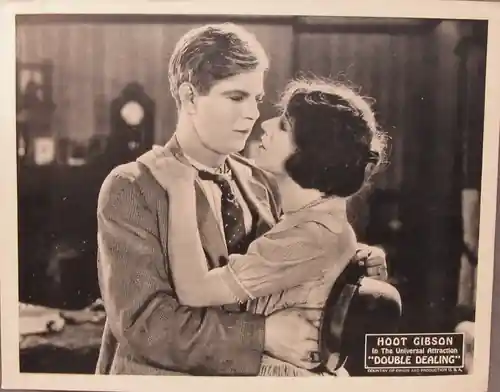
Comparing Double Dealing to other films of its epoch reveals its unique place. While it shares thematic elements of crime and intrigue with films like A Man's Home, its focus on the 'hidden' hero from within the domestic sphere offers a fresh perspective. Unlike the more boisterous, overtly action-packed escapades of a film such as High Speed, the thrills here are often more psychological, relying on suspense and clever maneuvering rather than pure velocity. The film’s exploration of class and duty, though not as overtly political as something like Birth Control or The Caillaux Case, nonetheless provides a subtle commentary on social structures and individual agency within them. The quiet defiance of the servant girl against external threats to her employer's stability resonates with an understated power, making her a compelling figure against the backdrop of an uncertain world.
The narrative’s progression is marked by a series of escalating confrontations. The initial attempts by the criminals might be subtle, perhaps involving forged documents or whispered threats, gradually building to more audacious acts of intrusion. The servant girl’s responses, too, would evolve, moving from cautious observation to decisive, often dangerous, intervention. This dynamic interplay between the aggressors and the protector forms the dramatic core. One can envision scenes of her stealthily observing the villains, perhaps hiding behind a curtain or peeking through a keyhole, her face a mask of determination. These moments, devoid of sound, rely entirely on the actor's ability to convey thought and emotion through gesture and expression, a testament to the artistry of silent film performers like Helen Ferguson. Her unspoken communication with the audience would have been paramount in conveying the stakes.
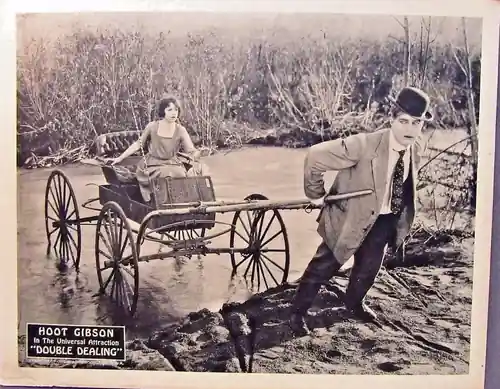
The film also provides a glimpse into the prevailing attitudes towards wealth and its protection. In an era before sophisticated security systems were commonplace, personal loyalty and vigilance were often the primary deterrents against crime. The very premise of the film underscores this vulnerability, making the servant girl’s role not just heroic, but also historically accurate in its reflection of societal realities. Her actions speak to a broader truth about the often-unacknowledged contributions of those in service roles, who frequently bore witness to, and sometimes intervened in, the dramas of their employers’ lives. It's a reminder that heroism isn't exclusive to the privileged or the powerful; it can bloom in the most unexpected corners of society.
The climax of Double Dealing would undoubtedly be a high-stakes affair, a culmination of the earlier machinations and a final, decisive showdown. Whether it involves a daring chase, a clever trap, or a dramatic reveal, the resolution would need to satisfy the build-up of tension. The successful fending off of the criminals by the servant girl would not only secure the young man’s property but also subtly redefine their relationship, perhaps imbuing it with a newfound respect and understanding that transcends their conventional roles. This kind of resolution, where the tables are turned not through brute force but through ingenuity and character, is far more satisfying than a simple victory of might over wrong.
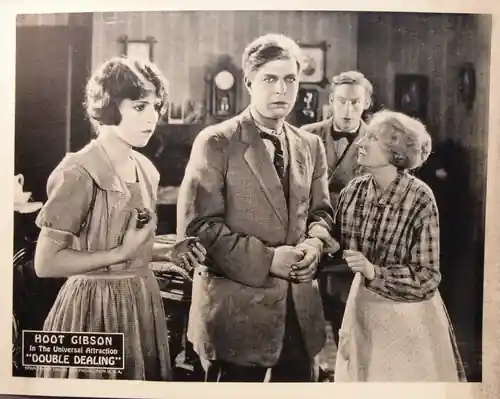
Reflecting on the legacy of films like Double Dealing, one recognizes their invaluable contribution to the cinematic lexicon. They are not merely historical artifacts but foundational texts that informed and shaped the narrative techniques we see in modern cinema. The visual grammar developed during the silent era—the close-ups, the cross-cutting, the dramatic lighting—are all present in nascent form, demonstrating how filmmakers were already pushing the boundaries of storytelling. The performances, too, are a masterclass in non-verbal communication, relying on exaggerated yet heartfelt expressions to convey complex emotions. Actors like John Francis Dillon and Eddie Gribbon, alongside the aforementioned cast, would have been instrumental in breathing life into these roles, making the villains truly menacing and the heroes genuinely sympathetic.
In an age where cinematic experiences are often defined by explosive special effects and rapid-fire dialogue, revisiting a film like Double Dealing is a refreshing reminder of the enduring power of a well-told story and compelling characterizations. It’s a testament to the ingenuity of early filmmakers who, with limited technological means, managed to craft narratives that continue to resonate. The film, in its quiet determination and unassuming heroism, offers a window into a bygone era, yet its themes of loyalty, deception, and the triumph of the underdog remain timeless. It stands as a compelling example of how a seemingly simple plot can be elevated through thoughtful writing and nuanced performances, leaving a lasting impression long after the final frame flickers into darkness. It doesn't need the overt social commentary of a The War of the Tongs, nor the slapstick of In Again, Out Again, to make its point. Its power lies in its quiet conviction and the unexpected strength of its protagonist.
The enduring appeal of these early films is often in their ability to strip away the superfluous and focus on the core elements of human drama. Double Dealing, with its tight narrative and compelling central figure, serves as a poignant reminder that the most powerful stories are often found not in grand pronouncements, but in the quiet, courageous acts of individuals. It’s a film that, if given the chance, can still captivate and intrigue, proving that the silent screen had a voice all its own, one that spoke volumes without uttering a single word. It’s a film that, much like a well-preserved antique, holds a quiet history, a narrative waiting to be rediscovered and appreciated for its craftsmanship and its unexpected depth. The writers, George C. Hull and Henry Lehrman, crafted a story that, while rooted in its time, manages to touch upon universal themes that still resonate today, a true mark of enduring artistry.
IMDb —
1922
Community
Log in to comment.