DbcultAccessing Vault...
Cult Review
Senior Film Conservator
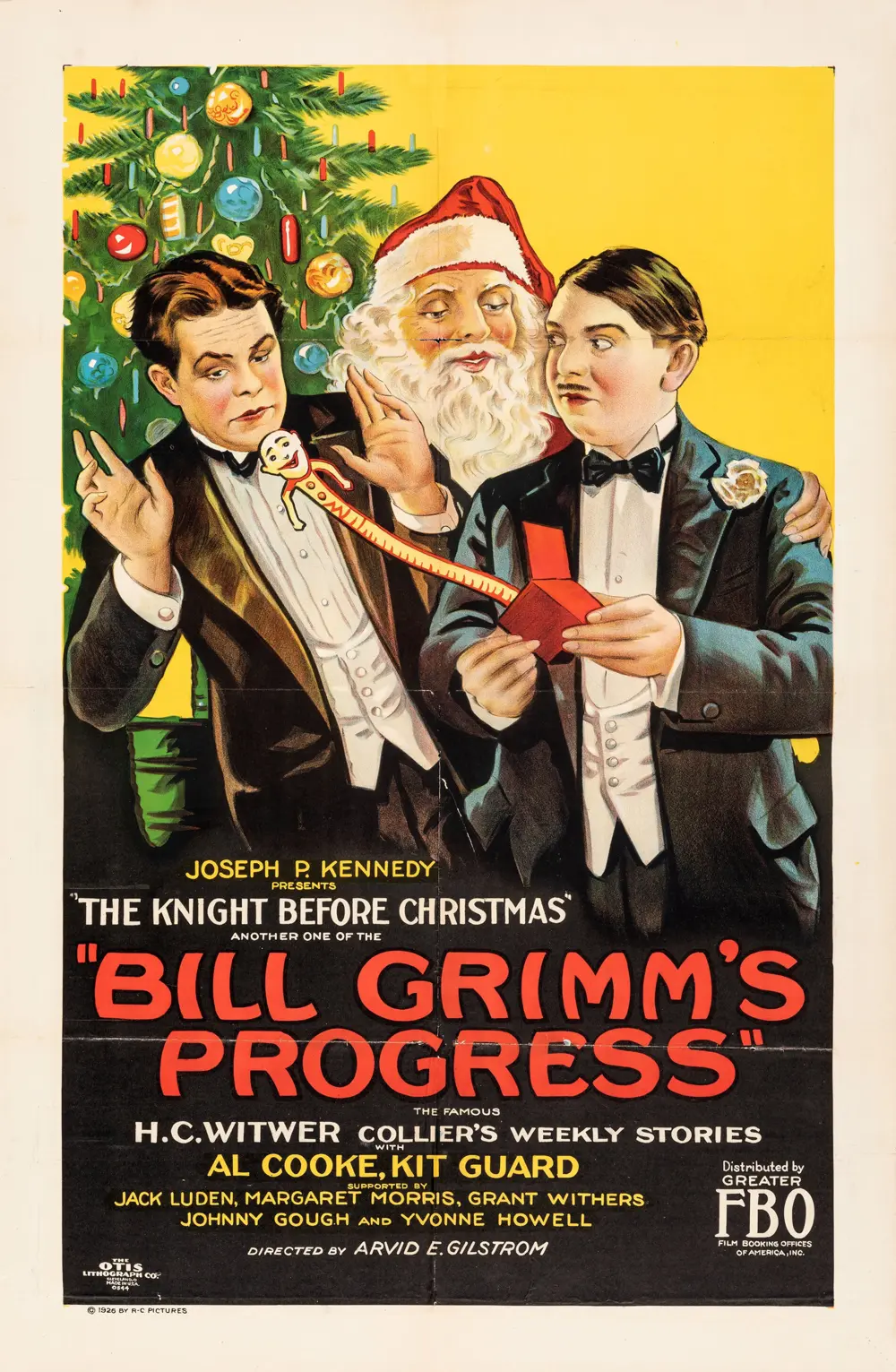
Is 'The Knight Before Christmas' worth watching today? Short answer: yes, but with significant caveats. This early cinematic curiosity offers a quaint, if somewhat simplistic, take on romantic fantasy that resonates with a particular kind of viewer, while leaving others distinctly underwhelmed.
It's a film for those who appreciate the foundational elements of genre cinema, who can forgive a lack of polish for the sake of a charming premise. However, it is decidedly not for audiences seeking sophisticated narratives, groundbreaking performances, or a film that challenges the boundaries of its chosen genre.
This film works because... it possesses an undeniable, if naive, charm, leveraging its fish-out-of-water premise to create moments of genuine warmth and humor, anchored by a surprisingly committed central performance.
This film fails because... its pacing is uneven, the supporting characters often feel underdeveloped, and its thematic explorations of time travel and chivalry versus modernity remain frustratingly superficial, never quite delving into the rich potential of its own concept.
You should watch it if... you are a cinephile curious about early romantic comedies, enjoy simple, feel-good holiday stories, or are looking for a gentle, undemanding film to watch during the festive season.
The cinematic landscape of the early 20th century was a fertile ground for experimentation, and 'The Knight Before Christmas' stands as a charming, if imperfect, testament to that era’s storytelling ambitions. At its heart, the film is a delightful, if somewhat predictable, romantic comedy draped in a festive cloak. It introduces us to Sir Cole, a medieval knight mysteriously plucked from his own time and deposited into the bewildering whirlwind of a bustling, modern (for its era) American city during Christmas.
This premise, now a familiar trope, was relatively fresh, offering fertile ground for comedic misunderstandings and heartwarming revelations. The film leans heavily into these anachronistic gags, often to good effect, as Sir Cole grapples with everything from automobiles to electric lights. His earnest attempts to maintain his chivalric code in a world that has largely forgotten such ideals form the backbone of the film's humor and emotional core.
The narrative quickly pairs him with a cynical local woman, a common archetype of the period, who has grown disillusioned with the very notion of romance and perhaps even the spirit of Christmas itself. Their evolving relationship, from initial skepticism to eventual affection, is the engine that drives the plot forward, aiming to teach both characters—and by extension, the audience—valuable lessons about faith, love, and the enduring power of kindness.
While its ambitions might seem modest by today's standards, for its time, 'The Knight Before Christmas' attempted to blend fantasy, comedy, and romance in a way that spoke to the popular sensibilities of its audience. It's a film that, despite its flaws, manages to carve out a small but memorable niche in the pantheon of early holiday cinema.
The cast of 'The Knight Before Christmas', featuring names like Grant Withers and Margaret Morris, brought a certain theatricality typical of the period to their roles. Grant Withers, as Sir Cole, embodies the titular knight with a remarkable sincerity. His performance is perhaps the film's strongest asset. Withers manages to convey Sir Cole's noble naiveté without descending into caricature, a difficult balance to strike given the inherently comedic nature of his predicament.
He sells the wide-eyed wonder and genuine confusion of a man out of time, whether he's attempting to joust with a parked car or gallantly offering his cape to a lady crossing a puddle. There's a particular scene where Sir Cole, bewildered by a phonograph, attempts to communicate with the 'singing box' that is genuinely endearing, showcasing Withers' ability to blend physical comedy with an underlying earnestness.
Margaret Morris, playing the pragmatic modern woman who takes Sir Cole in, provides a necessary foil. Her character arc, moving from skepticism to belief, is somewhat predictable, yet Morris delivers it with a spirited independence that was often characteristic of female leads in this era. She avoids making her character overly brittle, allowing glimpses of the warmth that Sir Cole eventually uncovers.
The chemistry between Withers and Morris, while not explosive, is gentle and believable, grounding the fantastical elements of the plot in a relatable human connection. Their interactions, though often driven by simple dialogue exchanges or visual gags, build a credible rapport. It’s not the passionate romance seen in something like Midnight Molly, but a slow burn of mutual respect and affection.
The supporting cast, including John Gough, Kit Guard, Al Cooke, Yvonne Howell, and Jack Luden, fill out the world with various townsfolk, friends, and comedic bit parts. While none are given significant depth, they contribute to the film's lighthearted atmosphere. Their reactions to Sir Cole's antics often serve as a mirror for the audience, providing communal laughter and reinforcing the film's central conceit. One could argue that some of these roles, particularly those intended for broad comedic relief, verge on the one-dimensional, a common pitfall in films of this vintage. They are functional, but rarely memorable.
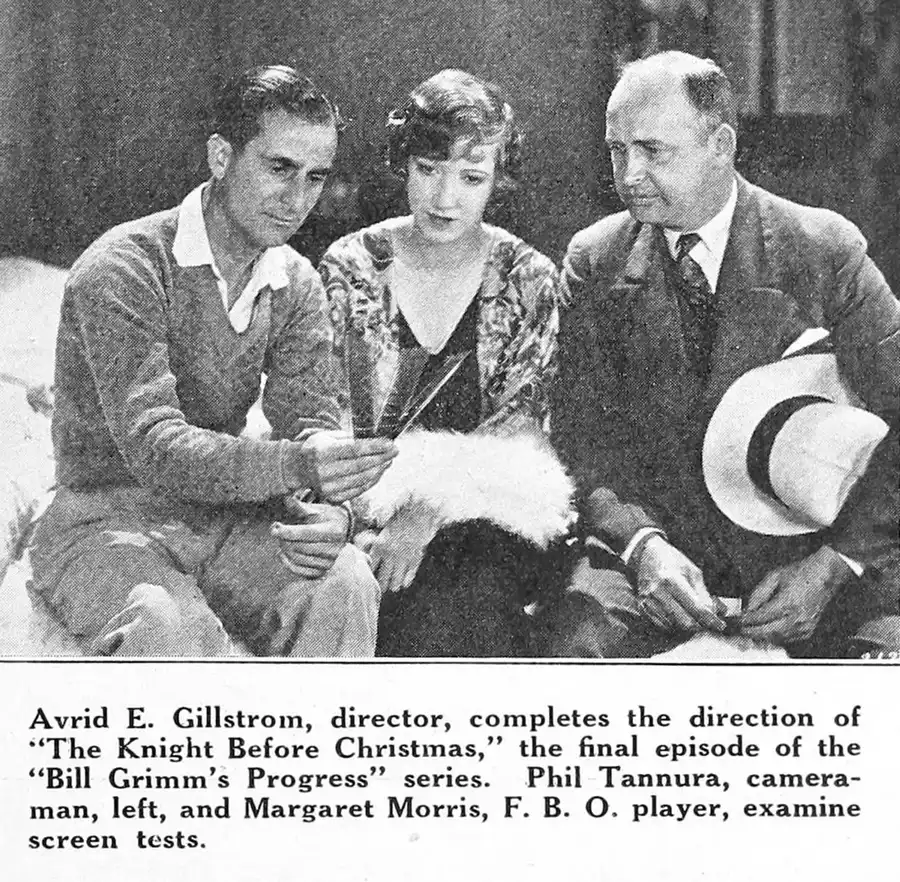
The directorial choices in 'The Knight Before Christmas' are, like many films of its period, straightforward and functional. The film prioritizes clear storytelling over stylistic flourish, a common approach when the novelty of cinema itself was still a significant draw. The pacing, however, is a point of contention. While the initial setup of Sir Cole's arrival and subsequent bewilderment is handled with engaging briskness, there are noticeable lulls in the middle act.
These moments, often dedicated to the slower development of the central romance or repetitive comedic beats, can test the patience of a modern viewer accustomed to more dynamic narrative propulsion. For example, a sequence involving Sir Cole attempting to learn a modern dance feels extended beyond its comedic impact, slowing the film's momentum considerably. It lacks the tight, almost frantic energy that makes a film like The Luck o' the Foolish so enduringly watchable.
The tone is consistently lighthearted and optimistic, even when characters face minor setbacks. This unwavering cheerfulness is both a strength and a weakness. It ensures the film remains a pleasant, family-friendly watch, aligning perfectly with its Christmas theme. Yet, it also prevents the film from exploring any deeper emotional complexities that its premise might offer. The stakes never feel particularly high, and resolutions often arrive with convenient ease, which can make the narrative feel a little too saccharine at times.
The director, likely constrained by the technology and storytelling conventions of the era, opts for a mostly linear and expository approach. There are few visual metaphors or complex camera movements; instead, the focus is on capturing the performances and advancing the plot in an understandable manner. This simplicity has its own charm, allowing the earnestness of the characters and the novelty of the premise to shine through without distraction. It's a directorial hand that guides rather than pushes, resulting in a film that is easy to follow, if not always deeply engaging.
The cinematography of 'The Knight Before Christmas', while rudimentary by today's standards, effectively captures the intended atmosphere. The film makes good use of its Christmas setting, with scenes often bathed in a soft, perhaps artificial, glow designed to evoke holiday cheer. While early films often struggled with capturing nuanced lighting, there's a clear effort to create a festive mood through set dressing and composition.
The production design, particularly the contemporary (1920s/30s) settings, offers a fascinating glimpse into the period. The costumes for the modern characters are authentic to the era, while Sir Cole's medieval attire provides a stark and often humorous contrast. The juxtaposition of his heavy armor and the light, flapper-era dresses or sharp suits of the townsfolk is visually striking and a constant source of quiet amusement.
One memorable visual is Sir Cole, fully armored, attempting to navigate a crowded city street, his imposing figure a bizarre anomaly amidst the hurried pedestrians and early automobiles. This recurring visual motif perfectly encapsulates the film's central conflict and comedic premise. It's a simple, effective way to visually communicate the 'fish out of water' element without relying on heavy exposition.
The use of practical effects for Sir Cole's transportation, though brief, is charmingly archaic. The film doesn't attempt grand spectacle, instead focusing on the intimate reactions of its characters to the unfolding events. This grounded approach, for all its technical limitations, imbues the film with a certain authenticity, making the fantastical elements feel a little more tangible within its own narrative logic. It’s a film that understands its visual strengths lie in contrast and character rather than grand, sweeping shots like those found in The Woman Under Cover.
At its core, 'The Knight Before Christmas' is a gentle exploration of timeless themes: the enduring power of love, the clash between tradition and modernity, and the rediscovery of faith (both in humanity and the festive season). Sir Cole represents an idealized past, a beacon of honor and courtesy in a world that, even then, was rapidly shedding such virtues for pragmatism and speed.
His interactions with the modern woman character highlight the film's central thematic tension. She embodies the cynicism and independence of a new age, a woman who has perhaps been hurt or disappointed, leading her to guard her heart. Sir Cole, through his unwavering belief in goodness and his simple acts of chivalry, slowly chips away at her defenses. This dynamic, while familiar, is handled with a sweetness that prevents it from feeling entirely cliché.
The Christmas setting is more than just a backdrop; it's an integral thematic element. It symbolizes a time for miracles, for generosity, and for opening one's heart, all of which are central to the film's message. The film suggests that the true spirit of Christmas, much like the ideals of chivalry, is timeless and can bridge even the widest temporal gaps. It’s a message that, despite its simplicity, still holds a certain resonance, especially for those seeking comfort and nostalgia during the holidays.
However, the film’s exploration of these themes is, admittedly, superficial. It presents the clash between past and present, but rarely delves into the deeper philosophical implications or the societal shifts that would logically accompany such a dramatic time jump. It prefers sentimentality over profound insight, which is not necessarily a flaw for its intended audience, but it does leave some narrative potential untapped. One could argue it missed a chance to critique modern life through Sir Cole's eyes, settling instead for a lighter, more agreeable tone.
Yes, 'The Knight Before Christmas' is worth watching for specific audiences. It's a charming piece of early cinema history. It offers a simple, heartwarming story. The film is perfect for those who enjoy classic romantic comedies. It's also suitable for viewers seeking undemanding holiday entertainment. Its historical context adds to its appeal. However, prepare for a slower pace. The plot is fairly predictable. It lacks the depth of modern filmmaking. But its earnestness is hard to deny. It works. But it’s flawed.
'The Knight Before Christmas' is not a film that will revolutionize your understanding of cinema, nor will it be remembered as a groundbreaking classic. What it is, however, is a surprisingly endearing and often charming early romantic comedy that, against all odds, manages to hold a certain appeal even today. Its greatest strength lies in its earnestness and the committed performance of Grant Withers, who brings a genuine heart to the anachronistic Sir Cole. While its pacing issues and superficiality prevent it from being truly great, it delivers exactly what it promises: a light, festive, and ultimately heartwarming tale of love defying time.
It serves as a wonderful example of how even simple premises, when executed with sincerity, can create lasting, if modest, cinematic experiences. If you approach it with the right expectations – a desire for gentle humor and old-fashioned romance – you might just find yourself thoroughly charmed. It’s a film that reminds us that sometimes, the simplest stories are the ones that resonate most deeply, especially when wrapped in the magic of the holiday season.
IMDb —
1928
Community
Log in to comment.