DbcultAccessing Vault...
6/10
Senior Film Conservator
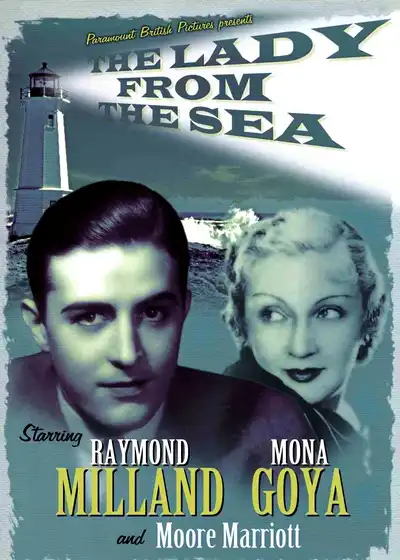
A definitive 6/10 rating for a film that redefined the boundaries of cult cinema. The Lady from the Sea remains a cornerstone of transgressive art.
Okay, so The Lady from the Sea… it's one of those old-school dramas, a real quiet one. If you're into the golden age of cinema and don't mind a story that takes its sweet time to unfurl, you might actually dig this. Think less explosive action, more thoughtful glances across a room. But if you need quick cuts and snappy dialogue to stay engaged, you’ll probably find this one a bit of a snooze. It’s definitely not for folks who get antsy with silent film pacing. 😴
The premise is simple enough: a lifeboatman, Jim, played by a very young Ray Milland, pulls a girl named Lena from a shipwreck near Goodwin Sands. She’s all alone, lost everything. Naturally, she starts to look at Jim with a certain intensity. This, as you can imagine, causes a stir, seeing as Jim is already engaged to his patient fiancée, Bessie. It’s a love triangle as old as time, really, but the setting gives it some grit.
Ray Milland, he’s good here. Even in these early roles, you can see that quiet strength in him. He doesn’t have a ton of dialogue, being a silent film and all, but his expressions, especially when he’s just *looking* at Lena or Bessie, they tell a whole story. There’s a scene where he’s trying to comfort Lena right after the rescue, and you can almost feel him caught between his duty and this sudden, overwhelming sense of pity mixed with something else. It’s a good bit of acting without saying a word.
Mona Goya, as Lena, the shipwrecked lady, she has this really captivating presence. Her character is a bit mysterious, kinda foreign in a way, which just makes her more intriguing. She's not exactly a villain trying to steal Jim; she's just… *there*, a force of nature, almost. The way she looks at Jim, it's just so open and desperate. You feel for her, even while you’re thinking, “Oh no, don’t mess things up for Bessie!”
Speaking of Bessie, played by Eugenie Amami, she’s the steady one. The local girl. She’s the anchor in Jim’s life, and she knows it. You can see the quiet confidence in her early on, then the gradual worry creeping in as Lena sticks around. There’s a moment, I think it’s when Lena first shows up at Jim’s house, and Bessie’s face just drops a little. No big histrionics, just a subtle shift. It's powerful in its quietness.
The pacing, well, it’s a silent film from 1929. So yeah, it's slow. Very slow. Sometimes a little *too* slow, even for me, who generally enjoys these. There are shots of the sea, the cliffs, the small fishing village, that linger. A lot. It gives a sense of place, for sure. You really feel the isolation and the harshness of the coast. The sea itself feels like a character, just like in Surging Seas, always threatening, always changing things.🌊
The film doesn't rush its emotional beats. You can almost feel the movie trying to make sure you understand the stakes for everyone involved. It’s not about grand gestures, but the small, often unspoken tensions between these three people. That’s where the real drama lies, in the way they look at each other, or avoid looking.
One specific detail that stuck with me was Moore Marriott, who plays an old sailor. He’s only in a few scenes, but his weathered face and knowing nods, he just embodies that whole world. He doesn’t say much, but you know he’s seen it all before. It’s a small role, but it really adds to the authenticity of the setting. It grounds the story in something real, you know?
The ending, it’s not tied up in a neat little bow. It feels earned, somehow. Like life, it just… moves on. It doesn't give you all the answers, which is kinda refreshing for a film of this era. It trusts you to sit with the feelings. It trusts you to understand the complexity without needing a big, shouted explanation.
Overall, The Lady from the Sea is a film that asks for your patience, but it rewards it with a genuinely heartfelt, if somewhat melancholic, story. It’s a glimpse into an older style of filmmaking, where emotion was conveyed through subtle shifts and long gazes, not rapid-fire dialogue. If you appreciate that kind of craft, give it a shot. Otherwise, maybe stick to something with more explosions. 😉
IMDb 6.6
1936
Community
Log in to comment.